Have you ever walked down your hallway and noticed a massive, terrifying green patch spreading across your ceiling? It is a sickening feeling that instantly makes your stomach drop. Most people assume their expensive homeowners insurance will easily cover the damage, only to get hit with a shocking claim denial letter. Let me show you why insurance companies secretly hate mold, and how you can protect your home from sudden claim rejections.
📌 Quick Summary: How to Protect Your Mold Claim
- Watch the Source: Insurance only covers mold if it stems directly from a sudden, accidental event (like a burst pipe), not long-term neglect.
- Mind the 14-Day Window: Most policies require you to report water damage within two weeks, or they will deny the resulting mold cleanup.
- Beware of Capped Limits: Standard policies usually cap mold remediation at $1,000 to $5,000, which is rarely enough for a major cleanup.
- Install Smart Sensors: Use cheap, battery-powered water detectors under sinks to catch leaks instantly and prove when they started.
Why Your Insurance Company Secretly Hates Mold
To understand why my claim was thrown in the trash, and why yours might be too, we have to look at how adjusters actually investigate property damage. Most regular people think water is just water. If your wall is wet and moldy, you assume something broke and the insurance should pay to fix it.
But insurance adjusters do not see the world that way. They are highly trained to act like detectives. They will trace the moisture back to its exact origin story. The source of the water is the single biggest factor in whether you get a fat check or a painful rejection letter.
Most standard property policies will only pay for mold removal if the fungus grew directly because of a "covered peril." A peril is just a fancy legal word for a specific, accidental disaster. For example, if your water heater suddenly explodes in the middle of the night and floods your kitchen, that is a covered peril.
Quick Look: Covered vs. Uncovered Mold Scenarios
If mold starts growing on your baseboards a few days after that sudden explosion, the insurance company will usually pay to clean it up. They consider the fungal growth to be a direct result of the sudden, accidental pipe failure. However, things get incredibly complicated when the water moves slowly and quietly.
The Deadly "Gradual Damage" Trap
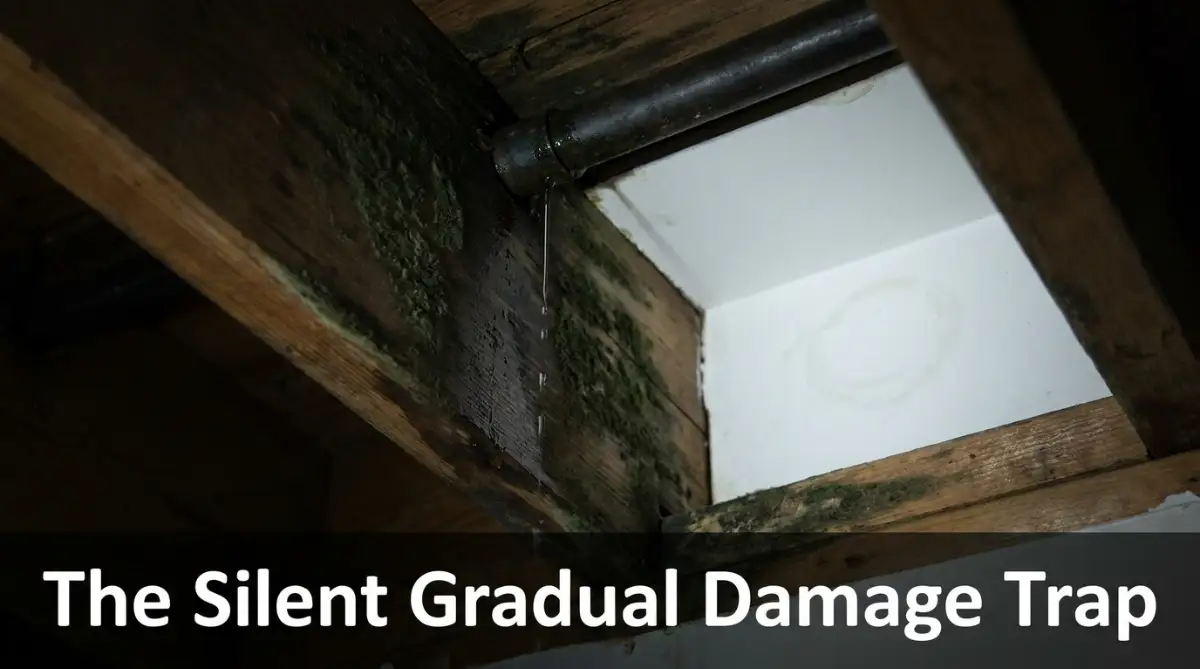
This is exactly where my insurance company caught me off guard. If water leaks slowly over a long period of time, insurance companies call it "gradual damage." Almost every single standard policy strictly excludes gradual damage from their coverage list.
Imagine you have a tiny pinhole leak in a copper pipe hidden safely behind your bathroom sink. It only drips one single drop of water every five minutes. You cannot hear it dripping, and you certainly cannot see it because it is trapped behind the drywall.
Over several long months, that slow drip creates a dark, damp, and perfectly humid environment. Mold absolutely loves the dark and the damp. It begins to grow and spread across the wooden studs of your beautiful house. By the time the fungus eats through the wall and becomes visible to your eyes, the leak has already been happening for half a year.
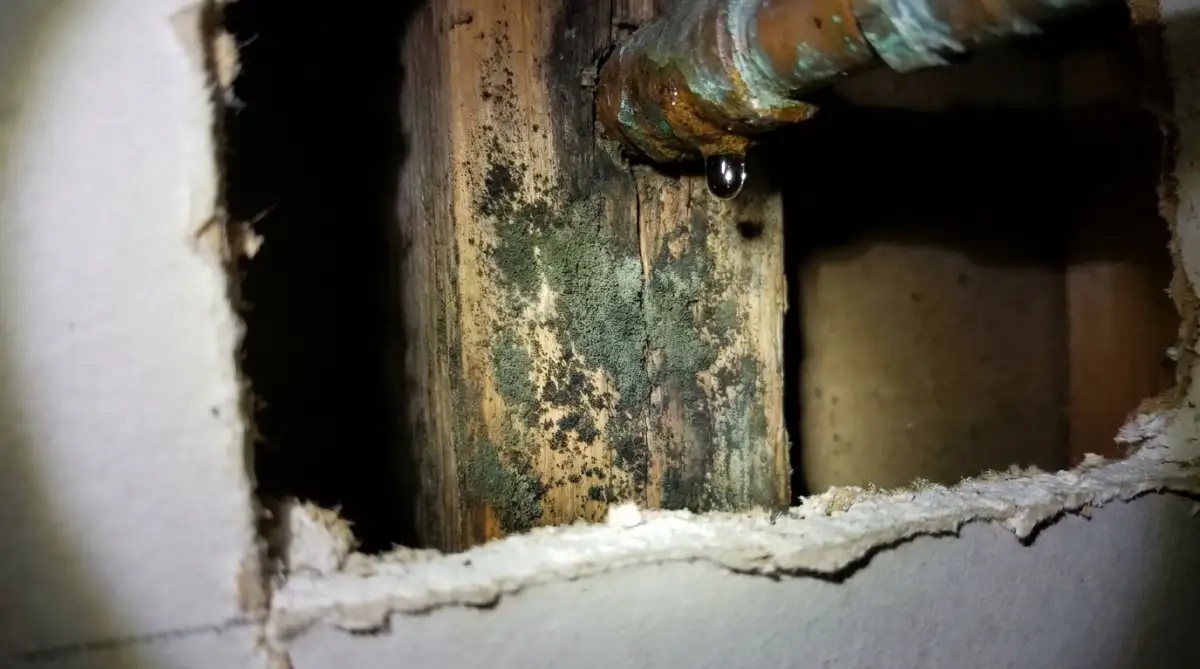
When the insurance adjuster finally comes to look at the damage, they will easily see the rusted pipe and the old, hard water stains. They will instantly know this did not happen overnight. Because the leak happened gradually over time, they will label it a maintenance issue and deny your claim on the spot.
If you want to see exactly how insurance adjusters hunt for signs of gradual leaks, you need to watch this quick breakdown.
The Strict 14-Day Reporting Rule
Even if you have a sudden pipe burst that is fully covered, you can still lose your mold protection if you are not careful about timing. Most standard policies have a very strict time limit for reporting water damage.
This is often known in the industry as the 14-day rule. If a toilet pipe bursts while you are away on a two-week family vacation, the water will sit inside your house for many days. By the time you get home, the mold has already taken over your expensive hardwood floors.
Because you did not report the sudden water damage within that 14-day window, the insurance company can easily argue that you failed to mitigate the damage. They expect you to stop the water flow and start drying things out immediately. If you are not home to do that, they often push the financial blame right back onto your shoulders.
I actually made a terrible mistake while trying to handle my own claim before the adjuster arrived. I grabbed a bottle of heavy bleach and scrubbed the moldy wall, thinking I was protecting my family from breathing in spores. By cleaning the wall, I completely destroyed the physical evidence of how the mold formed, giving the adjuster an easy excuse to deny my payout.
Always take dozens of clear photos and wait for professional instructions before you touch absolutely anything.
The Myth of Natural Flooding Coverage
Another massive point of confusion involves extreme weather and natural disasters. Many homeowners assume that if a heavy rainstorm pushes water into their finished basement, causing mold to grow, their standard policy will cover the cleanup.
This is an incredibly dangerous myth. Standard homeowners insurance absolutely does not cover flood water coming from the outside. If a nearby river overflows its banks, or if heavy rain pools in your yard and seeps through your concrete foundation, that is classified strictly as a flood.
Flood damage requires a completely separate policy through a national flood program or a private flood insurer. If you do not have that specific flood paperwork, any mold that grows from ground-level rainwater is entirely your financial responsibility.
The only time rain is ever covered is if it falls straight from the sky into your house because of a sudden opening. For example, if a heavy windstorm blows a massive tree branch onto your roof, tearing a hole in it, and rain pours inside. In that highly specific scenario, the resulting mold would likely be covered.
The Neglect and Maintenance Clause
Insurance companies fully expect you to act like a responsible, proactive property manager. They write specific clauses into your contract stating that they will not cover damage resulting from "neglect" or "lack of maintenance."
Mold thrives in environments with naturally high humidity. If you live in a hot, sticky climate and you refuse to use your air conditioning or a dehumidifier, moisture will naturally build up inside your home. Over time, this ambient humidity can cause mold to bloom on your ceilings, inside your dark closets, and around your window frames.
If you try to file a claim for this type of widespread mold, the adjuster will check your home's average humidity levels. They will look at the old caulking around your bathtub. They will carefully inspect the weather stripping around your exterior doors.
If they decide the mold grew simply because you failed to properly ventilate or maintain the property, they will deny the claim quickly. They view this situation as normal wear and tear, not an accidental or sudden disaster.
The Sump Pump and Drain Backup Loophole
Let us talk about one of the most frustrating exclusions hidden in your insurance paperwork. Many homes have a mechanical sump pump in the basement to keep natural groundwater from rising inside.
If that sump pump loses power during a bad thunderstorm or mechanically fails due to age, water will rapidly fill your basement. The heavy moisture left behind will quickly turn into a massive, toxic mold colony.
Most homeowners are completely shocked to learn that standard policies exclude water that backs up through sewers or drains, including sump pump overflows. You actually have to buy a specific add-on, called a rider or endorsement, to get any coverage for this exact event.
If you do not have the "Water Backup and Sump Overflow" endorsement printed clearly on your declaration page, you will not get a single penny. You will be stuck paying for the water extraction and the extensive mold remediation entirely out of your own savings account.
Understanding Capped Mold Limits
Even if you win the insurance lottery and your mold claim is actually approved, you are not entirely out of the woods yet. You might assume the insurance company will write a blank check to make your home perfectly safe and clean again.
Unfortunately, that is rarely how the financial side of a claim works. Most standard policies have very strict financial caps specifically placed on mold testing and remediation.
While the insurance company might pay fifty thousand dollars to replace your ruined hardwood floors and kitchen cabinets from a burst pipe, they handle the mold differently. They will often cap the mold cleanup portion at a surprisingly low number.
A standard policy cap for mold testing, removal, and air purification is usually around one thousand to five thousand dollars. If you have ever priced out professional mold remediation, you know that five thousand dollars barely covers the initial tearing out of the infected drywall.
If the mold has spread deeply into your HVAC system, requiring professional duct cleaning and total home sanitization, the final bill can easily exceed fifteen thousand dollars. You will be held completely responsible for paying the massive difference once you hit that tiny policy limit.
Decoding Your Own Policy Paperwork
So, how do you know what kind of coverage you actually possess right now? You have to become a detective with your own insurance documents.
Do not just look at the simple one-page summary your agent emails you every year. That basic summary, usually called the Declaration Page, only shows your broad coverage limits and your deductible. It does not show you the hidden traps and exclusions.
You need to ask your agent for the full, complete policy booklet. You are looking for a section specifically titled "Exclusions" or "Losses Not Insured." Inside that boring text, you will almost always see the words "Fungi, Wet or Dry Rot, or Bacteria."
Read the sentences immediately following those exact words carefully. This is where the insurance company clearly states they will not pay for mold unless it is the direct result of a covered peril hidden elsewhere in the massive book.
Roof Leaks and The Age Factor
Another common way people discover mold is by looking up at their bedroom ceiling and seeing a brown water stain. Roof leaks are notoriously tricky when it comes to insurance claims and mold coverage.
If a sudden hailstorm destroys your shingles, allowing water to enter your attic and cause mold, you are generally in a good position. The damage was sudden, weather-related, and completely accidental.
However, roofs have an expected, mathematical lifespan. If your asphalt shingle roof is twenty-five years old and simply starts leaking because it is tired and worn out, you are in trouble.
The insurance company considers an old, leaking roof to be a lack of standard home maintenance. They will deny the claim to replace the roof, and they will absolutely deny any claim to clean up the mold that grew inside your attic as a result.
The Cost of Ignoring the Small Signs
These are the exact gradual issues that create uncovered mold nightmares down the road. Your insurance policy is designed to act like a safety net for sudden disasters, not a maintenance plan for your daily chores.
When you ignore a small dripping pipe for six months, you are essentially giving the insurance company free ammunition to deny your future claims. They expect you to act quickly to stop small moisture issues before they become structural nightmares that cost thousands of dollars to fix.
Expert Adjuster Insight:
Never use the word "gradual" or guess a timeline when talking to your insurance adjuster. Stick strictly to the exact moment you discovered the physical water damage to avoid giving them an automatic excuse to reject your payout.
Mastering Your Mold and Moisture Defense Strategy
Now that you know exactly how the system is heavily stacked against you, it is time to fight back. You do not have to sit around and just hope an adjuster shows you mercy. Taking proactive control of your property coverage is the only way to sleep peacefully at night.
The absolute best defense against a denied claim is a strong, documented offense. Insurance companies respect homeowners who treat their property like a serious investment. When you can prove that you actively protect your home, it becomes incredibly difficult for them to use the "neglect" excuse.
Let us break down a few high-level strategies that smart homeowners use to completely bulletproof their policies. These are the secrets that insurance agents rarely volunteer to tell you over the phone.
Upgrading to High-Tier Policy Riders
The standard policy you bought online or through a quick phone call is essentially just a starter pack. It protects you from massive, total losses like a house fire or a tornado. But it leaves giant holes in your everyday moisture protection.
You need to call your agent tomorrow and ask them about adding specific "riders" or "endorsements" to your contract. A rider is simply an add-on that patches a hole in your base policy. The most important one you can ask for is a "Hidden Water Damage" endorsement.
This specific add-on forces the insurance company to pay for damage caused by slow, gradual leaks that were hidden behind walls or under floors. Since we already know that gradual damage is their favorite reason to deny a claim, this rider completely takes that weapon away from them.
You should also demand to raise your specific limits for fungal remediation. If your current contract caps cleanup at two thousand dollars, ask them what it costs to raise that cap to twenty thousand. You might be shocked to learn it usually only costs a few extra dollars a month. Securing this larger safety net guarantees you will actually receive a fair home insurance payout if disaster strikes.
Creating an Unbreakable Digital Evidence Trail
If an adjuster tries to claim that a pipe has been leaking for six months, how do you prove them wrong? You use hard, undeniable digital data.
We live in an amazing era of cheap, accessible smart home technology. You can buy a pack of smart water sensors for the price of a decent dinner. You simply place these tiny, battery-powered disks under your kitchen sink, behind your washing machine, and right next to your basement water heater.

The very second one of these sensors feels a drop of water, it sends a loud alarm directly to your smartphone. Because these devices connect easily to your standard home wi-fi, you will get notified even if you are sitting on a beach halfway across the world.
More importantly, the app keeps a permanent digital log of the exact date and minute the water was detected. When the adjuster tries to say the leak was gradual, you can hand them a printed report proving the leak started exactly 48 hours ago. It completely destroys their entire argument on the spot.
Treating Your Home Like a Living Organism
Your house needs to breathe properly to stay healthy, just like you do. Moisture naturally builds up inside from cooking, taking hot showers, and even just breathing. If that moist air cannot escape, it settles into your walls and feeds tiny fungal spores.
You have to actively manage your indoor climate. During the humid summer months, make sure you are running a high-quality dehumidifier in your basement. Keeping the air dry is a massive part of your overall health protection, as breathing in clean air keeps your respiratory system safe and strong.
According to the experts at the Centers for Disease Control and Prevention (CDC), you should always keep indoor humidity levels below fifty percent. Buying a cheap digital hygrometer for your living room is the easiest way to monitor this daily.
Make sure your bathroom exhaust fans are actually pushing steam all the way outside the house. Many older homes have fans that simply dump hot shower steam directly into the dark attic. This is a guaranteed recipe for a massive, uncovered fungal disaster right above your head.
The Power of Professional Annual Audits
We happily take our cars to the mechanic for an oil change, but we completely ignore the complex plumbing systems running through our walls. This blind trust in old pipes eventually leads to financial heartbreak.
Hiring a licensed plumber once a year for a basic visual inspection is a massive power move. Have them check the age of your washing machine hoses, your water heater valves, and the supply lines tucked behind your toilets.
Rubber hoses degrade slowly over time, and a trained professional can easily spot a bulging, weak hose weeks before it actually bursts open. They can also ensure your major appliances are not suffering from dangerous overheating issues that might cause internal condensation and dripping.
If you ever need to file a water claim, handing the corporate adjuster a recent, clean inspection report from a licensed plumber is incredibly powerful. It proves beyond a shadow of a doubt that you proactively maintain your property. This single piece of paper makes it extremely hard for them to use the "neglect" clause against you.

Catastrophic Blunders That Hand Adjusters an Easy Win
Even if you have the absolute best coverage money can buy, you can still ruin your chances of getting paid. When homeowners panic after finding major water damage, they often make emotional, rushed decisions that cost them thousands of dollars.
I have watched countless smart people accidentally sabotage their own cases simply because they did not know the hidden rules of the insurance game. Let us walk through the most dangerous pitfalls you must avoid when dealing with a potential fungal issue.
Using the Wrong Vocabulary on the First Phone Call
The very first phone call you make to the insurance company is the most dangerous part of the entire process. Everything you say is being recorded and typed into a permanent file.
If you call in a panic and say, "My sink has been leaking for a while, and now there is black stuff everywhere," you just killed your own claim. By using the words "for a while," you just legally admitted to gradual damage. The agent on the phone will highlight that sentence, and your denial letter will be printed before you even hang up.
You must choose your words carefully. You should say, "I just discovered a sudden water issue under my sink, and there is unexpected damage." Stick to the facts. Do not guess how long it has been happening. Let the professionals figure that out later.
If you have a habit of rushing through important tasks without thinking, you might be making dangerous morning routine mistakes that bleed into how you handle stressful emergencies. Slow down, take a deep breath, and think before you speak to the claims department.
Tossing the Broken Evidence in the Trash
When a nasty pipe bursts under the kitchen sink, your first instinct is to rip everything out and throw the rusty parts right into the garbage can. You just want the mess out of your house immediately. This is the biggest physical mistake you can possibly make.
The insurance adjuster needs hard proof to understand exactly how the mechanical failure happened. If you throw away the cracked fitting or the split rubber hose, you are destroying the main piece of evidence. They need to see that the break was sudden and accidental.
Always keep every single broken part in a plastic bag on your counter. Let the adjuster hold the broken piece and take their own macro photos of it. If you throw it away, they will assume you are hiding something, and they will likely deny the claim for a total lack of evidence.
If your claim gets thrown out over a missing pipe, you might find yourself frantically searching for high-interest unsecured loans just to afford the massive repair bill.
The DIY Bleach Scrub Illusion
When people see dark green spots forming on their white drywall, they usually panic, grab a heavy bottle of household bleach, and start scrubbing aggressively. They honestly believe they are fixing the problem and saving money.
In reality, bleach does not kill the roots of fungus on porous surfaces like drywall or bare wood. It only bleaches the color out. It makes the ugly spots invisible to your eyes while the roots continue to grow deep inside the wall cavity.
More importantly, by scrubbing the wall, you are wiping away the exact visual evidence the adjuster needs to approve a professional remediation team. Never try to clean a large fungal colony yourself.
According to guidelines from the Environmental Protection Agency (EPA), large areas of growth require professional containment to prevent cross-contamination. Call your insurance company immediately and wait for their official inspection before touching the wall.
Assuming You Have Groundwater Protection
We touched on this concept earlier, but it is a mistake so common and devastating that it deserves a deeper warning. When a massive spring rainstorm floods a local neighborhood, thousands of people call their standard home insurance agents.
They are almost always completely rejected. Standard property policies do not cover ground water entering your home. Period.
If you live anywhere near a body of water, or in a valley known for heavy spring rains, you must buy a separate, standalone policy. You can usually purchase this through the National Flood Insurance Program (NFIP), which is managed by the federal government.
Do not wait until the storm clouds are already on the evening news to ask for this specific coverage. Flood policies usually have a strict thirty-day waiting period before they officially take effect. Buy the coverage when the sun is shining brightly outside.
Hiring a Cheap Handyman Over a Certified Expert
When an insurance claim gets delayed or denied, many homeowners try to save a few bucks by hiring a cheap local handyman to cut out the moldy drywall. This is an incredibly dangerous physical and financial mistake.
Cutting into a wall full of active spores without setting up proper negative-pressure containment barriers is a disaster. It will instantly blow millions of invisible, toxic spores throughout your entire house. You will literally cross-contaminate your clean bedrooms, your soft furniture, and your expensive HVAC system.
If this happens, a small two-thousand-dollar cleanup turns into a whole-house nightmare. Always hire an officially certified remediation company. They know how to seal off the room and protect the rest of your property from secondary damage.
Just like you would never want to make dangerous password management mistakes that expose your digital life, you should never let an uncertified worker expose your family's lungs to toxic dust.
Taking the First "No" as the Final Answer
Corporate insurance adjusters are human beings, and they work for a massive company that constantly wants to save money. Sometimes, they make honest mistakes. Other times, they interpret a vague policy in a way that heavily favors the insurance carrier.
If your claim is denied because the adjuster casually claims the leak was "gradual," you do not have to accept that as the final word. You have the complete legal right to push back and demand a rigorous second opinion.
If you know for a fact that the water damage was sudden, you should highly consider hiring a licensed Public Adjuster. These are independent, licensed insurance experts who work directly for you, not the giant insurance company.
They know exactly how to read the confusing fine print and can often overturn a wrongful denial by aggressively fighting the corporate adjusters on their own terms.
Your New Game Plan for Total Property Protection
Dealing with hidden water damage and stubborn insurance companies is never a fun or relaxing experience. But proper education is absolutely your best weapon against unfair claim denials and sneaky policy exclusions.
You now understand that you cannot simply trust the standard, basic paperwork to cover every possible disaster scenario. You have to take active ownership of your property by installing smart leak detectors, checking your specific coverage caps, and demanding better endorsements from your local agent.
By treating your home like a carefully managed business asset, you remove the terrifying element of surprise. You stop being a helpless victim of sudden disasters and start becoming a prepared, highly educated homeowner who knows exactly how to navigate the complex system.
I know firsthand how terrifying it feels to find that hidden damage spreading inside your own sanctuary. But taking these simple, proactive steps today gave me my peace of mind back, and I am completely confident it will do the exact same thing for you. Pick up the phone tomorrow, call your agent, and take control of your policy!
Clear Answers to Your Biggest Water Damage Worries
Does standard property insurance ever cover black mold?
Standard policies usually do not cover the removal of fungal growth itself unless it was caused directly by a covered peril, like a sudden pipe bursting. If the growth happened due to high ambient humidity or a slow, ignored leak, the claim will almost certainly be denied.
Can my insurance company drop me for filing a water claim?
Yes, if you file multiple water damage claims within a relatively short period of time, your insurance company may view your property as a high financial risk. They have the legal right to raise your premiums significantly or choose not to renew your policy at the end of your term.
How much does a professional remediation team actually cost?
The total cost depends heavily on exactly how far the spores have spread through the house. A small, contained bathroom cleanup might cost two thousand dollars, while an entire flooded basement can easily exceed ten to fifteen thousand dollars for proper sanitization and rebuilding.
What exactly is a mold cap on an insurance policy?
A mold cap is a strict financial limit the insurance company places specifically on the cleanup and testing of fungal growth. Even if your overall property coverage is huge, the specific limit for removing the actual fungus is often severely capped around five thousand dollars.
Will my policy pay for a hotel if we have to leave?
If your home is deemed completely uninhabitable due to a covered water disaster, the "Loss of Use" section of your policy should pay for temporary housing. However, if the main claim is denied due to gradual damage, they will not pay a single dime for your hotel or food expenses.
How do I prove my water leak was sudden and accidental?
The absolute best way to prove a leak was sudden is to provide timestamped photos showing the immediate aftermath, along with an official written report from a licensed emergency plumber. Having smart water leak detector logs that show the exact minute the water started flowing is also undeniable evidence.
Disclaimer: The information provided in this article is for educational and informational purposes only and does not constitute official legal, financial, or insurance advice. Insurance policies vary wildly by state, provider, and individual contract terms. Always read your specific policy documents carefully and consult directly with your licensed insurance agent or a legal professional to fully understand your unique coverage limits and exclusions. We are not responsible for any denied claims, financial losses, or property damage resulting from the interpretation of this general guide.