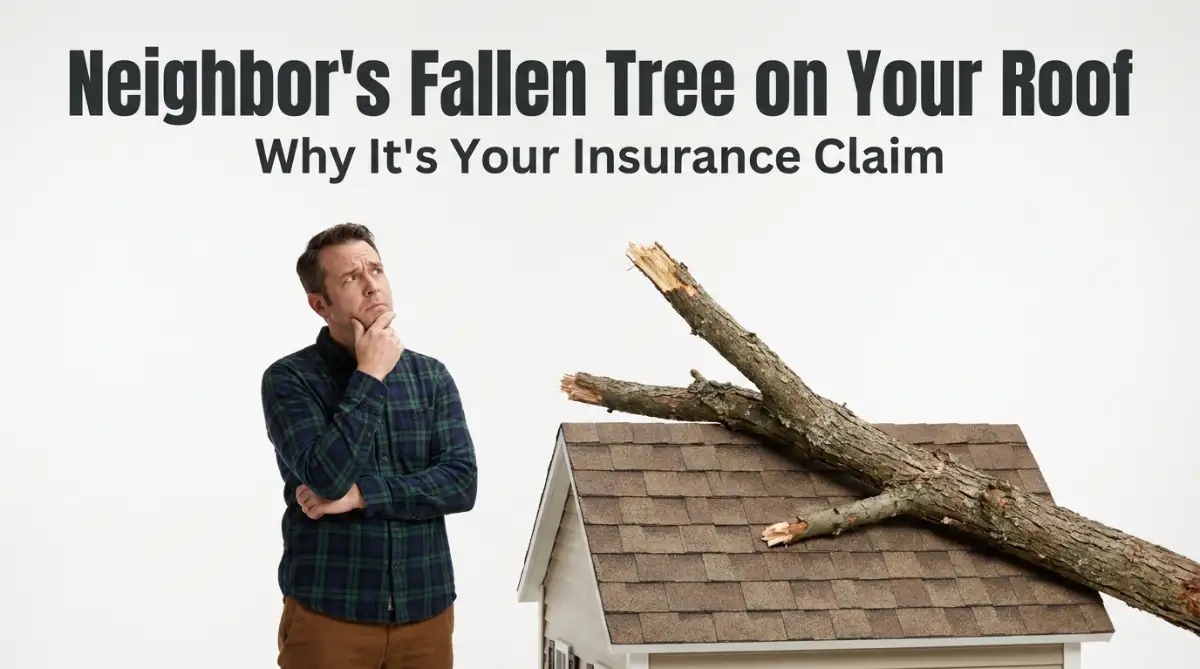
You hear a deafening snap, run to your living room, and find daylight shining through a split ceiling beam. The first thing you want to do is knock on your neighbor's front door and hand them the repair bill. But insurance law does not care whose yard the roots grew in—it only cares whose roof took the hit. I learned this the hard way, so let me show you how to protect your bank account before you make a costly mistake.
Before You Call Anyone: The 4 Golden Rules
-
Stay Off the Roof: Do not climb up to check the hole yourself while the wood is still shifting.
-
File on Your Policy First: Your insurer handles the damage to your structure; waiting on your neighbor just delays your tarping.
-
Document Before Tarping: Take clear photos and short videos of the fallen limb and crushed shingles before the mitigation crew covers it up.
-
Keep Every Receipt: Save the physical paper bills for tarps, nails, and emergency labor—your adjuster must add these to your final claim check.
Unraveling the Surprising Legal Reality of Property Lines
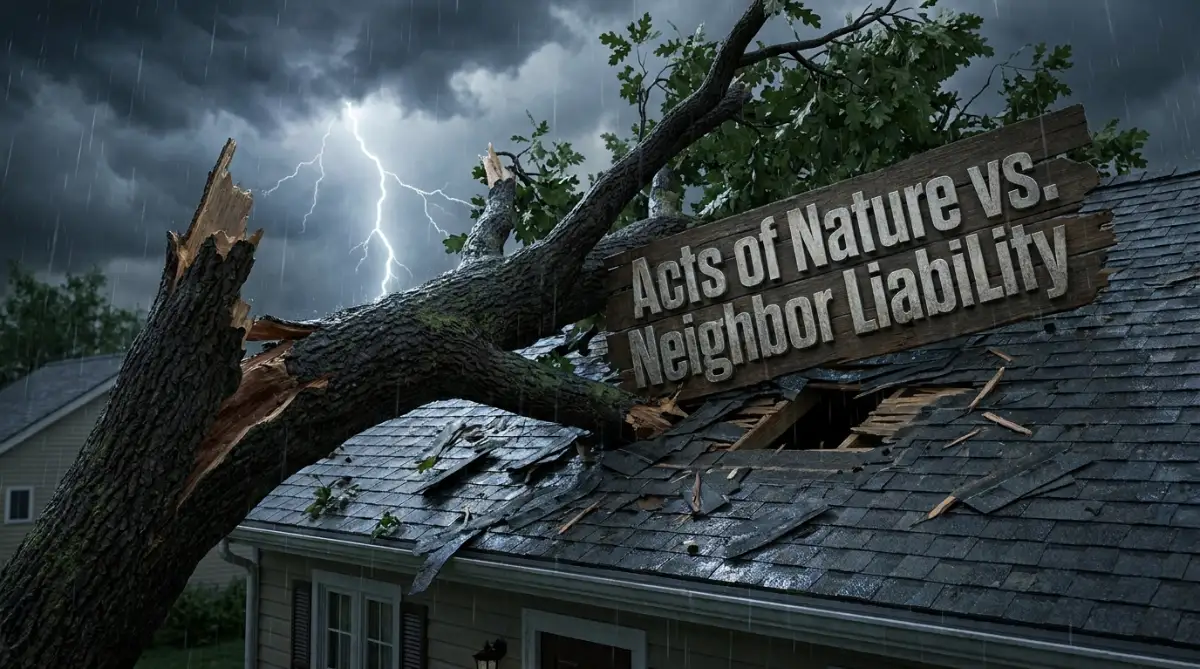
To understand why your neighbor is rarely to blame, we have to look closely at how property law handles nature. The legal system generally classifies sudden tree falls during storms as an "act of God" or an act of nature. Unless your neighbor received written warnings that their tree was completely dead and dangerous, they are considered legally blameless.
Mother Nature does not check property boundaries before she knocks down a massive branch during a midnight gale. Because the storm caused the fall rather than intentional negligence, the law places the burden of damage onto the owner of the structure that was struck.
This means your house, your roof, and your insurance policy take center stage the moment wood hits shingles. It feels completely unfair, especially if you spent years politely asking your neighbor to trim those heavy branches.
The Difference Between Negligence and Acts of Nature
There is one major exception to this frustrating rule that you need to keep in mind. If your neighbor's tree was visibly rotting, hollow, or completely dead, and you sent them certified warning letters before the storm, the legal liability shifts.
In that specific scenario, they were legally negligent because they ignored a known hazard threatening your property. Without clear proof of prior written warning, however, insurance companies treat the event as pure bad luck.
How to Shift Liability BEFORE the Next Storm Hits (The 3-Step Paper Trail)
-
Hire an ISA-Certified Arborist: Pay $150 to get a written safety assessment showing visible rot or root rot near your boundary line.
-
Send via Certified Mail with Return Receipt: Mail a physical copy of the report with a polite note requesting trimming. Keep the green postal tracking slip.
-
Save Timestamped Video Proof: Film the leaning branches against a street sign or your fence to establish how long the hazard existed.
You cannot control the weather, and the law assumes your neighbor cannot control sudden wind gusts either. Therefore, your homeowners insurance policy acts as the primary safety net for repairing your damaged roof.
How Homeowners Insurance Actually Responds
When you file a claim for a fallen tree, your standard policy typically covers the physical damage to your home structure. This includes your roof framing, shingles, drywall, and any indoor items crushed inside the rooms below.
However, your insurance company will subtract your policy deductible before they send you a single penny for repairs. If your deductible is two thousand dollars, you have to pay that initial amount out of your own savings account.
This financial sting catches many homeowners completely off guard right when they are dealing with emergency tarp services. Understanding this deductible reality ahead of time helps you build a proper emergency fund for unexpected weather disasters.
How the Math Actually Works on a Real Roof Claim
Still confused about why you have to pay for your neighbor's tree? This quick visual breakdown explains the exact legal loopholes in plain English:
Breaking Down the Financial Responsibility
To make things crystal clear, let us look at a quick comparison of who pays for what during a neighbor tree incident.
The Complicated Logistics of Yard Debris Cleanup
While your roof damage is covered under your dwelling protection, cleaning up the actual tree yard debris follows a different set of rules. Insurance policies often treat the wood itself very differently depending on where the branches landed.
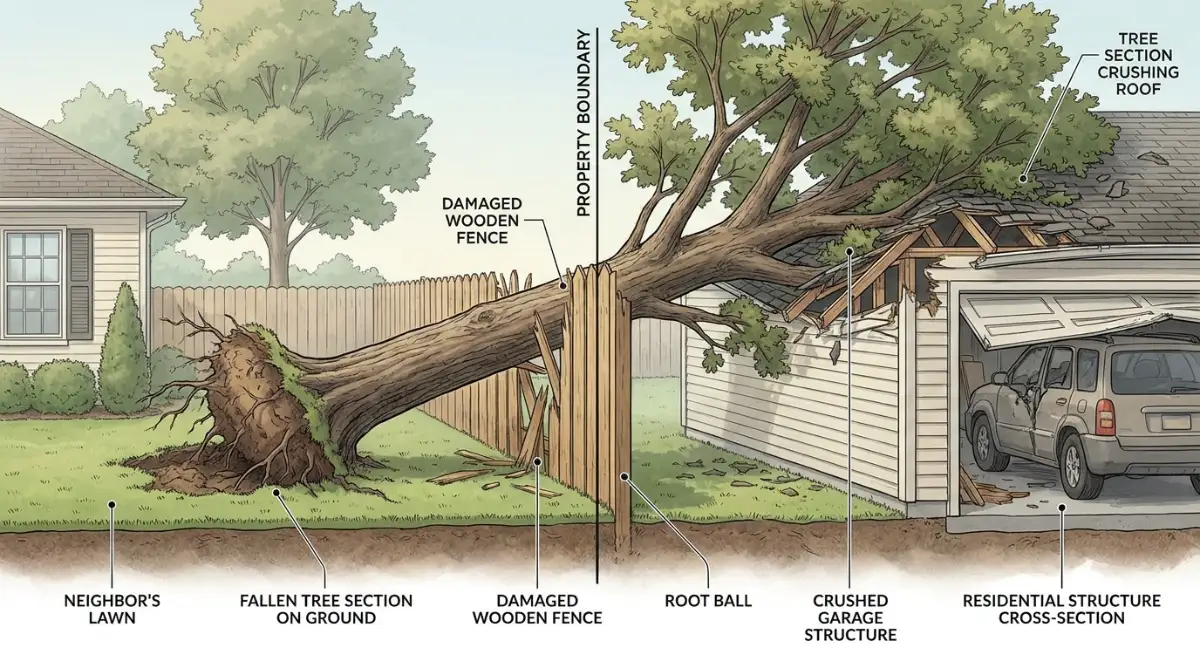
If the tree trunk crushes your roof or smashes your fence, insurance usually pays to remove the portion resting on the damaged structure. However, if the rest of the massive tree falls harmlessly onto your empty lawn or driveway, your insurer might refuse to pay for its removal.
They view a fallen tree sitting on grass as a landscaping issue rather than structural home damage. This leaves you arguing with tree removal services over hundreds or thousands of dollars in cleanup costs.
Why Your Neighbor Still Doesn't Have to Clear Your Yard
You might still feel angry that your neighbor's wood is cluttering up your backyard, but property lines remain active even after a storm. Your neighbor is generally not legally required to climb over your fence and clean up debris that landed on your grass.
In many municipalities, whatever part of the tree crosses your property line becomes your legal responsibility to chop up and discard. This surprises many residents who expect their neighbors to come over with chainsaws and clear everything away.
The Danger of Ignoring Tree Maintenance
This entire messy situation highlights why proactive property maintenance is so critical for modern homeowners. If you notice your own trees leaning dangerously over your neighbor's garage, you should hire an arborist immediately.
Taking down a sick tree proactively costs a few hundred dollars, whereas repairing a collapsed roof costs tens of thousands. Protecting your neighbors is ultimately a form of protecting yourself from future insurance nightmares and legal headaches.
If your neighbor refuses to trim their hazardous trees, keep a detailed paper trail of every conversation and certified letter you send them. That documentation becomes your ultimate legal shield if a major storm finally brings their neglected timber crashing down onto your living room.
Documenting the Scene Before Touching Anything
The moment you discover roof damage, your first instinct is to grab a rake and start cleaning up the mess. Doing this prematurely can destroy vital photographic evidence that your insurance adjuster needs to evaluate the claim properly.
Take wide-angle photos of the entire tree position relative to your house from multiple outdoor angles. Capture close-up shots of broken shingles, dented gutters, and crushed framing timbers before any emergency repairs begin.
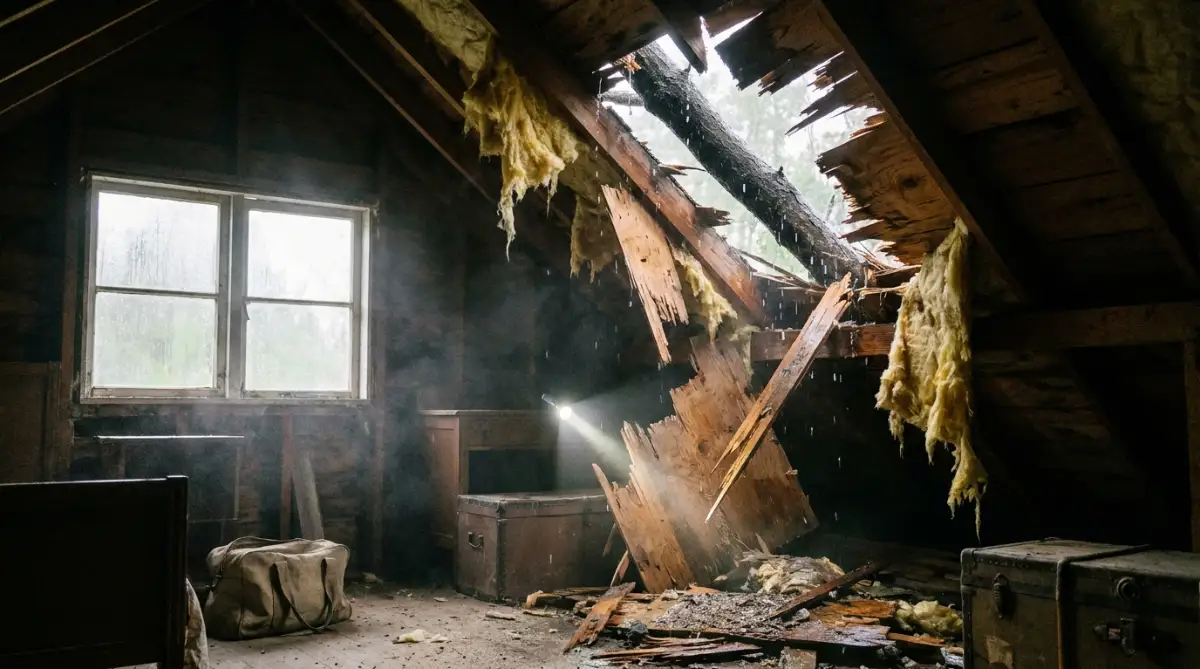
According to guidelines published by the National Association of Insurance Commissioners on consumer protection, thorough photo evidence prevents adjusters from disputing the origin of the impact. If water is actively pouring into your living room, however, you must take reasonable steps to prevent further interior destruction.
The Art of Emergency Mitigation
Insurance policies contain a strict clause requiring homeowners to mitigate further damage following a covered event. If you leave a massive hole in your roof open to oncoming rainstorms, the insurer can deny coverage for subsequent indoor mold and ruined furniture.
Hire an emergency roofing crew immediately to install heavy-duty waterproof tarps over the impacted zone. Keep every single receipt for emergency tarping, plywood, and labor services provided during those chaotic initial hours.