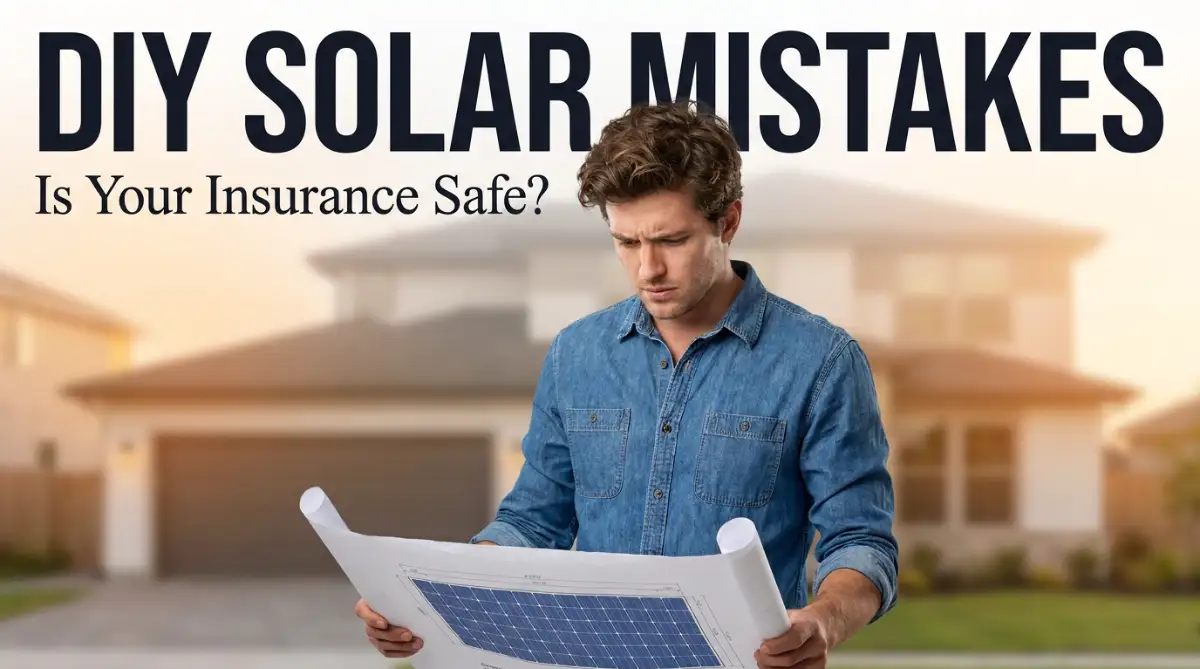
I thought I was a genius for saving five thousand dollars by installing my own solar panels over the weekend. But six months later, a giant brown water stain appeared on my living room ceiling. When I called my insurance company, the adjuster took one look at my DIY roof brackets and completely denied my claim. I had to pay thirty thousand dollars out of pocket to fix the rot. Let me show you why cutting corners on home energy projects can completely destroy your insurance policy.
My 60-Second Solar Safety Checklist
- Do not drill into your roof without a certified engineer's weight and wind load approval.
- Never wire high-voltage DC current into your main breaker panel yourself; always hire a licensed electrician.
- Call your insurance agent immediately after installation to increase your policy's replacement coverage.
- Make sure you have official "Permission to Operate" (PTO) from your utility company before turning the panels on
The Invisible Shield: How the "Faulty Workmanship" Clause Works
When you sign your homeowners insurance policy, you are entering into a legally binding contract. That contract contains a very specific, heavily enforced paragraph called the "Faulty Workmanship Exclusion."
This clause simply states that the insurance company is only responsible for covering sudden, unexpected, and accidental damage caused by outside forces like wind, hail, or lightning. They are absolutely not responsible for fixing damage caused by poor quality, unlicensed, or unpermitted work.
Let us look at a simple driving analogy.
If a wild deer suddenly jumps in front of your car on a dark road, your insurance pays for the damage because it was an unavoidable accident. But if your car wheels fall off on the highway because you tried to change your own brakes using cheap, unapproved parts, the insurance company will reject your claim because the crash was caused by your own bad work.
Your house operates on the exact same strict legal logic. If a licensed professional installs your solar panels and a storm rips them off, you are usually fully covered.
But if you drill holes into your own roof shingles without professional certifications and those holes cause a massive water leak, the company will call it "faulty workmanship." They will legally walk away from the claim, leaving you with an empty wallet and a rotting ceiling.
Let us explore the four most dangerous DIY solar mistakes that insurance adjusters look for when they want to deny your claim.

Structural Violations: Cracking Your Roof's Natural Armor
To hold heavy solar panels securely, you have to mount heavy metal racks directly into your roof's wooden rafters. This requires drilling dozens of deep holes straight through your water-resistant shingles and plywood underlayment.
Many excited DIYers make the mistake of assuming that as long as they find a rafter, they can just screw the brackets down and call it a day. This is a massive, highly destructive mistake.
The Drywall Anchor Analogy:
Imagine trying to hang a massive, hundred-pound mirror on your living room wall without finding a solid wooden stud. If you just screw it into the weak drywall, the mirror will eventually rip a giant hole in the wall and shatter on the floor.
Your roof is under constant, heavy pressure from wind and gravity. If you do not align your solar mounts perfectly with the center of your roof rafters, the heavy lag bolts will split the wood, completely ruining the structural integrity of your roof.
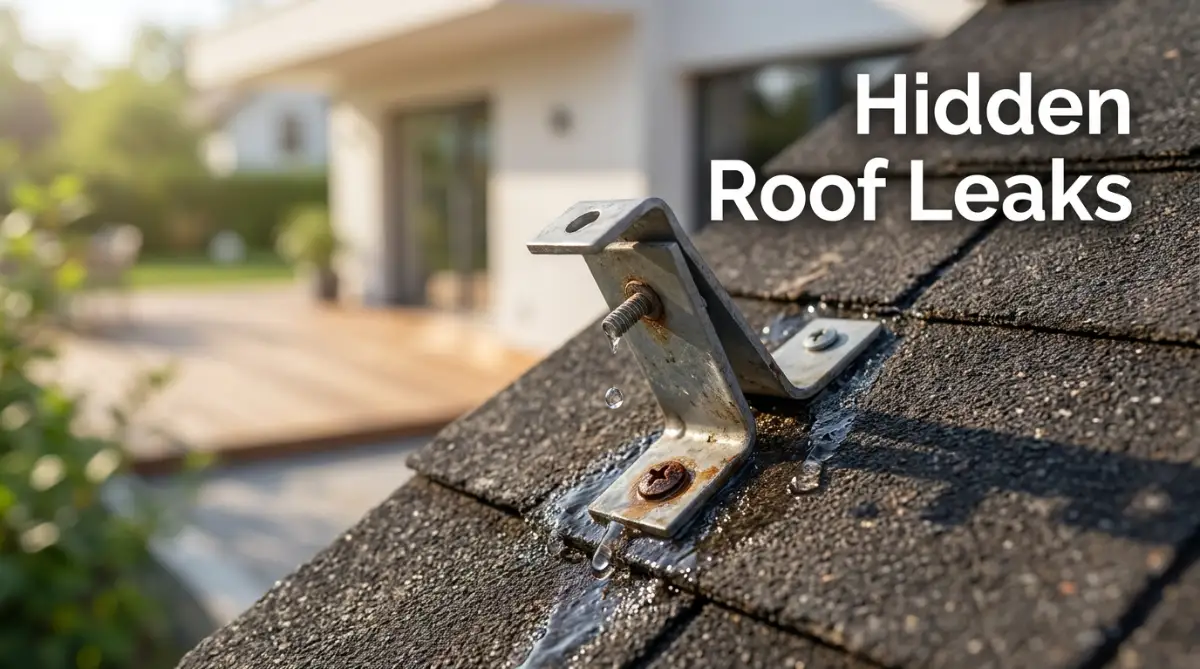
Furthermore, you must use highly specialized, waterproof flashing plates and thick silicone sealants around every single bolt. If you skip this step or use cheap caulk from the hardware store, rainwater will slowly seep through the holes over time.
The Homeowner Disaster Scenario:
Let us look at the story of a homeowner named Dave. He decided to install his own solar panels to save five thousand dollars on professional labor costs.
He didn't use proper flashing plates, assuming the silicone would hold. Six months later, a slow, hidden water leak rotted out three major wooden support beams under his roof, causing his ceiling to sag dangerously.
When Dave filed an insurance claim, the adjuster requested the official building permit and the certified installer's invoice. I used to think that keeping receipts in a random kitchen drawer was good enough, but insurance companies want official city paperwork for everything you change on your roof. Once I started keeping a dedicated folder with every signed permit and certified invoice, my peace of mind completely changed. Do not skip the paperwork, because that piece of paper is your only true shield when an unexpected disaster strikes.
Because Dave did not have these documents, the company denied the entire forty-thousand-dollar structural repair bill under the faulty workmanship clause.
The "Paper Shield" Rule:
If you ever file a storm damage claim, the adjuster will immediately ask for two things:
- The certified installer's invoice.
- The signed city building permit.
- If you do not have both documents in a folder ready to hand over, they will likely deny your claim under the "unlicensed modification" clause.
If you want to see what a professional, leak-proof solar mounting installation actually looks like up close, watch this quick video below before you touch a single tool on your roof!
The Invisible Danger: Unlicensed High-Voltage Electrical Work
Solar panels do not generate safe, low-voltage household electricity. They produce highly powerful, raw Direct Current (DC) electricity that can easily reach up to six hundred volts.
Connecting this raw power to your home's main electrical panel is not a simple "do-it-yourself" weekend project. It requires advanced electrical knowledge and strict compliance with local building codes.
The Lightning Bolt Analogy:
Imagine trying to safely catch a small bolt of lightning in your hands and direct it into your home's outlets using cheap copper wires. If you make a single bad connection or use the wrong wire thickness, the electricity will instantly jump and create a massive fire.
If your DIY wiring sparks an electrical fire that burns your house down, the fire investigator will search the ruins specifically looking for the origin of the blaze.
If they find that the fire started at an unpermitted, amateur solar inverter connection, your insurance company will void your entire fire coverage policy. You will lose your home, your belongings, and your financial security because you tried to save a few dollars on an electrician.
The "Plug and Play" Illusion: Myth vs. Reality
Many online companies sell DIY solar kits that are marketed as "plug and play." They make it sound like setting up a solar system is exactly like plugging a new refrigerator into the wall.
This is a dangerous marketing illusion designed to make sales. A home solar system is a miniature utility power plant that must interact safely with your local electricity grid.
The Myth: You can just mount the panels, plug them in, and start saving money on your electricity bill immediately.
The Reality: You legally cannot turn on a grid-tied solar system without a formal Interconnection Agreement and Permission to Operate (PTO) from your local utility company. If you connect your panels to the grid without permission, you can face massive legal fines and your utility company can permanently cut off your power.
The Weight and Wind Load Hazard
A standard solar panel weighs approximately forty pounds. When you install an average twenty-panel system on your roof, you are adding eight hundred pounds of permanent, dead weight to your roof structure.
Before you add this weight, you must ensure your roof can physically support it. Many older homes have roof structures that are already sagging from age.
Additionally, solar panels act like giant sails during high-wind storms. If the panels are not mounted at the perfect angle with certified wind-load brackets, the wind will get underneath them and rip your entire roof structure completely off your house.

The Importance of Professional Engineering:
Professional installers always hire a certified structural engineer to evaluate your roof before they turn a single screw. They calculate the exact wind-load limits of your area to ensure the panels will never blow away.
If you do the work yourself without these engineering calculations, your insurance company will categorize any wind damage as preventable negligence. They will argue that you installed a giant sail on your roof without proper safety engineering, making the destruction entirely your own fault.
Understanding the structural limits of your roof is just the beginning of a safe solar journey. You must also learn how to navigate the complex world of electrical engineering and local government inspections.
According to consumer guides published by the U.S. Department of Energy, home solar panels must comply with strict national electrical codes to ensure basic safety [1]. Skipping these official safety protocols is incredibly dangerous and can easily destroy your entire property.
Research conducted by the The Solar Consumer Guide shows that improperly installed solar systems are a major source of electrical fires and structural damage in residential areas. Many amateur owners assume they can learn everything from online videos, which is a massive mistake.
Just like relying on television dramas can lead to surprising Miranda rights misconceptions from TV dramas when dealing with real-world law, relying on quick online tutorials leads to massive structural and insurance errors in solar projects. You cannot treat a highly advanced electrical system like a simple DIY weekend project.
Let us look at the advanced, pro-level secrets you can use today to protect your home and ensure your insurance policy remains completely safe.
Advanced Strategies for Guaranteed Insurance Compliance
If you want to enjoy the benefits of solar energy without losing your home insurance coverage, you must change your approach completely. You cannot afford to cut corners when dealing with high-voltage electricity and structural roof loads.
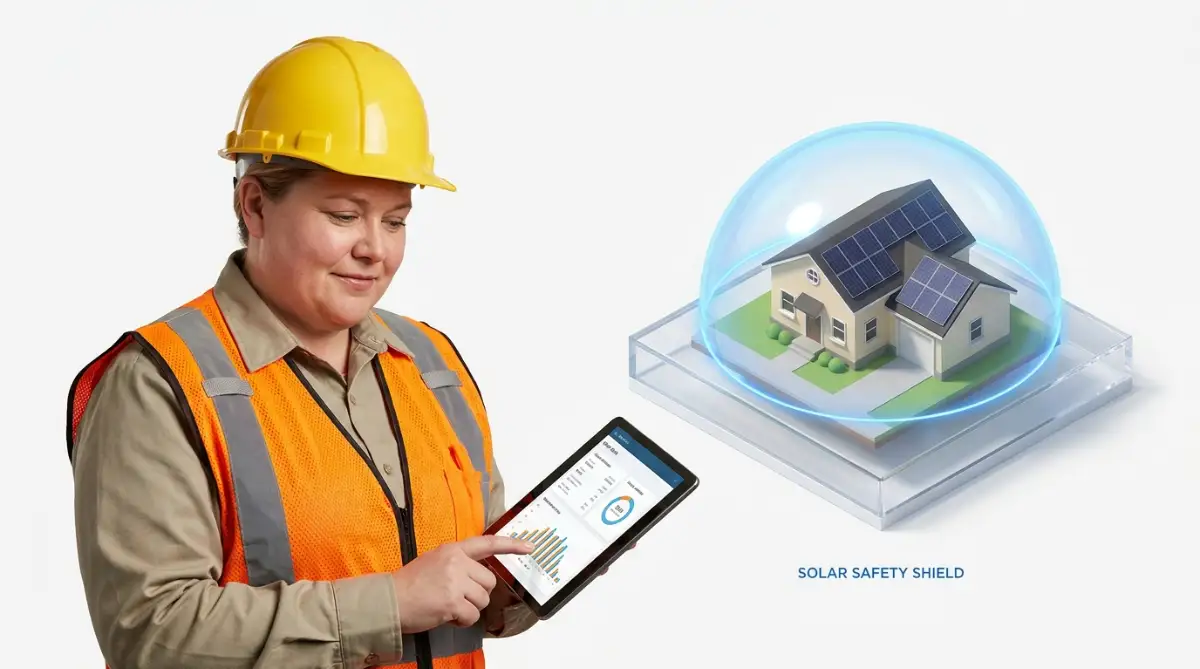
By applying specific, expert-level safety measures, you will build an unbreachable wall of protection around your property. These advanced strategies will force your insurance provider to see you as a highly responsible, low-risk homeowner.
Let us explore the most effective ways to secure your system and maintain your legal rights.
The Certified Installer Shield
The single most effective way to protect your insurance policy is to hire a NABCEP-certified professional to handle the installation. NABCEP stands for the North American Board of Certified Energy Practitioners, and it is the gold standard for solar industry training.
When you hire a certified professional, they do not just mount the panels; they handle the entire legal paperwork trail. They will pull the required city building permits, submit detailed electrical schematics to your utility company, and arrange for an official government inspection.
This paper trail is your ultimate legal shield. If a storm eventually damages your roof, you can proudly hand your insurance adjuster the certified installer's invoice and the signed city permits.
The insurance company will have absolutely zero legal grounds to use the "faulty workmanship" clause against you. They will be forced to approve your claim and pay for the repairs quickly.
Myth vs. Fact: Insurance Premiums
- The Myth: My insurance company does not need to know about my solar panels.
- The Fact: Solar panels increase your home's total replacement value. If your house burns down and your policy was never updated to include the $20,000 panel system, the insurance company will simply not pay to replace them.
Securing an Official Engineering Sign-Off
Before any solar panel touches your roof, you must obtain a structural engineering report. A licensed structural engineer will physically inspect your attic, calculate the load-bearing capacity of your rafters, and determine if your roof can safely support the extra weight.
Many older homes require additional wooden supports or metal brackets before they can handle the weight of a solar array. If you install the panels without this engineering report, you are taking a massive financial risk.
If your roof sags or collapses under the weight of the panels, the insurance company will instantly deny the claim. They will correctly argue that you added hundreds of pounds of dead weight to your roof without professional engineering clearance.
Always pay a few hundred dollars to get a stamped engineering report before starting any solar work. This simple piece of paper protects your home's structural integrity and guarantees your insurance company cannot blame you for any eventual collapse.
Silent Legal Trapdoors That Will Sabotage Your Business
Even highly intelligent homeowners make terrible choices when they are trying to save money on home improvements. The excitement of producing your own clean electricity often blinds people to basic legal and safety rules.
If you fall into these common traps, your financial safety net will completely collapse. This frustrating cycle can easily lead to direct policy cancellation or complete bankruptcy after a disaster.
Let us look at the silent pitfalls you must avoid to keep your home and your family safe.
The DIY Electrical Fire Trap
Imagine you want to save three thousand dollars by doing the electrical wiring of your new solar system yourself. You watch a few online videos, buy some cheap copper wire, and connect your high-voltage solar panels directly to your main breaker box.
The system turns on, and you feel like a financial genius as you watch your electric meter spin backward. But six months later, a loose wire connection inside your attic sparks a massive electrical fire in the middle of the night.
The fire department manages to save your family, but your entire second floor is completely destroyed. When the fire investigator searches the ruins, they will easily trace the origin of the blaze back to your unpermitted solar connection.
Always hire a licensed, bonded electrician to complete the final utility connections. The official electrical permit they file is your ultimate shield against a denied fire claim.
DO's and DON'Ts For Safe Solar Integration:
- DO hire a licensed structural engineer to evaluate your roof's weight capacity.
- DO NOT ever install solar panels over old, damaged shingles that need replacement.
- DO notify your insurance provider in writing immediately after your system is approved.
- DO NOT attempt to wire high-voltage DC inverters without professional electrical training.
Neglecting the Waterproof Sealant
Every single lag bolt you drill into your roof to hold the solar mounts is a potential entry point for water. If you do not seal these holes with professional-grade materials, water will slowly seep into your attic over time.
Maintaining your roof's external shield requires a strong, waterproof barrier. Just like using natural home remedies to fix extremely dry and flaky skin heals your face gently without harsh chemicals, keeping clean rubber gaskets and high-quality sealants protects your home from water damage.
If you use cheap caulk or skip the flashing plates to save a few dollars, the slow leaks will rot your wooden rafters from the inside out. By the time you notice the water stain on your living room ceiling, the structural rot will already be catastrophic.
The insurance adjuster will easily spot the cheap, unsealed brackets and deny your water damage claim immediately under the negligence clause. Always use certified, heavy-duty aluminum flashing plates and industrial-grade silicone sealants around every single roof penetration.
A Word from the Expert: Your Blueprint for Confident Growth
Transitioning your home to clean solar energy does not have to be a scary, mysterious, or overwhelming experience. You now hold the exact same technical and legal knowledge that professional solar developers use to protect multi-million dollar commercial projects.
By taking a few short hours to secure your permits, hire certified pros, and update your policy, you completely remove the fear of the unknown. You are no longer crossing your fingers and hoping your insurance company does not cancel your coverage.
Instead, you are confidently building an unbreachable wall of security around your home and your financial future. This simple shift in your mental approach gives you incredible power over your entire home improvement journey.
Your Solar Safety Checklist:
- Audit Your Roof First: Never install solar panels on a roof that has less than ten years of life remaining, as replacing the shingles later requires paying thousands to remove and reinstall the panels.
- Hire Certified Professionals: Only use installers who carry active liability insurance and hold official certifications from recognized industry organizations.
- Secure Your Permits: Ensure your contractor files all required city building permits and electrical plans before any work begins on your property.
- Notify Your Insurance Agent: Send your final certified installation invoice and city permits to your insurance provider immediately to update your home's total replacement value.
Your home is your most valuable asset and your family's ultimate safe zone. Do not let basic shortcut habits or the temptation to save a quick dollar compromise your security.
Check your local zoning laws, protect your roof with professional engineering, and take complete, fearless control of your solar journey starting right now.
Transitioning your home to clean energy should feel empowering, not like a constant source of legal anxiety. Taking just a few extra hours to hire the right professionals and secure your permits will protect your hard-earned savings for years to come. Take a deep breath, pick up the phone to talk to a licensed pro today, and start your green energy journey the right way!
Common Questions About DIY Solar Panels and Home Insurance
Will homeowners insurance cover water damage if I install solar panels myself?
Homeowners insurance typically denies water damage claims caused by DIY solar installations under the "faulty workmanship" clause. If unpermitted work or unsealed roof penetrations cause a leak, the insurance company will walk away and leave you to pay for the repairs entirely on your own.
Do I need a building permit before turning on a home solar panel system?
You legally cannot turn on a grid-tied solar system without a formal Interconnection Agreement and Permission to Operate (PTO) from your local utility company. Connecting panels without official approval can result in massive legal fines and permanent power disconnection.
Why is it risky to install solar panels on an old roof?
Installing solar panels on an aging roof is risky because replacing worn-out shingles later requires paying thousands of dollars to remove and reinstall the panels. Professionals always recommend ensuring your roof has at least ten years of life remaining before starting any solar project.
Can I wire high-voltage solar panels to my home electrical panel myself?
Wiring high-voltage DC electricity that can reach up to 600 volts is dangerous and should never be treated as a simple weekend DIY project. Making a single bad connection can spark an electrical fire, and unpermitted work can void your entire fire coverage policy.
What is a NABCEP-certified professional and why should I hire one?
A NABCEP-certified professional is a heavily trained solar expert who handles everything from panel mounting to pulling official city permits and utility paperwork. Having this certified paper trail acts as your ultimate legal shield to guarantee your insurance claims are approved.
Disclaimer: The information provided in this article is for educational and general informational purposes only and does not constitute professional engineering, electrical, or legal advice. Building codes, permitting processes, and home insurance regulations vary heavily by country, state, and local municipality. Always consult with a licensed structural engineer, certified solar installer, and your home insurance provider regarding the exact requirements of your personal solar installation project.