The Invisible Threat Hanging Over Your Digital Creations
Have you ever generated a stunning image with AI, used it on your website, and suddenly wondered, "Wait, am I going to get sued for this?" It is a terrifying thought. The technology moved so incredibly fast that most creators are completely confused about who actually owns the final picture. I know that silent anxiety all too well. Let me show you the exact legal loopholes and safe strategies you need to use AI in your business without constantly looking over your shoulder.
📌 Quick Summary: Using AI Legally and Ethically
- Zero Human Ownership: You cannot legally copyright a pure AI-generated image because a human did not physically create it.
- The Modification Loophole: You can claim a copyright if you take an AI image into Photoshop and drastically change it using your own human painting skills.
- Avoid Living Artists: Never use the names of living artists or protected trademarks (like Disney) in your text prompts to avoid counterfeiting their work.
- Update Your Contracts: If you hire a freelancer, update your contract to make sure they disclose if they used AI to build your digital assets.
Peeling Back the Curtain: How the Software Actually "Learns"
Before we can talk about who legally owns a picture or a piece of text, we have to look closely at how the machine created it. Artificial intelligence does not possess actual human imagination or a soul.
It cannot suddenly invent a brand new painting style out of thin air. These massive software models are trained using a process called "machine learning," which requires an incredibly gigantic amount of raw data.
To train the software, tech companies built automated programs called "web scrapers." These scrapers crawled across the entire internet, downloading billions of images, articles, books, and paintings without ever asking the original creators for permission.
The Blender Analogy:
Think of the software exactly like a massive, high-powered kitchen blender. The tech companies threw millions of copyrighted paintings, photographs, and books into the blender and hit the power button.
When you type a prompt asking for a picture of a dog in the style of a famous painter, the software reaches into the blender. It pulls out tiny, microscopic pieces of the original artists' work, blends them together mathematically, and pours you a brand new image.
Because the new image is a messy blend of a million different copyrighted pieces, the legal system struggles to figure out who actually owns the final result.
Did You Know? The "Monkey Selfie" Precedent
In 2011, a monkey grabbed a photographer's camera and took a famous selfie. The US Copyright Office officially ruled that a monkey cannot own a copyright because it is not human. Today, the legal system treats AI exactly like that monkey—since a machine made it, nobody actually owns the final picture!
The Hard Truth About Human Authorship
The absolute most important legal concept you must understand right now is the strict definition of "Human Authorship." According to the United States Copyright Office, copyright protection only exists for things that are created directly by a human mind.
If a monkey picks up a camera and accidentally takes a beautiful photograph, the monkey cannot own the copyright, and neither can the owner of the camera. The law explicitly states that non-human entities cannot hold intellectual property rights.
When you use a program like Midjourney or ChatGPT, you are simply typing an instruction into a text box. You are acting as the "idea person," but the machine is doing the actual heavy lifting of creating the final product.
Because the machine created the final output, the government currently says that purely AI-generated content cannot be copyrighted by anyone.
What This Means For Your Business:
If you generate a beautiful, highly detailed logo for your new startup using artificial intelligence, you cannot legally stop anyone else from using it. Because you do not hold a copyright, a competitor can simply download your logo from your website, put it on their own products, and make millions of dollars.
You would have absolutely no legal power to sue them or force them to stop. This lack of protection makes using artificial intelligence for core brand assets incredibly risky for long-term business growth.
The Safe Zone: Substantial Human Modification
You might be thinking, "If I cannot own the output, then these tools are completely useless to me." That is a very common reaction, but it is not entirely true.
There is a highly specific legal loophole that professional artists use to protect their work. It is called Substantial Human Modification.
The law states that if you take a generated image and heavily modify it using your own human skills, you can claim a copyright on the final, modified version.
Let us look at a highly practical scenario.
Imagine you generate a basic, flat image of a city skyline. If you publish that image exactly as it came out of the machine, you have zero legal protection.
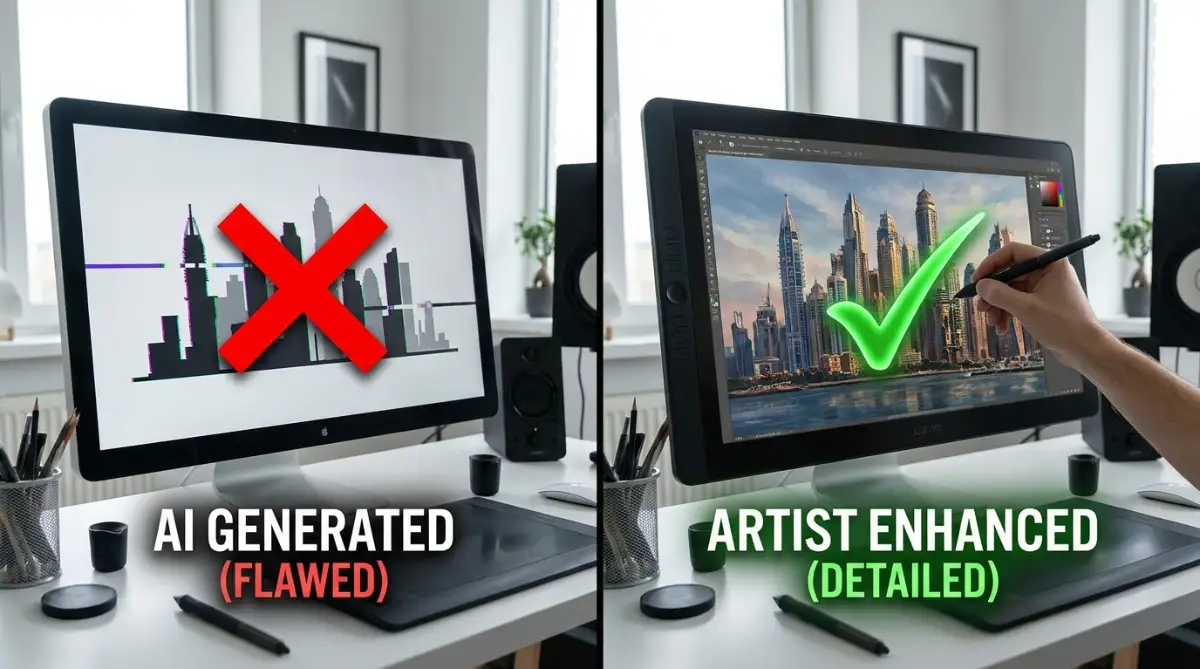
But what if you take that skyline image into Photoshop? You spend five hours manually painting new shadows, adding unique characters you drew yourself, and completely changing the color grading.
Because you applied a massive amount of traditional human effort to change the original image, you have created a brand new "derivative work." The copyright office will likely grant you full protection because your human creativity is the dominant force in the final picture.
I made the mistake of trying to copyright a comic book where every single panel was purely AI-generated, and my application was rejected instantly. My biggest realization was that the government demands to see proof of actual human brushstrokes or heavy editing before they hand over legal protection.
If you are terrified of getting sued for using digital images on your website, you absolutely must watch this expert legal breakdown on how to modify generated art safely.
Navigating the Ethical Minefield of Artist Compensation
Beyond the strict legal rules, we must also talk about the heavy moral ethics of using these tools. The creative community is incredibly angry right now, and their anger is completely justified.
Many popular software models were trained specifically on the names and exact styles of living, working artists. You can literally type "Draw a fantasy landscape in the exact style of Greg Rutkowski," and the machine will perfectly mimic his lifetime of hard work in ten seconds.
The machine can do this because it ingested thousands of his copyrighted paintings without ever paying him a single penny. When you generate an image using his specific name, you are essentially creating a cheap counterfeit that steals potential clients away from the real human artist.
The Ethical Creator Checklist:
If you want to use these powerful tools while maintaining a clean professional conscience, you must establish strict internal rules for yourself.
First, never use the name of a specific, living artist in your generation prompts. Instead of asking for a specific artist's style, describe the actual art style using generic artistic terms.
Use broad words like "impressionist, thick brush strokes, high contrast, vibrant oil painting." This forces the machine to rely on general art history rather than actively cloning a living person's active portfolio.
Quick Look: Safe Prompting Matrix
Second, if you are working on a massive, high-budget commercial project, always try to hire a real human artist first. Use the artificial intelligence tools specifically for brainstorming, storyboarding, or creating quick internal concept mockups.
Once you have a clear idea of what you want, hand those cheap generated mockups to a real human illustrator and pay them to create the final, legally protected masterpiece.
Advanced Legal Protections for Your Business
Now that you understand the basic rules of machine generation and human modification, we have to talk about protecting your actual business operations. Your company relies heavily on distinct visual branding to survive in a highly competitive market.
If you use artificial intelligence to build your logo or design your main product packaging, you are stepping into a legal gray area. According to recent legal guidelines published by the United States Copyright Office, the government will actively reject any copyright application that tries to claim ownership over pure AI-generated material [1].
You must learn to use these established legal frameworks to protect your daily operations from sudden copyright infringement claims. Legal analysts at the American Bar Association (ABA) heavily warn business owners that using unmodified generated images for commercial advertising is incredibly risky [2].
If a competitor realizes your logo is generated, they can legally copy your logo and use it on their own products without paying you a single cent. Many amateur founders trust popular television myths instead of actual legal guides.
Just as relying on television leads to surprising Miranda rights misconceptions from TV dramas when dealing with real-world law, relying on social media rumors leads to massive corporate copyright failures. You cannot treat intellectual property law like a simple, casual suggestion.
Learning how to navigate these legal boundaries takes serious, dedicated attention. Skipping your legal research is as dangerous as practicing costly study habits that secretly sabotage your exam grades before a major college test; it guarantees a painful, expensive failure.
Let us explore the advanced, pro-level secrets you can use to build an unbreakable wall of protection around your company's digital assets today.
The Safe Incorporation Strategy
When you use an artificial intelligence platform, you must read their specific "Terms of Service" document very carefully. Not all software companies offer the exact same licensing rights to their users.
Some platforms strictly forbid you from using their generated images for any commercial purpose, meaning you cannot use them to sell a product. Other platforms grant you a broad commercial license, allowing you to use the images freely in your marketing campaigns.
The Software Rental Analogy:
Think of using an AI platform exactly like renting a car from an agency. Even though you are holding the steering wheel and deciding where the car goes, you do not actually own the vehicle.
The rental agency has a strict contract detailing exactly how fast you can drive and where you are allowed to park. If you violate their rental contract, they will take the keys back immediately and charge you a massive penalty fee.
Your Actionable Strategy:
You must actively track which specific software tool you used to generate every single image in your business portfolio. Create a dedicated spreadsheet that lists the file name, the platform used, and the exact text prompt you typed.
This organized paper trail acts as your ultimate legal defense. If someone ever accuses you of stealing their specific photograph, you can immediately pull up your spreadsheet and prove that the image was generated legally using a licensed software tool.
The "Work Made for Hire" Contract Loophole
If you hire a freelance graphic designer to build your website, you naturally assume that you own all the legal rights to the final artwork. But many freelance designers are now secretly using artificial intelligence to speed up their daily workflow.
If they hand you a logo that was purely generated by a machine, you are paying them for something they do not actually own. This creates a massive legal liability for your company down the road.
Your Actionable Strategy:
You must update every single independent contractor agreement your company uses. Add a strict, highly specific clause regarding artificial intelligence.
State clearly: "The Contractor must disclose any use of generative artificial intelligence tools during the creation of the deliverables. The Contractor guarantees that the final delivered artwork contains sufficient human modification to qualify for full copyright protection under current U.S. law."
This simple contract update shifts the entire legal burden away from your company and places it firmly onto the freelancer's shoulders. It protects your brand identity from becoming a public, unprotected asset.
Silent Legal Traps That Will Destroy Your Business
Even highly intelligent founders make terrible choices when they are trying to launch a marketing campaign quickly on a tight budget. The heavy stress of meeting daily deadlines often makes us ignore basic legal precautions.
If you fall into these incredibly common traps, your legal shield will completely collapse, leaving your personal assets exposed. Let us look at the silent pitfalls you must avoid to keep your business and your family safe.
The "Public Figure" Defamation Disaster
One of the most dangerous things you can do with a generation tool is create fake, highly realistic images of real, living people. You might generate a funny picture of a famous politician or a beloved celebrity endorsing your new coffee brand.
You think it is just a harmless joke that will get a lot of likes on your social media page. This is a massive, highly destructive legal mistake.
Using someone's actual face to sell a product without their written permission is a direct violation of their "Right of Publicity."
If that celebrity's legal team sees your advertisement, they will hit your company with a massive, multi-million dollar lawsuit for defamation and unauthorized commercial use.
Never use the names, faces, or specific likenesses of real human beings in your generation prompts. Stick to generic descriptions like "a smiling young woman drinking coffee" to keep your marketing campaigns completely legally safe.
Uploading Highly Confidential Client Data
When you use a popular text-based artificial intelligence tool to summarize a long document, you have to paste the text directly into their chat window. Many lazy employees copy and paste highly sensitive company financial records, private client emails, and secret software code directly into the public chat box.
This is an absolute disaster waiting to happen. Most free artificial intelligence platforms actively use your chat history to train their future software models.
If you paste your company's secret marketing strategy into the chat box today, the machine might accidentally spit that exact strategy out to your biggest competitor tomorrow.
If you try to bypass security rules or violate platform communication guidelines, you risk causing permanent damage to your career. You must avoid these software errors just as you would avoid the silent DIY solar mistakes that destroy your home insurance payout to protect your wealth and peace of mind.
DO's and DON'Ts For Safe AI Usage:
- DO use generic, broad descriptions when generating artwork for commercial use.
- DO NOT ever paste sensitive client data, passwords, or personal emails into a free generation tool.
- DO explicitly state in your freelance contracts that all delivered work must be legally copyrightable.
- DO NOT try to copyright an image that you did not heavily modify yourself in an editing program.
Common Questions About AI Copyright Rules
Can I legally sell t-shirts with designs I generated using an AI program?
Yes, you can physically sell the t-shirts, but you cannot legally stop someone else from copying your exact design and selling the exact same t-shirts. Because the original generated image has no copyright protection, it essentially belongs to the public domain.
What happens if the AI accidentally generates an image that looks exactly like a copyrighted Disney character?
If you use a generated image that closely resembles a heavily protected trademark, like Mickey Mouse or Batman, you are committing direct trademark infringement. The machine's mistake does not protect you from a massive corporate lawsuit, so always delete those images immediately.
Do I have to tell my clients that I used artificial intelligence to build their website graphics?
While there is no strict federal law demanding transparency yet, it is an incredibly important ethical business practice. Hiding the use of these tools from a paying client destroys professional trust and can easily ruin your long-term freelance reputation.
Your Blueprint for Confident Creative Growth
Navigating the complicated legal language of artificial intelligence does not have to be an overwhelming or terrifying experience. You now hold the exact same strategic knowledge that professional intellectual property attorneys use to protect massive creative agencies.
By taking a few short hours to update your freelance contracts, audit your prompts, and protect your sensitive data, you completely remove the heavy fear of getting sued. You are no longer crossing your fingers and hoping a massive corporation does not notice your marketing campaign.
Instead, you are confidently commanding your own digital assets behind an impenetrable, organized legal fortress. This simple shift in your mental approach gives you incredible power over your entire creative future.
My personal design business grew exponentially the day I finally stopped panicking about the legal rules and actually updated my client contracts to reflect the new technology. Stop letting confusing internet rumors hold your creativity hostage; read your software terms of service right now and start building your brand safely.
Disclaimer: The information provided in this article is for educational and general informational purposes only and does not constitute formal legal, financial, or intellectual property advice. Copyright law and artificial intelligence regulations are rapidly evolving and vary heavily by country, state, and specific judicial rulings. Always consult with a licensed intellectual property attorney or a certified business lawyer regarding the exact legal protections, copyright applications, and commercial use requirements of your personal digital assets.