
Opening an official letter from the IRS demanding a complete audit of my crypto portfolio was one of the most terrifying moments of my life. I used to think my decentralized wallets were totally invisible, so I carelessly swapped tokens for years without tracking a single thing. When the government finally caught up with me, I realized that avoiding crypto taxes isn't just illegal—it's a massive financial trap waiting to snap shut. Let's look at exactly how the tax system tracks your digital assets, and how you can clean up your messy history before you get that dreaded envelope in the mail.

Your 4-Step Crypto Tax Survival Plan:
- Decentralized wallets are not anonymous; the IRS uses advanced blockchain analytics to trace transactions from your KYC exchanges straight to your private wallets.
- Every single crypto-to-crypto swap (like trading ETH for an altcoin) is a taxable event, even if you never cashed out to USD.
- If you transfer crypto between exchanges and lose your original cost basis data, the IRS will assume your cost basis is $0 and tax you on your entire portfolio balance.
- Airdrops and staking rewards are taxed as ordinary income based on their exact value on the day you receive them, regardless of whether the price crashes later.
The False Safety of On-Chain Anonymity
The biggest misunderstanding in the entire cryptocurrency space is the belief that decentralized wallets are completely invisible to tax authorities. Many people think that because they do not have their real name attached to their MetaMask or Trust Wallet, their transactions cannot be tracked.
This is a highly dangerous assumption that gets people into trouble. The blockchain is not an anonymous void; it is a permanent, public, and completely unchangeable ledger.
Every single swap, transfer, and staking reward is recorded in plain sight for the entire world to see. Tax authorities now use incredibly advanced blockchain analytics software to map the flow of digital assets.
They can easily trace a transaction from a regulated exchange where you did complete your identity check (KYC) straight to your private, decentralized wallet. Once they connect your real identity to that wallet address, they have a complete map of your entire financial history.
Debunking the "Crypto-to-Crypto" Tax Myth
Many investors believe that taxes are only triggered when they physically sell their digital assets for US dollars. They think that swapping one token for another is a completely tax-free event.
This is the most common mistake that triggers massive IRS audits. In the eyes of the law, every single swap is actually treated as two separate financial events.
First, you are legally selling your original token for its current fair market value in cash. Second, you are immediately using that cash to purchase the new token.
If your original token grew in value since you first acquired it, that swap triggers a taxable capital gain. If you made hundreds of small swaps throughout the year, you have hundreds of taxable events that you must report.
My Quick "Is This Taxable?" Checklist 🧾
If you did any of the following this year, you officially created a taxable event that must be reported:
- Swapped Ethereum for a smaller altcoin on Uniswap (Yes, even if you never cashed out to a bank).
- Bought an NFT using crypto.
- Received an unexpected Airdrop in your wallet.
- Sold any coin for USD or transferred it to your checking account.
- Non-Taxable Exception: Moving crypto from your Coinbase account to your Ledger hardware wallet (Transferring between your own accounts is safe!).
Comparison of Common Crypto Actions: Taxable vs. Non-Taxable
The Nightmare of Missing Cost Basis
When you transfer your digital assets from one exchange to another, the cost basis data often gets completely lost in transit. The new exchange has absolutely no idea how much money you originally paid to acquire those tokens.
When you eventually sell those tokens, the exchange will report the transaction to the tax authorities with a cost basis of zero. This is a massive, highly expensive trap.
If the government assumes your cost basis is zero, they will try to tax you on the entire sales price of your assets. You will end up paying a massive tax bill on money you never actually made.
To fix this, you must keep a meticulous record of every single transaction from the very first day you entered the market. You cannot rely on the exchanges to keep these records for you, as they frequently close down or delete old data.

Pro Tip: I used to think that because I lost money overall, I did not need to report my trades. My biggest realization came when I realized the IRS only saw my sales and assumed my cost basis was zero, resulting in a terrifying tax bill for profits I never actually made. I immediately started using dedicated crypto tax software to automatically pull my transaction histories and calculate my true cost basis using the FIFO method.
The Hidden Trap of Staking and DeFi Rewards
Participating in decentralized finance (DeFi) and staking your tokens to earn yield feels like an incredible way to grow your wealth passively. But the tax treatment of these rewards is highly aggressive.
The moment a staking reward or an interest payment lands in your wallet, it is treated as regular income. You are legally required to report the fair market value of those tokens on the exact day you received them.
It does not matter if the token price crashes ninety percent the next week. You are still fully taxed on the high value it had on the day of receipt.
If you do not set aside cash to cover these income taxes, you can easily end up owing more money to the government than your entire remaining portfolio is actually worth. You must actively track these micro-rewards throughout the year to avoid a massive surprise at tax time.
Do you want to know exactly how the IRS matches your exchange data with your personal tax return? Watch this highly revealing video of a certified public accountant explaining the hidden red flags:
The Danger of Ignoring Hard Forks and Airdrops
Airdrops and hard forks feel like free money dropping out of the sky directly into your digital wallet. You wake up, check your address on a blockchain explorer, and see a new token sitting there waiting for you.
But just like staking rewards, the government treats airdrops as immediate taxable income. You must report the value of those tokens the exact moment you gain physical control over them.
If you do not report these sudden additions to your wealth, the blockchain analytics software will eventually flag your wallet. The government will see a massive asset suddenly appearing in your possession without any clear origin.
This unexpected growth is a primary trigger for a manual audit. You must treat every single on-chain event with extreme seriousness, keeping your records perfectly updated to protect your financial freedom.
Pro Tip: How to Actually Price an Airdrop 🪂
When you wake up and find 1,000 free tokens airdropped into your wallet, how much do you owe the IRS? The rule is surprisingly strict: You owe income tax based on the fair market value of the token at the exact moment you gained control of it. If the token was worth $5 on Tuesday when you claimed it, but crashed to $1 on Friday, you still owe income tax on the $5 value! If you get a massive airdrop, cash out at least 30% immediately to cover your future tax bill.
The Power of Automated Tracking Tools
Trying to calculate your crypto taxes manually using a standard spreadsheet is practically impossible if you make more than ten trades a year. You will quickly get completely overwhelmed by the complex math of cost basis tracking.
You must invest in a high-quality, dedicated crypto tax software tool. These programs connect directly to your exchange accounts and your public wallet addresses using read-only API keys.
They automatically pull your entire transaction history, match your transfers, and calculate your exact capital gains and losses in seconds. It is a simple, highly affordable tool that completely removes the heavy stress of tax preparation.
By having your records organized and ready, you build an unbreakable wall of protection around your portfolio. You can confidently hit the submit button on your tax return, knowing you have reported everything perfectly.
Next-Level Tax Strategies: How Experts Navigate the Crypto Tax Matrix
When you want to protect your portfolio from aggressive audits, standard tax preparation is not enough. You need to understand the advanced methods that high-net-worth investors use to legally minimize their tax obligations. These techniques are completely legal, but they require a deep understanding of tax regulations and meticulous record-keeping. By using these pro-level secrets, you can transform your annual tax filing from a stressful nightmare into a highly organized wealth-building session.
The Power of Specific Identification (SpecID) Methods
Most amateur investors default to the First-In, First-Out (FIFO) method because it is the easiest to calculate. Under FIFO, the first tokens you purchased are assumed to be the first ones you sell. However, in a volatile market, this method can easily result in you paying the highest possible tax rate on your gains.
Instead, you can use the Highest-In, First-Out (HIFO) method to identify specific tokens for every transaction. This allows you to claim that you sold the tokens you purchased at the highest price, which instantly minimizes your reported capital gains.
To use this advanced technique legally, you must have highly detailed records that show the exact acquisition date, time, and cost basis of every single token. Keeping messy or incomplete records is just as risky as making dangerous password management mistakes that leave your digital identity exposed. Both habits invite unnecessary, costly risks into your digital life.
Leveraging Tax-Loss Harvesting and the Wash-Sale Loophole
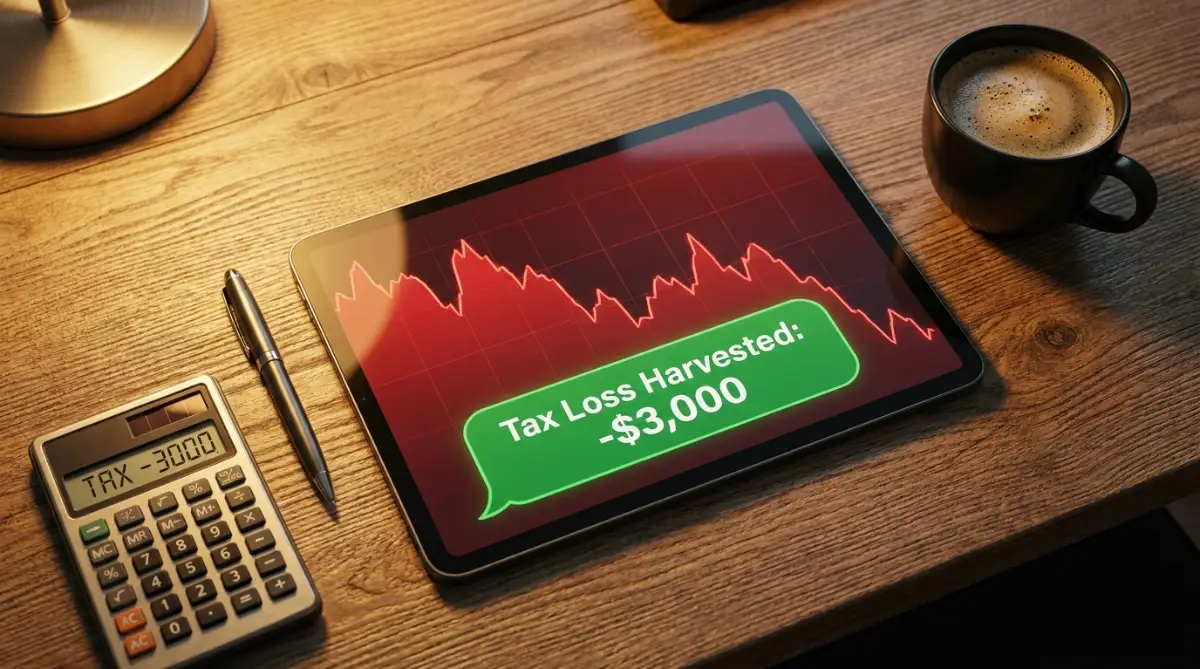
One of the most powerful wealth-building secrets in the crypto world is tax-loss harvesting. This strategy allows you to sell your declining digital assets at a loss to offset your capital gains from other successful trades. You can even use these losses to offset up to three thousand dollars of your ordinary income.
In the traditional stock market, there is a strict "wash-sale" rule that prevents you from selling a stock for a loss and buying it right back within thirty days. However, under current tax guidelines, cryptocurrency is often treated differently, meaning the wash-sale rule does not always apply to digital assets.
You can theoretically sell your declining tokens to lock in the tax loss, and immediately buy them right back to maintain your portfolio position. Before implementing this strategy, you must verify the latest updates to the official IRS Virtual Currency Guidance. Tax regulations are constantly evolving, and staying updated is the only way to avoid audit flags.
Organizing Your Decentralized Finance (DeFi) Records
Tracking your transactions across multiple decentralized networks can quickly become an absolute logistical nightmare. Every single gas fee, liquidity pool deposit, and yield farming reward must be categorized perfectly.
You cannot afford to let years of on-chain transactions pile up without proper organization. Use dedicated crypto tax software to automatically sync your public wallet addresses and label your transactions weekly. This simple habit keeps your data perfectly organized, ensuring you are always ready if the government requests an audit.

Silent Pitfalls That Will Turn Your Tax Season Into a Nightmare
Even when people genuinely try to file their taxes honestly, they often fall into hidden traps that cause immediate audits. The tax authorities are highly aware of the common tricks people use to avoid reporting their gains.
If you do not recognize these subtle mistakes, your tax return will eventually flag the automated scanning software. Let's look closely at the dangerous, everyday errors that quietly ruin the financial safety of crypto investors.
The Peer-to-Peer (P2P) Tracking Illusion
Many traders believe that by avoiding centralized exchanges and trading only through peer-to-peer platforms, they are completely safe from government tracking. They think that because they did not complete an identity check (KYC), their transactions are invisible.
This is a massive, highly expensive misunderstanding of how tax authorities operate. While the exchange might not have your name, your bank account certainly does.
If you receive a sudden, massive bank transfer from a peer-to-peer buyer, your bank is legally required to report the unusual activity to the government. When the tax authorities see large sums of cash entering your bank account without any clear origin, they will immediately launch a manual audit. According to detailed blockchain analysis from the Chainalysis database tracking system, every single on-chain transaction eventually connects to a real-world bank account.
Ignoring Micro-Transactions and Gas Fees
When you are actively swapping tokens on decentralized networks, you pay a small transaction fee, commonly known as gas, on every single trade. Most people completely ignore these micro-transactions because they only cost a few cents or dollars each.
But over a single year of active trading, those tiny fees can easily add up to thousands of dollars in total expenses. These gas fees are actually considered a part of your transaction cost, meaning they should be used to reduce your capital gains.
If you fail to track these micro-expenses, you are voluntarily paying a much higher tax bill than you actually owe. This is exactly how people lose money on small, overlooked habits that quietly destroy your smartphone battery lifespan. You must pay close attention to the small details to protect your long-term wealth.
The Exchange Bankruptcy Trap
With the sudden, catastrophic failures of several massive cryptocurrency exchanges, many investors have lost full access to their accounts. They assume that since the exchange is dead and their funds are locked, they do not have to report anything.
This is a highly dangerous trap. The IRS still expects you to report your capital gains from the active months before the exchange crashed.
Even worse, if the exchange website is completely shut down, you can no longer download your transaction history. If you are audited, you will have absolutely no way to prove your cost basis, and the government will try to tax your total sales at a hundred percent.
Blindly Trusting Automated Software Without Verification
Crypto tax software is an incredible tool, but it is not a magic solution that requires zero human supervision. Sometimes, the software will completely misinterpret a transfer between your own personal wallets as a taxable sale.
If you blindly accept the software's automated tax report without double-checking the numbers, you will end up sending an extremely inaccurate return to the government. This inaccurate return will instantly trigger an audit flag.
Relying entirely on automation without manual verification is exactly like making silent freelance profile mistakes that keep you from getting your first client. You must take the time to review your transaction history manually, ensuring every single transfer is labeled correctly.
Your Roadmap to Absolute Peace of Mind
Managing your cryptocurrency taxes does not have to be a scary or overwhelming experience. You do not need to be a certified public accountant to keep your portfolio perfectly safe from audits.
By taking a few simple, proactive steps today, you can completely remove the fear of the unknown. Let's look at your exact action plan to secure your financial freedom.
Action Plan for Tomorrow Morning
Do not wait until the night before the tax deadline to start organizing your files. Procrastination is the absolute biggest cause of audit-triggering mistakes.
Your very first step tomorrow should be creating a dedicated folder on your computer specifically for your tax documents. Download every single transaction history from every exchange you have ever used.
If you have been making bad choices with your morning routine, like checking social media instead of organizing your files, you need to change those habits. Avoiding dangerous morning routine mistakes that secretly destroy your daily productivity is the only way to build a highly successful, organized financial life.
Your Weekly Maintenance Routine
To keep your records clean, you must treat your tax tracking exactly like a weekly chore. Spend just fifteen minutes every Sunday opening your tax software and labeling any untracked transactions.
- Match your transfers between your personal wallets.
- Categorize your staking rewards as income.
- Update the cost basis for any off-chain purchases.
If you maintain this simple weekly routine, tax season will become a completely stress-free experience. You will never have to spend hours frantically searching for old transaction data.
I spent nearly three months in a state of constant panic when I received my first audit notice, convinced I was going to lose my entire portfolio. But once I sat down, organized my cost basis, and started tracking my transactions weekly, the heavy stress completely disappeared. I promise you, if you take control of your records today, you will face the next tax season with absolute confidence and peace of mind.
Frequently Asked Questions About Crypto Taxes and Audits
Can the IRS track my transactions if I only trade on decentralized exchanges (DEXs)?
Yes, absolutely. While decentralized exchanges do not require you to complete an identity check (KYC), all your trades are recorded permanently on the public blockchain. Tax authorities use advanced analytics tools to track the flow of funds from your KYC-verified accounts straight to your decentralized wallet address.
What happens if I completely forget to report my cryptocurrency transactions?
If you fail to report your crypto transactions, the IRS can hit you with massive financial penalties, interest on the unpaid taxes, and potentially even criminal charges for tax evasion. According to historical research from the Tax Foundation, the government has drastically increased its budget specifically for tracking and auditing digital asset transactions.
Can I offset my regular job income with my cryptocurrency losses?
Yes, if your net capital losses exceed your capital gains for the year, you can legally use up to three thousand dollars of those losses to offset your ordinary income. Any remaining losses can be carried forward to future years to offset future gains.
Why does my exchange reported tax form look completely different from my actual profits?
Most exchanges issue standard forms that only report your total sales, completely ignoring how much money you originally paid to acquire those assets. If you do not manually calculate your true cost basis using your own records, the government will assume your cost basis was zero and try to tax you on the entire sales price.
Is it safe to use a cryptocurrency tax software program?
Yes, using a reputable crypto tax software program is highly recommended because it automatically calculates your cost basis across multiple platforms. Just ensure you connect the software using read-only API keys, which allows the program to read your transaction history without having the power to actually move your funds.
How long should I keep my physical cryptocurrency transaction records?
You should legally keep all your transaction histories, wallet addresses, and cost basis records for a minimum of three years from the date you filed your tax return. However, because crypto audits can sometimes look back even further, keeping digital backups permanently is the safest strategy.
Disclaimer: The information provided in this article is for educational and general informational purposes only and does not constitute professional tax, financial, or legal advice. Cryptocurrency tax regulations are highly complex and vary significantly depending on your country, state, and specific financial situation. Always consult with a certified public accountant (CPA) or a licensed tax attorney before filing your cryptocurrency tax returns.