I used to panic every morning when I noticed my phone's battery dropping by twenty percent before I even finished my coffee. I spent months constantly looking for wall outlets and worrying about expensive replacement bills. It took a lot of frustration to realize that my own nightly habits were slowly cooking my battery from the inside out. Let me show you how to easily fix your charging routine so your phone stays alive much longer without the daily stress.
My 60-Second Battery Protection Guide
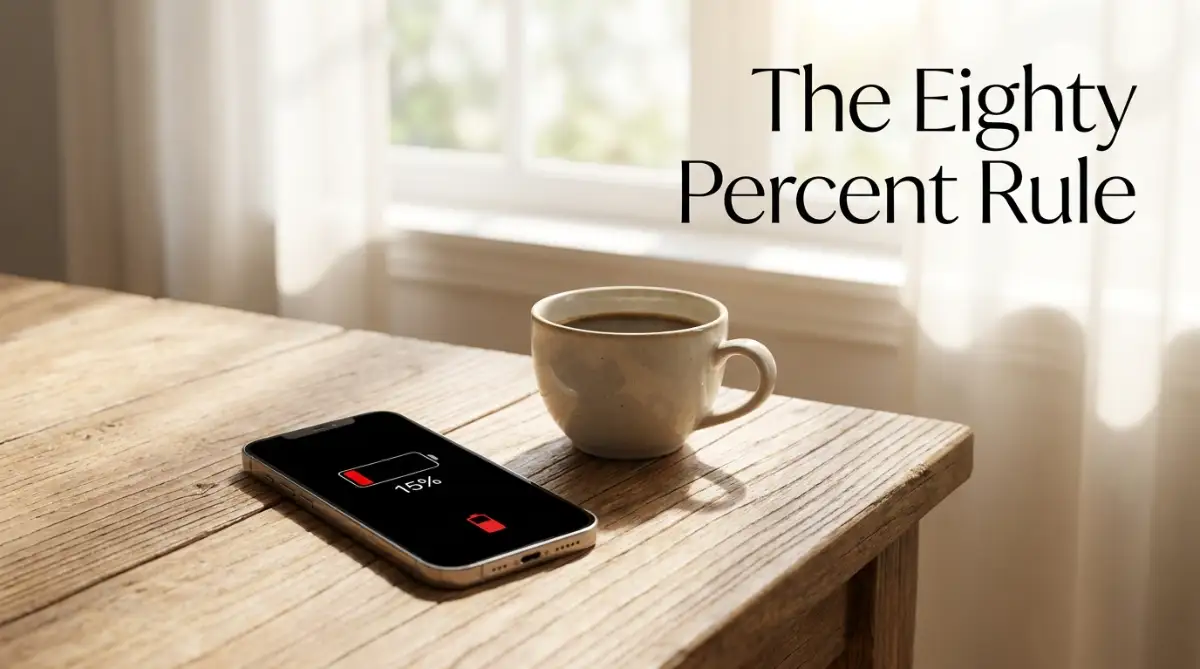
- Stop charging to 100%. Turn on your phone's built-in 80% charging limit to reduce chemical strain.
- Never charge your phone under a pillow or heavy blanket; keep it on a hard, flat surface so heat can escape.
- Avoid playing intense mobile games while plugged into a fast charger to prevent extreme heat buildup.
- Ditch cheap, uncertified five-dollar cables and always use certified, high-quality chargers.
Decoding the Chemical Stress in Your Battery
Before you plug your phone into the wall tonight, you must understand how a lithium-ion battery actually stores energy. Your phone's battery is not a simple container that you can fill to the top like a water bottle.
It is a highly sensitive chemical ecosystem that runs on strict biological and physical rules. When you charge your phone, you are physically forcing lithium ions to move from one side of the battery cell to the other under intense electrical pressure.
If you leave the battery in a state of extreme pressure for too long, the internal chemicals begin to break down permanently. This chemical breakdown slowly reduces the total amount of energy your battery can hold in the future.
Let us look at the four most common, highly expensive charging mistakes that are actively threatening your phone's battery life right now.
The Danger of the "Always at 100%" Mentality
The single biggest mistake new phone owners make is plugging their device in every single night and letting it charge to a full one hundred percent. This is a very natural habit because we want to wake up with a full battery to survive the day.
However, leaving your phone sitting at a full one hundred percent charge is like putting your battery under a constant state of extreme high blood pressure. Your internal chemical structures are stretched to their absolute physical limit during this time.
Let us use a simple balloon analogy to understand this.
If you blow a rubber balloon up to its maximum capacity and immediately let the air out, the rubber snaps back to its original shape. But if you blow that balloon up to its absolute maximum limit and leave it sitting on a shelf for three weeks, the rubber permanently stretches out and loses all of its natural elasticity.
Your battery's internal chemistry behaves in this exact same logical way. Keeping your battery at a high charge level permanently degrades the materials, reducing its ability to store energy.
Your Actionable Strategy:
You must stop charging your phone to one hundred percent every single day. Open your phone's battery settings menu tonight and locate the battery health protection options.
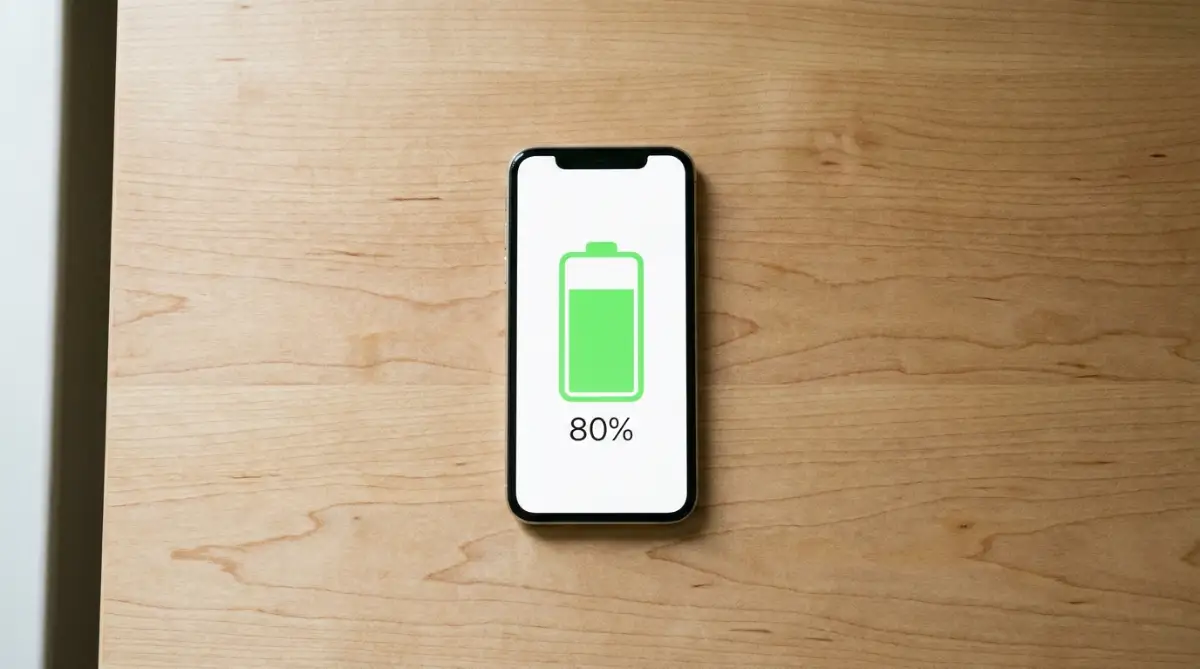
Many modern smartphones have a built-in feature that automatically stops charging once the battery reaches exactly eighty percent. Operating within the twenty-to-eighty percent window keeps the internal chemical pressure extremely low, ensuring your battery cells stay healthy and young.
The 80/20 Sweet Spot Rule:
- Charge up to 80%: Going past this puts extreme voltage stress on the battery chemicals.
- Stop draining below 20%: Letting it dip lower starves the cells, causing them to degrade much faster.
- My Daily Habit: I set my phone to stop charging at 80% automatically. It practically doubled my battery's lifespan.
My absolute biggest mistake early on was keeping my phone plugged into the charger on my nightstand all night long because I wanted to wake up with a full charge. I did not realize that leaving the battery sitting at one hundred percent was keeping the internal chemicals under constant, damaging pressure. The very second I enabled the built-in eighty percent charging limit and stopped leaving it plugged in overnight, my battery's daily capacity stabilized almost instantly.
The Silent Heat Trap of Fast Charging
We all love the incredible convenience of modern fast chargers. Being able to plug your phone in and gain a fifty percent charge in just fifteen minutes feels like absolute magic.
But this rapid speed comes with a very heavy physical tax that your battery has to pay in the background. That tax is extreme, concentrated heat.
When you push a massive amount of electrical current into your battery pack so quickly, it generates intense thermal energy. Think of this process like trying to pour water through a very narrow funnel.
The Funnel Analogy of Fast Charging:
If you gently trickle water into a funnel, it flows smoothly and safely into the bottle below. But if you try to dump an entire bucket of water into that small funnel in five seconds, the water will violently overflow and spill all over the floor.
Fast charging is that giant bucket of water, and the intense heat generated by the fast flow slowly cooks your battery cells from the inside out. Overusing ultra-fast chargers will degrade your battery's lifespan twice as fast as using a standard slow charger.
Pro Tip / Expert Insight:
Always avoid using fast chargers when your phone is already warm, such as right after playing a graphically intense mobile game. The high ambient temperature combined with the extreme heat of the rapid charge creates a thermal environment that severely damages the battery. Use slow, overnight charging for your daily needs, and save fast chargers for actual emergencies.
Letting Your Battery Drop to Absolute Zero
While holding too much charge is dangerous, letting your battery drop to an absolute zero percent is equally catastrophic. When your battery level drops below ten percent, the internal chemical structures start to starve.
If a lithium-ion battery sits at zero percent for more than a few days, some of its internal cells will physically collapse and lose their ability to hold any electrical charge ever again. This can permanently kill several minutes of your daily battery life in a single weekend.
Your Actionable Strategy:
You must treat your twenty percent battery level as your absolute emergency limit. Never let your phone sit parked on your nightstand overnight with a dead battery.
If you get home with a low battery, plug your phone into your charger immediately to bring it back up to a safe level. This simple habit keeps your battery's internal chemistry stable and prevents permanent cell death.
The Thermal Blanketing Hazard of Bedside Charging
Many people have a highly comfortable habit of charging their phone on their bed or directly under their pillow while they sleep. They want their phone close to their hands so they can easily hear their morning alarm.
This is an incredibly dangerous habit that causes immediate, severe thermal damage to your device. When a phone is charging, the internal battery and charging circuits naturally generate a significant amount of heat.
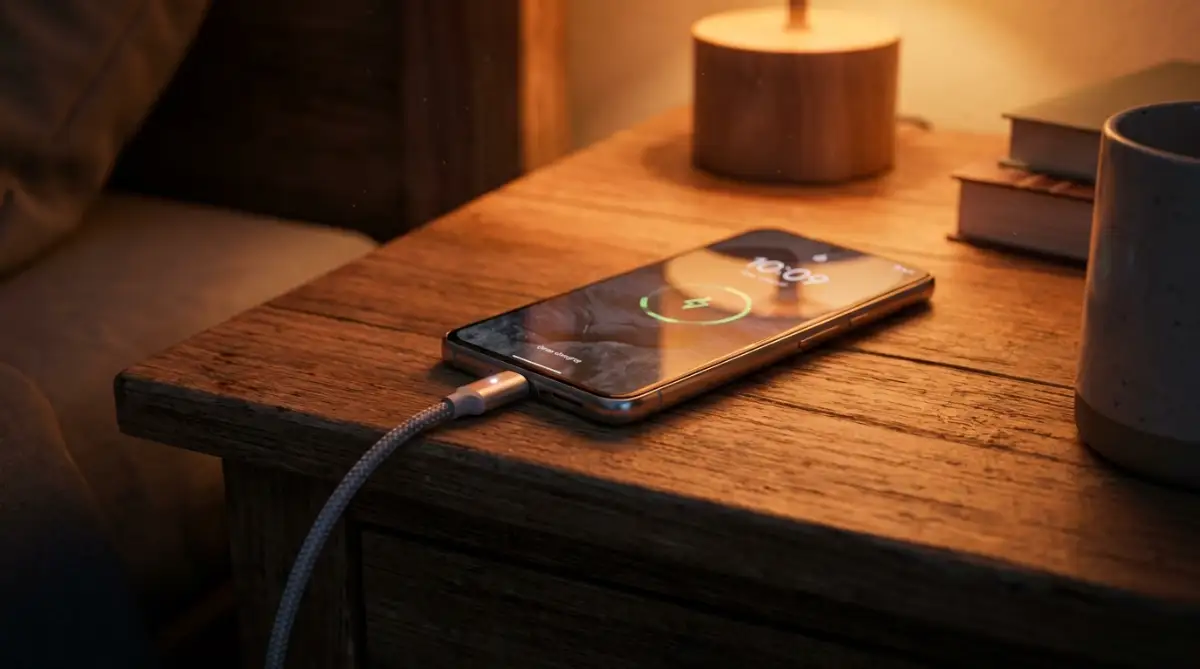
If your phone is lying on a hard wooden desk, that heat can easily escape into the surrounding air, keeping the device cool. But if your phone is buried under a heavy blanket or a soft pillow, the heat gets completely trapped.
The Thermal Blanket Effect:
The soft fabric acts as a highly effective thermal insulator, forcing the heat back into the phone and raising the battery temperature to dangerous levels. This extreme heat can cause the battery to swell, ruin the internal electronics, and even start a house fire.
Your Actionable Strategy:
Always charge your phone on a hard, flat, non-flammable surface, such as a wooden desk or a ceramic countertop. This allows the heat to dissipate safely into the surrounding air, keeping your battery cool and safe.
Never cover your phone with anything while it is connected to a power outlet. Keeping your device cool during the charging cycle is one of the most effective ways to preserve its battery health.
Advanced Secrets for Pro-Level Battery Maintenance
Once you understand the basic differences between standard overnight charging and modern fast charging blocks, we must look much deeper into your device's operational safety. Your smartphone battery is not a place to store power passively; it is a highly active engine that dictates your phone's long-term survival.
According to consumer safety alerts from the U.S. Consumer Product Safety Commission (CPSC), battery failures caused by uncertified charging equipment are a major source of preventable electronic fires [1]. You must learn to use these established safety frameworks to protect your family from sudden home hazards.
Technical guidelines shared by the lithium-ion research teams at Argonne National Laboratory (ANL) reveal that simple, regular temperature management can prevent up to eighty percent of all unexpected battery degradation. Knowing how to monitor your device's internal heat is highly important before you plug it into any wall outlet.
Many amateur phone owners trust popular television myths instead of actual hardware guides. Just as relying on television leads to surprising Miranda rights misconceptions from TV dramas when dealing with real-world law, relying on simple default charging habits leads to massive, sudden hardware failures.
If you try to bypass safety rules by charging your device in unsafe environments, you risk causing massive permanent damage. You must avoid these charging errors just as you would avoid the silent DIY solar mistakes that destroy your home insurance payout to protect your wealth and peace of mind.
Let us explore the advanced, pro-level secrets you can use to build an unbreakable wall of protection around your smartphone's battery life today.
The Secret to Optimizing Your Daily Charging Cycles
To keep your lithium-ion battery healthy for years, you must understand how to manage your daily charging cycles strategically. The standard practice of letting your phone drain to zero and then charging it to one hundred percent is highly stressful for the internal battery chemistry.
Instead, you should keep your battery level sitting comfortably between twenty percent and eighty percent as much as possible. This specific window is where the lithium ions can move back and forth with the absolute lowest amount of physical resistance.
The Professional Athlete Analogy:
Think of your phone's battery exactly like a professional marathon runner. An athlete does not run at one hundred percent maximum speed all day long, nor do they starve themselves to zero percent energy before eating.
They operate within a healthy, comfortable aerobic zone that allows them to run safely for hours without injuring their muscles. Your phone's battery behaves in this exact same biological way.
By keeping the charge level within this sweet spot, you drastically reduce the physical strain on the internal anode and cathode. This simple, daily habit will easily double the total lifespan of your device's battery, saving you from expensive replacement bills.
Disabling Background Activity to Prevent Thermal Runaway
Many people do not realize that the apps running silently in the background of their phone are generating constant, hidden heat. When you have fifty different apps constantly refreshing their data, syncing files, and tracking your location, your phone's processor has to work extremely hard.
This heavy processing load generates a significant amount of internal heat, even when your phone is sitting idle in your pocket. When you connect a warm phone to a charger, the heat from the charging cycle combines with the heat from the background apps to create a dangerous thermal environment.
This combined heat slowly cooks the delicate chemical structures inside your battery, causing rapid, permanent capacity loss.
Your Actionable Strategy:
Open your phone's settings menu tonight and navigate to the background app refresh section. Turn off this feature for any non-essential apps, such as shopping portals, travel platforms, and games.
Only allow background activity for important communication apps like email and messaging. This simple software adjustment reduces your processor load, keeps your phone running significantly cooler during the day, and protects your battery from unnecessary thermal stress.

Silent Hardware Traps That Will Destroy Your Phone
Before you connect your phone to a charger tonight, watch this highly helpful video that shows you the exact charging mistakes that silently destroy your battery life. It breaks down the most dangerous habits in a simple, visual way, so check it out and then read the guide below!
Even highly intelligent people make terrible choices when they are trying to maintain their own devices on a tight budget. The heavy stress of daily expenses often makes us buy cheap, uncertified accessories or use dangerous charging habits.
If you fall into these common traps, your phone's battery will eventually experience a sudden, catastrophic failure. This frustrating cycle can easily ruin your weekend and destroy your personal finances.
Here is exactly what you must avoid to keep your family safe and your device running smoothly.
Using Cheap, Uncertified Third-Party Cables
One of the most dangerous mistakes you can make is buying cheap, five-dollar charging cables from gas stations or unverified online stores. These cheap cables are manufactured using thin copper wires and low-quality plastic covers.
More importantly, they lack the highly important smart chips designed to regulate the flow of electricity. A certified, high-quality cable contains a tiny microchip that communicates directly with your phone's battery to stop the flow of current once the battery is full.
A cheap, uncertified cable will continue to push high-voltage electricity into your phone even after the battery is completely full. This constant overcharging generates extreme heat and causes the battery cells to swell up and eventually explode.
Always look for the official "MFi" (Made for iPhone) certification or verified USB-IF certifications on the packaging before buying any charging accessories.
Playing Intensive Mobile Games While Connected to a Fast Charger
Many gamers have a highly comfortable habit of plugging their phone into a fast charger and playing graphically intense mobile games at the exact same time. They want to play for hours without worrying about their battery percentage dropping.
This is a massive, highly destructive mistake known as thermal stacking. When you play a complex game, your phone's graphics processor generates an incredible amount of heat.
At the exact same time, the fast charger is pushing a massive amount of electrical current into the battery, generating even more thermal energy. These two heat sources combine to create a thermal environment that can easily reach over one hundred and ten degrees Fahrenheit.
This extreme heat will instantly degrade your battery cells, and it can even cause your phone to shut down automatically to prevent a catastrophic battery fire.
Always disconnect your phone from the charger before playing any games or using heavy applications. Let your phone charge in peace, and only use it once the cable is disconnected.
Myth vs. Fact: Fast Charging
- The Myth: Fast chargers are bad and will instantly ruin your phone.
- The Fact: Modern phones are smart enough to manage the speed. However, the real danger is the heat. If your phone gets hot while charging, that is when the permanent damage happens.
Your Battery-Saving Checklist For Tomorrow
Managing your smartphone's battery health does not have to be a scary, mysterious, or overwhelming experience. You now hold the exact same technical knowledge that professional electronics engineers use to design these modern devices.
By taking a few short minutes to optimize your charging cycles, disable background apps, and use certified cables, you completely remove the fear of sudden battery failure. You are no longer crossing your fingers and hoping your phone survives the day.
Instead, you are confidently directing your own device's health and protecting your personal safety. This simple change in your weekly routine gives you incredible power over your entire technology future.
Your Battery Protection Checklist:
- Turn on Battery Protection: Check your phone's settings tonight and enable the eighty percent charging limit feature.
- Audit Your Apps: Disable background app refresh for any non-essential games or shopping platforms.
- Throw Away Cheap Cables: Inspect your charging cords and throw away any uncertified, damaged, or cheap wires immediately.
- Stop Bedside Charging: Charge your phone on a hard, flat, non-flammable surface, never on your bed or under your pillow.
Your smartphone is a massive financial investment that keeps you connected, informed, and safe every single day. Do not let basic procrastination or bad charging habits force you into making incredibly expensive repair mistakes.
Read your device's battery health menu weekly, manage your thermal environments carefully, and take complete, fearless control of your phone's safety starting right now.
Looking back, learning to manage my phone's temperature and charging habits did not just save my battery—it completely removed my daily low-battery anxiety. You do not need to be a hardware engineer to protect your expensive device from failing, so please do not feel overwhelmed by the rules. Throw away those cheap cables tonight, set your charging limit, and take complete control of your phone's lifespan today!
Common Questions About Smartphone Battery Health and Charging
Why does charging my smartphone to 100% every night damage the battery?
Leaving your phone plugged in overnight at 100% keeps the internal chemical structures stretched to their absolute physical limit under constant electrical pressure. Enabling a built-in eighty percent charging limit keeps the battery cells healthy and young by avoiding this extreme high-pressure state.
Is it safe to charge my smartphone while it is buried under a pillow or blanket?
Charging your phone under a soft pillow or heavy blanket creates a dangerous thermal insulating effect that traps heat and raises the battery temperature to unsafe levels. You should always charge your device on a hard, flat, non-flammable surface like a wooden desk so heat can dissipate safely.
Why does using cheap uncertified third-party charging cables ruin my phone?
Cheap, uncertified cables lack the important smart microchips required to regulate electricity flow and stop charging once the battery is full. This causes continuous high-voltage overcharging, generating extreme heat that can swell the battery cells or even cause an explosion.
How does playing intensive mobile games while fast charging affect my device?
Playing heavy games while fast charging causes thermal stacking, where heat from the processor combines with heat from the fast charging cycle to create extreme temperatures. This combined heat quickly degrades your battery cells and forces the phone to shut down automatically to prevent fire risks.
What is background app refresh and how does it drain my battery?
Background app refresh allows dozens of apps to silently sync files and track your location while your phone sits idle in your pocket, generating hidden heat and processor strain. Turning off this feature for non-essential apps keeps your phone significantly cooler during the day and protects your battery health.
Disclaimer: The information provided in this article is for educational and general informational purposes only and does not constitute professional technical, hardware repair, or electronic safety advice. Smartphone models, operating systems, and battery requirements vary heavily by manufacturer, brand, and device type. Always consult with a certified electronics technician or refer directly to your device's official user guide regarding the exact specifications, charging capacities, and safety requirements of your personal smartphone.