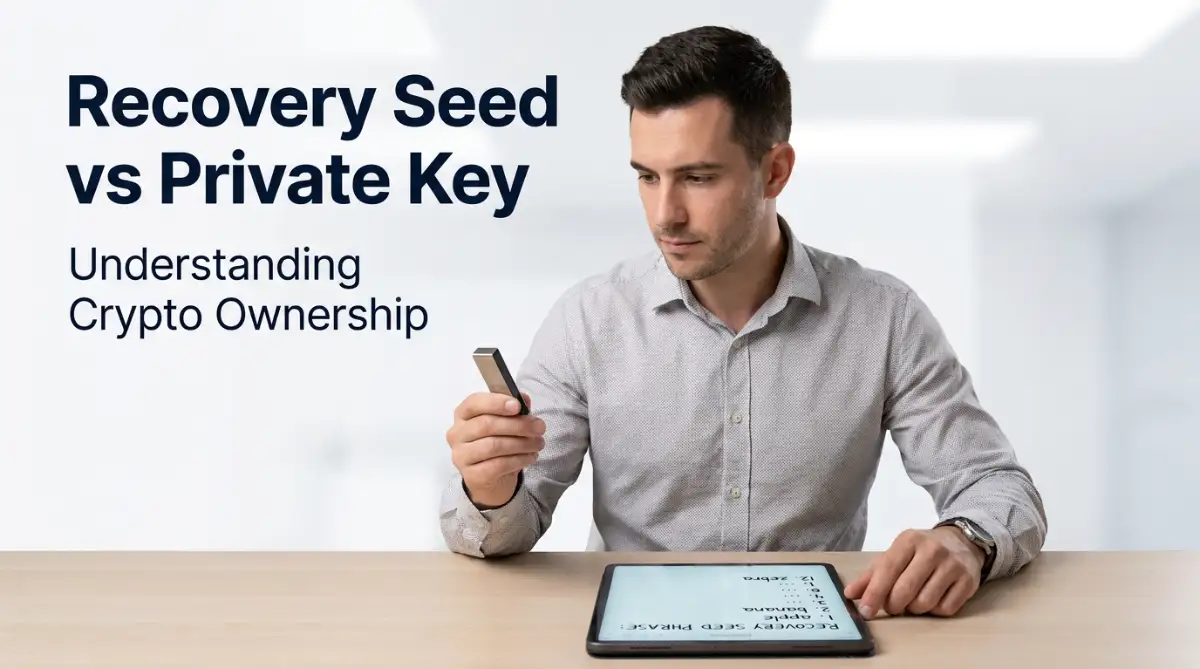
The Hidden Anxiety of Misunderstanding Modern Money
Trying to understand crypto and digital money usually feels like trying to read an alien language. You sit there while friends throw around words like 'blockchain' and 'nodes,' secretly hoping nobody asks for your opinion. I used to dodge these conversations completely because the tech jargon was so overwhelming. But once you strip away the confusing computer terms, this system is actually incredibly simple. Let's break down exactly how digital ledgers work using everyday examples you already understand, so you never feel left out of the conversation again.
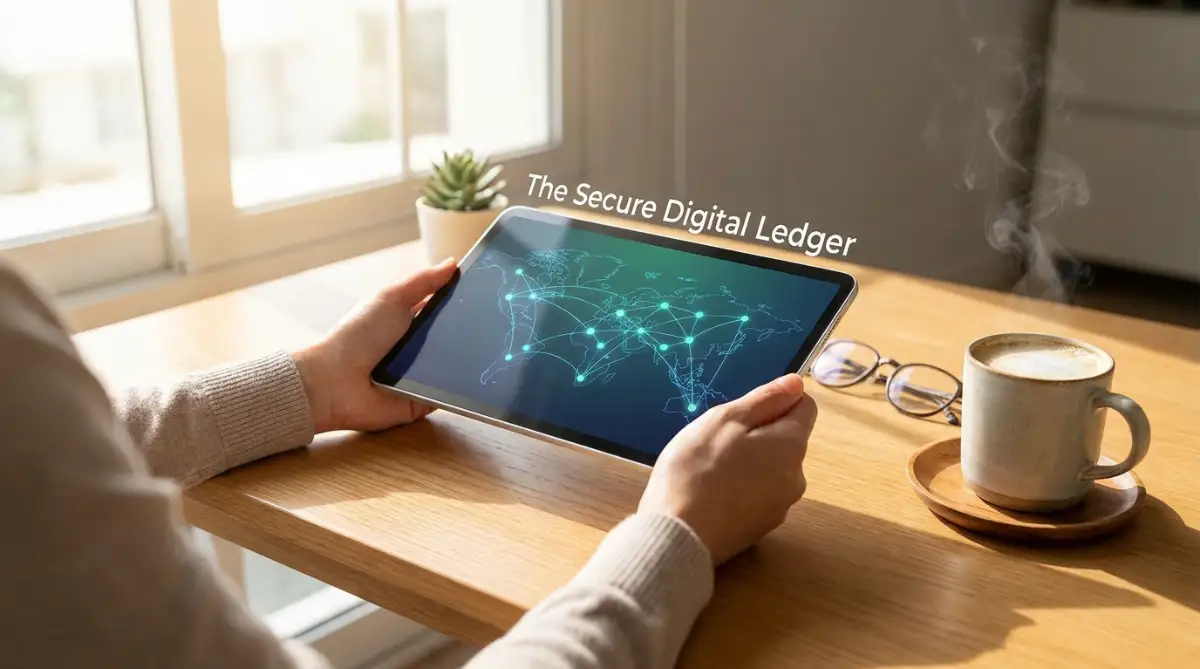
Your 4-Step Guide to Understanding Digital Money:
- A digital ledger (blockchain) is simply a chain of locked digital boxes holding transaction receipts that are mathematically sealed to prevent hacking.
- Decentralization means no single bank controls your money; instead, thousands of independent computers verify every transaction, removing the risk of a single central failure.
- Your Public Key is a safe mailing address to share, but your Private Key is the literal key to your vault—never share it or save photos of your recovery words in your cloud drive.
- Avoid common beginner traps by always copying and pasting long network addresses and completely ignoring "urgent" direct messages from fake support agents on social media.
The Simple Science Behind the Digital Ledger
Understanding this modern digital system does not rely on having a college degree in computer science. It certainly does not require you to know how to write complex computer code.
The entire foundation relies entirely on three highly logical, interconnected ideas. If you understand the exact rules this computer network follows, you will easily see why it is considered one of the safest systems ever created.
We are going to look at the three most practical, basic steps that make this technology function. By following this simple educational approach, you will master the core concepts with absolute confidence.
Step 1: Visualizing the Digital Container (The Block)
The absolute best way to understand this system is to look at the actual name: Blockchain. It is literally just a digital chain made out of digital blocks.
To make sense of this, you first need to understand what a single "block" actually does. Think of a single block as a heavy, transparent glass safety deposit box sitting in a bank vault.
This glass box has one specific job. Its entire purpose is to hold highly specific pieces of digital information safely inside.
Let us use a very practical analogy to understand the contents. Imagine you want to send one hundred dollars to your best friend across the country.
When you make that transaction, the computer creates a brand new glass box to store the receipt. This box records three main pieces of data: exactly who sent the money, exactly who received the money, and the exact amount of money that was moved.
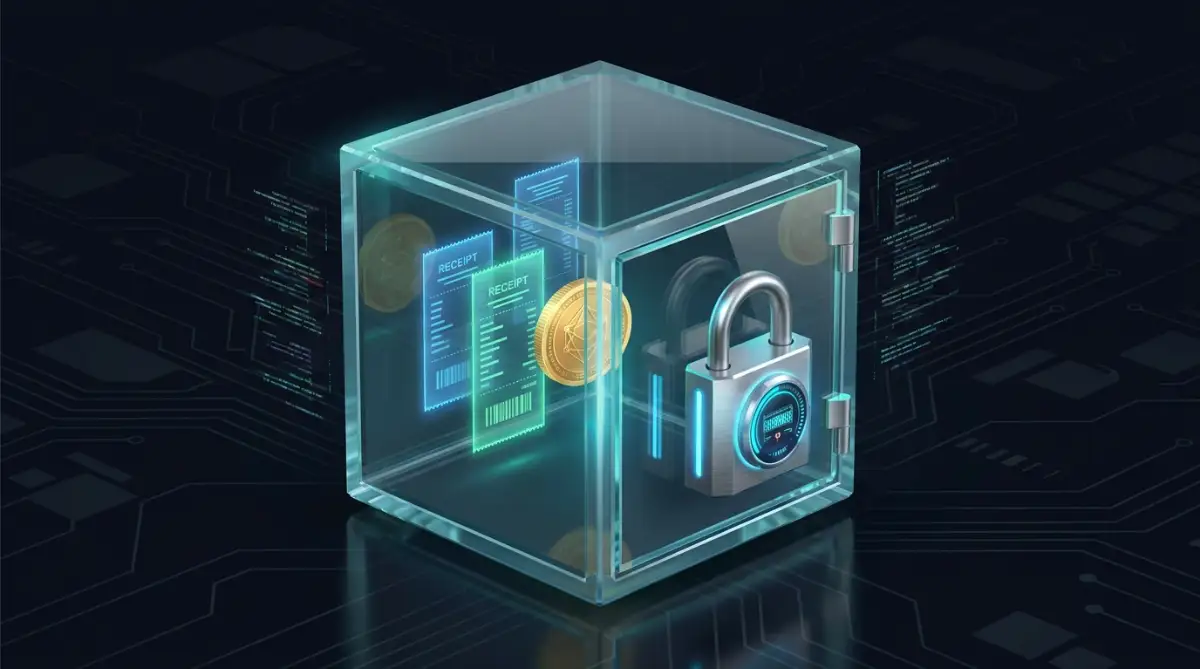
Once the box is completely full of transaction receipts, the system locks it shut permanently. This is where the brilliant safety mechanism comes into play.
Every single time a new box is locked, it is automatically assigned a unique digital fingerprint. In the technology world, this unique fingerprint is mathematically called a "Hash."
A hash looks like a long, random string of numbers and letters, such as "8f7e6d5c4b3a." It acts exactly like a human fingerprint because no two blocks will ever have the exact same hash code.
If someone tries to secretly open the glass box and change a single detail of the transaction, the entire fingerprint changes instantly. This highly sensitive fingerprinting system makes it immediately obvious if a hacker tries to tamper with the data inside.
Your Actionable Learning Tip for Today:
When you think about this technology, stop picturing flying digital coins in space. Instead, picture a highly organized filing cabinet filled with secure, locked folders.
Every single time a folder gets full of information, it gets stamped with a permanent, unchangeable wax seal. This wax seal guarantees that the information inside remains perfectly pure and completely untouched by bad actors.
Quick Comparison: Traditional Bank vs. Digital Ledger 🏦
To make this even easier to picture, here is how the old way compares to the new system:
Step 2: The Unbreakable Mathematical Link (The Chain)
Now that we understand the individual glass boxes, we need to understand how they work together. Having a single locked box is great, but a hacker could easily just steal the entire box and throw it away.
To prevent this from happening, the system uses a brilliant mathematical trick to connect every single box together. This connection creates the "chain" part of the name.
When the computer creates a brand new block of data, it includes its own unique fingerprint. However, it also includes the exact fingerprint of the block that was created right before it.
Let us look at a real-life scenario to make this crystal clear. Imagine three people standing in a straight line holding hands.
Person A holds the hand of Person B, and Person B holds the hand of Person C. If Person B suddenly disappears, the entire line is instantly broken, and everyone notices the missing link immediately.
The digital blocks hold hands mathematically using those unique fingerprint codes. Block number two contains the fingerprint of block number one.
Block number three contains the exact fingerprint of block number two. This strict chronological order creates a heavy, unbreakable digital timeline going all the way back to the very first transaction ever made.
If an internet thief tries to hack into block number two and alter your financial transaction, the fingerprint of block number two changes instantly. Because block number three is actively looking for the old fingerprint, the mathematical connection completely shatters.
The computer system instantly sees this broken link and triggers a massive red alarm. It automatically rejects the hacked block and refuses to accept the changed information.
Your Actionable Learning Tip for Today:
To alter a single transaction, a hacker would have to successfully change the specific block they are targeting. Then, they would have to instantly recalculate the fingerprints for every single block that comes after it.
Because modern networks contain hundreds of thousands of connected blocks, this mathematical task requires an impossible amount of computer processing power. The chain mechanism naturally creates a timeline that is mathematically frozen in place, ensuring your data remains permanently safe.
Step 3: Removing the Middleman for Absolute Safety
We have built a secure chain of locked glass boxes, but there is still one major question left to answer. Where exactly does this massive chain live, and who is officially in charge of protecting it?
In a traditional banking system, the bank owns the main server building and keeps the master ledger completely hidden from the public. If a thief breaks into that one specific central building, they can steal everyone's money at the exact same time.
This single point of failure is a massive security risk for your personal wealth. The new digital technology solves this problem by using a concept called "Decentralization."
Decentralization simply means that there is absolutely no central boss, no main headquarters, and no single computer server holding the data. Instead of keeping the master ledger hidden in one secure vault, the system gives a perfect, updated copy of the ledger to thousands of different people all over the world.

Think of this highly practical analogy to grasp the concept. Imagine a crowded room filled with five hundred independent accountants sitting at their desks.
Every single accountant has an exact copy of the same financial notebook. When you send money to a friend, you stand up and shout the details of the transaction to the entire room.
All five hundred accountants quickly write down your transaction in their personal notebooks. Before the transaction is considered officially complete, the accountants must compare their notes with each other.
If 499 accountants have the exact same record, but one accountant tries to lie and change the numbers, the group instantly rejects the liar. The transaction is only approved when the majority of the room mathematically agrees that the information is perfectly correct.
Your Actionable Learning Tip for Today:
In the modern digital world, these independent accountants are actually thousands of personal computers called "Nodes." These nodes are operated by everyday people spread across different countries and continents.
For a hacker to successfully steal your money, they cannot just attack a single bank server in one city. They would have to simultaneously hack the computers of thousands of independent people across the globe at the exact same millisecond.
Because coordinating such a massive, simultaneous global attack is mathematically and physically impossible, your digital data remains incredibly secure. By spreading the responsibility across a massive global network, the system entirely removes the risk of a single catastrophic failure.
My "Myth vs. Reality" Reality Check 🛑
When I first learned about decentralization, I had a lot of misconceptions. Let's clear up the biggest one right now:
- The Myth: Because the network is run by random people all over the world, anyone can easily peek at my personal identity.
- The Reality: The system is totally pseudonymous. The thousands of "accountants" verifying your transaction only see a random string of math numbers (your public key), not your real name, email, or home address. Your privacy remains completely locked down.
Advanced Secrets for Absolute Network Security
Now that you understand how decentralized nodes agree on information, we need to look at the advanced security layers. According to financial experts at Investopedia, the entire digital ledger network relies heavily on public key cryptography to prove ownership. This specific mathematical system is exactly what keeps your digital assets locked safely away from strangers on the internet.
You also need to deeply understand how automated agreements work safely on this modern network. Technology analysts at Forbes explain that these self-executing digital agreements remove the need for expensive lawyers or slow bank managers. When you combine high-level cryptography with automated digital agreements, you get a financial system that is entirely bulletproof.
However, understanding the math behind the system is only half the battle. If you want to safely navigate this space, you must know how to personally secure your digital access points. Learning exactly how to secure your cryptocurrency wallet from advanced phishing attacks is an absolute necessity for anyone using the network.
Step 4: Mastering the Two-Key Safety System
The most brilliant security feature of this technology is how it handles user accounts. You do not have a standard username and password like you do on social media. Instead, the network gives you two highly specific mathematical keys to use.
You receive a "Public Key" and a "Private Key." These two keys work together in perfect mathematical harmony to protect your identity and your money.
Let me give you a very practical real-life analogy. Think of your Public Key exactly like the physical mailing address of your house. You can share this address with anyone in the world, and they can use it to send you letters or packages.
It is completely safe to share your Public Key with strangers on the internet. However, your Private Key acts exactly like the small metal key that actually opens your physical mailbox.
If you give a stranger your metal mailbox key, they can open your box and steal all your mail. Your Private Key is the only thing that gives you the mathematical authority to spend your money on the network. You must protect this specific key with your life and never share it with anyone.
My biggest "aha" moment was realizing that sharing my public address was totally fine, but my private key was literally the key to my whole digital house. Early on, I actually almost sent my private key to a fake support agent because I was panicking over a stuck transaction. Always treat that private key exactly like the secret pin code to your bank account, and never type it into a random chat window!
Step 5: Automating Trust With Smart Contracts
The digital ledger does much more than just move money from one person to another. It also handles highly complex agreements between strangers safely. It does this using a powerful tool called a "Smart Contract."
A smart contract is simply a tiny computer program running directly on the digital ledger. It contains a strict list of rules that cannot be changed once they are turned on.
Think of a smart contract exactly like a physical vending machine. You do not need a human cashier to buy a soda from a machine. You simply insert a dollar bill, press the button for your drink, and the machine automatically drops the soda into the tray.
The vending machine follows a strict set of pre-programmed rules. If you only put in fifty cents, the machine will mathematically refuse to give you the drink.
Smart contracts do the exact same thing for digital transactions on the network. They automatically hold the money safely until both strangers fulfill their end of the bargain. By completely removing human emotions and human errors, the network guarantees absolute fairness.
Maintaining Your Daily Protective Barrier
Your physical computer and internet connection must remain perfectly clean at all times. You should also prepare your digital tools with extreme precision before making any transaction.
Following a complete guide to calibrating your drone compass before flight ensures a safe outdoor trip for a pilot. In the exact same way, running a strict security check on your computer ensures a perfectly safe digital transaction. Treat your security routine like a professional pilot checklist, and you will never lose your money.

Five Dangerous Network Mistakes You Must Avoid
Even highly intelligent people make terrible choices when they start using new digital technology. The massive thrill of controlling your own money often blinds everyday users to basic internet safety rules.
If you fall into these incredibly common traps, your bulletproof security setup will completely collapse. This frustrating cycle can easily ruin your financial future and destroy your hard-earned savings.
Here is exactly what you must avoid to keep your digital wealth completely safe from invisible predators on the internet.
Before we jump into this list of bad habits, check out this super helpful video that breaks down exactly how these digital scams work. It explains the tech in plain English so you can easily spot a trap a mile away, so watch it quickly and then read the rules below!
1. Storing Your Recovery Words on a Cloud Drive
When you first create a digital account, the software gives you a secret list of recovery words. Because writing takes physical effort, many beginners simply take a quick picture of the screen with their smartphone.
This is an absolute disaster waiting to happen. The moment you take a photo, your smartphone automatically syncs that image to cloud storage servers like Google Drive or Apple iCloud.
Internet thieves routinely run automated software scripts that scan millions of cloud accounts specifically looking for pictures containing recovery words. You must write your recovery words on a physical piece of paper and lock it in a fireproof safe at home.
2. Typing Long Network Addresses Manually
A public receiving address on this network usually contains more than thirty random letters and numbers. Many beginners make the terrifying mistake of trying to type this long address into their keyboard manually.
If you type the address yourself and get a single letter wrong, the system will not stop you. The network will perfectly execute the transaction and send your money to a completely unknown destination.
Because the digital ledger is permanent and irreversible, there is absolutely no customer service number to call for a refund. Always use the "copy and paste" function on your computer, and visually check the first four and last four characters before hitting send.
3. Trusting Urgent Direct Messages on Social Media
Scammers actively monitor social media platforms looking for confused beginners. The moment you ask a simple technical question on Twitter or Reddit, they send you a direct message pretending to be official customer support.
They use highly urgent, threatening language to cause instant panic in your mind. They will claim your account is frozen and demand that you click a link to verify your identity immediately.
Official developers and network creators will absolutely never send you a direct private message. If someone messages you offering fast technical help, immediately block their account and report them for fraud.
4. Sending Assets on the Wrong Digital Pathway
The modern digital ecosystem actually contains dozens of entirely different ledger networks running at the same time. You can think of these different networks like different train tracks heading to different cities.
Beginners often try to send money from one specific network directly to an address on a completely different network. This is exactly like trying to put a massive cargo train on a tiny subway track.
The systems are totally incompatible, and the transaction will completely fail. If you send your money down the wrong digital pathway, those funds will be permanently burned and lost in cyberspace forever.
5. Leaving Smart Contract Connections Wide Open
When you use a decentralized application, it will ask for mathematical permission to access your wallet. To save you time, these applications usually ask for an "unlimited spend approval."
If that specific application gets hacked by a bad actor six months later, the hackers can use your old, forgotten approval to drain your account. You might be sleeping peacefully while a bad smart contract empties your entire life savings.
You must build a strict habit of revoking digital permissions immediately after completing your business on a website. Keeping your connection list completely empty ensures that nobody can pull money out of your pocket while you are not looking.
Your Master Plan for Digital Confidence
Navigating the scary world of decentralized technology does not have to be an overwhelming or stressful experience. You now hold the exact same technical knowledge that professional computer scientists use to build these secure systems.
By taking a few hours to understand how the digital boxes connect and how the nodes agree, you completely remove the heavy fear of the unknown. You are no longer crossing your fingers and begging a massive central bank to keep your data safe.
Instead, you are confidently commanding your own digital wealth behind an impenetrable, mathematical fortress. This simple shift in your mental approach gives you incredible power over your entire financial destiny.
You are fully capable of safely sending and receiving digital data without feeling paranoid, panicked, or confused by the technology. Remember that the digital ledger is simply a highly organized filing cabinet that requires a disciplined operator to function safely.
Like a sharp knife in a kitchen, it can help you build a beautiful meal, or it can cause massive damage if you handle it carelessly. Take a deep breath and start with the very first step today.
Write your private keys on physical paper, delete any digital photos of your passwords, and always double-check your sending addresses. You have the total ability to handle digital transactions smoothly and intelligently from the comfort of your living room.
Protect your mathematical keys, read every transaction prompt slowly, and take complete, fearless control of your digital future starting right now.
Looking back, pushing past my fear of computer jargon was the best financial decision I ever made. You absolutely do not need to be a math genius to master these tools, so please do not let the scary terms push you away. Just grab a piece of paper, write down your passwords safely offline tonight, and take your very first step toward totally owning your money!
Common Questions About How Digital Ledgers Work
What is a blockchain and why is it called that?
A blockchain is simply a digital system made up of connected data blocks that hold financial transactions in a strict chronological order. Each block contains a unique mathematical fingerprint linked to the block before it, creating an unbreakable chain of secure information.
How does decentralization keep my financial data safe from hackers?
Decentralization means there is no central server or main headquarters for hackers to break into and steal data. Instead, thousands of independent computers worldwide hold identical copies of the ledger, making it mathematically impossible for a single thief to alter the network.
What is the difference between a public key and a private key?
Your public key acts like a home mailing address that you can safely share with anyone so they can send you funds. Your private key acts like the secret key to your mailbox, giving you the sole mathematical authority to spend your money on the network.
Why shouldn't I take a digital photo of my wallet's recovery phrase?
Taking a screenshot or photo of your recovery words causes your smartphone to automatically upload that image to cloud storage servers. If a hacker breaches your cloud account or uses automated spyware, they can easily steal your recovery words and drain your entire account.
What happens if I send my crypto down the wrong network pathway?
Sending assets down an incompatible network pathway will cause your transaction to completely fail and get permanently lost in cyberspace. Because the digital ledger is irreversible, there is no customer service department available to reverse the transfer or refund your coins.
Financial & Health Disclaimer:
The content provided on globalsinfo regarding finance, crypto, real estate, health, and legal topics is strictly for informational and educational purposes only. We are not licensed financial advisors, doctors, or attorneys. Any decisions made based on our articles are at your own risk. Always consult with a certified professional before making any financial or health-related decisions[1].
FTC Affiliate & Earnings Disclosure:
We may receive compensation when you click on links to our affiliate partners or complete third-party offers. This financial compensation helps us maintain the site to provide free educational content, but it does not affect our reviews or recommendations[1].