The Hidden Anxiety of the Red Battery Icon
I remember the exact morning my favorite smartphone completely died on me during an important trip. I had just woken up to an alarm that barely sounded because the battery was completely cooked. For months, I obsessively left it plugged in overnight, thinking I needed a full tank for the busy day ahead. I thought I was doing the right thing to keep my device alive and healthy. Instead, my phone would get incredibly hot, and the total battery health dropped like a rock in just a few short months. I felt completely frustrated and betrayed by the very technology I relied on every single day.
Have you ever felt that sudden rush of panic when you see your phone battery dip below twenty percent? You are definitely not alone in this feeling. We constantly worry about our devices running out of juice right when we need them the most. This constant fear forces many of us into weird charging habits that actually do more harm than good.
We wake up in the middle of the night just to unplug our phones, terrified of destroying the battery. We stress out over whether we should leave our expensive laptops connected to the wall while working from home. This constant "battery anxiety" ruins our peace of mind and makes us slaves to the nearest power outlet.
The worst part is that almost all of this worry comes from outdated advice passed down from older generations of technology. Our parents told us never to leave things plugged in too long, and we blindly carried that advice into the modern era. But the technology in your hands today is much smarter than the gadgets from a decade ago.
We are making daily decisions based on pure fiction, and it is time to clear the air.
📌 Quick Summary: How to Protect Your Battery Health
- Overnight is Safe: Modern phones stop accepting power at 100%. You cannot "overcharge" them.
- Heat is the Enemy: Do not sleep with your phone under your pillow while it charges; heat destroys the chemical layers inside the battery.
- The 20-80 Rule: Keep your battery between 20% and 80% when possible to reduce high-voltage stress on the cells.
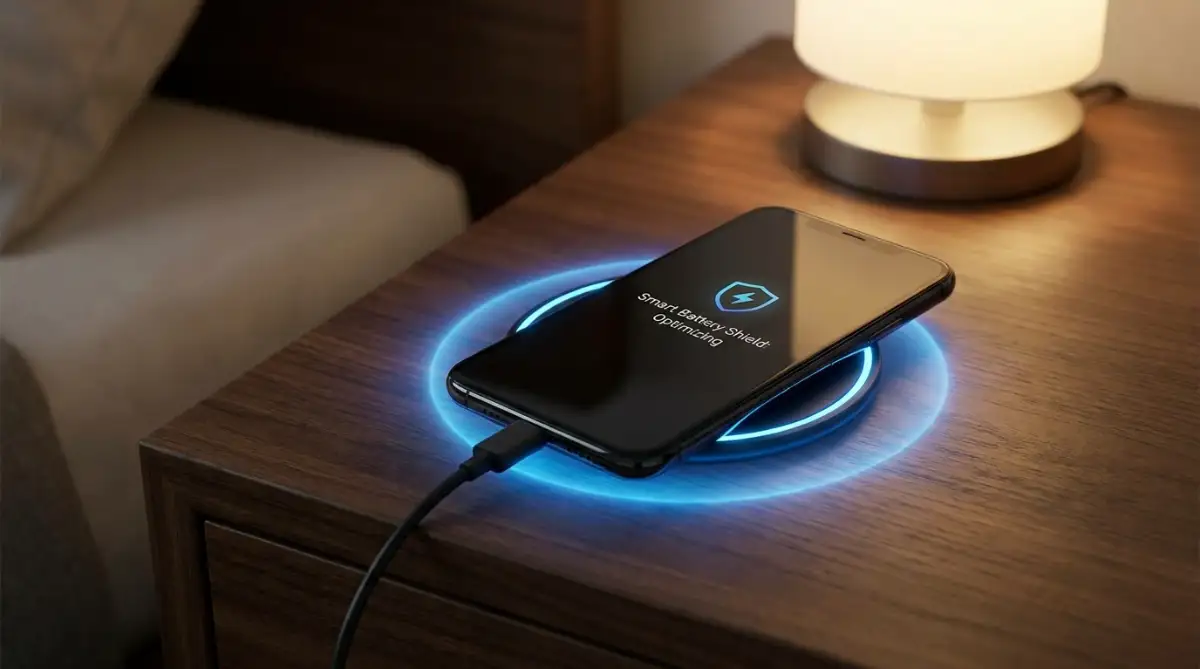
- Turn on Smart Charging: Enable "Optimized Battery Charging" in your settings so the software can manage the overnight power flow for you.
The True Science Behind Your Gadget's Power Supply
To really understand why we have been lied to for so long, we need to look at how modern power systems actually operate. You do not need to be an engineer to get this. Think of your phone battery like a simple bucket of water.
When you plug your phone into the wall, the charger acts like a heavy flowing hose filling up that bucket. In the old days, that hose would just keep running even when the bucket was completely full. The water would spill over the edges, causing massive damage and stress to the container itself. This is exactly what happened with older nickel-cadmium batteries used in early cell phones and tools.
Those old batteries suffered from something called a "memory effect." If you did not let them die completely before charging them again, they would literally forget their total capacity. They would also take in continuous power even when they were full, which led to dangerous overheating and a ruined power cell.
But your current smartphone, tablet, or laptop does not use those ancient materials. Today, almost every portable electronic device runs on a highly advanced lithium-ion or lithium-polymer battery. These power cells are completely different beasts.
More importantly, your modern device has a tiny, incredibly smart computer chip built right into the charging port. This is called a Power Management IC (Integrated Circuit). This tiny chip is the unsung hero of your daily tech life.
When your modern battery reaches one hundred percent, this smart chip acts like a digital traffic cop. It completely stops the flow of electricity coming from the wall charger. The "hose" gets shut off automatically, no matter how long the cable stays connected.
Breaking Down The "Overcharging" Illusion
Let us talk about the biggest lie of them all: the fear of overcharging. You have probably heard someone warn you that leaving your phone plugged in while you sleep will push too much power into the battery and cause it to swell or explode.
Because of the Power Management IC we just talked about, true overcharging is virtually impossible on any modern, name-brand device. Your smartphone knows exactly when it is full. Once it hits that maximum capacity, it reroutes the power.
Instead of forcing more energy into a full battery, the device starts running directly off the power coming from the wall outlet. The battery just gets to rest. It is essentially taking a nap while the wall electricity powers your background apps, Wi-Fi updates, and morning alarms.
However, something very interesting happens while it rests. Over several hours, your phone naturally loses a tiny bit of power just by staying turned on. It might drop to ninety-nine percent.
When this happens, the smart chip gently lets a tiny sip of electricity back in to push it up to one hundred percent again. This slow, gentle process is called "trickle charging." Trickle charging is perfectly safe and is designed by engineers to keep your device ready for the morning without causing any harm.
Myth vs. Fact: The "Overcharging" Fear
Myth: Leaving my phone plugged in overnight pushes too much electricity into the battery and makes it explode.
Fact: Impossible! Modern smartphones have a built-in Power Management IC chip. Once the battery hits 100%, this tiny computer physically shuts off the incoming power. Your phone is essentially taking a nap while running directly off the wall outlet!
If you want to see exactly what happens inside a lithium-ion battery when it hits 100%, you need to watch this visual breakdown.
The Real Silent Killer Destroying Your Gadgets
If leaving your phone plugged in overnight does not overcharge it, why do batteries still degrade over time? Why does your phone hold less of a charge after a year of use? The answer is not the amount of time it spends on the charger.
The real, absolute worst enemy of your battery is extreme heat.
Lithium-ion batteries are very sensitive to temperature changes. They operate best right at room temperature, similar to what you find comfortable in your home. When a battery gets too hot, the chemical reactions inside start to break down at a rapid pace. This chemical breakdown permanently destroys the total capacity of the cell.
Here is where the overnight charging problem actually comes into play. The danger is not the electricity itself. The danger is where you are placing your device while it charges all night.
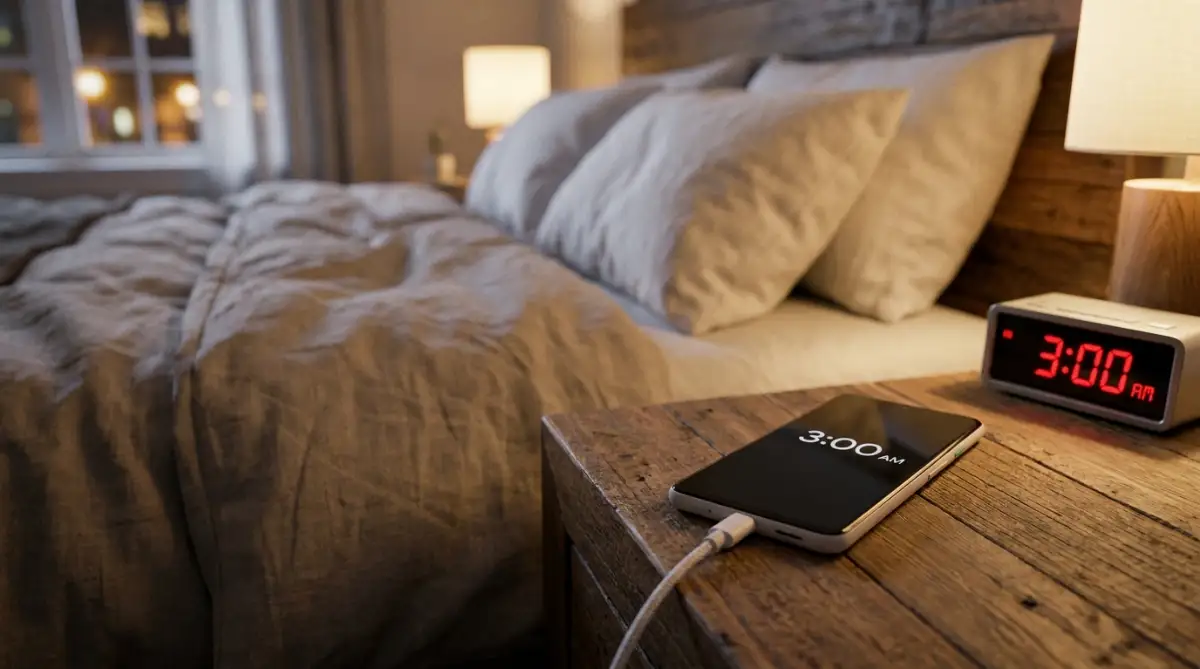
Think about your own bedtime habits for a moment. Do you plug your phone in and toss it onto your soft mattress? Do you occasionally fall asleep with the phone tucked right underneath your pillow?
I used to sleep with my phone under my pillow while it was plugged in so I could hear my alarm clearly. I realized this was trapping all the heat generated during the charging cycle and cooking my battery alive. Now, I keep it on a cool, hard wooden nightstand, and the difference in my battery lifespan has been absolutely incredible.
When you charge a device, it naturally produces some heat as energy flows into the battery. If your phone is resting on a hard, flat surface like a desk or a bedside table, that heat escapes easily into the air. The device stays nice and cool.
But if it is buried under blankets, resting on a thick rug, or trapped inside a heavy leather case, that heat has nowhere to go. It bounces right back into the battery. You are essentially baking your smartphone while you dream.
Why the 20-80 Rule Actually Matters
Now that we know overcharging is a myth and heat is the real villain, we need to talk about battery stress. Even though the phone stops accepting a charge at one hundred percent, staying at full maximum capacity puts a certain level of tension on the battery cells.
Imagine eating a huge Thanksgiving dinner. You are completely full. Now imagine someone forces you to stay completely full, taking another bite every time you digest a little bit. You would feel incredibly uncomfortable and bloated.
Your lithium-ion battery feels a similar type of stress when it is forced to sit at exactly one hundred percent for hours on end. It is not exploding, but it is under high physical tension. Over a long period of time, this constant high-voltage state can slightly speed up the aging process of the battery chemistry.
Because of this, tech experts often talk about the "20-80 rule." This guideline suggests that you should try to keep your battery percentage between twenty and eighty percent for the best possible long-term health.
When your battery stays in this middle zone, the chemical layers inside are relaxed. There is no extreme voltage tension.
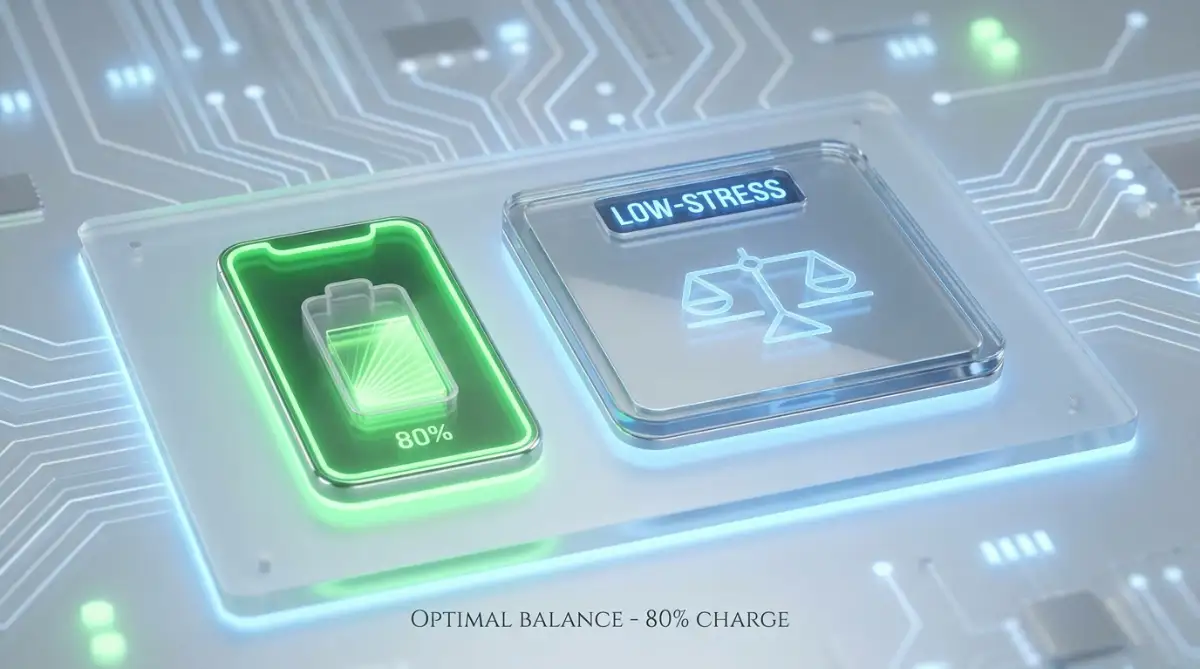
Does this mean you should wake up at 3 AM to unplug your phone when it hits eighty percent? Absolutely not. Losing your sleep over a gadget completely defeats the purpose of technology making our lives easier.
How Apple and Android Fixed the Problem for You
The brilliant engineers who design our phones are well aware of this high-voltage stress issue. They know we want to plug our phones in overnight. So, instead of forcing us to change our habits, they changed the software to protect us.
Both iOS and Android have introduced incredible smart charging features in recent years. If you own an iPhone, it is called "Optimized Battery Charging." On Android devices, it might be called "Adaptive Charging" or "Protect Battery."
These software features use machine learning to understand your exact daily routine. Your phone learns what time you usually go to sleep and what time you normally wake up.
When you plug your phone in at midnight, the software allows it to quickly charge up to eighty percent. Then, it completely stops the charging process. It intentionally leaves your phone slightly empty for the entire night, keeping the battery totally relaxed and stress-free.
Then, right before you normally wake up—say around 6 AM—the phone turns the charger back on and fills that last twenty percent. When your alarm goes off at 7 AM, you have a perfectly fresh, one hundred percent charged phone.
This process completely eliminates the high-voltage stress of sitting at maximum capacity all night. You get the convenience of overnight charging with zero downsides. If you have not turned this feature on in your battery settings yet, you are missing out on the easiest way to protect your device.
The Laptop Myth: Should You Leave It Plugged In?
While we spend a lot of time stressing over our phones, laptops create an entirely different level of confusion. Many people who work from home leave their laptops plugged into the charger twenty-four hours a day, seven days a week.
Other people constantly plug and unplug their laptops throughout the workday, trying to mimic the charging habits of their cell phones. This constant plugging and unplugging can actually be exhausting and distracting.
Just like smartphones, modern laptops use smart lithium-ion battery packs. And just like smartphones, they cannot physically overcharge.
When your laptop hits one hundred percent, the internal power switch flips. The laptop stops drawing power from the battery and runs entirely on the AC power coming from the wall outlet. Leaving it plugged in while you work at your desk is generally perfectly fine and completely safe.
However, there is a catch that you need to be aware of. Laptops generate significantly more heat than smartphones, especially when you are doing heavy tasks like video editing, playing games, or running massive spreadsheets.
If you leave a hot laptop plugged in all the time, you are combining that natural computer heat with a fully maxed-out battery state. This combination of heat and maximum voltage tension can definitely cause the battery to swell or lose capacity over a few years.
To solve this, major laptop brands like Dell, Lenovo, and Apple have introduced desktop modes. These built-in software tools purposefully limit the maximum charge of your laptop to around sixty or eighty percent if they detect the computer is always connected to a charger.
If you use your laptop mainly at a desk like a traditional computer, turning on this charge limit feature is the smartest thing you can do. You can leave it plugged in forever without worrying about destroying the internal power cell.
The Case Trick: A Simple Fix for Better Health
We already established that heat is the ultimate destroyer of your battery's lifespan. But there is a very common accessory that makes this heating problem much worse: your protective phone case.
We all use heavy-duty cases to protect our expensive glass screens from drops and cracks. But thick rubber, leather, and plastic cases act like a heavy winter coat for your phone. They trap the natural heat generated by the processor and the battery.
When you plug your phone in overnight, especially if you are using a fast charger, the temperature rises quickly. If that thick case blocks the heat from escaping, the battery slowly roasts inside its own shell.
You do not need to throw away your favorite case, but you should practice a little common sense. If you notice your phone gets physically hot to the touch while charging, simply pop it out of the case before you go to bed.
Taking two seconds to remove a thick case gives the device a chance to breathe. The aluminum or glass back of the phone is specifically designed to act as a heat sink, pulling warmth away from the delicate battery components. Letting the phone cool naturally in the open air is one of the easiest ways to add months of healthy life to your battery.
Expert Pro-Tip: The "Cool Surface" Rule
Never charge your phone while it is sitting on your bed, couch, or under a pillow. Soft fabrics trap the heat generated by the battery. Always place your charging device on a hard, flat surface like a wooden nightstand or a marble counter so the heat can safely dissipate into the air.
Does Fast Charging Ruin the Battery?
Another massive myth floating around the internet is that fast chargers will instantly destroy your phone's battery health. We see these huge power bricks promising to give us fifty percent battery in just thirty minutes, and we naturally assume that much power must be dangerous.
The truth is much more balanced. Fast charging technology is incredibly complex and surprisingly safe. The phone and the charger actually "talk" to each other constantly during the charging process.
When your battery is completely dead, it can safely absorb a massive amount of power very quickly without taking any damage. This is why the first fifty percent fills up in a flash. The battery is empty, and the ions have plenty of room to move around rapidly.
But as the battery gets closer to being full, the space inside gets crowded. Pushing electricity in at a high speed becomes much more difficult. If the charger kept pushing maximum power at this stage, it would generate dangerous levels of heat and ruin the battery.
So, the smart chip steps in again. Once the battery passes seventy or eighty percent, the phone tells the fast charger to slow down. The power drops significantly, and the last few percentages are filled at a normal, slow speed.
Because of this intelligent speed control, fast chargers are not the battery killers they are made out to be. They only deliver high power when it is perfectly safe to do so. You do not need to throw away your fast charger out of fear.
However, fast charging does create slightly more heat than standard slow charging. If you are charging overnight while you sleep, there is absolutely no reason to use a fast charger. You have eight hours to kill.
Using an older, slower charger next to your bed is a fantastic habit. It keeps the battery perfectly cool all night long. Save your fast charger for your living room or office, where you actually need a quick boost before heading out the door.
The Myth of Fully Draining Your Battery
Let us tackle one more classic piece of advice that you need to stop following immediately. Many people still believe they need to let their phone die completely to zero percent before plugging it back in. They call this "calibrating" the battery.
With old nickel-based batteries, this was actually necessary. But doing this to a modern lithium-ion battery is incredibly harmful.
Lithium-ion cells hate extremes. They do not like being at one hundred percent, and they absolutely despise dropping all the way to zero percent. When a modern battery is completely drained, the chemical layers can become slightly unstable.
If you leave a battery at zero percent for a long period of time, it can fall into a deep discharge state. When this happens, the internal protection circuit might shut down completely for safety reasons. At that point, the battery will never accept a charge again. It becomes a permanent brick.
You should try to plug your phone in before it drops below fifteen or twenty percent. Treating your battery nicely in the middle ranges is the real secret to longevity. It is much better to plug your phone in for short, random bursts throughout the day than to let it die and force a full zero-to-one-hundred charge cycle.
Short top-ups keep the battery active, cool, and perfectly healthy.
Why You Should Keep Your Software Updated
You might be wondering what software updates have to do with the physical battery inside your device. The connection is actually huge.
Remember the Power Management IC and the smart charging features we discussed earlier? Those systems rely heavily on the device's operating system to function correctly.
Companies like Apple, Google, and Samsung are constantly tweaking their battery management algorithms. Sometimes they discover a bug that is causing a background app to drain too much power, generating unnecessary heat. Other times, they find a way to make the overnight charging process even more efficient.
By refusing to update your phone's software, you are missing out on these critical thermal management improvements. An outdated operating system might struggle to properly regulate the flow of electricity, leading to a warmer device and a shorter lifespan.
Taking the time to install those annoying software updates actually protects your hardware. It ensures your device is using the most modern, safe, and efficient logic to handle its own power supply.
What You Should Do Starting Tonight
If you want to stop worrying and start treating your devices right, you only need to change a few minor habits.
First, stop stressing about leaving your phone plugged in while you sleep. The phone is smart enough to handle itself.
Second, make sure you take your phone out from under your pillow or heavy blankets. Place it on a cool, hard surface so it can breathe freely during the night.
Third, dive into your phone's battery settings right now. Look for the "Optimized Charging" or "Adaptive Battery" toggle and turn it on immediately. Let the software do the heavy lifting for you.
By understanding how modern technology actually works, we can finally let go of these stressful, outdated charging myths. Your devices are built to serve you, not the other way around. Enjoy your technology, sleep well, and wake up to a safely charged world every single morning.
Going Beyond the Basics: Level Up Your Battery Care
Now that we have cleared up the scary myths about overnight charging, you might be wondering how to actually make your battery last for years. It is not just about avoiding bad habits; it is about building a proactive routine.
The secret to incredible battery longevity lies in how you manage your device during the day, not just while you sleep. Think of your battery health like maintaining a healthy diet. You cannot just eat well for one meal and expect perfect health. It is a daily commitment.
Many tech enthusiasts swear by a concept called "shallow discharging." Instead of letting your phone drop from a full charge all the way down to twenty percent in one go, try to keep it topped up.
If you are sitting at your desk, plug it in for twenty minutes while you answer emails. When you hop in the car, let it sip some power while you drive. These small, frequent charging sessions put significantly less stress on the chemical layers inside the battery compared to one massive charging block.
Another incredibly powerful tip is managing your screen brightness and background activity. Your screen is the absolute biggest power drain on any modern device. By simply keeping your brightness around fifty percent and turning on auto-brightness, you drastically reduce how hard the battery has to work.
Less work means less heat, and less heat means a longer-lasting battery. It is a beautiful, simple cycle that most people completely ignore.
The Heat Sink Hack You Probably Ignored
We talked earlier about how removing your thick case can save your battery from roasting while charging. But what if you are playing a heavy mobile game or editing a video while the phone is plugged in?
This is a dangerous combination. You are pushing the processor to its absolute limits, generating massive internal heat, while simultaneously forcing energy into the battery cells.
If you absolutely must use your device for heavy tasks while it is plugged in, try this incredibly simple trick. Rest the back of your phone or tablet against a cool, metallic surface.
You can use the aluminum base of a desk lamp, a metal cooling pad, or even just a flat stone coaster. These materials act as natural heat sinks. They literally pull the excess heat away from your device and disperse it into the air.
It might sound a little bit silly, but this tiny habit can drop the internal temperature of your phone by several degrees. And in the world of lithium-ion technology, a few degrees can add months to your battery's total lifespan.
If you are dealing with other devices that get dangerously hot during heavy use, you should definitely learn how to spot and avoid overheating issues before they cause permanent hardware damage.

The Costly Mistakes Ruining Your Devices
Even with all this great information, I still see people making terrible mistakes with their expensive tech every single day. The most heartbreaking part is that these mistakes are entirely preventable.
One of the biggest traps people fall into is buying cheap, uncertified chargers from the local gas station or dollar store. You know the ones I mean. They cost three dollars and usually break after a week.
Those cheap chargers are missing the essential safety chips that communicate with your phone. They do not know how to regulate voltage properly. Sometimes they push too little power, which frustrates you. Other times, they push way too much power, completely overriding your phone's built-in safety measures.
Using a poorly made cable or power brick is like putting dirty, unfiltered gas into a luxury sports car. It might run for a little while, but eventually, the engine is going to fail spectacularly.
Always look for accessories that are officially certified by the manufacturer. If you have an iPhone, look for the "MFi" (Made for iPhone) badge. If you are using Android, stick to well-known, reputable brands like Anker, Belkin, or the original manufacturer's equipment. Spending ten extra dollars on a good charger can save you a thousand dollars on a new phone.
According to safety researchers at UL Solutions, uncertified electronics are one of the leading causes of electrical fires and permanent device failure. It is simply not worth the risk.
Leaving Dead Devices in the Drawer of Doom
We all have that one drawer in our house filled with old phones, forgotten tablets, and random gadgets we no longer use. We usually toss them in there when the battery is completely dead and forget about them for years.
This is a massive mistake.
If you leave a lithium-ion battery sitting at zero percent for months at a time, it falls into a state called "deep discharge."
When a battery enters deep discharge, the protective circuit inside actually shuts down to prevent the battery from becoming chemically unstable. Once that circuit shuts off, the battery will never accept a charge again. It becomes completely useless.
Worse yet, deeply discharged batteries can sometimes swell up like a balloon, cracking the screen of your device and creating a serious fire hazard.
If you are going to store an electronic device for a long time, charge it to about fifty percent first. Then, turn it completely off. Every six months, take it out of the drawer, charge it back up to fifty percent, and put it away again.
This simple maintenance routine keeps the battery chemistry stable and ensures your old devices will actually work if you ever need them in an emergency. If you are struggling with old devices that will not hold a charge, you might be making some overlooked habits that quietly destroy your smartphone battery lifespan without even realizing it.
The Sun is Not Your Friend
Another incredibly common mistake happens during the summer months. You are driving in your car, using your phone for GPS navigation. You have it mounted right on the dashboard, baking in the direct, hot sunlight for hours.
Or maybe you are relaxing at the beach, and you leave your phone sitting on a towel while you go for a swim.
Direct sunlight is an absolute battery killer. The dark glass screen of your phone absorbs heat rapidly, turning the inside of the device into a tiny oven. Even if your phone is turned off, this extreme external heat causes the battery chemistry to degrade incredibly fast.
Always keep your devices in the shade. If you are driving, try to mount your phone in front of an air conditioning vent to keep it cool while it works. If you are at the beach, tuck it safely inside a bag or under a thick towel. Treat your gadgets like they can get a sunburn, and they will reward you with years of reliable performance.
Why You Keep Closing Your Apps
Here is a habit that almost everyone is guilty of. You open the recent apps menu on your phone and manually swipe away every single app to "save battery."
I used to do this obsessively. I thought I was cleaning up my phone and giving the battery a break. It turns out, I was actually making the problem much worse.
Modern operating systems, both iOS and Android, are incredibly smart about managing background apps. When you minimize an app, the system basically freezes it in place. It uses almost zero battery power while it sits there in the background.
However, when you manually force-close an app by swiping it away, you completely remove it from the phone's short-term memory (RAM).
When you want to open that app again later, the phone has to load it entirely from scratch. This process of loading a heavy app from cold storage requires a massive spike in processor power and battery usage.
By constantly closing and reopening your apps all day long, you are actually draining your battery significantly faster than if you just left them alone. Stop swiping. Let your phone's operating system do its job.
Take Control of Your Tech Without the Stress
You do not need to be a computer engineer or a battery scientist to keep your devices running perfectly for years.
The biggest takeaway from everything we have covered is simply to let go of that old, outdated battery anxiety. Your modern smartphone, laptop, and tablet are incredibly smart machines built with advanced safety features. They know exactly how to manage their own power.
You can confidently plug your phone in right before you go to sleep. Wake up to a full charge without a single ounce of guilt. Just remember to keep it out from under your pillow and let it breathe on a cool nightstand.
Stop worrying about draining the battery to zero percent, and instead, give it little sips of power throughout the day whenever it is convenient for you. Treat your devices well, keep them away from extreme heat, and they will absolutely take care of you in return.
I used to constantly stare at that little battery percentage icon, letting it dictate how I spent my day. Once I finally trusted the smart technology inside my phone and stopped babying it, my battery anxiety completely disappeared, and honestly, my devices have never run better. You have the power to fix these habits starting right now.
Your Biggest Device Charging Questions Answered
Is it safe to use my phone while it is charging?
Yes, it is perfectly safe to use your phone while it charges. However, playing heavy games or watching high-quality videos while plugged in will generate extra heat, which can slowly age your battery over time.
Should I let my phone battery die completely before charging?
No, you should never intentionally let a modern lithium-ion battery drop all the way to zero. Letting it die completely puts heavy strain on the chemical cells, so it is best to plug it in when it hits around twenty percent.
Do wireless chargers ruin battery health faster than cables?
Wireless chargers do not ruin batteries directly, but they are less efficient and generate significantly more heat than a standard cable. If you use a wireless charger, make sure it is in a cool room and not sitting in direct sunlight.
How do I know if my charger is actually certified and safe?
The easiest way is to stick to trusted name brands or buy directly from the manufacturer. Avoid super cheap, unbranded chargers from gas stations, and always look for official safety logos printed directly on the power brick.
Can keeping my laptop plugged in all day damage it?
Most modern laptops stop charging once they hit one hundred percent, so it is safe to leave them plugged in. However, if your laptop runs very hot while you work, that combination of heat and a full battery can cause long-term wear.
Disclaimer: The information provided in this article is for educational and informational purposes only and should not be considered professional technical advice. While we strive to provide accurate and up-to-date information regarding battery health and device management, technology standards and manufacturer guidelines frequently change. Always refer to the official documentation and support channels provided by your specific device manufacturer for the safest and most accurate charging recommendations. We are not responsible for any damage, data loss, or hardware failure that may result from following or misinterpreting the tips provided in this guide.