The Freezing Fear of a Dead Battery
I spent my first winter with an electric car completely terrified. I drove two hours in a snowstorm with the heater turned entirely off, freezing my hands on the steering wheel because I read online that the cold would instantly kill my battery. I was miserable, and I was also totally wrong. Let me show you how to actually manage your EV in the winter so you never have to shiver through a commute again.
My 60-Second Winter EV Survival Guide (TL;DR)
- Your battery will not randomly freeze and die; the car's thermal management system actively pumps warm liquid around the cells to protect them.
- Use your heated seats and steering wheel instead of blasting the cabin air to save massive amounts of battery power.
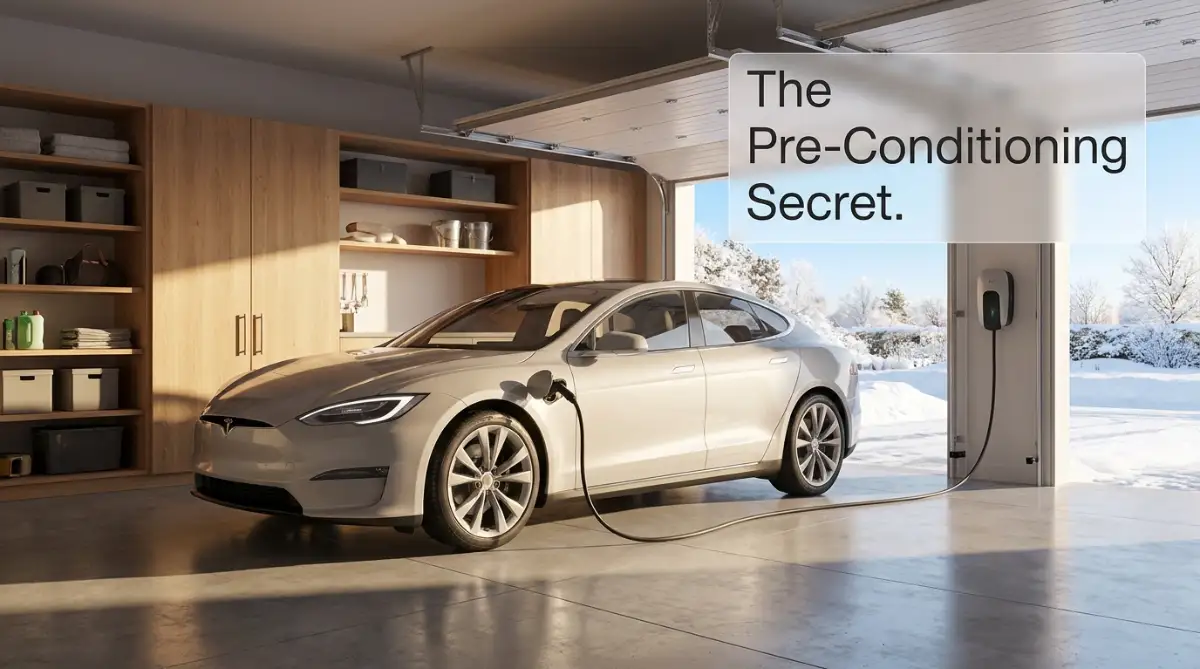
- Always enter public charging stations into your car's GPS so the battery can warm itself up before you plug in.
- Leave your car plugged into the wall charger until the exact second you leave to prevent the heater from draining your battery.
The Biological Reality of Lithium-Ion Cells
Before we can debunk the myths, you have to understand exactly what happens inside your battery when the temperature drops. Your electric car's battery pack is not just a giant, hollow bucket of electricity.
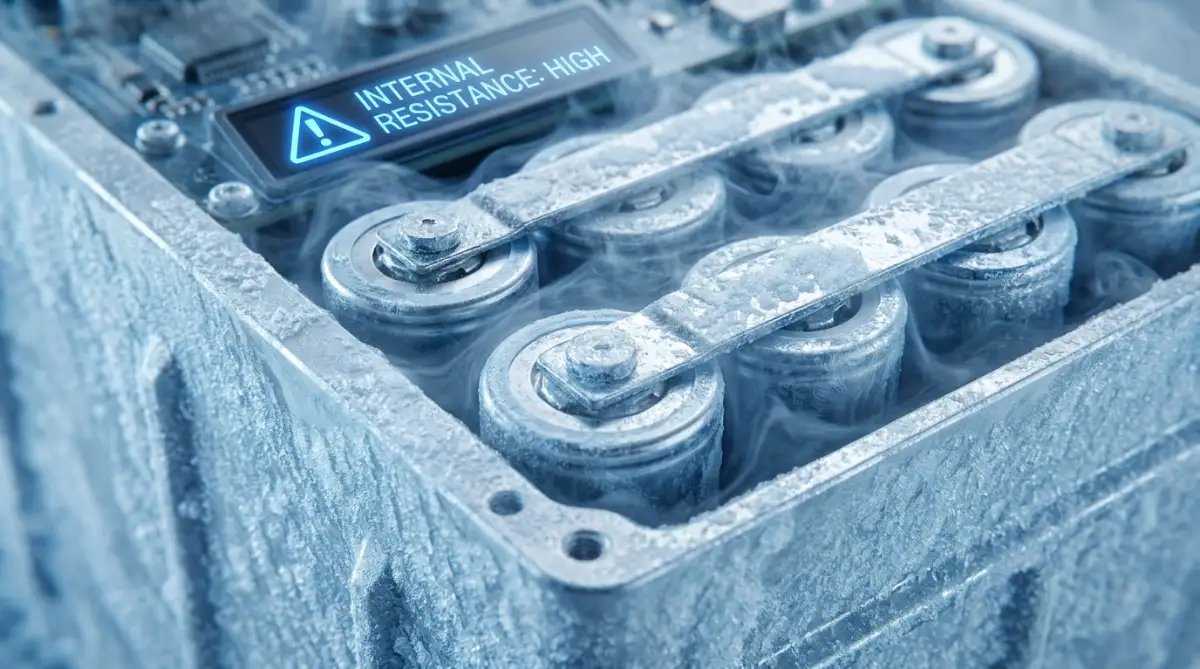
It is a highly sensitive chemical ecosystem that relies on microscopic lithium ions swimming from one side of a cell to the other. When the weather gets extremely cold, the thick liquid electrolyte inside those cells physically stiffens up.
The Cold Honey Analogy:
Think of your battery's internal liquid exactly like a jar of raw honey sitting in your kitchen cabinet. On a warm summer day, the honey flows incredibly fast and smooth.
But if you put that exact same jar of honey in the refrigerator overnight, it becomes extremely thick, slow, and highly resistant to moving. Your battery behaves in this exact same logical way when the temperature drops below freezing.
The battery has not actually lost any of its electrical energy; the energy is just moving much slower because the internal "honey" is too thick. When you understand this basic physical resistance, the scary dashboard numbers start making perfect, logical sense.
Myth 1: The Battery Will Just Randomly Freeze and Die
The absolute biggest myth floating around social media is the idea that your car will just suddenly shut down while driving on a snowy highway. People imagine their battery pack turning into a solid block of ice, killing the engine instantly.
This is a complete, scientifically impossible illusion.
The Truth About Thermal Management:
Unlike the very first electric cars built ten years ago, modern vehicles have a massive, highly intelligent Thermal Management System (TMS) built directly into the floorboard.
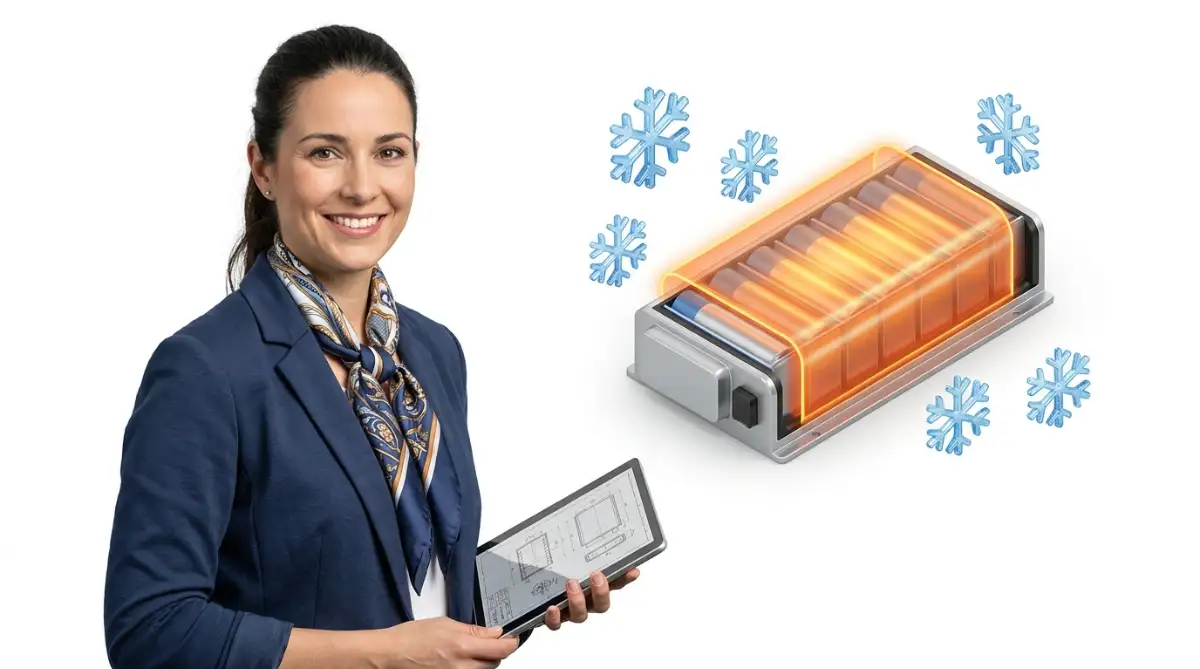
Your car actually has a dedicated network of liquid heating and cooling pipes wrapped entirely around the individual battery cells. When the sensors detect freezing weather, the car's computer automatically pumps warm liquid through those pipes to heat the battery up safely.
It literally acts like a heated blanket wrapped around the chemical cells. Because the car is constantly monitoring and adjusting its own internal temperature, it will never just randomly freeze and die while you are actively driving it.
The only time a battery gets dangerously cold is if you leave the car parked and completely unplugged in a freezing driveway for several days straight. If the car is driving, the internal friction of the motors and the active heating system keep the battery perfectly warm and highly responsive.
Myth 2: You Cannot Use the Heater Without Draining the Battery Instantly
When I first bought my electric car, I was terrified to touch the climate control buttons during the winter. I wore a heavy winter coat, gloves, and a hat inside my car because I firmly believed that turning on the heat would drain fifty miles of range in ten minutes.
This is a massive misunderstanding of how modern electric heating systems actually operate.
In an old gas-powered car, the engine naturally produces a massive amount of waste heat, which is simply blown into the cabin to keep you warm. Because an electric motor is incredibly efficient, it produces almost zero waste heat, meaning the car has to use battery electricity to generate warmth from scratch.
While it is absolutely true that running the heater uses battery power, the amount of power it uses is incredibly exaggerated by internet rumors.
The Heat Pump Revolution:
Almost all new electric vehicles are now built with a highly advanced piece of hardware called a Heat Pump.
A heat pump works exactly like a reversed refrigerator; it absorbs the tiny amount of heat that exists in the freezing outside air and forcefully compresses it to warm the inside of your cabin. A heat pump uses up to sixty percent less electricity than a traditional, old-school electric resistance heater.
I actually tested this myth myself on a freezing morning commute. My biggest realization was that blasting my heated seats and my heated steering wheel used almost zero noticeable battery power, because heating the physical surface of my body is mathematically much cheaper for the car than trying to heat the entire volume of air inside the cabin.
The 80/20 Heat Rule:
If you want to save maximum range while staying warm, follow this simple rule: Turn your heated seats and heated steering wheel up to 80% power, but keep the cabin air blower down to 20%. Heating the air wastes massive energy, but heating the seats directly touching your body uses almost nothing.
If you are terrified of losing your driving range by running your heater, you absolutely must watch this expert breakdown of how a heat pump actually saves your battery in the winter.
Myth 3: Fast Chargers Do Not Work in the Winter
You have probably seen the viral news clips showing angry drivers yelling at frozen charging stations during a blizzard. The news anchor will boldly claim that electric cars simply cannot be charged when it snows.
This is a dangerous half-truth that lacks critical context.
The physical charging stations themselves can absolutely function in the cold. The real problem happens when drivers try to plug a freezing cold battery into a massive, high-speed charger.
If you try to force massive amounts of electricity into a freezing cold, stiff battery, the car's computer will aggressively reject the power to prevent a chemical fire.
The Frozen Sponge Rule:
Imagine taking a bone-dry, frozen kitchen sponge and holding it under a high-pressure fire hose. The water will just violently bounce off the hard surface of the sponge without actually soaking in.
But if you run warm water over the sponge slowly, it softens up and easily absorbs the moisture. Your battery acts exactly like that sponge; it must be warm before it can absorb high-speed electricity.
Your Actionable Pre-Conditioning Strategy:
You hold the absolute power to bypass this charging delay completely. You simply have to use a software feature called Battery Pre-Conditioning.
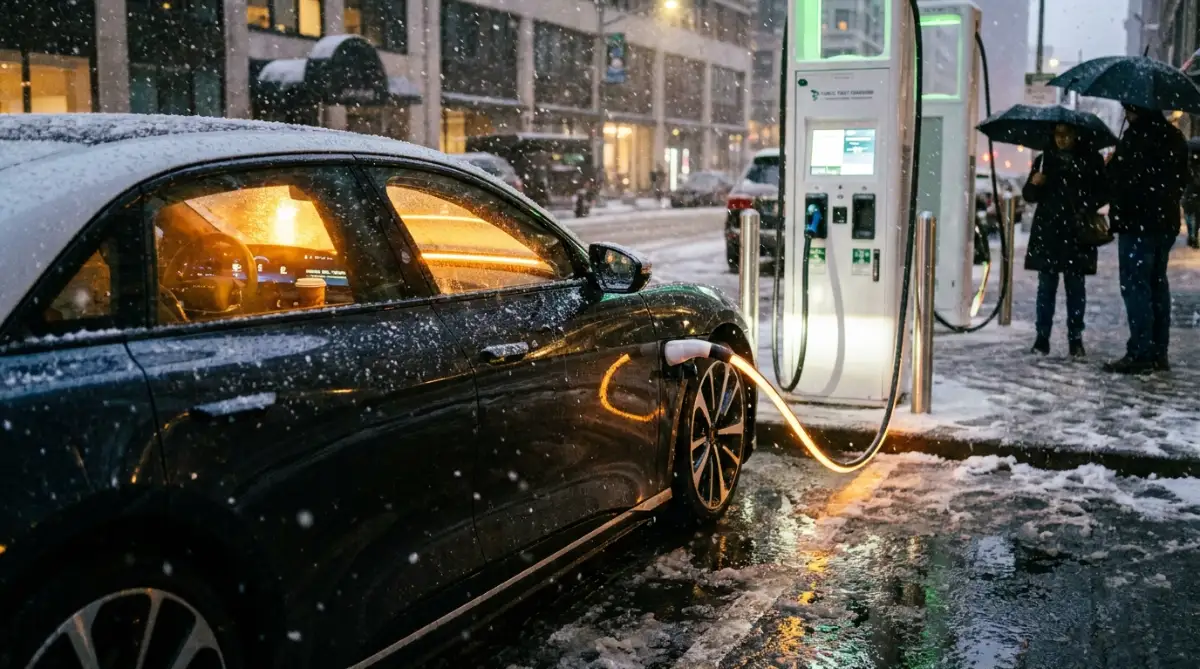
If you are driving toward a public fast charger, you must enter that specific charging station into your car's built-in GPS navigation system. When the car's computer knows you are heading to a charger, it automatically starts heating the battery pack thirty minutes before you arrive.
By the time you pull into the parking lot, your battery is physically warm, soft, and perfectly ready to accept the maximum charging speed immediately. The people you see stranded at the chargers are almost always the people who forgot to tell their car's GPS where they were going.
Advanced Pre-Conditioning Tactics for Extreme Winter
Once you understand the basic concept of a heat pump, we must look much deeper into how you actually prepare the vehicle before you drive. Your electric car's battery is not a passive block of metal; it is a highly active engine that completely dictates your winter survival.
According to advanced automotive engineering research shared by the advanced automotive engineering research shared by Argonne National Laboratory, manually managing battery temperature before unplugging from the wall is the absolute secret to maintaining full range in freezing weather [1]. You must learn to use these established software tools to protect your daily commute from sudden drops in power.
Data published by the Data published by the U.S. Department of Energy (DOE) on FuelEconomy.gov reveals that properly heating the cabin while the car is still plugged in can increase winter driving range by up to twenty percent [2]. Knowing how to use your car's mobile app is highly important before you step outside into the snow.
Many amateur EV owners trust angry social media myths instead of reading their actual owner's manual. Just as relying on television leads to surprising Miranda rights misconceptions from TV dramas when dealing with real-world law, relying on Facebook rumors leads to massive, sudden range anxiety.
If you try to bypass battery management rules and drive a freezing car, you risk permanently degrading the cells. You must avoid these winter errors just as you would avoid the silent DIY solar mistakes that destroy your home insurance payout to protect your wealth and peace of mind.
Just as overlooked habits that quietly destroy your smartphone battery lifespan ruin a tiny phone, leaving an electric car outside unplugged ruins a massive vehicle. Let us explore the advanced, pro-level secrets you can use to build an unbreakable wall of heat around your electric vehicle today.
The Secret of "Departure Time" Scheduling
One of the most powerful tools built into your electric car is a software setting called Departure Scheduling. Most drivers completely ignore this menu, assuming it is just a fancy alarm clock for the car.
It is actually a highly sophisticated thermal management trigger. If you leave for work every single morning at exactly 7:30 AM, you should tell the car's computer that exact time.
The Slow Coffee Analogy:
Imagine you have an automatic coffee maker in your kitchen. You do not want the machine to brew the coffee at 3:00 AM because it will be cold and gross by the time you wake up.
You set the machine to start brewing at 7:15 AM so the coffee is perfectly hot the exact second you walk into the kitchen. Your electric car behaves in this exact same logical way.
Your Actionable Strategy:
When you plug your car into your home charger at night, open your smartphone app and set your departure time for 7:30 AM. The car will sleep quietly all night, but at 6:45 AM, it will secretly wake up and begin pulling electricity directly from your house wall, not from the internal battery.
It uses the house electricity to warm the massive battery pack and heat the entire cabin to seventy degrees. When you walk out to the car at 7:30 AM, the windows are completely defrosted, the seats are hot, and your battery is still sitting at a perfect one hundred percent.
My Pre-Conditioning Routine:
- Step 1: Plug the car into the Level 2 wall charger in my garage.
- Step 2: Open the mobile app before going to bed.
- Step 3: Set the cabin temperature to 72 degrees and the departure time to 8:00 AM.
- Step 4: Wake up to a warm, fully charged car that already melted the snow off its windshield.
Utilizing the "Eco Mode" Traction Control
Driving in heavy snow and thick ice requires a completely different physical approach than driving on dry summer pavement. Electric cars are famous for their massive, instant torque.
If you press the accelerator pedal too hard on a patch of ice, the wheels will instantly spin out of control, throwing the car sideways. To prevent this terrifying slide, you must manually engage your car's Eco Mode or Snow Mode setting.
This specific software setting acts like a heavy, invisible pillow placed directly underneath your accelerator pedal. It physically softens the power delivery, forcing the electric motors to roll the tires incredibly slowly and smoothly.
Pro Tip / Expert Insight:
Never rely purely on the car's automated safety sensors to catch you on a sheet of black ice. Turning on Eco Mode manually drops the torque instantly, giving your heavy vehicle the absolute best chance of gripping the slippery road without violently spinning the tires.
Silent Winter Mistakes That Will Destroy Your Confidence
Even highly intelligent drivers make terrible choices when they are trying to manage their electric vehicle quickly on a freezing morning. The heavy stress of being late for work often makes us ignore basic thermal logic and safe driving habits.
If you fall into these incredibly common traps, your driving range will eventually experience a complete, sudden failure. This frustrating cycle can easily leave you stranded, destroy your confidence in the technology, and force you into a panic.
Here is exactly what you must avoid to keep your daily commute completely safe and reliable.
Unplugging the Car Too Early Before Leaving
One of the worst mistakes new EV owners make is unplugging their car from the wall charger an hour before they actually leave the house. They unplug the car, start eating breakfast, and then turn the heater on using the mobile app to warm the cabin up.
This is a massive, highly destructive logical trap. Because the car is unplugged, it has to use its own internal battery power to run the heavy cabin heater.
By the time you finally step outside and get into the car, you have already wasted ten percent of your driving range just heating the air inside the garage. Maintaining your daily energy reserves requires a strong, active protective habit.
Just like using natural home remedies to fix extremely dry and flaky skin heals your face gently, keeping your car plugged in protects your battery life. Always leave the charging cable physically attached to the car until the exact second you are ready to put the car in reverse.
Ignoring Your Tire Pressure in the Cold
We all know that air shrinks when it gets freezing cold. This basic law of physics directly impacts the four heavy rubber tires holding your car to the road.
If your tire pressure drops by just a few pounds, the tires spread out and create a massive amount of physical friction against the pavement. This heavy friction acts like an invisible anchor dragging behind your car, forcing the electric motors to work twice as hard to maintain your speed.
DO's and DON'Ts For Winter EV Safety:
- DO check your tire pressure gauge every single week during the winter months.
- DO NOT rely entirely on the digital dashboard range estimator when climbing steep, snowy hills.
- DO turn off your automatic folding mirrors in the winter to prevent the internal gears from freezing and breaking.
- DO NOT leave your car sitting at a twenty percent charge in a freezing parking lot overnight.
Common Questions About Winter EV Driving
Will my electric car battery get permanently damaged if I leave it outside in the snow?
No, your battery will not suffer permanent chemical damage from sitting in the cold. The battery management system goes into a deep sleep mode, and while the usable range will temporarily drop while it is freezing, the battery's total health will completely restore itself the moment the weather warms back up.
Is it safe to charge my car outside during a heavy rain or snowstorm?
Yes, it is absolutely safe. Both the charging cable handle and the port on your vehicle are heavily weather-sealed and designed to instantly cut power if water ever penetrates the connection, making electrocution mathematically impossible.
Why does regenerative braking feel completely different in the winter?
Regenerative braking works by pushing heavy electrical current back into the battery when you take your foot off the gas pedal. Because a freezing cold battery cannot accept heavy bursts of electricity safely, the car's computer automatically turns off regenerative braking until the battery physically warms up.
Do electric cars get worse traction in the snow because they are heavier?
Actually, the exact opposite is true. Because the massive, heavy battery pack is laid perfectly flat across the entire bottom of the car, an electric vehicle has an incredibly low center of gravity, which provides massively superior traction and stability on ice compared to a standard gas car.
Your Winter Driving Action Plan
Navigating the freezing winter months in an electric vehicle does not have to be a scary, mysterious, or overwhelming experience. You now hold the exact same strategic knowledge that professional automotive engineers use to design these incredible machines.
By taking a few short minutes to set your departure times, check your tire pressure, and utilize your heated seats, you completely remove the fear of suddenly running out of power. You are no longer crossing your fingers and hoping your battery survives the commute.
Instead, you are confidently commanding your own highly advanced thermal engine like a seasoned professional. This simple shift in your daily routine gives you incredible power over your entire winter driving experience.
I completely stopped stressing about winter driving the day I finally figured out how to use the departure scheduling feature on my app. Stop letting internet rumors dictate your anxiety, take five minutes right now to set your morning warm-up timer, and instantly feel the massive relief of stepping into a perfectly warm, fully charged car.
Disclaimer: The information provided in this article is for educational and general informational purposes only and does not constitute professional automotive repair, engineering, or winter driving safety advice. Electric vehicle battery chemistries, thermal management systems, and software settings vary heavily by manufacturer, brand, and specific model year. Always consult with a certified automotive technician or refer directly to your vehicle's official owner's manual regarding the exact specifications, charging limits, and winter safety requirements of your personal automobile.