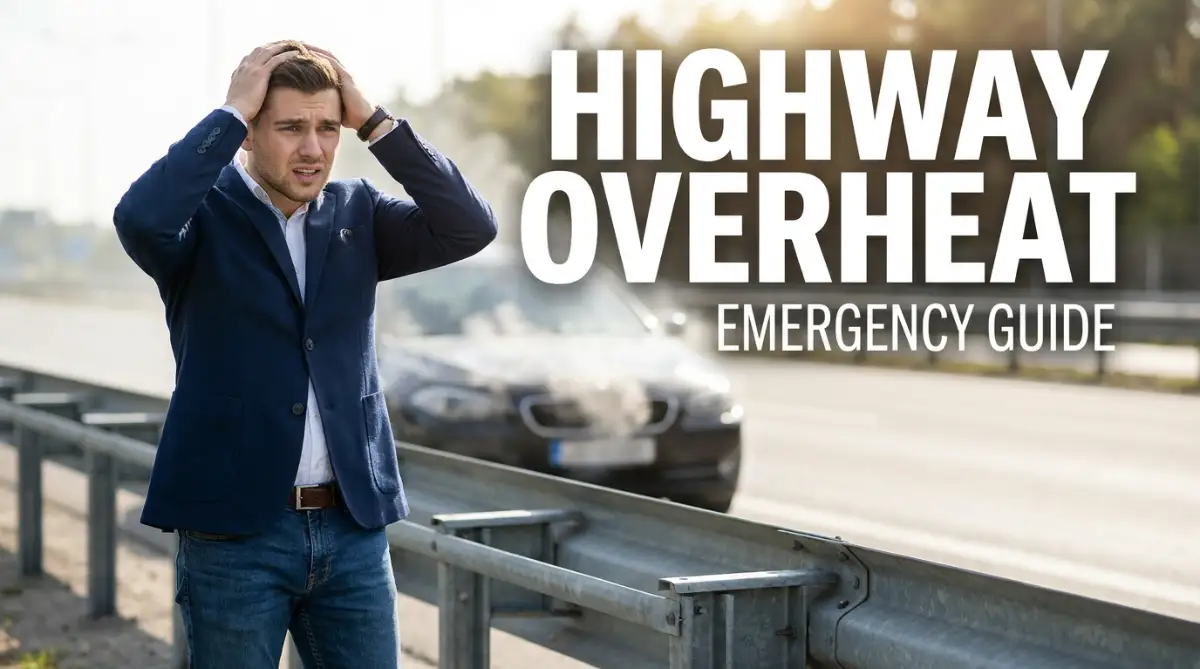
Seeing white steam blast out from under your car hood while cruising at seventy miles per hour turns an ordinary drive into an instant panic. Most drivers make the fatal mistake of pushing for "just one more exit" or ripping off the radiator cap while the engine is boiling, resulting in cracked engine blocks and third-degree steam burns. In this guide, I will show you how to use your cabin heater to pull heat off the motor, how to safely pull over without causing a pileup, and the strict rules you must follow before ever touching a hot cooling system.
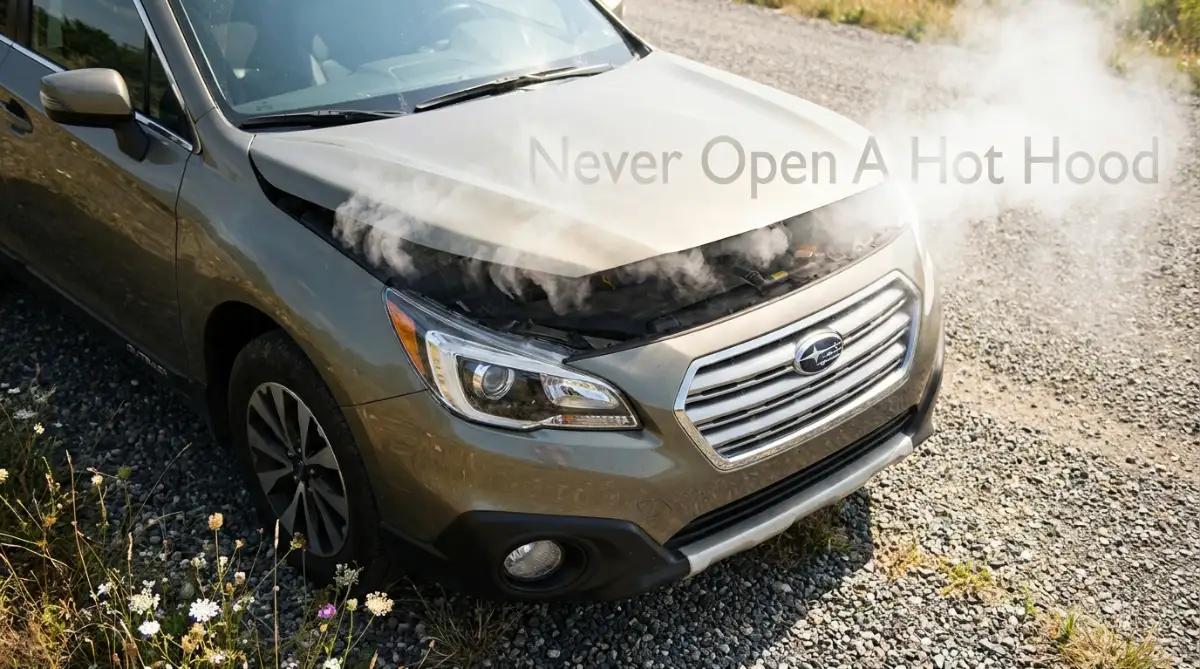
📌 What You Must Do When Your Engine Overheats:
-
Blast the heater immediately: Turning your cabin heat to full blast acts as a secondary mini-radiator, drawing heat directly away from the boiling motor.
-
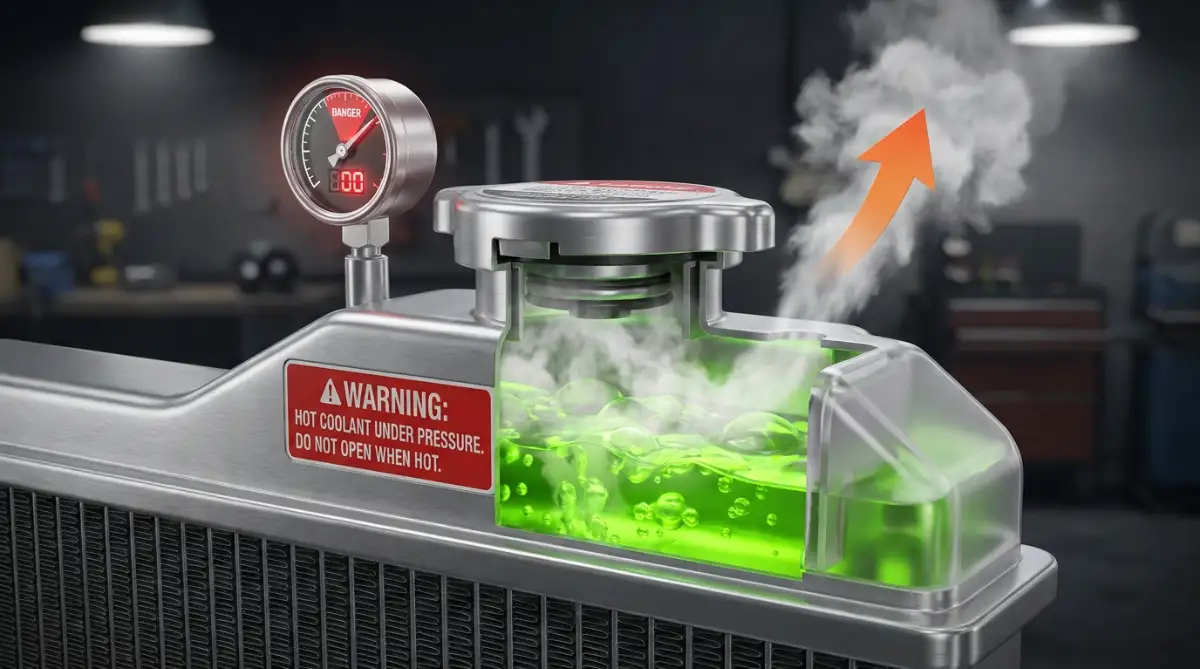
Never open a hot radiator cap: Pressurized coolant boils well over 240°F; opening the cap causes a violent volcanic steam geyser that causes third-degree burns.
-
Do not pour cold water on hot metal: Pouring cold liquid over a superheated engine block causes instant thermal shock, cracking the engine block in half.
-
Wait 45 minutes before touching anything: Engines take nearly an hour to cool naturally; step away from the car and wait behind highway guardrails.
Reading The Hidden Warning Signs First
Most engines do not just explode into a cloud of smoke without warning you first. The problem is that we are usually too distracted by our music or the highway traffic to notice the subtle hints. Your car always tries to communicate with you before a major meltdown happens.
The very first sign is usually a sudden loss of power. You might press the gas pedal to pass a truck, but the car feels strangely heavy and sluggish. When an engine gets too hot, the internal metal parts actually expand. This expansion creates massive friction, which robs your car of its normal horsepower.
The next warning sign is the smell. Engine coolant has a very distinct, sweet, syrupy odor when it burns. If you suddenly smell something sweet coming through your air conditioning vents, you need to look at your dashboard immediately. If that temperature needle is creeping past the halfway mark, your emergency has officially started.
🌡️ The Gauge Watch: Temperature Zones & Immediate Driver Action
My Mechanic Rule: If your temperature gauge hits the red zone, the clock is ticking in seconds, not miles. Driving just sixty seconds with zero coolant will warp your aluminum cylinder head and hand you a four-thousand-dollar engine repair bill!
The Counter-Intuitive Heater Trick
If you notice the temperature rising but you have not seen any smoke yet, there is a brilliant mechanical trick you can use. You need to immediately turn off your air conditioner and turn your car's heater on to the absolute maximum setting. Yes, I know it sounds completely crazy to blast the heat when you are already sweating on a summer highway.
Here is the science behind why this works. Your car's heater core is essentially a second, smaller radiator hidden behind your dashboard. When you turn on the heater, you are pulling massive amounts of excess heat away from the main engine block and pushing it into the cabin.
This simple action can drop your engine temperature just enough to give you a few extra minutes of safe driving. Those extra minutes might be exactly what you need to reach the next safe highway exit instead of pulling over on a dangerous blind curve. Just roll down all your windows, point the vents away from your face, and let the heater do its job.
Navigating The Safe Pull-Over
If the heater trick does not work, or if you actually see white steam, you must stop driving immediately. Continuing to drive a heavily overheating car for even one more mile will cause the internal metal components to warp. This will destroy your engine block completely.
Do not slam on your brakes. Sudden braking on a highway is extremely dangerous and can cause a massive pileup. Instead, turn on your hazard lights immediately to warn the drivers behind you. Take your foot off the gas pedal and let the car naturally lose speed.
Gently guide your vehicle to the right-hand shoulder. You want to get as far away from the white line as safely possible. If there is a grassy area beyond the shoulder, try to park your tires on the grass. You need a wide physical buffer between your car and the passing highway traffic.
I learned the hard way that ignoring the temperature gauge is a very expensive mistake. My biggest error was thinking I could just push the car for two more miles to reach a gas station, but that extra push actually cracked my radiator completely. Always pull over the exact second you realize the temperature is out of control.
The Deadly Danger Of The Hood
Once you are safely parked, your natural instinct will be to pop the hood to see what is wrong. You must fight this urge completely. Opening the hood of an overheating car is one of the most dangerous things you can do.
Your cooling system operates under extreme pressure. The liquid coolant inside the hoses is currently boiling at well over two hundred degrees. If you pop the hood, the sudden rush of cool outside air can actually cause a compromised radiator hose to burst in your face.
Even worse, you should absolutely never touch the radiator cap. The cap holds back massive amounts of pressurized steam. Removing it while the engine is hot is exactly like pulling the pin on a thermal grenade. The boiling coolant will erupt upward like a geyser, causing severe third-degree burns to your hands and face.
🎬 Mechanic’s Field Guide: 7 Common Causes of Engine Overheating
Before you start guessing which part broke or throwing money at random repairs, watch this hands-on diagnostic guide from Honest Mechanic Colorado. He walks you through the engine bay to explain the seven most frequent cooling system failures—from stuck thermostats to hidden water pump leaks—so you know exactly what your mechanic should check:
Now that you know what mechanical failures trigger an overheating spike on video, let us focus on protecting your personal physical safety while stranded on a fast-moving highway:
Securing Your Physical Safety
While your car sits on the shoulder cooling down, you need to think about your bodily safety. Highways are incredibly unforgiving places. If your car is parked very close to the traffic lanes, you should not stay inside the vehicle.
Check your mirrors carefully, exit through the passenger side door if possible, and step far away from the car. The safest place to stand is usually behind a metal guardrail or up on a grassy embankment. Never stand directly in front of your car or directly behind it.
If a distracted driver accidentally clips your parked vehicle, you do not want to be anywhere near the impact zone. Call for a tow truck or roadside assistance immediately. Tell the dispatcher exactly which highway mile marker you are near.
Understanding The Core Mechanics
To truly handle this emergency, it helps to understand what is actually breaking down inside your car. An internal combustion engine creates thousands of tiny explosions every single minute. These explosions generate a massive amount of heat that must be managed.
Your water pump pushes a mixture of water and antifreeze through small channels inside the engine block. This fluid absorbs the extreme heat. The hot fluid then travels out to the radiator at the front of your car, where the rushing wind cools it back down.
When your car overheats, it simply means this cycle has been broken. A rubber hose might have snapped, leaking all the fluid onto the road. The water pump might have failed, leaving the fluid entirely stagnant. Or the cooling fans behind the radiator might have stopped spinning.
Myth vs Reality: The Cold Water Mistake
There is a very old, dangerous myth that you can fix an overheating car by pouring a bucket of cold water directly over the engine. People think this will instantly cool the metal down so they can keep driving.
Myth: "If my engine is too hot, pouring cold water on it will balance the temperature out."
Reality: Pouring cold liquid onto super-heated metal causes a violent reaction called thermal shock.
When metal rapidly cools, it violently shrinks. If you pour cold water on a hot engine block, the metal will physically crack in half. A cracked engine block is completely unfixable. You would have to pay thousands of dollars to buy a brand new motor. You must let the engine cool down naturally with the ambient air.
The Waiting Game
Patience is your absolute best tool in this situation. It usually takes a minimum of forty-five minutes to an entire hour for an overheated engine to become safe to touch. Do not try to rush this process.
While you wait, you can look under the car from a safe distance. Try to see if there is a puddle forming on the ground. Engine coolant is normally brightly colored. It might be neon green, bright orange, or even pink, depending on the brand of your vehicle.
If you see a massive puddle of bright liquid rushing out from under the engine, you have your answer. You have suffered a catastrophic coolant leak. In this scenario, adding more water to the radiator later will not help at all. It will simply pour straight out of the broken hose and onto the ground again. You absolutely require a tow truck.
What Happens If You Lose Power Steering?
There is another terrifying element to overheating that nobody talks about. Sometimes, the cause of the overheat is a snapped serpentine belt. This is the large rubber belt that spins your water pump.
If this belt breaks on the highway, your water pump stops working, causing the immediate overheat. But that exact same belt also powers your steering system and your alternator. This means you will suddenly lose the ability to steer easily.
The steering wheel will instantly become incredibly stiff and heavy. Do not panic if this happens. The car can still steer, but you will have to use a lot of arm muscle to force the wheel to turn. Grip the wheel tightly with both hands and firmly force the car onto the shoulder.
Preparing For The Tow Truck Diagnosis
When the tow truck driver finally arrives, they are going to ask you a few simple questions. Giving them clear, accurate answers will help your mechanic solve the problem much faster.
Tell them exactly what you smelled. Mention if the temperature gauge spiked slowly over ten minutes, or if it shot up instantly in two seconds. An instant spike usually means an electronic sensor failed or a belt snapped. A slow, steady rise usually points to a slow coolant leak.
Also, tell them if you heard any strange noises. A failing water pump often makes a loud grinding or whining noise right before it completely dies. A blown head gasket sometimes sounds like a rhythmic ticking or puffing noise coming from the engine bay.
By staying calm, refusing to open the hot hood, and clearly documenting the warning signs, you take total control of the emergency. You prevent permanent engine damage and ensure your own physical survival on a very dangerous stretch of road. The highway is unpredictable, but your reaction to the crisis does not have to be.