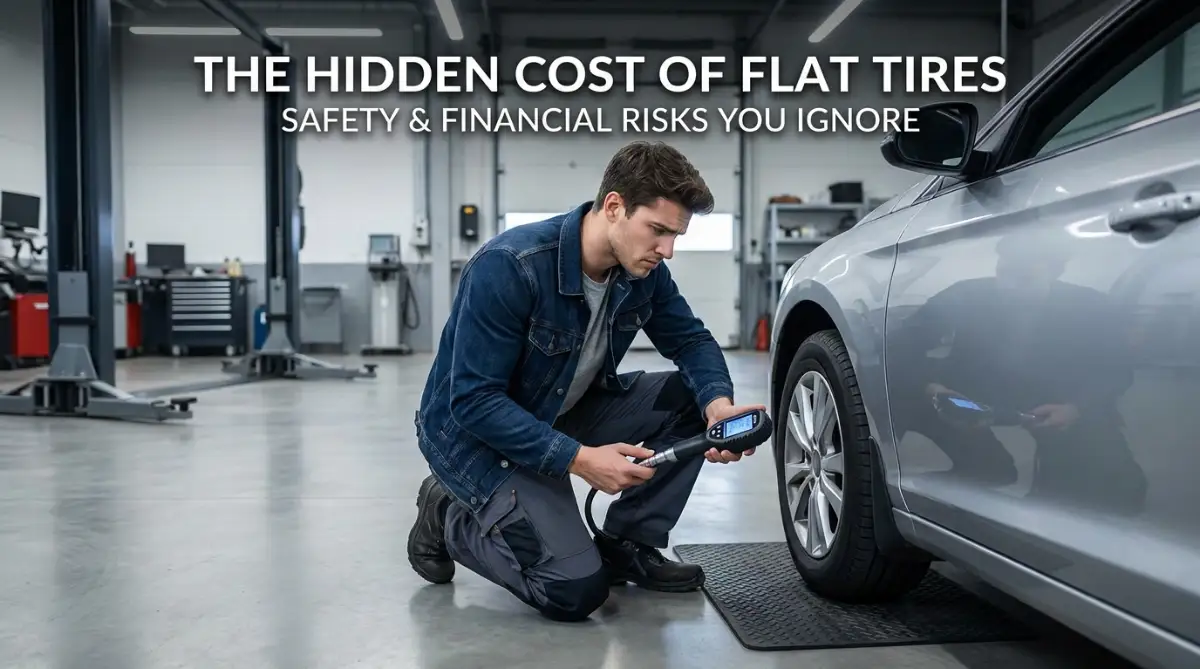
That glowing orange tire horseshoe light on your dashboard is easy to ignore after a long day at work, but driving on soft rubber is an expensive gamble. Most people assume low tire pressure only drops gas mileage by a tiny fraction, but it actually bakes the internal steel belts from intense friction until the tire blows out completely. In this guide, I will show you the real damage underinflation causes beneath your car, why relying solely on dashboard sensors leaves you blind, and how a sixty-second pressure check can save you hundreds of dollars in premature tire replacements.
📌 What Every Driver Must Know About Tire Pressure:
-
Heat destroys soft tires: Underinflated tires flex heavily as they roll, creating intense internal friction that separates steel belts and causes highway blowouts.
-
Never trust your eyes: Modern radial tires hide low air pressure behind stiff sidewalls; a tire can be 8 PSI low and still look completely firm.
-
Check only cold tires: Driving even one mile warms up the air inside and gives a false high reading; always measure first thing in the morning.
-
Follow the door sticker, not the tire: The correct pressure is printed on the driver-side door jamb, not the maximum number molded onto the tire rubber.
The Hidden Mechanics of Underinflated Rubber
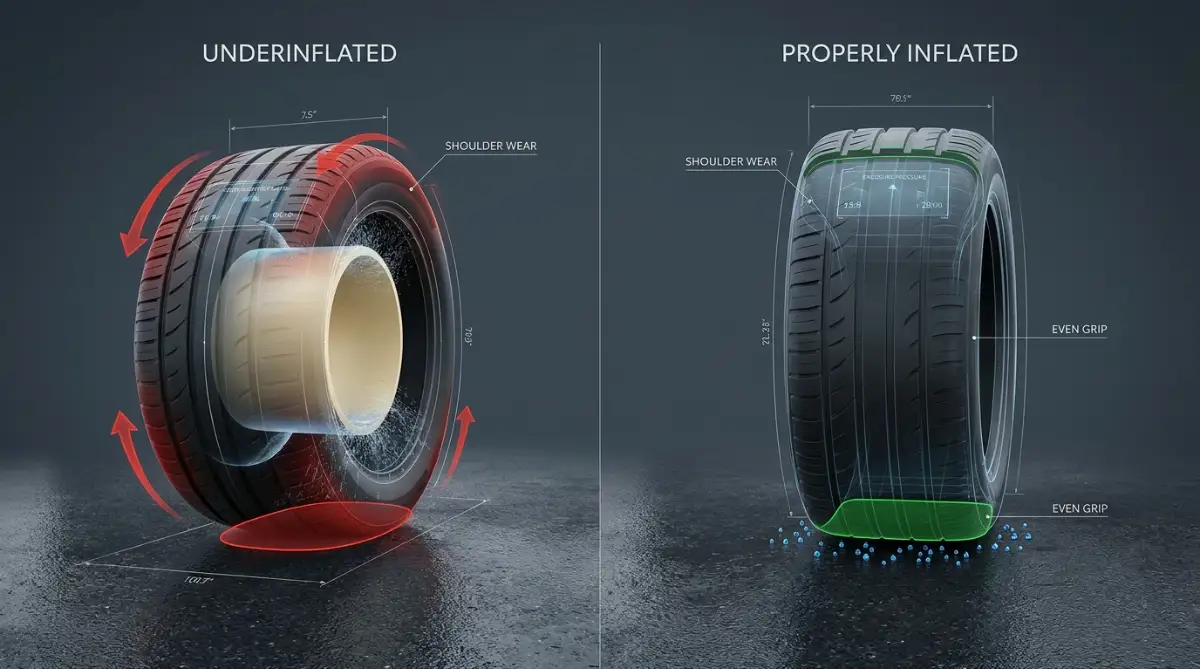
To understand why this is so dangerous, you need to picture what actually happens where the rubber meets the road. A properly inflated tire sits tall and firm, creating a very specific, flat patch of contact with the asphalt. When you lose just a few pounds of air pressure, the structural integrity of that entire tire completely collapses.
The sides of the tire, known as the sidewalls, begin to bulge outward under the heavy weight of the vehicle. Instead of rolling smoothly forward, the tire now bends and flexes aggressively with every single rotation. This excessive flexing creates a massive amount of internal friction deep inside the rubber compounds.
Friction directly generates severe heat, which is the absolute worst enemy of any automotive tire. If you drive a soft tire at highway speeds, the internal temperature can easily reach boiling levels. When the rubber gets too hot, the internal steel belts start to separate, leading to a sudden and explosive blowout.
How Soft Tires Drain Your Fuel Budget
Beyond the obvious safety risks, driving on soft tires is essentially exactly like burning dollar bills out of your car window. Have you ever tried to ride a bicycle with a completely flat tire? You have to pedal twice as hard just to move forward because the flat rubber acts like a heavy anchor dragging on the ground.
Your car engine faces the exact same exhausting struggle when the tires lack proper air pressure. This is a scientific concept known as rolling resistance. When rolling resistance increases, the engine has to burn significantly more fuel just to maintain your normal highway cruising speed.
📊 The Low Tire Penalty: What Missing Air Pressure Actually Costs You
My Rule of Thumb: If you wait for the dashboard light to turn on before grabbing an air pump, you have already been burning extra gas and wearing down your tire shoulders for weeks. Check your pressure manually while the tires are stone cold!
Even a slight drop in pressure can lower your overall gas mileage by up to three percent. That might not sound like much, but if you commute every day, you are quietly wasting hundreds of dollars at the gas pump every year. Keeping your tires firm is the absolute easiest, completely free trick to instantly improve your vehicle's fuel economy.
The Silent Destruction of Uneven Tread Wear
Tires are incredibly expensive, and you expect a good set to last you at least a few years. When a tire lacks air, the center of the tread lifts up slightly, forcing the outer edges to carry the entire weight of the car. This means the outer edges of your tires will scrub against the pavement and wear down incredibly fast.
I actually ruined a brand-new set of expensive tires in less than six months because I never bothered to buy a pressure gauge. The middle of the tire looked completely brand new, but the outer shoulders were completely bald. I had to throw away perfect rubber simply because I was too lazy to check the air pressure once a month.
🎬 AutoZone Pro Tip: How Tire Pressure Controls Your Gas Mileage
If you want to see the direct connection between your air gauge and your wallet, watch this quick visual demonstration from the technicians at AutoZone. They explain how low tire pressure creates heavy rolling resistance, how soft rubber burns extra gas at the pump, and why regular checks stop your tread from wearing out years too early:
Now that you have seen how soft tires silently drain your fuel budget on video, let us look at the most dangerous hidden consequence of all: emergency braking failure.
When the edges wear down, you lose the deep grooves that physically push rainwater away from the tire. If you hit a puddle on the highway, the bald edges will cause the car to hydroplane and lose total control. Replacing your tires early because of uneven wear is a massive, completely avoidable financial penalty.
The Unpredictable Danger of Emergency Braking
We rarely think about our tires until we suddenly need them to save our lives. Imagine a child running out into the street chasing a basketball right in front of your moving car. You slam your foot hard on the brake pedal, expecting the vehicle to stop instantly.
If your tires are properly inflated, they bite hard into the asphalt and bring you to a safe, controlled halt. But if your tires are soft and squishy, the braking physics completely change for the worse. The soft sidewalls will actually fold and collapse forward under the extreme braking pressure.
This physical folding significantly increases the total distance required for the car to come to a complete stop. You might miss hitting the obstacle by five feet with good tires, but crash directly into it with soft tires. Your expensive anti-lock braking system cannot save you if the rubber gripping the road is structurally failing.
Steering and Handling Nightmares
Driving an underinflated car feels exactly like trying to run a marathon while wearing a pair of loose, slippery socks. The vehicle loses its sharp, responsive connection to the steering wheel in your hands. When you turn the wheel to change lanes, the car feels incredibly heavy, sluggish, and eager to drift off course.
This delayed steering reaction is incredibly dangerous if you have to swerve suddenly to avoid a pothole or a wild animal. The car will physically lean heavily to one side, making it incredibly difficult to regain balance and control. You might actually overcorrect your steering just to force the car back into the lane, leading to a violent rollover accident.
You want your car to feel tight, predictable, and instantly responsive to your physical commands. Maintaining the exact manufacturer-recommended air pressure is the only way to guarantee that specific handling performance. Do not accept a sloppy, dangerous ride when the absolute cure takes less than three minutes at a local gas station.
Smart Methods to Maintain Perfect Tire Health
Now that you fully understand the severe risks, building a rock-solid maintenance habit is actually incredibly simple. The very first tool you need to buy is a high-quality digital tire pressure gauge to keep in your glove compartment. Do not rely on the cheap, plastic stick gauges sitting in a dusty cup at the gas station, as they are notoriously inaccurate.
A digital gauge provides an exact mathematical number, removing all the stressful guesswork from the process. You want to check your tire pressure exclusively when the tires are completely cold. Driving just two miles down the road generates enough heat to temporarily expand the air inside, giving you a completely false reading.
Reviewing official tire safety documentation from the National Highway Traffic Safety Administration (NHTSA) confirms that checking pressure before your morning commute is the absolute safest strategy. Make it a strict habit to check all four tires on the first Saturday morning of every single month. This small monthly routine acts exactly like checking for dangerous password management mistakes that leave your digital identity exposed; catching problems early prevents massive disasters later.
You also need to completely ignore the bold numbers written directly on the rubber sidewall of your tire. That specific number is the maximum pressure the tire can physically hold before bursting, not the recommended driving pressure. If you fill your tires to that maximum limit, your car will bounce wildly over every single bump on the road.
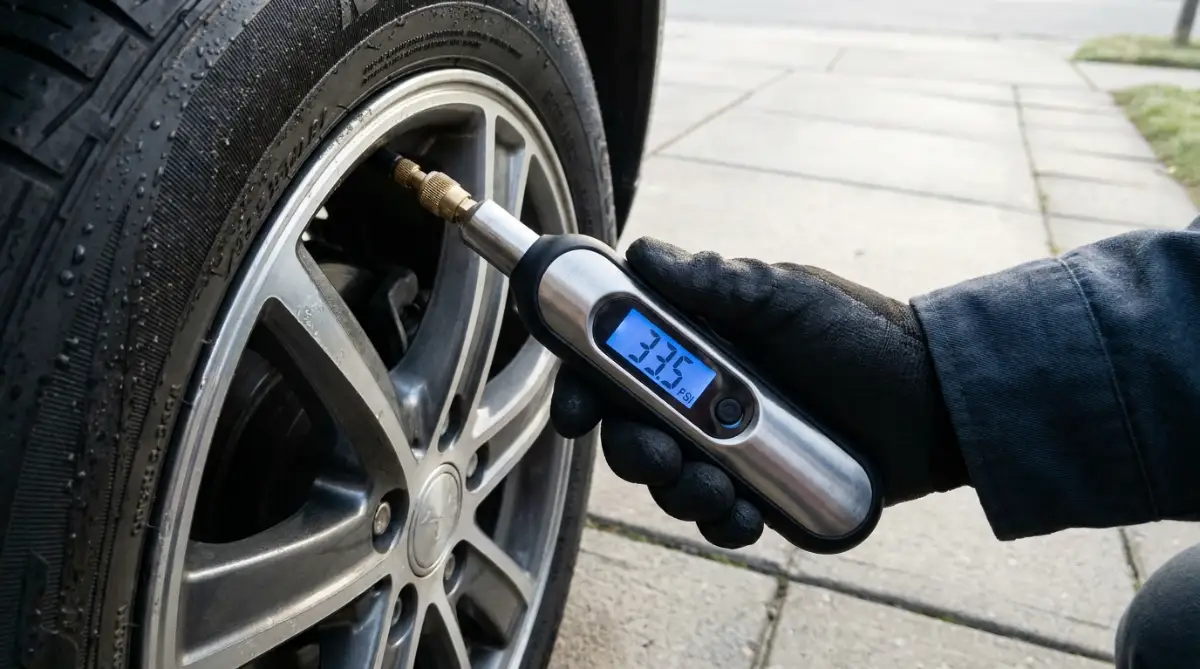
To find the correct pressure, you must open your driver-side door and look for a heavy yellow and white sticker inside the door jamb. The automotive engineers calculated that specific number based on the exact weight and suspension dynamics of your specific vehicle. Following that factory sticker ensures your tires maintain the perfect footprint on the highway.
🏷️ The PSI Number Rule: Door Jamb vs. Tire Sidewall
Never make the rookie mistake of pumping air until you match the number stamped on the tire rubber:
-
The Sidewall Number (The Trap): That 44 or 50 PSI stamped into the tire is the maximum bursting limit the rubber can survive. Inflating to that number ruins your traction, shakes your teeth loose over bumps, and wears out the center tread fast.
-
The Driver Door Sticker (The Gold Standard): Look at the yellow-and-white metal sticker inside your driver-side door frame. That 32 to 36 PSI number was calculated by factory suspension engineers specifically for your vehicle's total weight.
Understanding the Dashboard TPMS Light
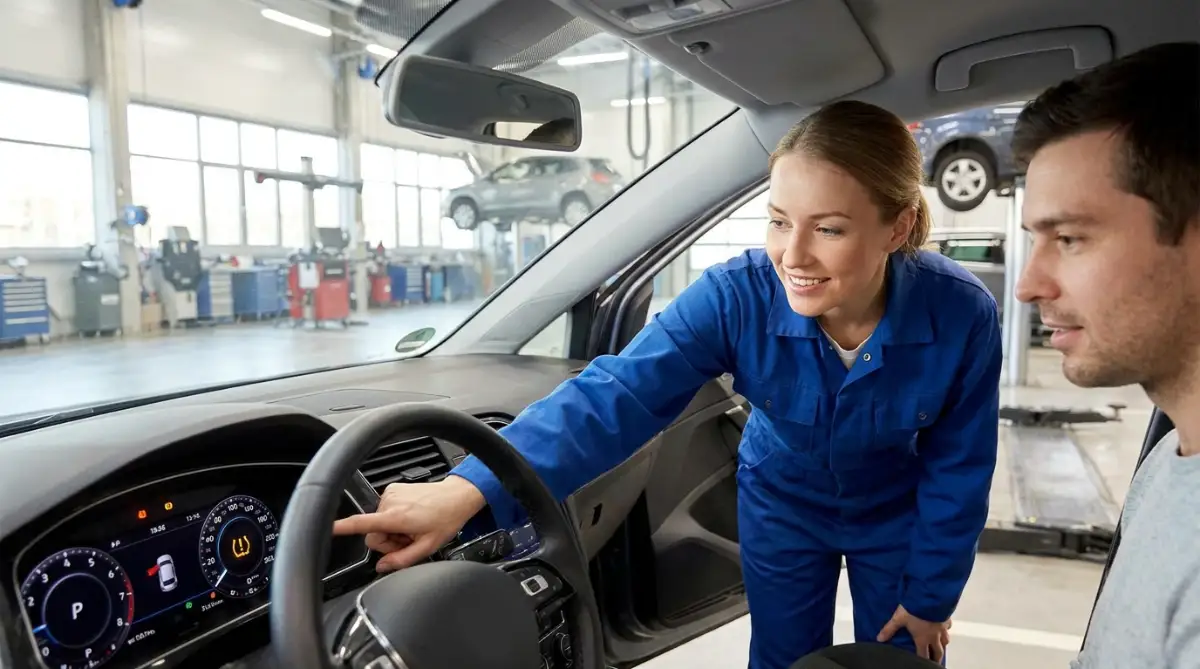
Modern cars are legally required to have a Tire Pressure Monitoring System (TPMS) installed from the factory. This is the system that triggers the orange warning light on your dashboard when something goes wrong. However, relying entirely on this warning light is a massive mistake that many drivers make daily.
The TPMS sensor usually only triggers the dashboard light when a tire loses roughly twenty-five percent of its recommended pressure. This means you could easily be driving on dangerously soft tires for weeks before the computer actually warns you. Treating the warning light as your primary maintenance strategy is exactly like ignoring dangerous morning routine mistakes that secretly destroy your daily productivity.
If that orange light turns on while you are driving, do not panic and slam on the brakes on a busy highway. Slowly and carefully guide your vehicle to the nearest safe parking lot or gas station. Ignoring the light and driving fifty more miles is a guaranteed way to completely destroy the internal structure of the tire.
Tragic Errors That Destroy Expensive Rubber
Watching a family sit stranded on the side of a busy highway is incredibly heartbreaking. These terrifying situations almost always stem from a few easily preventable mistakes that drivers make out of pure convenience. The absolute worst offense is visually guessing if a tire needs air just by looking at it in the driveway.
Modern radial tires have extremely stiff sidewalls that mask how much air is actually missing inside. A tire can easily be ten pounds underinflated and still look completely firm to the naked eye. If you trust your eyes instead of a digital gauge, you are silently destroying your expensive rubber.
Another massive pitfall is completely forgetting about the spare tire hidden in the trunk of your car. People usually ignore the spare for five years, completely forgetting that rubber slowly loses air pressure over time even when not being used. Imagine finally getting a flat tire in the rain, only to pull out a spare that is completely flat and useless.
I once had a blowout on a dark country road and realized my spare tire had zero air pressure because I never checked it. I had to pay a massive tow truck fee simply because of my own lazy maintenance habits. It is exactly like realizing