The Midnight Battle: Why Counting Sheep Is Actually Driving You Crazy
I spent three years dreading bedtime. Every night at 3 AM, I would stare at my ceiling, completely exhausted but painfully awake, doing the math on how few hours I had left before my alarm went off. I tried every "expert" tip out there—lavender sprays, expensive teas, absolute darkness—and nothing worked. It turns out, trying so hard to force myself to sleep was the exact thing keeping me awake. Let me show you what finally fixed my sleep schedule when all the generic advice completely failed.
Your Midnight Survival Guide (TL;DR)
- If you can't sleep after 20 minutes, get out of bed immediately. Don't train your brain to panic under the covers.
- Stop trying to catch up on sleep during the weekends; waking up at the same time every day is mandatory.
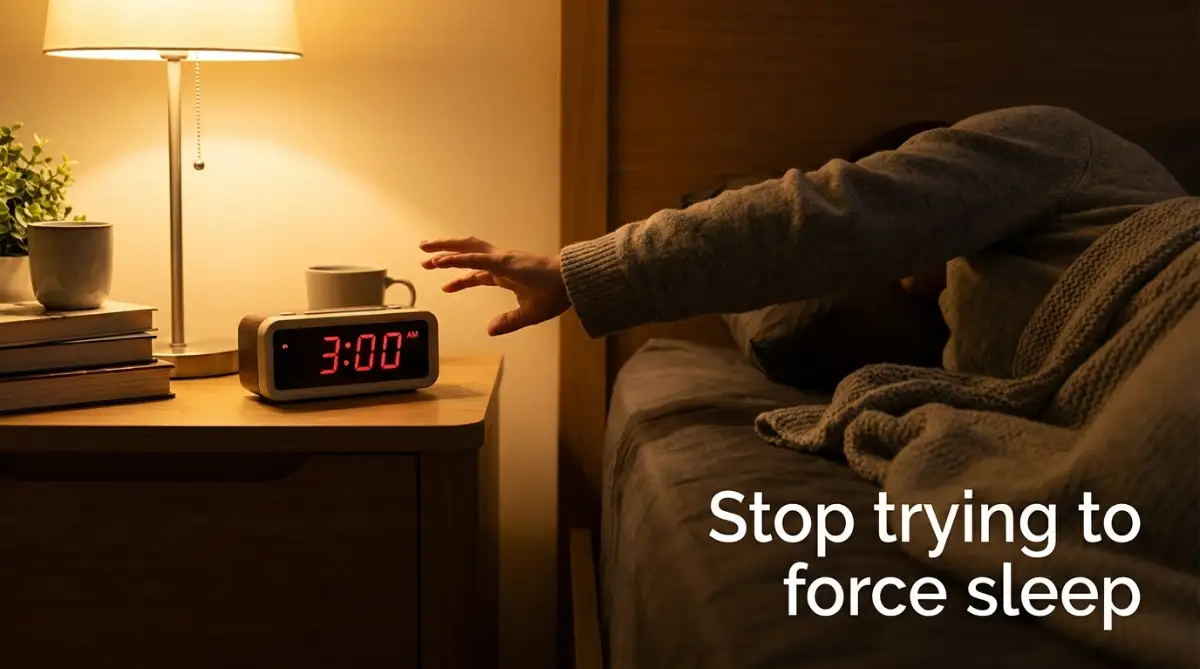
- Turn your clock away from your face. Checking the time at 3 AM triggers a massive adrenaline rush.
- Try "Paradoxical Intention": Lie in bed and actively tell yourself you are going to stay awake. Removing the pressure to sleep usually makes you fall asleep.
The Reality Check: When Good Sleep Advice Turns Toxic
We are constantly bombarded with rules about how to get the perfect night of rest. But what happens when the exact rules you follow are keeping you awake?
Let's look at the actual science of sleep and break down why these popular habits are secretly working against you. Many of the things we believe to be healthy are actually creating hidden stress for our nervous systems.
The Big "8 Hours A Night" Illusion
Almost every health article tells you that you must get exactly eight hours of sleep to function properly. This rule is repeated so often that we treat it like an absolute law of nature.
But thinking you need exactly eight hours is one of the biggest traps for an insomniac. It creates massive performance anxiety the moment your head hits the pillow. You start doing sleep math, counting backwards from your alarm time to see if you can still hit that magic number.
Scientific Fact: Sleep needs are highly individual and change based on your genetics, daily activity, and stress levels.
Some people function beautifully on six and a half hours, while others genuinely need nine. By forcing yourself to stay in bed for eight hours when your body only needs seven, you create long periods of shallow, broken sleep. Your bed suddenly becomes a place of frustration instead of a place of deep rest.
The Danger Of "Staying In Bed Until You Fall Asleep"
We logically think that staying in bed is the only way to eventually fall asleep. If you get up, you will just wake yourself up more, right?
This is actually the most damaging sleep myth out there. Think of your brain like a highly trainable puppy. It learns through association and environmental cues.
If you spend three hours tossing, turning, and stressing out in bed, your brain connects the bed with feelings of anxiety. Your mattress literally becomes a trigger for panic instead of relaxation.
Here is what you should do instead:
- The 20-Minute Rule: If you cannot fall asleep after what feels like 20 minutes, get out of bed immediately.
- Change Your Environment: Go to a dimly lit room and do something boring, like reading a technical book or knitting.
- Return Only When Sleepy: Do not go back to bed until your eyelids are literally drooping and heavy.
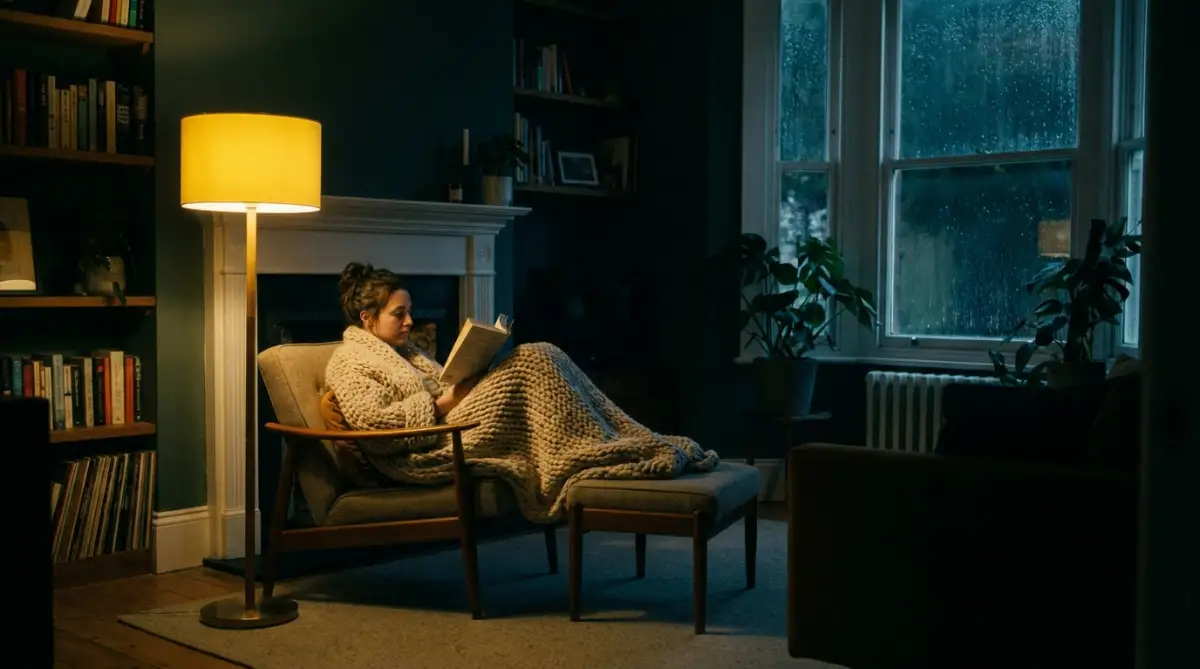
I used to force myself to stay in bed, thinking my body would eventually surrender to sleep. My biggest realization came when I finally started getting up to read on the couch instead; my brain stopped treating my bed like a torture chamber, and my sleep anxiety dropped entirely.
A Quick Rule of Thumb:
If you are lying in bed and start feeling your chest tighten with anxiety, that is your immediate signal to get up. Do not look at the clock to check if 20 minutes have passed; just trust your physical frustration. The bed is for sleeping, not for suffering.
Catching Up On Sleep On The Weekends
After a brutal week of poor rest, Saturday morning feels like a massive relief. You turn off your alarms, draw the heavy curtains, and sleep until noon to pay off your sleep debt.
While this feels amazing in the moment, it completely destroys your internal body clock. Your circadian rhythm heavily relies on a consistent wake-up time to know when to release melatonin at night.
Myth vs Reality:
- Myth: You can bank your sleep and pay it back later without consequences.
- Reality: Sleeping in on Sunday means you will not be tired on Sunday night, triggering the dreaded Monday morning insomnia.
When you sleep in late, you are basically giving yourself severe jet lag without ever getting on an airplane. Your brain thinks you traveled across three different time zones. To fix this, you must wake up at the exact same time every single day, even after a terrible night of sleep.
The Truth About Blue Light and Bedtime Winding Down
Have you ever felt completely exhausted, but the moment you put your phone away and close your eyes, you feel wide awake? Watch this eye-opening explanation below:
The "Blue Light Blockers Solve Everything" Myth
We have all heard that the blue light from our phones blocks melatonin production. So, the modern solution is to just wear yellow-tinted glasses or turn on night mode.
People think this gives them a free pass to scroll through social media or read the news right up until they close their eyes. But blue light is only half of the actual problem.
The content you are consuming is doing far more damage to your nervous system than the light itself. Reading an angry political post, watching a fast-paced video, or checking an urgent work email triggers a massive dopamine and cortisol release. Your brain goes into high alert mode, thinking there is a problem it needs to solve immediately.
No pair of special glasses can stop the stress response of reading an upsetting text message. You need a complete digital sunset to let your mind truly power down.
Myth: You Must Have A Complicated Bedtime Routine
Another common trap is building an incredibly strict, multi-step bedtime routine. You take a warm bath, meditate for twenty minutes, drink chamomile tea, and read ten pages of a book.
While these activities are healthy, relying heavily on them creates a huge problem. If you miss one step, or if you sleep in a different house, your brain panics. You start believing that you cannot physically sleep unless conditions are absolutely perfect.
Good sleepers do not have rigid rituals; they just go to bed when they are tired. Your goal should be to make sleep feel effortless again, not like a difficult chore you have to complete perfectly.
A Quick Comparison Table: What Helps vs What Hurts
Understanding The Core Root Of Sleep Anxiety
To truly move past insomnia, we have to look closely at how fear drives the entire condition. Insomnia is rarely just a physical problem.
It is almost always a learned psychological fear of not sleeping. When you experience a few bad nights due to stress or illness, you start worrying about it happening again. This worry releases adrenaline into your bloodstream, which chemically prevents your brain from falling into deep rest.
You end up developing a phobia of wakefulness. Every time you try a new tea, a new pillow, or a new supplement, you are secretly sending a message to your brain. You are telling it, "Sleep is difficult, and I need special tools to achieve it."
To break free, you must slowly prove to your brain that being awake in the middle of the night is not actually dangerous. It might be annoying, and you might feel tired tomorrow, but it is not a life-threatening emergency.
Redefining Your Relationship With Rest
Instead of trying to force sleep, focus entirely on deep relaxation. You cannot control the exact second you fall asleep, just like you cannot control your heartbeat.
What you can control is how you respond when you are awake. If you lie in bed accepting your wakefulness without fighting it, your heart rate slows down naturally. Paradoxically, the moment you stop caring about whether you sleep or not is the exact moment sleep finally arrives.
Your body knows exactly how to sleep. It has known how to do this since the day you were born. By removing these strict, stressful myths from your life, you step out of your own way and let your biology take over naturally.
Beyond The Basics: Deep Biological Secrets To Fix Your Sleep Cycle
Now that we understand why forcing yourself to sleep actually backfires, we need to look at what actually works. You do not need expensive gadgets or heavily medicated sleeping pills to fix your internal clock.
Your body already has a beautifully designed system for resting. You just need to remove the hidden roadblocks that are confusing your nervous system every night. Let's look at some highly advanced, biology-based methods to naturally invite sleep back into your bedroom.
The Magic Of The "Morning Anchor" Routine
Most people treat their insomnia by focusing entirely on what they do right before bed. But science shows that your ability to fall asleep at night is actually determined the exact moment you wake up.
Your brain needs a massive dose of bright sunlight first thing in the morning to start a timer. This sunlight hits your eyes and tells your biological clock to start counting down to bedtime. If you wake up and stay in a dark room scrolling on your phone, your brain never gets that essential morning signal.
You must get outside within thirty minutes of waking up. Just ten minutes of natural sunlight on your face completely resets your daily rhythm. Ignoring this step is one of the most common dangerous morning routine mistakes that secretly destroy your daily productivity and your evening sleep drive.
Mastering The Core Temperature Drop
Did you know your body temperature has to drop significantly for you to fall into deep, restorative rest? Your core needs to cool down by about two to three degrees Fahrenheit.
This is why a stuffy, warm bedroom is your worst enemy when dealing with insomnia. If you sleep in heavy clothes or keep the heater on, your body physically cannot cross the threshold into the deep sleep stages.
Think about how electronics work. When you play heavy video games, your device heats up, and you look for simple ways to spot and avoid overheating issues so it does not crash. Your brain works the exact same way at night. It needs to dump excess heat to power down properly.
A Quick Pro Trick for Cooling Down:
- Take a hot shower about an hour before bed.
- This sounds backwards, but the hot water brings all your blood to the surface of your skin.
- When you step out of the shower, that heat evaporates rapidly into the air.
- This creates an artificial drop in your core body temperature, heavily signaling to your brain that it is time to sleep.

The Power Of Paradoxical Intention
This is a secret technique often used by top sleep therapists, and it sounds completely crazy at first. When you get into bed tonight, I want you to actively try to stay awake.
Do not look at your phone or turn on the lights. Just lie there with your eyes open and tell yourself, "I am going to stay awake for as long as I possibly can." Keep your eyes gently open in the dark and focus entirely on the shadows in your room.
By removing the pressure to fall asleep, your sleep anxiety immediately disappears. According to leading experts discussing the psychological impact of sleep anxiety, trying to force rest creates an adrenaline spike. The moment you give yourself permission to stay awake, that adrenaline vanishes, and sleep quietly sneaks up on you.
Creating A True Mental Buffer Zone
You cannot go from working intensely on your laptop directly to sleeping peacefully. Your brain is not a light switch that you can just flip off on demand.
During this buffer time, you must stop trying to solve problems. Dim the overhead lights, switch to small reading lamps, and do something incredibly boring. This slow transition period convinces your nervous system that all daily threats have passed.

The Accidental Sleep Saboteurs You Deal With Every Night
Even when people try their best to build healthy habits, they often fall into hidden traps. These are innocent mistakes that we make out of pure desperation for rest.
If you do not recognize these sneaky habits, they will quietly undermine all the hard work you are putting into fixing your schedule. Let's break down the most dangerous pitfalls that are actively ruining your nights.
The Clock-Watching Panic Trap
This is perhaps the most common and destructive habit of all insomniacs. You wake up in the middle of the night and instantly reach for your phone or alarm clock to check the time.
The moment you see "3:14 AM" glowing in the dark, your brain starts doing panicked math. You realize you only have three hours left before work, and a massive wave of panic washes over you. That single moment of panic releases enough cortisol to keep you wide awake until sunrise.
You have to completely remove the ability to see the time from your bed. Turn your alarm clock around to face the wall. If you use your phone for an alarm, put it entirely across the room face down. You do not need to know what time it is unless your alarm is actively ringing.
The Sleep Math Trap:
- What you do: "It's 2 AM. If I fall asleep right now, I can still get 4 hours."
- What your brain hears: "DANGER! We only have 4 hours left! Stay awake and panic!"
- The fix: Turn your clock around. If you don't know what time it is, your brain can't do the math.
Overdosing On Synthetic Melatonin
When natural sleep fails, almost everyone turns to the supplement aisle at the grocery store. People treat gummy melatonin like it is a completely harmless sleep vitamin.
They take massive doses of five or ten milligrams every single night, hoping it will knock them out. But melatonin is an actual hormone, and taking high doses confuses your body's natural production factories.
The medical truth about melatonin usage shows that less is actually more. High doses can cause terrifying nightmares, severe morning grogginess, and actually fragment your rest. If you rely on massive doses of store-bought hormones, your brain simply stops making its own naturally.
Using Your Bed As An Entertainment Hub
Your bed should only be used for two things: sleep and intimacy. That is it.
However, we have turned our mattresses into home offices, dining tables, and movie theaters. We lie in bed paying bills, answering emails, and worrying about dangerous password management mistakes that leave your digital identity exposed.
When you do these high-stress activities under your blankets, your brain creates a strong physical association. It starts believing that the bed is a place for high alertness and problem-solving. If you want to watch a movie or eat a snack, you must do it on the living room couch, never in your bed.
The "Just In Case" Napping Disaster
After surviving a terrible night of tossing and turning, you feel like an absolute zombie by 2:00 PM. The urge to take a quick nap on the couch becomes completely overwhelming.
You tell yourself that you will just close your eyes for twenty minutes to survive the afternoon. But that small nap acts like a snack before dinner; it completely ruins your appetite for sleep later that night.
By sleeping in the afternoon, you release the sleep pressure that your body was building up. When midnight rolls around, you are suddenly wide awake again, trapped in the exact same miserable cycle. You must push through the daytime tiredness to protect your ability to sleep at night.
Your Personal Blueprint For Finally Waking Up Refreshed
Overcoming insomnia is not about perfectly executing a complex list of medical rules. It is simply about getting out of your own way and letting your natural biology take the wheel.
When you stop treating sleep like a difficult performance test, the anxiety slowly melts away. You have to start trusting your body again, even when it feels like it has betrayed you.
The "Do Nothing" Strategy For Late-Night Wakings
If you wake up at 2 AM, the best thing you can do is absolutely nothing. Do not try to meditate perfectly, do not do intense breathing exercises, and do not panic.
Just accept that you are awake and that it is perfectly okay. Read a physical book with a dim light or sit quietly in a comfortable chair. The less you care about falling back asleep, the faster your eyelids will get heavy again.
Managing Your Digital Environment Smartly
Your bedroom needs to be a sacred, tech-free sanctuary. The blinking lights from routers and charging screens are constantly telling your brain that the sun is up.
Additionally, leaving your phone plugged in next to your head all night is a terrible idea. Not only does the temptation keep you awake, but constant overnight charging contains overlooked habits that quietly destroy your smartphone battery lifespan. Charge it in the kitchen and buy a simple analog alarm clock for your nightstand. Recent studies on how light exposure during sleep impacts your cardiometabolic health prove that even tiny LED lights can ruin your deep sleep stages.
A Word On Long-Term Healing
Healing your sleep cycle takes real patience. You did not develop insomnia overnight, and it will not magically disappear in a single day.
You will have setbacks. You will have nights where you do everything perfectly, and you still end up staring at the ceiling. When that happens, do not get angry at yourself.
Just remind yourself that a bad night of rest is not dangerous. You will survive the next day, and your sleep drive will be even stronger the following evening. Trusting the process is the ultimate key to freedom.
I struggled with sleep anxiety for years, trying every gadget and supplement on the market with zero success. My sleep only returned when I finally stopped fighting the wakefulness and learned to just let go of the pressure. I promise you, if you take the pressure off tonight and just allow yourself to rest without expectations, your body will eventually remember exactly what to do.
Questions You Might Still Have About Fixing Your Sleep
Why do I always wake up at exactly 3 AM every single night?
Waking up around 3 AM is incredibly common because that is when our deep sleep cycles naturally transition into lighter sleep stages. At this specific time, your body's core temperature begins to rise, and small amounts of cortisol are released to prepare you for morning. If you are highly stressed, this natural light sleep phase easily turns into a full awakening.
Can I ever cure my chronic insomnia without taking sleeping pills?
Yes, you absolutely can overcome it naturally by changing how you respond to wakefulness. Cognitive Behavioral Therapy for Insomnia (CBT-I) is widely considered the most effective long-term treatment, even outperforming heavy medications. It focuses on fixing your sleep anxiety and rebuilding a healthy relationship with your bed.
Is reading a book on my tablet bad for my sleep if I use night mode?
Yes, reading on a glowing screen is still highly problematic, even with the blue light filtered out. The content you are reading on a tablet keeps your brain highly engaged, and the backlight still signals to your eyes that it is daytime. Switching to a physical paper book or an e-ink reader with no backlight is always a much safer choice.
How long does it actually take to fix a broken sleep schedule?
If you strictly wake up at the exact same time every day and stop taking afternoon naps, you can reset your schedule in about two to three weeks. The first few days will feel absolutely exhausting, but you have to push through the fatigue. Consistency is the only way your biological clock learns the new routine.
Does drinking a glass of warm milk actually help you sleep?
Warm milk contains a tiny amount of tryptophan, which is an amino acid related to sleep, but not enough to actually knock you out. However, the psychological comfort of a warm, nostalgic drink can genuinely help you relax. It works well as a calming ritual, as long as it does not cause you indigestion.
Disclaimer: The information provided in this blog post is for educational and informational purposes only and is not intended as medical advice. Sleep disorders can be complex and may be linked to underlying health conditions. Always consult with a qualified healthcare professional or a certified sleep specialist before making significant changes to your health routines, starting new supplements, or treating severe chronic insomnia.