Why You Should Never Co-Sign a Loan (Even for Family or Friends)
When a close friend or family member asks you to co-sign a loan, saying yes feels like basic loyalty. But banks do not care about love or loyalty—to an underwriter, you are not a supportive character reference; you are an unpaid insurance policy who is legally on the hook for every single dime. In this guide, I will show you why co-signing quietly handcuffs your ability to buy your own home, how it leaves you with zero ownership rights, and how to protect your family without signing your financial freedom away.

📌 What You Must Know Before Co-Signing Any Loan:
- You are not a backup plan: To the bank, you are 100% equally responsible; collection agencies can legally target your bank accounts first without even contacting your friend.
- Zero ownership rights: You do not get the car keys, the title, or the deed—you only get the legal obligation to pay if things go wrong.
- Your mortgage dreams get frozen: The entire balance of that co-signed loan counts against your personal Debt-to-Income (DTI) ratio, even if you never pay a penny.
- Help with an Authorized User status instead: If you want to help a relative build credit safely, add them as an authorized user on an existing credit card and cut up the physical plastic.
Decoding the Brutal Reality of Shared Liability
To truly understand why you are putting yourself in massive danger, we have to look closely at why the bank is asking for your signature in the first place. Banks are incredibly smart, deeply greedy organizations that have perfected the art of risk assessment.
When your friend applies for a loan and gets rejected, the bank is making a very clear, data-driven statement. The bank's highly advanced computer algorithms have looked at your friend's financial history and determined that there is an extremely high mathematical probability that they will default on the payments.
The bank is literally saying, "We do not trust this person with our money."
So, when they ask for a co-signer, they are not asking for a character reference. They are looking for a financial hostage.
When you sign that paper, you are legally telling the bank, "I am one hundred percent willing to pay for this entire loan out of my own pocket if my friend messes up." Let us break down the specific legal and financial traps you are blindly walking into.
The "Equal Responsibility" Trap
The single biggest misconception about this entire process is the idea of being a backup plan. People incorrectly assume that the primary borrower is the main target, and the co-signer is just a safety net standing quietly in the background.
This is completely, legally false. The exact second the ink dries on that contract, the bank views both of you as entirely equal.
If the monthly payment is three hundred dollars, the bank expects three hundred dollars on the first of the month. They do not care if the primary borrower lost their job or got sick. They do not care about any private handshake agreement you made in your kitchen.
If the primary borrower misses a payment by even a single day, the bank has the absolute legal right to instantly pursue you for the full amount. They will start calling your personal cell phone. They will start sending aggressive letters to your home address.
In many states, the bank does not even have to try collecting from the primary borrower first. If you have a fatter savings account or a steadier job, the collection agency will skip your friend entirely and come straight after your assets. You are fully on the hook from day one.
⚖️ The Unfair Trade: Primary Borrower vs. Co-Signer Reality
The Brutal Truth: You take on 100% of the financial downside while holding 0% of the physical asset. If they refuse to make the payment, you cannot even legally sell the car to pay off the debt because your name is not on the title!
🎙️ Reality Check: Dave Ramsey’s Brutal Truth on Co-Signing
If you are still on the fence about whether adding your signature to a loved one's loan is just a harmless favor, listen to this no-nonsense wake-up call from Dave Ramsey. He pulls zero punches explaining why banks look for co-signers and why putting your name on someone else's debt is the fastest way to wreck your finances and poison family relationships:
The Silent Destruction of Your Debt-to-Income Ratio
Even if your friend is incredibly responsible and makes every single payment perfectly on time for five straight years, you are still actively damaging your own financial future.
Whenever you apply for a major loan, like a mortgage for a new house, the underwriter looks closely at a math equation called your Debt-to-Income (DTI) ratio. This equation compares how much money you earn against your total monthly debt obligations.
When you co-sign a loan for someone else, that entire debt balance instantly appears on your personal credit report. It sits right next to your own credit cards and student loans.
When the mortgage underwriter calculates your math, they are forced to include that massive car payment in your specific column, even if you have never made a single payment on it yourself.
I actually had to delay buying my own house for an entire year because I co-signed a student loan for my cousin. The bank looked at my perfectly clean credit history, saw her massive thirty-thousand-dollar debt sitting on my file, and told me my debt burden was too high to qualify for a mortgage. I had completely handcuffed my own life progress to help someone else.
The Real-Time Credit Score Damage
We all work incredibly hard to build a strong, healthy credit score. You pay your bills on time, keep your credit card utilization low, and slowly climb the numerical ladder.
When you attach your name to someone else's debt, you are handing them the remote control to your personal credit score.
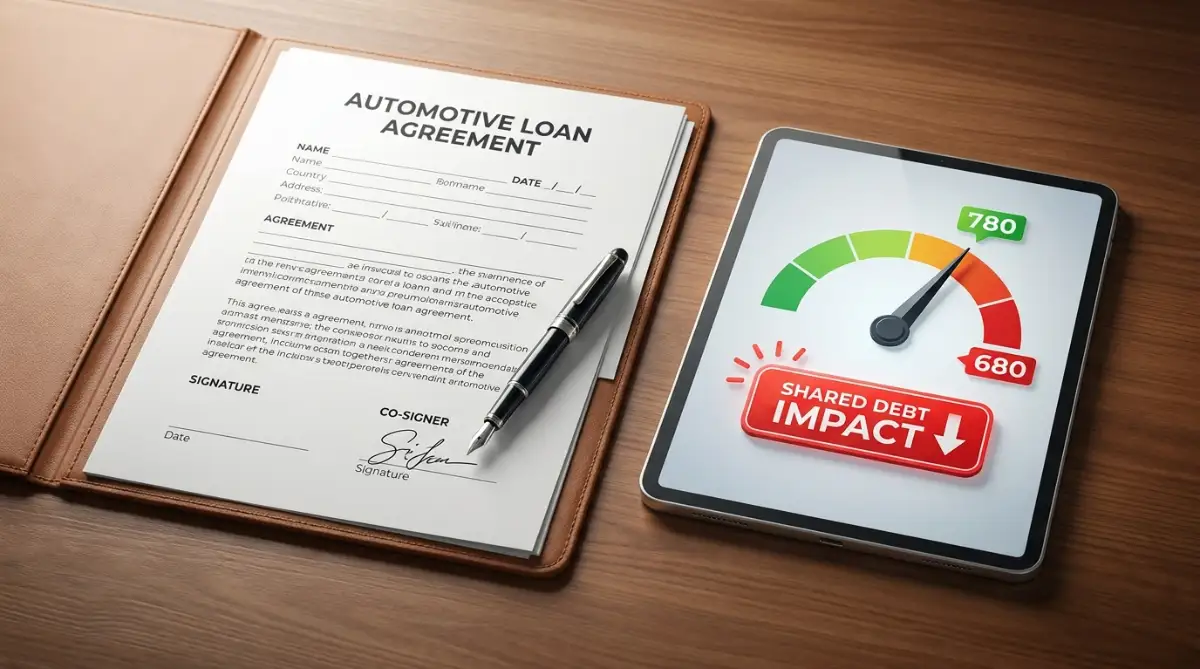
If the primary borrower misses a payment by thirty days, that late mark hits their credit report. But because your name is on the exact same contract, that exact same late mark instantly hits your credit report too.
A single thirty-day late payment can instantly drop an excellent credit score by up to one hundred points. If they miss three payments in a row, or if the car is eventually repossessed, your credit profile is completely destroyed.
The most frustrating part is that you usually have absolutely no idea it is happening. The bank mails the monthly statements and the late notices directly to the primary borrower's house.
Unless your friend calls you to admit they are failing, you will live in total ignorance until you try to apply for a new credit card and get hit with a shocking rejection letter. You are essentially flying completely blind while someone else pilots the plane.
The Complete Loss of Control
When you buy a car or a house for yourself, you maintain complete physical and legal control over the asset. If you lose your job and cannot afford the car payments anymore, you can easily make the mature decision to sell the car, pay off the remaining loan balance, and walk away clean.
When you co-sign for someone else, you completely surrender that power.
You do not hold the title to the vehicle. You do not have the keys. You cannot force the primary borrower to sell the car if they start struggling financially.
You are legally bound to pay for a depreciating asset that you cannot touch, cannot drive, and cannot liquidate.
If your friend decides to hide the car from the repo man, the bank will just happily sue you for the entire remaining balance. It is a completely unbalanced relationship where you take on one hundred percent of the financial risk but hold absolutely zero percent of the actual power.
The Illusion of "Getting Off the Loan"
People often agree to this risky arrangement because they believe it is a temporary favor. The primary borrower will confidently say, "Just help me get approved today, and I promise I will refinance the loan in six months to take your name completely off."
This is a dangerous, comforting lie that almost never comes true.
Refinancing a loan requires the primary borrower to walk into a bank and qualify entirely on their own merit. If they needed your help today because their credit was terrible, their credit is likely not going to magically become excellent in just six short months.
Building a strong credit profile takes years of consistent, disciplined behavior.
Furthermore, if they miss a single payment during those first six months, their credit score drops even lower, making it mathematically impossible for them to ever qualify for a solo refinance.
You must enter the agreement assuming your name will be permanently stuck on that contract until the final dollar is paid off five or ten years down the road. If you are not completely comfortable being financially chained to this person for the next decade, you must refuse to pick up the pen.
Establishing Strict Financial Boundaries
Saying "no" to a family member who is desperately begging for help is incredibly painful. It feels selfish, and it often leads to highly emotional arguments at the dinner table.
But you have to realize that protecting your own financial stability is the most responsible thing you can possibly do for your entire family tree. If you let someone drag your credit score down into the mud, you will not be in a position to help anyone when a true emergency actually hits.
You need to reframe the conversation entirely. When someone asks for your signature, you are not rejecting them as a person. You are rejecting a toxic mathematical equation designed by a greedy bank.
You can soften the blow by offering alternative ways to help that do not involve signing a legal contract. If your sibling needs a car to get to a new job, do not co-sign a massive twenty-thousand-dollar loan at a dealership.
💬 Word-for-Word Script: How to Say "No" Without Starting a Family Feud
When a loved one asks you to co-sign, never make it personal. Blame your future financial goals and read this exact response:
"I love you and want to see you succeed, but I have a strict rule never to co-sign any debt. My lender has informed me that adding any outside debt to my credit file will instantly freeze my own plans to buy a home [or refinance my mortgage]. I cannot put my family’s future at risk, but I am more than happy to help you build a savings budget or look at reliable used cars that fit your current cash flow."
Taking a hard line on the math protects your boundaries while proving that you still care about their journey.
Instead, offer to physically help them shop for a reliable, three-thousand-dollar used car on Facebook Marketplace. If you have the extra cash available, you could offer them a small, zero-interest personal loan directly from your own savings account.
If they fail to pay you back, you lose a little bit of cash, but your personal credit score remains completely untouched. You protect your ability to buy a house, and you keep the massive banking system out of your private family business.
Smart Alternatives to Protect Your Wealth
When you finally realize that co-signing is a mathematical trap, you still have to deal with the emotional reality. Your loved one is sitting right in front of you, asking for help to achieve a major life goal. You cannot just hand them a thick financial textbook and walk away.
You need to provide them with actual, actionable alternatives that solve their immediate problem without dragging your personal credit score into the line of fire. There are incredibly effective ways to help someone build their credit and secure a loan completely on their own merit.
Let us look at a few pro-level strategies that keep your relationship entirely intact while leaving the massive banks completely out of your personal business.
The Authorized User Strategy
If your ultimate goal is simply helping a younger sibling or a child build their credit score from scratch, you do not need to co-sign a heavy installment loan. The safest, most controlled method is adding them as an "Authorized User" on one of your oldest, healthiest credit cards.
When you do this, your long history of perfect, on-time payments is instantly mirrored onto their blank credit report. This gives their score a massive, immediate boost.
However, you hold all the power. You can literally cut up the physical card the bank mails them. They get all the credit-boosting benefits of the account, but they physically cannot spend a single dime of your money.
If they ever start showing signs of financial irresponsibility, you simply call the bank and remove their name from the account. According to consumer guidelines from Experian, removing an authorized user instantly strips the shared history from their report, completely isolating your primary account from any future damage they might cause.

Structuring a Formal Private Loan
Sometimes, a family member just needs five thousand dollars to buy a cheap, reliable used car to get to work. Instead of walking into a dealership and co-signing a high-interest loan with a predatory lender, you can become the bank yourself.
If you have the extra cash sitting safely in your savings account, you can offer them a private loan. But you must treat this exactly like a professional business transaction.
Do not just hand them cash in the kitchen. Draft a formal, written promissory note that outlines the exact loan amount, the monthly payment schedule, and a specific interest rate. Have both parties sign the document and keep a copy for your records.
If they stop paying you, you will absolutely lose the cash you lent them. But you will not lose your credit score, and you will not have aggressive collection agencies calling your phone at dinner time.
If you do not have the extra cash to lend, you must firmly encourage them to explore safer unsecured loans for bad credit rather than risking your financial stability.
Pushing for a Larger Down Payment
When a bank rejects a solo loan application, it is usually because the "Loan-to-Value" ratio is completely out of balance. The person is trying to borrow too much money for an asset they cannot actually afford yet.
If they can lower the total amount of money they are asking the bank for, the bank's mathematical risk drops significantly.
Instead of co-signing, offer to help them save an aggressive down payment over the next six months. Sometimes, offering to match their savings dollar-for-dollar up to a certain amount is the perfect motivation.
If they walk into the bank with a twenty percent cash down payment, the underwriter will often approve the loan strictly on their own merit.
This approach completely solves the problem while forcing the borrower to prove they have the daily discipline to save money. If someone lacks the discipline to save a down payment, they will likely make dangerous morning routine mistakes that bleed into how they manage their monthly car payments. You want to see proof of stability before you help.

Fatal Errors That Compound Your Financial Misery
Even after people sign on the dotted line, they often try to ignore the reality of the situation. They shove the contract in a drawer and blindly hope the primary borrower handles everything perfectly.
This passive, avoidant behavior is exactly what turns a minor late payment into a permanent financial disaster. If you are already stuck in a co-signed agreement, you cannot afford to close your eyes.
I have watched incredibly smart professionals lose their entire savings simply because they trusted someone else to manage a shared contract. Let us walk through the absolute worst mistakes you can make when your name is tied to someone else's debt.
Trusting the Primary Borrower's Word
This is the most common and devastating mistake co-signers make. You ask your friend if they made the car payment this month, and they casually reply, "Yes, absolutely. Everything is handled."
You believe them because you want to believe them. Two months later, you get a terrifying letter from a collection agency.
When your name is on a loan, you cannot rely on verbal promises. People who are drowning in debt will often lie out of deep shame and embarrassment. They will hide the late notices and pretend everything is perfectly fine right up until the tow truck arrives.
You must demand completely transparent, direct access to the online loan portal. You need your own login credentials so you can verify the payment status with your own two eyes every single month.
If the primary borrower refuses to give you the login information, you are flying completely blind. This lack of visibility is just as dangerous as making silent freelance profile mistakes that secretly cost you money without you ever realizing it.
Ignoring the Early Warning Signs
Financial disasters rarely happen overnight. They are usually preceded by a long series of tiny, highly visible red flags.
If your co-signer starts asking to borrow twenty dollars for gas, or if they constantly complain about being short on rent, you need to pay immediate attention. If they cannot afford basic daily necessities, they are definitely not going to be able to afford the massive car payment next week.
Do not wait for the bank to call you. If you see the warning signs, you must step in proactively.
Call the primary borrower and have an uncomfortable, honest conversation about their budget. Offer to help them review their expenses. If you ignore the smoke, you will eventually have to deal with a massive fire.
Addressing financial issues early is the exact same logic you use when spotting and avoiding overheating issues on your expensive electronics. You fix the small problem before the entire system melts down permanently.
Failing to Keep a Cash Reserve
If you are already legally bound to a co-signed loan, you must operate under the strict assumption that you will eventually have to pay the bill yourself.
Many co-signers live paycheck to paycheck, completely assuming the primary borrower will never fail. When the primary borrower suddenly loses their job, the co-signer is caught entirely off guard with zero cash available.
Because both people are broke at the exact same time, the loan defaults, and both credit scores are completely destroyed.
To protect yourself, you must aggressively build an emergency cash reserve specifically dedicated to that shared loan. You need to keep at least three months' worth of loan payments sitting safely in a separate, highly liquid savings account.
According to financial analysts at the Consumer Financial Protection Bureau (CFPB), having a dedicated cash buffer is the only guaranteed way a co-signer can protect their credit score when the primary borrower inevitably stumbles.
A Word From The Expert: Protecting Your Future
Navigating the emotional pressure of helping a loved one is incredibly difficult, but you now have the exact logical framework to protect your own future. You understand that adding your signature to a bank document does not make you a hero; it makes you a legal hostage.
You know that checking the online portals, building emergency cash buffers, and offering safer financial alternatives are the only ways to survive the modern banking system. Your credit score is a delicate, highly valuable asset that dictates your ability to buy a home, secure a reliable vehicle, and build lasting wealth.
Do not let guilt or social pressure convince you to hand the keys to your financial future over to someone else. You have the absolute right to set firm boundaries and protect the life you have worked so incredibly hard to build.
I used to feel terribly guilty whenever I said no to someone asking for money. But the day I finally realized that protecting my own credit was the only way I could ever truly help my family in a real emergency, that guilt completely vanished. You have the exact same power to draw a line in the sand starting right now today!
Essential Questions About Shared Debt
Can I legally remove my name from a co-signed loan later?
You cannot simply call the bank and ask them to remove your name. The only way to officially remove your legal liability is if the primary borrower successfully refinances the entire loan into their own name based strictly on their own improved credit score.
Will co-signing a loan stop me from buying a house?
It absolutely can. The entire debt balance of the co-signed loan is mathematically added to your personal Debt-to-Income (DTI) ratio. If that extra debt pushes your DTI over the lender's strict limit, your mortgage application will be flatly denied.
What happens to the debt if the primary borrower files for bankruptcy?
If the primary borrower successfully files for bankruptcy, the court wipes away their legal obligation to pay the debt. However, because you are the co-signer, the bank will instantly transfer one hundred percent of the legal liability directly to you, demanding full payment immediately.
Does the bank have to notify me before the loan goes into default?
In many states, the bank is under absolutely zero legal obligation to notify the co-signer when a payment is late. They will often simply report the missed payment to the credit bureaus, heavily damaging your score before you even know a problem exists.
Should I co-sign a student loan for my child?
Co-signing private student loans is incredibly risky because they are rarely forgiven and carry very high interest rates. If you must help, you should strongly encourage them to exhaust all federal student loan options first, as federal loans generally do not require a co-signer and offer safer, income-driven repayment plans.
Can a collection agency garnish my wages for a co-signed debt?
Yes. If the loan defaults and the bank sues for the balance, they can win a legal judgment against both you and the primary borrower. If you have a steadier job, the collection agency will absolutely garnish your wages and freeze your bank accounts to recover their money.
Disclaimer: The information provided in this article is for educational, informational, and personal finance purposes only. Co-signing a loan involves entering into a highly complex, legally binding contract that carries severe financial risks and liabilities. Consumer protection laws and debt collection practices vary significantly depending on your specific state and local jurisdiction. Always consult directly with a licensed financial advisor or a qualified consumer protection attorney before signing any shared debt agreements. We are not responsible for any credit score damage, financial losses, or legal complications resulting from the interpretation of this general guide.