
Why Did My Credit Score Drop After Paying Off My Car Loan?
There is a strange, unspoken secret in the banking world: doing the responsible thing and paying off your car loan early can actually cause your credit score to drop. It feels completely backward to get penalized for clearing your debt, but lending algorithms operate on their own cold, mathematical logic. In this guide, I will break down exactly why this temporary dip happens, how long it takes for your score to recover, and how you can offset the penalty before you make that final payment.

📌 Quick Facts: The Truth About Paying Off Your Car Early
- The dip is temporary: Closing an installment loan drops your score temporarily because it changes your active "credit mix."
- Do not pay interest for a score: Keeping a loan active just to protect a 3-digit number costs you thousands in unnecessary banking interest.
- DTI beats a credit score: Eliminating your car payment drastically lowers your Debt-To-Income ratio, making you far more attractive to mortgage lenders.
- Buffer your cards first: You can offset the score drop by paying your active credit card balances down to near-zero right before making your final car payment.
Why the Credit Scoring Machine Gets Upset
To understand why paying off your car note early can cause a temporary dip in your numbers, we have to look at how the major credit bureaus evaluate risk. Most people assume that credit scores measure how wealthy you are or how proud you should feel about being debt-free.
That is completely false. A credit score is not a moral report card or a measure of personal virtue.
Instead, a credit score is simply a cold, calculated risk assessment tool built by corporations to predict one specific thing: how likely you are to pay back future borrowed money on time. Lenders do not care if you hate paying interest. They care about how predictable your financial habits are.
When you carry an active installment loan like a car note and make steady, boring, on-time payments month after month, you provide the algorithm with a steady stream of positive data. You prove that you can manage a long-term contract without missing a beat.
When you suddenly pay that entire loan off years ahead of schedule, you instantly change the makeup of your financial profile. The scoring system has to recalibrate, and sometimes that sudden change triggers a temporary penalty.
The End of an Installment Relationship
The primary reason your score often dips after an early payoff comes down to a concept called "credit mix." The scoring models love to see that you can successfully juggle two completely different types of credit at the same time.
Those two types are revolving credit (like credit cards with flexible monthly balances) and installment credit (like a fixed car loan or a mortgage with a set monthly payment).
When you wipe out your auto loan, you completely close that installment account. If that car note was the only installment loan active on your credit report, you suddenly have zero active installment credit.
The scoring algorithm looks at your profile and thinks, "Well, they used to manage a fixed loan well, but we have no current data on how they handle installment debt right now." This sudden absence of active installment history can cause a minor drop in your overall points.
📊 What Actually Happens When Your Loan Closes (Impact Chart)
My Honest Take: You might lose 15 points on a digital dashboard, but your actual borrowing power (DTI) goes through the roof. If you want to buy a house soon, that DTI improvement matters 100x more than a temporary score dip.
The Shrinking Length of Credit History
Another hidden factor at play is the average age of your accounts. The length of your credit history makes up about fifteen percent of your total score calculation.
When you open a brand-new auto loan, it acts as a brand-new account on your report. Over the months and years, that car loan ages right alongside your older accounts, helping to build a stable timeline.
However, when you pay that loan off and the account is officially marked as closed, its contribution to your ongoing active credit age eventually shifts. While closed accounts can stay on your report for up to ten years in good standing, the immediate closure of an active trade line alters the active weight distribution of your history.
🎙️ Expert Reality Check: Dave Ramsey on the "Paid-Off Car" Penalty
If you are still panicking over your credit score dropping, take a deep breath and listen to this. Financial expert Dave Ramsey perfectly explains why the credit bureaus temporarily punish you for becoming debt-free—and why you should absolutely celebrate your payoff anyway:
The Myth of Paying Interest to Build Wealth
Let us address the loudest, most annoying piece of bad financial advice that floats around the internet. Whenever people discover that paying off a car early can drop their credit score, shady commentators will pop up and tell you that you must keep the loan active.
They will argue that you need to pay hundreds or thousands of dollars in unnecessary interest to the bank just to keep your credit score artificially inflated.
This is terrible, backwards logic that benefits nobody except the lenders collecting your hard-earned cash. Paying interest purely for the sake of boosting a three-digit number is financial insanity.
Think about it like buying a bucket of expensive water just to keep a waterproof umbrella open in your living room. You are burning real, spendable dollars out of your pocket today just to chase a hypothetical credit score for tomorrow.
A temporary, minor point drop on a credit report is completely meaningless if it means you are saving thousands of dollars in cold cash interest charges. True financial health is about having more money in your bank account, not keeping a bank rich just to look good on a digital dashboard.
Short-Term Pain Versus Long-Term Freedom
The most important thing to remember about that slight score dip is that it is almost always temporary. Your credit file is dynamic, meaning it constantly updates and reacts to your ongoing habits.
If your credit history is otherwise healthy, solid, and filled with on-time credit card payments and clean history, your score will typically bounce right back within a few months. The system just needs a brief adjustment period to process the change.
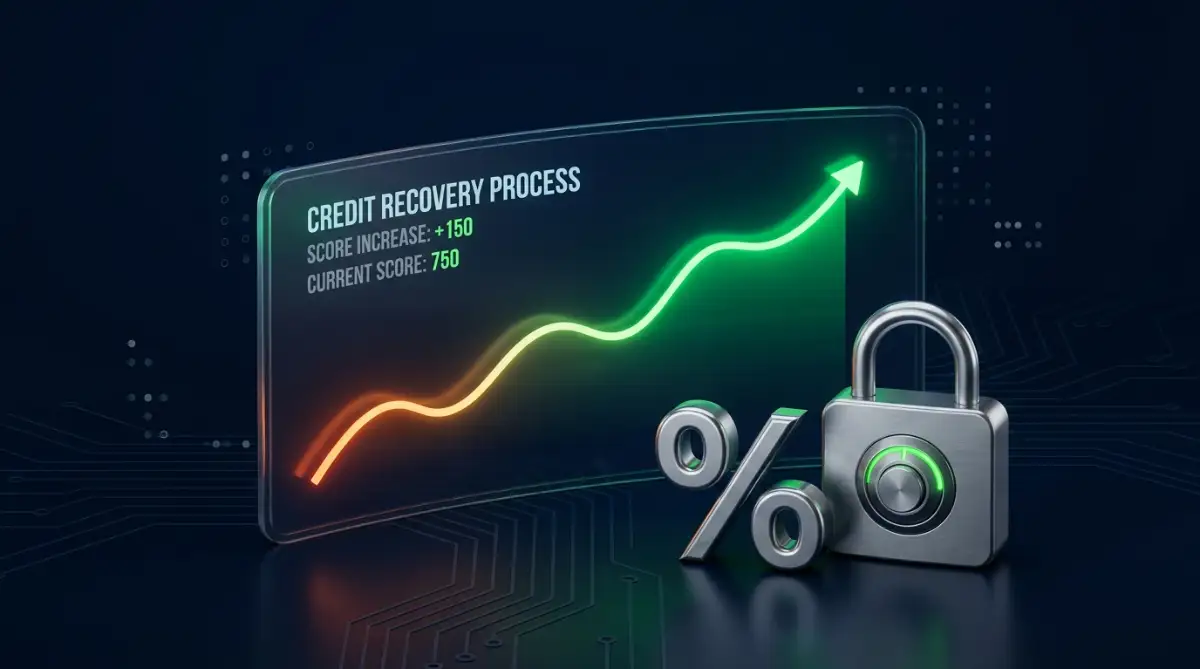
Let us look at a practical scenario to put things into perspective. Imagine you pay off your car two years early, and your score drops by fifteen points for three months.
During those three months, you aren't planning to buy a house or apply for any new credit cards anyway. By month four, your score rebounds higher than it was before because your overall debt-to-income ratio just improved dramatically.
You saved a mountain of cash in interest, lowered your monthly financial obligations, and your credit score recovered naturally all by itself. That is a massive win across the board.
When Early Payoff Actually Protects Your Credit
While we focus a lot on the score itself, paying off an auto loan early can actually save your credit from catastrophic disaster in other ways. Life is completely unpredictable, and financial emergencies happen when you least expect them.
Imagine you lose your job or face an unexpected medical emergency six months from now. If you still had that heavy car payment hanging over your head, matching that monthly bill alongside your rent or mortgage would become a massive struggle.
If things got tight enough that you missed even a single car payment, your credit score wouldn't just drop by twenty points—it would plunge by one hundred points or more overnight. A late payment or a default on an active loan does permanent, devastating damage that takes years to fix.
By aggressively paying off that auto loan early while times were good, you completely eliminated that monthly liability. You bought yourself ultimate financial breathing room.
If an emergency hits tomorrow, you have one less bill choking your cash flow. That peace of mind is worth infinitely more than a temporary fluctuation in a credit algorithm.
How to Offset the Temporary Dip
If you are currently preparing to pay off your car note early, but you know you will need to apply for a mortgage or a major apartment lease next month, you can plan ahead to cushion the blow.
Because you know the algorithm might react to the closing of an installment account, you can take steps to strengthen the other pillars of your credit profile before you pull the trigger.
First, make sure your revolving credit utilization is sitting as low as possible. Utilization makes up a massive thirty percent of your total score, so keeping your credit card balances near zero creates a powerful buffer.
If your credit cards show a zero balance or very low utilization, that positive momentum can easily override any minor temporary penalty caused by closing out your vehicle loan.
Second, avoid opening any other new accounts right around the same time. Too many inquiries or new accounts stacked together combined with a closed loan can confuse the scoring model and make you look temporarily unstable.
⏱️ The 90-Day Credit Recovery Timeline
If you are worried about your score bouncing back, here is exactly what the recovery phase looks like for a healthy credit profile:
- Month 1 (The Dip): The lender reports the zero balance. Your score drops roughly 15-20 points due to credit mix changes.
- Month 2 (The Stabilization): Your credit cards continue to report on-time payments. The algorithm accepts the new normal. Score stays flat.
- Month 3 (The Rebound): Assuming you kept your revolving credit utilization below 10%, your score begins climbing back, often returning to its pre-payoff baseline or higher by day 90.
Strategic timing ensures you get the debt-free lifestyle you want without disrupting major financial moves you might have planned for the near future.
Pro-Level Strategies to Manage Your Auto Loan and Credit Health
Now that we have busted the myth that paying off your car early is a financial disaster, let us talk about how to play the credit game like a true master. Managing vehicle debt requires a delicate balance between saving money on interest and keeping your financial profile looking healthy to outside lenders.
You cannot just throw all your cash at a loan without thinking about the ripple effects it creates across your broader credit ecosystem. The secret is learning how to phase out your vehicle debt strategically so your financial freedom never comes at an unnecessary cost.
Let us dive into the advanced habits that experienced financial planners use to maintain a stellar credit score while staying completely debt-free.
The Art of Strategic Principal Prepayments
If you want to crush your car note early without taking a massive credit score hit all at once, you should avoid paying the loan off in one single, massive lump sum. Instead, transition into a strategy of targeted principal prepayments.
Every single month, add an extra fifty or one hundred dollars directly to the principal balance when you make your regular payment. Make sure you explicitly tell the bank that the extra money must be applied to the principal and not toward next month's advance payment.
According to guidelines published by the Federal Trade Commission (FTC), lenders are required to apply extra funds correctly if you give them clear instructions. This gradual approach slowly shrinks your loan balance over time without causing an abrupt account closure shock to the credit bureaus.

It lets you save money on interest while giving the scoring algorithms a smooth, continuous transition period. Your credit profile adapts organically to the shrinking debt instead of panicking over a sudden zero balance.
Maintaining a Healthy Credit Mix Blueprint
We touched on the concept of credit mix earlier, but keeping your profile balanced is an ongoing art form. If your car loan was your only installment debt, paying it off leaves your credit report heavily reliant on revolving credit cards.
To offset this imbalance over the long term, you need to ensure your remaining credit accounts are managed with absolute perfection. Keep your credit card utilization below ten percent, and never miss a single payment deadline.
If you ever need to apply for another major loan down the road, a sparkling clean revolving history will completely overshadow the minor absence of an active car note. You can easily manage these financial platforms by keeping your digital tools optimized, much like how you would speed up your phone with simple steps to clear app cache on android to keep things running smoothly.
The Buffer Strategy for Future Borrowers
If you know deep down that you will be applying for a mortgage or a major business loan within the next twelve months, you need to time your final car payoff very carefully. Do not clear the loan right before you sit down with a mortgage lender.
Instead, give your credit profile at least six months of breathing room after the car loan is fully closed. This buffer window allows any minor score dips to correct themselves completely.
By the time the mortgage underwriter pulls your credit report, your score will have fully rebounded, and your Debt-To-Income ratio will look incredible because that old car payment is completely gone. You get the absolute best of both worlds: a clean credit report and a massive boost to your monthly borrowing power.
If you are a freelancer or self-employed person trying to qualify for a major loan, you also want to avoid silent freelance profile mistakes that might make your income look unstable alongside a newly cleared debt.

Financial Traps That Destroy Your Debt-Free Progress
Even when you have the best intentions of becoming debt-free, the modern consumer world is aggressively engineered to pull you back into financial traps. When people finally experience the sweet taste of freedom after paying off their car, they often let their guard down entirely.
This careless attitude leads to devastating mistakes that can trap them in a brand-new cycle of high-interest borrowing. Let us walk through the most dangerous emotional pitfalls you must avoid at all costs.
Falling Into the "Upgrade Trap"
The most dangerous trap waiting for you at the finish line of a car payoff is the psychological urge to immediately replace your vehicle. You finally own your car free and clear, meaning your monthly budget has extra breathing room.
Your brain starts whispering that since you no longer have a car payment, you can easily afford a brand-new, much more expensive luxury car. This is the ultimate financial illusion.
If you immediately run out and sign a new seven-year loan for a flashy vehicle, you have learned nothing from your journey. You just marched right back onto the exact same hamster wheel you worked so hard to escape.
Keep driving that paid-off car for as many years as it runs reliably. Take the money you used to send to the bank and invest it into your savings account or retirement fund instead.
Neglecting Emergency Savings While Paying Debt
Another massive blunder people make is throwing every single cent of their disposable income at their auto loan while completely ignoring their emergency fund. They treat their savings account like zero, leaving themselves completely vulnerable to life's surprises.
Imagine you scrape together your last penny to pay off your car early, only to have your home's HVAC system break down two weeks later. Because you have zero cash in the bank, you are forced to rack up massive, high-interest debt on a credit card just to fix the house.
You traded one form of debt for an even worse one because you forgot to build a safety net. According to research reports from the Consumer Financial Protection Bureau (CFPB), having even a modest cash buffer prevents families from spiraling into emergency high-interest borrowing when things break down.
Before you make that final aggressive push to clear your car note, always ensure you have a few months of living expenses safely tucked away in a high-yield savings account. You can easily manage your budgeting tools online without running into dangerous password management mistakes that could compromise your emergency funds.
Ignoring Small Leaks in the Monthly Budget
When people clear a major loan, they often celebrate by loosening their daily spending habits. They start buying daily coffees, ordering takeout more frequently, and subscribing to multiple streaming services they never use.
They figure that since the heavy car payment is gone, these little expenses do not matter anymore. But these tiny daily leaks can quietly swallow up all the financial breathing room you just fought to create.
You must maintain your disciplined mindset even after the debt is gone. If you let your lifestyle expand to match your new cash flow, you will never build true, lasting wealth.
Take a moment to clean up your daily habits, much like how you would clear out digital clutter to troubleshoot home Wi-Fi dead zones without buying an expensive router. Keep your financial pathways clear, simple, and entirely focused on your long-term goals.
Your Blueprint for Lifelong Financial Independence
Mastering your vehicle debt and understanding how credit scores truly operate gives you an incredible superpower in a world full of consumer confusion. You no longer have to live in fear of what a banking algorithm thinks about your choices.
You know that achieving true debt freedom is always superior to paying unnecessary interest just to chase an arbitrary point score. By planning your payoffs strategically, protecting your emergency cash, and avoiding lifestyle inflation, you are building an unbreakable financial fortress.
Take a close look at your auto loan statement this week and decide what your next smart move will be. You have all the knowledge you need to win this game completely on your own terms.
I used to stress out endlessly over every minor fluctuation in my credit report, letting a computer score dictate my mood. The day I realized that stacking cash in my bank account matters infinitely more than keeping a bank rich with interest payments, my entire outlook changed for the better. You have the full power to take absolute control of your financial destiny starting right now today!
Common Questions About Auto Loan Payoffs
Will my credit score drop permanently if I pay off my car early?
No, a credit score drop caused by paying off an installment loan is never permanent. The algorithm simply experiences a brief adjustment period after an account closes, and your score will naturally rebound within a few months.
Is it ever a smart idea to keep a car loan active?
Only if your auto loan carries an exceptionally low, promotional interest rate, and you can earn a higher guaranteed return by keeping your cash sitting in a high-yield savings account or investment vehicle. Otherwise, eliminating the psychological weight and cost of debt is almost always the superior choice.
What should I do as soon as my auto loan is fully paid off?
You need to contact your lender to ensure they release the lien on your vehicle title and mail it to you. Keep that physical title safe in a secure location, and make sure you update your auto insurance policy if you decide to drop optional coverages like comprehensive or collision.
Does an early payoff trigger any hidden bank fees?
Most modern auto loans do not carry prepayment penalties, but you must double-check the fine print of your original contract before sending extra money. If your specific contract has a prepayment clause, paying early might trigger a small administrative fee.
How long does it take for a paid-off auto loan to show on my credit report?
It typically takes anywhere from thirty to forty-five days for the lender to report the updated zero balance to the major credit bureaus. Do not panic if your credit monitoring app does not change overnight; the banking system moves slowly.
Can paying off my car help me qualify for a house?
Yes, eliminating a heavy monthly car payment drastically lowers your Debt-To-Income ratio. This gives you significantly more borrowing power when you apply for a mortgage, making it much easier to get approved for your dream home.
Disclaimer: The information provided in this article is for educational and informational purposes only and does not constitute official financial, legal, or credit counseling advice. Credit scoring models and lending standards vary widely based on individual circumstances and changing industry regulations. Always consult directly with a certified financial planner or a licensed credit professional before making major decisions regarding your personal debt. We are not responsible for any financial losses or credit score fluctuations resulting from the interpretation of this general guide.