Watching muddy water creep across your living room floor while your insurance agent tells you that you are not covered is an absolutely sickening feeling. I used to trust the colorful government flood maps, thinking my house on the hill was completely safe from water damage. It turns out, standard home insurance completely ignores ground-up flooding, and those official maps are dangerously outdated. Let's look at exactly how to properly protect your biggest financial asset before the next heavy summer storm hits.
Your 4-Step Flood Protection Plan:
- The Map Illusion: Never rely purely on outdated FEMA maps; new concrete shopping centers and housing developments can instantly turn a "low-risk" neighborhood into a flood zone.
- Top-Down vs. Bottom-Up: Standard homeowners policies only cover top-down water damage (like a leaky roof) and will completely reject ground-up surface water flooding claims.
- Physical Defense: Fix your property grading and extend your gutter downspouts at least six feet away from your foundation to physically block water from entering your walls.
- The Mold Trap: Never leave wet furniture sitting in a flooded basement waiting for an adjuster; actively remove the water and document everything with a video to avoid insurance negligence claims.
Demystifying The Broken Map System
To understand why your house is still secretly in danger, we have to look closely at the tools the government uses to define risk. The Federal Emergency Management Agency (FEMA) is responsible for drawing the official flood maps that dictate whether or not you are legally required to buy extra insurance.
These maps are incredibly complex, highly detailed, and completely flawed. Millions of people base their entire financial safety strategy on a system that is fundamentally broken.
The Problem With Looking Backward
The biggest issue with official flood maps is that they are entirely based on historical data. Engineers look at where the water went during major storms over the past fifty or one hundred years. They take a pencil, draw a circle around those specific areas, and label them as high-risk zones.
But our physical environment is changing aggressively and rapidly. A massive shopping mall or a new housing development gets built right down the street from you. This new construction covers acres of natural, soft dirt with hard, impenetrable concrete parking lots.
When a heavy rainstorm hits, that water can no longer soak gently into the ground. Instead, millions of gallons of water run directly off the fresh concrete and flood straight into your older neighborhood. A historical map drawn ten years ago cannot possibly predict the sudden impact of a brand new concrete shopping center.
Pro Tip: When I was shopping for my second house, I refused to just look at the official FEMA map. I actually drove to the neighborhood during a heavy thunderstorm just to see how the water behaved on the street. My biggest realization came when I saw a completely "safe" house sitting at the bottom of a slightly sloped road, acting exactly like a giant catcher's mitt for the entire neighborhood's runoff. Always trust your own eyes over an old piece of paper.
The 60-Second "Rainstorm Test" 🌧️
Do not wait for a hurricane to test your property. The next time it rains heavily, grab an umbrella and walk around your house. Does the water pool around your foundation? Do your gutter downspouts dump water less than three feet from your bricks? If you see water sitting still instead of flowing away toward the street, you are actively inviting a basement flood.
The Myth Of The "100-Year Flood"
If you live in a moderate-risk area, you have probably heard the incredibly confusing term "100-year flood zone." This phrase single-handedly convinces millions of people to cancel their insurance policies.
When a normal human being hears "100-year flood," they logically think, "A flood will only happen here once every century, so I am perfectly safe for the rest of my life."
This is a massive statistical misunderstanding. The term actually means that there is a strict one percent chance of a massive flood happening in your neighborhood every single year. Over the course of a standard thirty-year mortgage, that adds up to a twenty-six percent chance that your house will experience devastating water damage.
Those are terrifying odds. You are actually more likely to experience a flood during your mortgage term than a major house fire, yet nobody would ever dream of canceling their fire insurance.
The Silent Danger Of Poor City Infrastructure
You do not need a massive hurricane or a broken river dam to destroy your basement. The most common cause of urban flooding has absolutely nothing to do with nature; it is entirely a man-made failure.
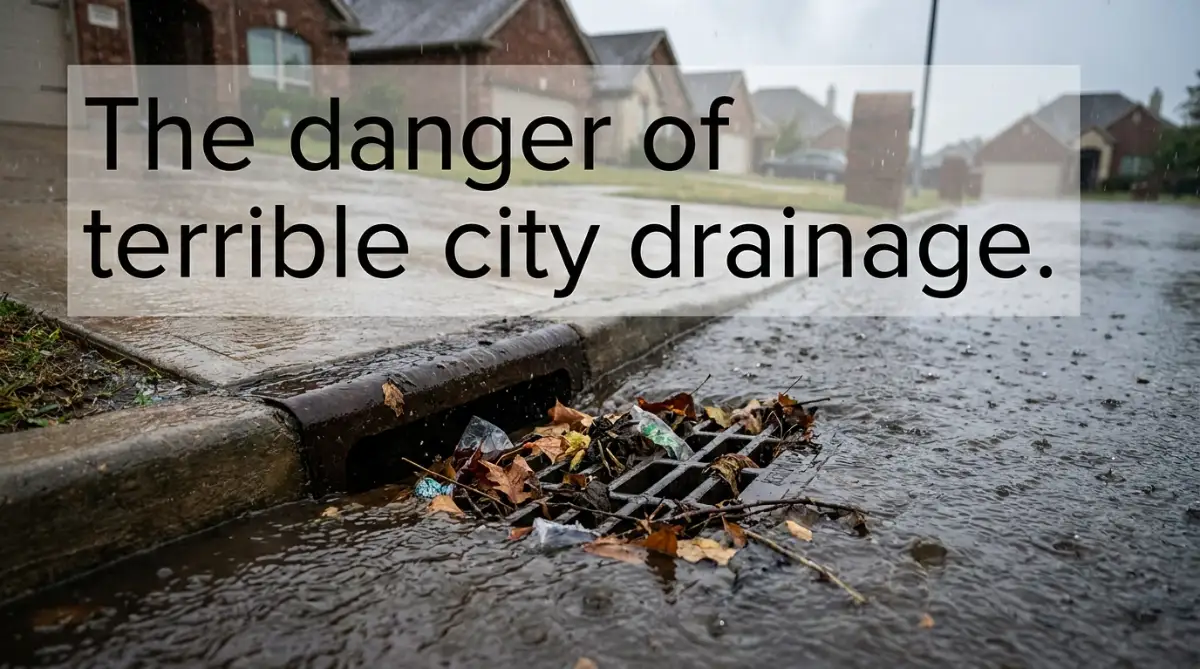
Think about the metal storm drains sitting on the edge of your street. These tiny grates are responsible for sucking up thousands of gallons of rainwater and moving it safely away from your property.
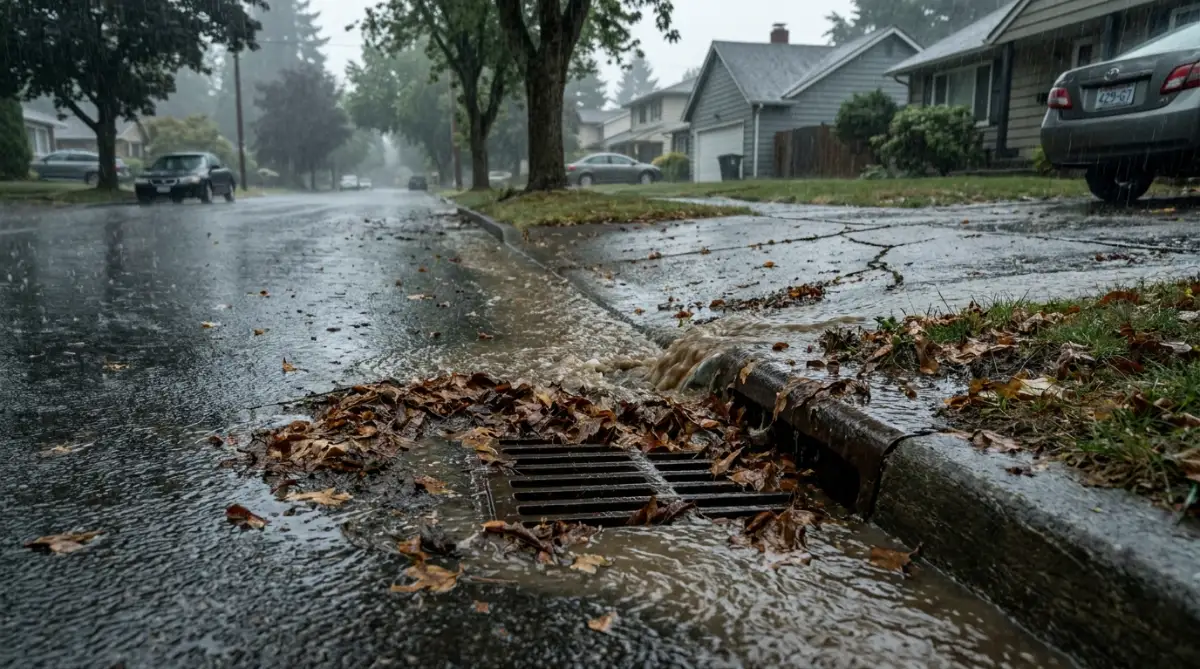
But city maintenance is notoriously terrible. By the end of autumn, those drains are completely choked with dead leaves, plastic trash, and heavy mud. When the spring rains arrive, the water physically cannot enter the sewer system. The water quickly backs up, jumps the concrete curb, and flows straight down your driveway.
Because the water touched the outside ground before entering your home, your standard homeowner's insurance will completely deny the claim. They will correctly label it as a "flood," leaving you entirely responsible for the massive cleanup bill.
Have you ever wondered exactly how a standard insurance company legally defines a flood versus a simple water leak? Watch this highly revealing breakdown by an independent claims adjuster:
Understanding Your True Homeowner Policy Limits
The confusion surrounding water damage usually stems from a massive misunderstanding of what standard insurance actually covers. Your agent probably told you that you are fully covered for "water damage," which sounds incredibly reassuring.
But in the highly specific legal language of the insurance industry, not all water is treated equally. If you do not read the fine print of your policy, you are practically begging for a sudden financial disaster.
Top-Down Versus Bottom-Up Water
Here is the easiest way to remember the strict legal difference. If the water comes from the top down, you are usually covered. If the water comes from the bottom up, you are entirely on your own.
For example, if a heavy storm blows a few shingles off your roof, and rainwater pours through your ceiling and ruins your television, your standard policy will absolutely pay for the damages. If the pipe under your upstairs bathroom sink suddenly bursts and floods your living room, you are completely covered.
But the exact second that rainwater touches the physical ground outside your house, its legal definition completely changes. If rain pools in your backyard, pushes against your foundation, and leaks through your basement window, it is officially classified as surface water flooding. Your standard policy will instantly reject this claim with zero hesitation.
The Danger Of "Sewer Backup" Exclusions
There is another terrifying loophole that homeowners discover when it is entirely too late. Imagine a massive storm overwhelms the city's main sewer line. The massive pressure literally forces raw, dirty sewage backward through the pipes, erupting out of your basement toilet or shower drain.
This is the most disgusting, biologically hazardous type of water damage possible. It requires professional hazmat cleanup crews.
Most people assume this is a plumbing issue, but many basic insurance policies specifically exclude sewer backups unless you buy a completely separate, specific endorsement rider. Even if they do not call it a "flood," they will still refuse to pay for the massive cleanup.
You must call your agent tomorrow morning and specifically ask, "Do I have a dedicated sewer and drain backup rider on my policy right now?" If the answer is no, you are taking a massive, unnecessary risk with your family's health and finances.
Pro Tip: The $50 Backup Rider 🚽
Many homeowners skip the "Sewer and Drain Backup" rider because they assume it is too expensive. In reality, adding this specific protection to your existing policy usually costs less than $50 a year. Considering a professional raw sewage cleanup crew charges upwards of $10,000, adding this rider today is a total no-brainer.
Why You Need A Private Flood Policy Immediately
Now that you understand the massive gaps in your protection, the solution becomes incredibly obvious. If you own a piece of property, you need a dedicated, standalone flood insurance policy, regardless of what color your house is on the FEMA map.
Many people aggressively avoid buying this policy because they assume it will cost them thousands of dollars a year. This is only true if you live directly on the edge of the ocean.
If you truly live in a low-to-moderate risk zone, flood insurance is often shockingly cheap. Because the government maps consider you "low risk," you actually qualify for the absolute best, lowest pricing available.
You can often secure a massive two-hundred-and-fifty-thousand-dollar protection policy for just a few hundred dollars a year. That is roughly the cost of a single cup of coffee every week. Trading the price of a coffee for the absolute peace of mind that a sudden rainstorm will not bankrupt your family is the smartest financial decision you will ever make.
Advanced Tips To Build Unbreakable Financial Protection
Now that you know the official government maps are practically useless for real-world safety, it is time to take aggressive control of your own property. You do not have to live in constant fear of the next rainstorm. There are highly practical, immediate steps you can take today to protect your house.
Let's look at exactly how smart homeowners stop water from ever reaching their foundation, long before a storm even hits the radar.
Master Your Property's Grading
The absolute most critical line of defense against flooding is the physical shape of your yard. If you walk outside and notice that the dirt around your foundation slopes downward toward your house, you have a massive emergency on your hands.
Water always follows gravity. If your yard slopes toward the bricks, every single drop of rain is being funneled directly into your basement walls. You must hire a landscaping contractor to fix the grading around your home.
They will add heavy topsoil around the perimeter, creating a strict slope that pushes the water far away from your foundation. According to structural engineering guidelines published by the National Association of Home Builders, a proper property grade should drop at least six inches for every ten feet it moves away from the house. This invisible dirt ramp is your absolute best physical insurance policy.
Strategic Gutter And Downspout Extension
We all know we have to clean our gutters so the roof does not rot. But almost everyone completely ignores where that gutter water actually goes once it hits the bottom of the pipe.
If your downspout simply dumps a massive waterfall of rain right next to your foundation, you are actively trying to flood your own basement. All that concentrated water will quickly pool up, soak through the soft dirt, and eventually crack your concrete walls.
You must buy plastic downspout extensions from the local hardware store. These cheap, flexible pipes attach to the bottom of your gutters and carry the heavy water at least six feet away from the side of your house. It is a brilliant, twenty-dollar fix that prevents thousands of dollars in hidden foundation damage.
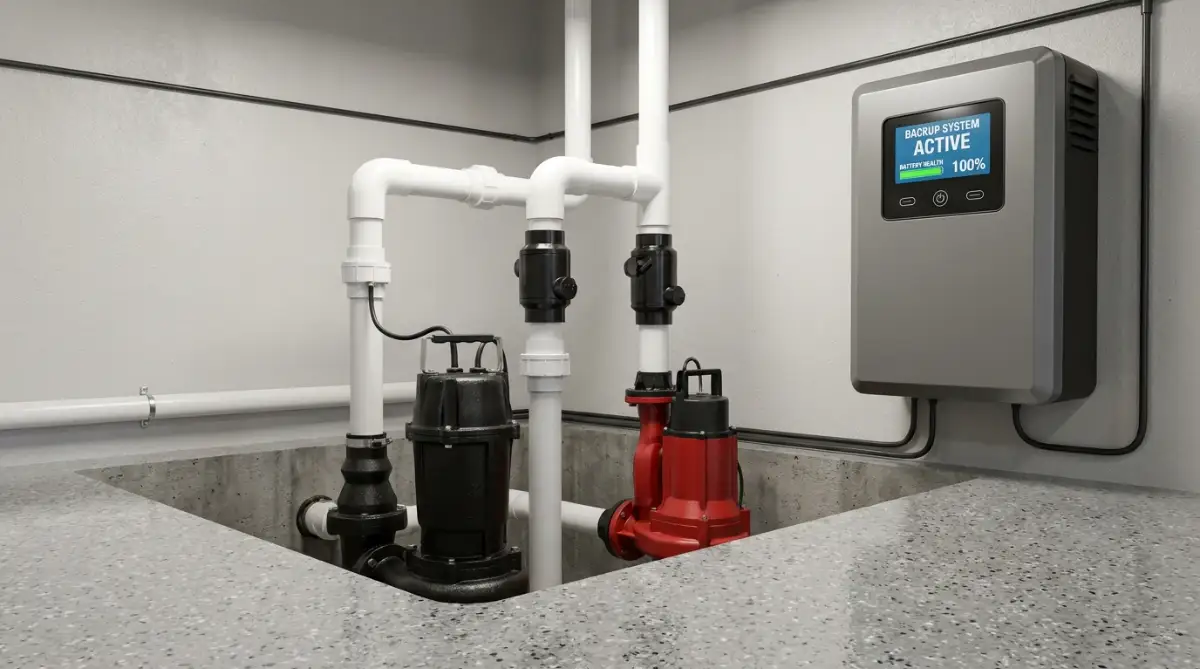
Installing A Battery-Powered Sump Pump
If you have a basement, you probably already have a main sump pump sitting in a hole in the floor. Its only job is to push rising groundwater back out into the yard.
But here is the massive catch that ruins lives: severe thunderstorms almost always cause power outages. If the storm knocks out your electricity, your main sump pump completely dies exactly when you need it the absolute most.
You must install a secondary, battery-operated backup sump pump right next to the main one. It sits quietly waiting, and if the main power fails, the battery instantly kicks in to keep your basement completely dry.
The Devastating Mistakes Homeowners Make During A Flood
Even when you prepare perfectly, disaster can still strike. If the water actually breaches your home, you will instantly feel a massive wave of panic.
Human instinct often makes us do incredibly foolish things when we are terrified. If you make the wrong move during or immediately after a flood, you will completely ruin your chances of getting an insurance payout. Let's break down the absolute worst mistakes you must avoid.
The "Wait For The Adjuster" Trap
Many people walk into a flooded basement, take one photo, and then completely close the door. They think they have to leave the massive puddle of water sitting there exactly as it is until the official insurance adjuster arrives three days later.
This is an absolute nightmare scenario. Stagnant water begins growing highly toxic black mold in exactly forty-eight hours. If you leave the water sitting there on purpose, the insurance company will aggressively accuse you of absolute negligence.
Your legal duty is to actively mitigate the damage as fast as humanly possible. You must take dozens of clear photos and a long, detailed video of the water damage on your phone. Once you have that solid digital proof, you must immediately start ripping up wet carpets and running heavy-duty water pumps. If you do not actively try to save your own house, the insurance company will refuse to pay for the secondary mold damage.
Throwing Away Expensive Broken Items
When your basement floods, it is incredibly tempting to just throw all the ruined, soggy furniture directly into a giant dumpster. You just want the disgusting mess out of your life immediately.
If you throw those items away before the insurance adjuster physically sees them, you will never get paid for them. The adjuster needs to officially document the brand, the size, and the exact condition of every single ruined item to calculate your final payout.
You absolutely have to move the wet items out of the house so they do not grow mold, but you must drag them out to the backyard or the driveway. Let the ugly, ruined furniture sit outside under a tarp until the insurance check officially clears your bank account.
Accepting The Very First Settlement Offer
After a few stressful weeks, the insurance company will finally send you a settlement offer. You are exhausted, and you just want the nightmare to end, so you naturally want to sign the paper and take the check.
Do not sign that very first paper. The initial offer from an insurance adjuster is almost always a massive lowball estimate. They use internal software that relies on outdated, cheap pricing for building materials and local contractor labor.
You must hire your own independent, highly trusted local contractor to walk through the house and write a detailed repair estimate.
Ignoring The Serious Danger Of Electrical Shock
This is a massive safety warning that cannot be ignored. If your basement is flooded, the water has likely touched the low-hanging electrical outlets on your walls.
Many panicked homeowners will grab a bucket and instantly step barefoot into a dark, flooded basement without thinking. If the power is still on, that puddle of water is literally a highly charged, deadly electrical trap.
You must completely shut off the main power breaker to your entire house before your foot ever touches standing water. If you cannot safely reach the main breaker panel without stepping in water, you must evacuate the house and call the fire department. No piece of wet furniture is ever worth risking a lethal electrical shock.
A Final Blueprint For Total Peace Of Mind
We have covered a massive amount of intense, watery ground today. The goal here is not to make you terrified of every dark cloud in the sky. The primary goal is to completely destroy the dangerous myth that a government map somehow protects your living room.
Nature is entirely unpredictable, and city drainage systems fail every single day. When you finally accept that every single house is technically sitting in a flood zone, you stop making foolish gambles with your family's largest financial asset.
Your Immediate Safety Action Plan
Do not wait until the local news predicts a massive hurricane to start thinking about this. Your very first step tomorrow morning should be calling your local insurance agent.
Ask them specifically to quote you a price for a separate, private flood insurance policy. If they tell you it is not necessary because of your low-risk map zone, kindly ignore them and demand the quote anyway. You will be absolutely shocked by how cheap the yearly premium is for a house on a hill.
I spent three years convinced I was completely safe from water damage because I lived on top of a steep, beautiful hill. When a sudden storm overwhelmed the street drain and completely destroyed my finished basement, I was left paying out of pocket because I trusted a broken map instead of my own common sense. I promise you, if you buy that cheap, separate flood policy this week, you will sleep incredibly soundly during the next massive thunderstorm, knowing your family is entirely protected.
Common Questions About Sudden Water Damage
Does my renter's insurance cover my personal stuff if the apartment floods?
Unfortunately, no. Standard renter's insurance policies have the exact same strict exclusions for ground-up flooding as standard homeowner policies. If the river overflows into your first-floor apartment, your renter's insurance will not pay to replace your ruined laptop or couch. You must purchase a separate flood policy specifically designed for renters to protect your personal belongings.
Can I buy flood insurance at the last minute if a hurricane is coming?
No, you absolutely cannot wait for an emergency. The National Flood Insurance Program (NFIP) has a strict, mandatory 30-day waiting period before your new policy actually becomes active. If you buy the policy on Tuesday and your house floods on Friday, you are completely out of luck. You must secure this protection months before the heavy storm season actually begins.
What happens if my roof leaks heavily during a bad rainstorm?
If the water enters your home from the top down due to a sudden storm breaking your roof, it is generally covered by your standard homeowner's policy. However, if the insurance adjuster determines the roof leaked because it was thirty years old and you completely neglected routine maintenance, they will likely deny the claim based on homeowner negligence.
Does flood insurance cover the expensive landscaping in my backyard?
No, typical flood insurance policies are incredibly strict about what they cover. They primarily cover the main physical structure of your house and the essential systems inside, like your furnace and electrical panel. They will absolutely not pay to replace your ruined grass, your expensive outdoor swimming pool, or a detached storage shed sitting in the backyard.
Will my rates instantly skyrocket if I make a single flood claim?
It depends entirely on the type of policy you hold. If you have a government-backed NFIP policy, the rates are strictly standardized and usually do not spike wildly after a single claim. However, if you hold a private market flood policy, the company will definitely view you as a higher risk after a massive payout, and your yearly premium will likely increase during your next renewal period.
Disclaimer: The information provided in this blog post is strictly for educational and informational purposes only and does not constitute formal legal or financial advice. Insurance policies vary massively by state, and the specific wording of your contract dictates your actual coverage. Always consult directly with a licensed, professional insurance agent to thoroughly review your personal policy exclusions before a major disaster strikes.