The Silent Range Anxiety Every Hybrid Owner Faces
When I bought my very first hybrid car, I was completely terrified of the digital battery meter on my dashboard. I remember driving down a steep, winding hill, watching the power bars shift, and feeling a sudden wave of panic hitting my chest. I had no idea how the car was actually recharging itself without being plugged into a wall. My eyes were glued to the digital screen instead of the actual road ahead. That constant fear of being stranded completely ruined my daily morning commute.
Everyday people buy hybrid cars to save money on gas and find some mental peace during their travels. But instead of feeling relaxed, many drivers end up developing severe range anxiety. You constantly stare at the battery level, wondering if running the air conditioning will drain your power entirely. It feels incredibly frustrating when you do not understand the complex machine you are driving every single day.
You might even start feeling like you made a massive financial mistake at the dealership. The constant mental stress of wondering if your battery will die on a busy highway destroys the joy of owning a modern vehicle. You start asking friends for advice, only to get confusing answers about kinetic energy and heavy mechanical engineering terms.
This lack of clear, simple understanding turns a quick trip to the grocery store into a stressful math problem. You just want a reliable car that gets you home safely, not a complicated physics exam. You find yourself stepping on the brake pedal the traditional way, completely wasting the incredible technology sitting right under your seat.
But once you actually see how the internal system works, that heavy anxiety instantly disappears into thin air. Let us break down this amazing energy feature into simple, bite-sized pieces. By the time you finish reading, you will understand exactly how to drive your hybrid with absolute confidence.
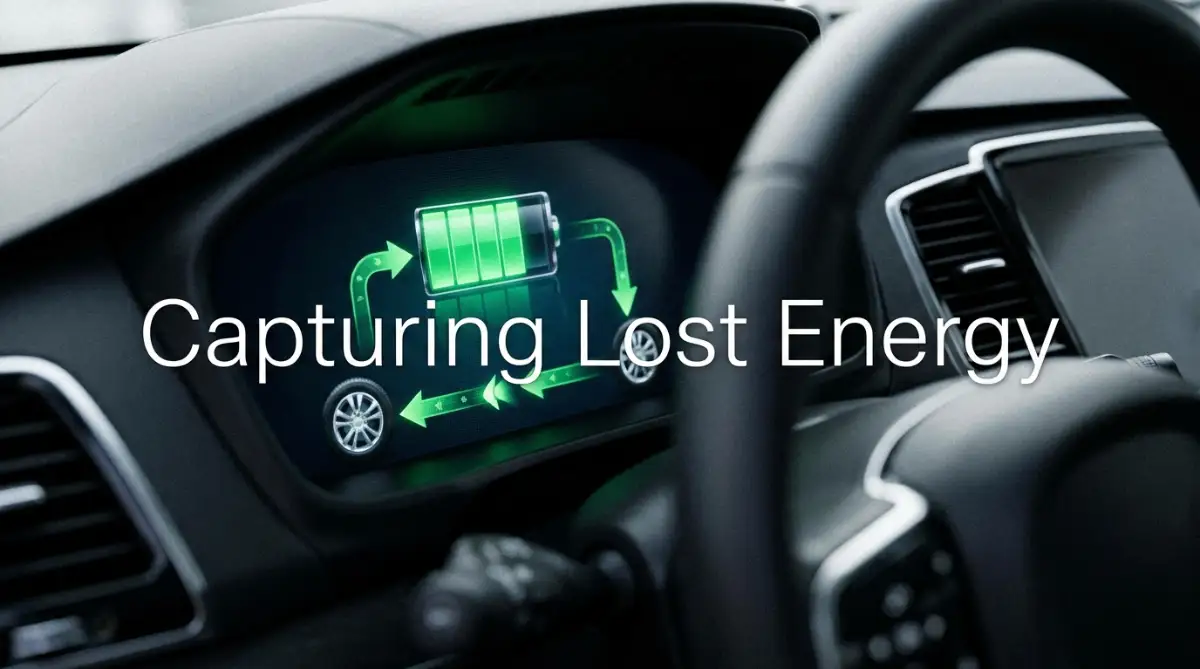
Turning Forward Motion Into Free Electricity
To understand how your car creates power, we first need to look at how a normal car wastes power. When you drive a traditional gas-powered vehicle, your car builds up a lot of forward momentum. Scientists call this moving force kinetic energy.
When you step on the brake pedal in a normal car, metal pads clamp down on the spinning wheels. This heavy friction stops the car, but it also creates a massive amount of intense heat. All that forward moving energy is simply burned off into the air as wasted heat. You literally burn your hard-earned money every single time you approach a red light.
Hybrid cars were brilliantly designed to solve this exact waste problem. Instead of letting that moving energy escape as heat, the car captures it and sends it directly back to the battery. Think of it like catching rainwater in a bucket instead of letting it sink into the dry dirt.
The secret behind this magic is the car's electric motor. When you press the gas pedal, the battery sends electricity to the motor, which spins the wheels forward. But the moment you lift your foot off the gas, that exact same motor instantly reverses its job.
Instead of using electricity to spin the wheels, the forward rolling of the wheels physically spins the motor. When an electric motor is spun manually like this, it acts as a generator and creates fresh electricity. This fresh electricity flows straight through thick orange cables back into your hybrid battery pack.
The Physical Sensation of Capturing Power
If you have recently switched to a hybrid, you have probably noticed a strange feeling when you let off the gas. The car feels like it is lightly dragging or slowing down much faster than a normal vehicle. That gentle pulling sensation is actually the electric motor working hard as a generator.
The resistance of the generator spinning creates a natural braking effect on the entire car. You are literally feeling the physical weight of electricity being created in real-time. This means you do not even need to touch the actual brake pedal for the car to start slowing down smoothly.
I used to ride my brakes hard at the very last second because I drove my hybrid exactly like my old truck. I quickly realized this aggressive habit completely bypassed the energy capture system and wore out my brake pads. If you give yourself extra distance to stop, you allow the car to generate maximum free power.
Watch exactly how you can master this smooth driving technique in traffic:
This simple shift in driving behavior changes your entire fuel efficiency game. By anticipating stops early, you let the magnetic resistance of the motor do the heavy lifting. Your physical brake pads only kick in at the very end to bring the car to a complete, final halt.
Separating the Myths from the Facts
Because this technology feels so futuristic, a lot of strange rumors float around the internet. Many new drivers are terrified they might accidentally overcharge their battery while driving down a long mountain. Let us clear up these common misunderstandings right now.
As you can see, the engineers who built these cars planned for almost every extreme scenario. You do not have to manually control the electricity flowing into the battery. The vehicle makes thousands of micro-decisions every second to keep you perfectly safe.
How the Brain of the Battery Keeps You Safe
You might be wondering how so much electricity can rush into a battery without causing massive overheating issues. The answer lies in a brilliant piece of software called the Battery Management System, or BMS. Think of the BMS as a highly trained security guard standing at the door of your battery pack.
The BMS constantly monitors the temperature, voltage, and overall health of every single battery cell. When you brake hard and send a massive spike of electricity backward, the BMS evaluates the situation instantly. If the battery is too hot from driving in the summer sun, the security guard slows down the incoming power.
This smart computer also prevents the battery from ever reaching a true one hundred percent charge. Keeping the battery slightly below completely full prevents heavy stress on the internal chemistry. It is exactly like stopping eating right before your stomach feels uncomfortably stuffed.
If you happen to live in a very cold climate, you might notice your regenerative braking feels weak on winter mornings. This is not a mechanical failure; it is the BMS protecting your vehicle. Cold batteries cannot accept fast charges safely, so the computer limits the incoming power until the battery naturally warms up.
By strictly controlling how fast energy enters and exits, the computer ensures your hybrid battery lasts for many years. You never have to worry about managing these electrical currents yourself. You simply drive the car, and the hidden security guard handles all the dangerous math in the background.
Adjusting Your Driving Style for Maximum Efficiency
Now that you understand the science, you can easily tweak your daily driving habits to save serious money. The absolute best environment for a hybrid car is heavy, stop-and-go city traffic. Every time you creep forward and slow down, you are harvesting tiny amounts of free energy.
When you see a traffic light turn red in the distance, immediately take your foot off the accelerator. Do not race toward the red light only to slam on the physical brakes at the very last second. Let the car glide and capture that forward momentum for as long as safely possible.
Highway driving is slightly different because you are mostly maintaining a high, constant speed. You will not generate much power on an empty, flat highway because you are rarely slowing down. However, when you finally take the exit ramp, you have a massive opportunity to refill your battery.
Let the vehicle coast up the exit ramp naturally without using the gas pedal. That long, slow deceleration will send a beautiful surge of green energy straight into your storage system. It becomes a fun little game to see how much battery you can recover before reaching your driveway.
The Long-Term Benefits for Your Wallet
Understanding this system does more than just cure your daily range anxiety. It actively protects your bank account from unexpected maintenance bills at the mechanic. Because the electric motor does most of the stopping, your traditional brake pads hardly ever touch the metal rotors.
Normal car owners have to replace their heavy brake pads and rotors every few years. Hybrid owners often drive for incredible distances before their physical brakes show any real signs of wear. You are essentially getting a free brake job just by driving smartly and smoothly.
Additionally, keeping the battery actively cycling between charging and discharging keeps the internal chemicals very healthy. A battery that sits completely unused or constantly drained will degrade much faster. Your smooth braking habits actually extend the total lifespan of the expensive battery pack in your trunk.
When you truly grasp how regenerative braking works, your car stops feeling like a mysterious, scary machine. You start working together with the technology instead of fighting against it. You can confidently drive past gas stations knowing exactly how your hybrid is safely powering your daily journey.
Mastering the Art of Maximum Energy Recovery
Now that you understand the basic science behind your hybrid, it is time to level up your daily driving habits. The best hybrid drivers do not just react to traffic; they actively anticipate the flow of the road. By changing how you approach red lights and stop signs, you can squeeze an amazing amount of free electricity out of every single trip.
One of the biggest insider secrets is learning how to read the road far ahead of your front bumper. If you see a line of brake lights glowing a half-mile down the highway, take your foot off the gas pedal right away. Do not wait until you are right behind the traffic jam to start slowing down.
Coasting early allows the magnetic resistance inside the electric motor to harvest power for a much longer period. Think of this technique like troubleshooting home wi-fi dead zones without buying an expensive router. You just need to find the exact right spot to release the pedal to get the strongest possible energy connection.
If you want to dive deeper into the exact physics of this energy exchange, there is a wealth of trusted information available. Reading the official guidelines on energy recovery from the US Department of Energy explains exactly how this process reduces national fuel consumption. Knowing the math behind your car makes the whole experience much more rewarding.
Unlocking the Hidden Gears on Your Shifter
Take a close look at the gear shifter in your hybrid vehicle the next time you sit in the driver's seat. You will probably notice a strange gear labeled "B" or "L" sitting right below the standard Drive option. Most dealership salespeople completely forget to explain what this incredibly useful gear actually does.
That "B" stands for Braking mode, and it is a powerful tool for driving down steep mountains or long hills. When you shift into this mode, the car’s computer heavily increases the magnetic resistance inside the electric generator. As a result, the car slows down much faster without you ever needing to touch the physical brake pedal.
Using this mode on a steep decline saves your normal brake pads from overheating and warping. It also pushes a massive, steady stream of electricity directly into your battery pack. However, you should not use this heavy setting for normal, flat city driving because it slows the car down too aggressively.
Protecting Your Battery Chemistry Year-Round
Your driving style is only half of the equation when it comes to maintaining a healthy hybrid system. The actual chemical health of your battery heavily depends on the outside temperature and how you manage it. Just like human beings, hybrid batteries perform at their absolute best when they are sitting at a comfortable room temperature.
Extreme summer heat can actually force the battery management computer to limit your energy capture. Reviewing official electric battery guidelines from the US Department of Energy shows how high temperatures stress battery cells over time. The computer purposely slows down the incoming electrical charge to prevent the entire pack from dangerously overheating.
If you want to keep your system running perfectly, try to park your car in a shaded area or a garage during hot summer afternoons. This simple habit keeps the internal chemicals cool, allowing the system to accept a full charge during your evening commute. Treating your car's thermal limits seriously is exactly like finding simple ways to spot and avoid overheating issues with your expensive home electronics.
You should also be aware of how extreme winter weather changes your driving experience. Freezing temperatures make the battery chemicals thick and slow, which temporarily reduces how much power you can harvest. Your car might feel like it is ignoring the regenerative system completely until the heater warms up the cabin.
Do not panic when your fuel efficiency drops slightly during the cold months of January and February. This is completely normal behavior, much like how overlooked habits quietly destroy your smartphone battery lifespan if you leave your phone out in the cold. Once spring arrives, your car will automatically return to its highly efficient self.
Hidden Driving Habits That Secretly Drain Your Power
Many first-time hybrid owners bring terrible driving habits over from their old gas-powered vehicles. Because the car feels completely normal on the inside, it is very easy to forget you are driving a giant rolling computer. These simple mistakes will completely sabotage your fuel economy and cost you hundreds of dollars at the gas pump.
One of the most destructive things you can do is aggressively bouncing between the gas pedal and the brake pedal. Some drivers have a nervous habit of constantly tapping the gas, speeding up, and immediately hitting the brakes. This aggressive yo-yo effect completely confuses the computer running your electric motor.
When you drive this way, the car never gets a solid chance to harvest a long, steady stream of power. You are just wasting gas to speed up and instantly throwing that momentum away. Fixing this erratic driving pattern is just like fixing dangerous morning routine mistakes that secretly destroy your daily productivity. You need a smooth, consistent flow to get the best results.
The Dangerous "Neutral Gear" Trap
There is a very old driving myth that shifting your car into Neutral at a stoplight saves gas. While this might have been slightly true for cars built in the 1980s, it is a terrible idea for modern hybrids. Shifting a hybrid into Neutral actually physically disconnects the wheels from the electric motor.
Real-Life Scenario: I once tried coasting down a long, quiet highway off-ramp in Neutral just to see what would ha