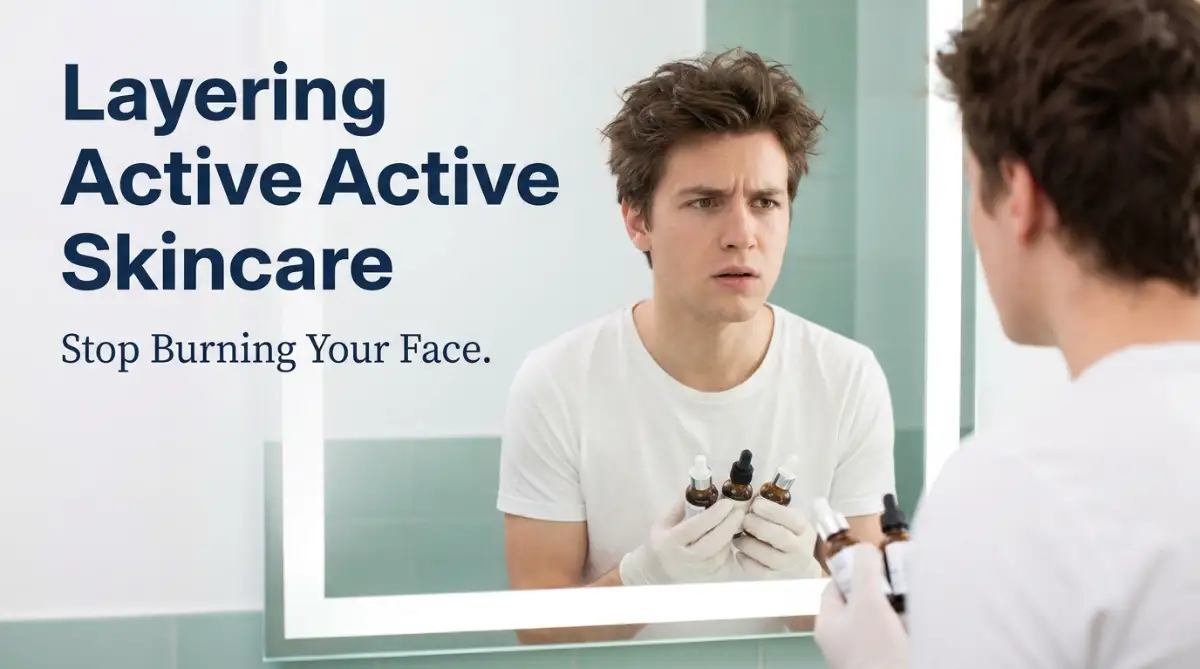
Staring in the mirror at a face covered in bright red, stinging chemical burns after trying a new skincare routine is an absolute nightmare. When I first started experimenting with active ingredients, I piled acids and retinol onto my skin all at once, thinking more product meant faster results. It took a painful week of severe peeling for me to realize that powerful chemicals require strict scientific rules. Let's look at how to mix your skincare safely so you can get a glowing complexion without burning your face.

This constant cycle of burning your skin and waiting for it to heal completely ruins your daily confidence. You feel terrified to try anything new, so you just wash your face with plain water and watch your complexion get duller every day.
You feel incredibly frustrated because you are spending a massive amount of money on premium products, but your face actually looks significantly worse than when you started. It makes you want to throw all the bottles in the trash and give up on taking care of yourself entirely.
But your skin is not broken, and the products are not necessarily bad. The heavy truth is that you are simply trying to drive a high-performance sports car without ever learning how to use the steering wheel or the brakes.
These active ingredients are incredibly powerful tools, and just like any powerful tool, they follow strict scientific rules of engagement. By understanding the basic chemistry of how these liquids interact with each other, you can stop burning your face and start glowing safely. Let us strip away the confusing marketing noise and build a routine that actually works.

- The Layering Rule: Always apply your skincare products from the thinnest consistency to the thickest cream so they actually penetrate your pores.
- Separate Your Shifts: Never mix strong exfoliating acids (AHAs/BHAs) and Retinol in the exact same routine—use them on completely different nights (skin cycling).
- Check the pH: Use a low-pH cleanser (around 5.5) to protect your natural acidic skin barrier and prevent daily irritation.
- Protect Your Actives: Buy active serums like Vitamin C in dark amber bottles and store them away from sunlight to prevent chemical death (oxidation).
The Biology of Absorption: Setting the Foundation
Before you open a single bottle of serum, you have to understand how your physical skin actually behaves. Your face is protected by a tough, oily outer shield called the lipid barrier.
This barrier is specifically designed by biology to keep outside chemicals from entering your bloodstream. When you apply an active ingredient, you are essentially trying to sneak a chemical past this highly trained security guard.
If you apply a thick, heavy oil to your face first, you are building an extra, impenetrable brick wall over your pores. If you try to apply a watery, lightweight vitamin serum on top of that heavy oil, the water will simply sit on the surface and eventually evaporate into the air.
You might as well be pouring your expensive serums directly down the bathroom sink. To get these active chemicals deep into your pores where they can actually work, you must follow the absolute golden rule of cosmetic chemistry.
The Golden Rule: Thinnest to Thickest
The most reliable, foolproof way to layer any skincare product is based entirely on the physical weight and texture of the liquid. You must always apply your products moving from the most watery consistency to the thickest, heaviest cream.
The Clothing Analogy:
Think of your skincare routine exactly like getting dressed for a freezing winter day. You always put on your thin, lightweight cotton undershirt first, followed by a slightly thicker sweater, and finally, you put your heavy, waterproof winter coat on the very outside.
If you tried to put your thick winter coat on first, and then tried to stretch a tiny undershirt over the top of the coat, it would not work at all. Your skin behaves in this exact same logical way.
Your Actionable Application Order:
- Cleanser: Wash away the dirt and pat your skin gently with a soft towel.
- Toner or Essence: These look and feel exactly like plain water. They sink into the skin instantly and prep the pores to receive heavier ingredients.
- Active Serums: These are slightly thicker liquids, usually delivered by a glass dropper. This is where your powerful Vitamin C or Hyaluronic Acid lives.
- Moisturizer: This is your thick, creamy lotion. It acts like a warm blanket, sealing all the watery serums deeply into your skin.
- Facial Oil or Sunscreen: Oils are the heaviest molecules. They act as the final, waterproof winter coat, locking everything inside and blocking the outside elements.
By following this exact physical progression, you guarantee that every single expensive drop of product successfully penetrates your skin barrier without getting blocked by a heavier cream.
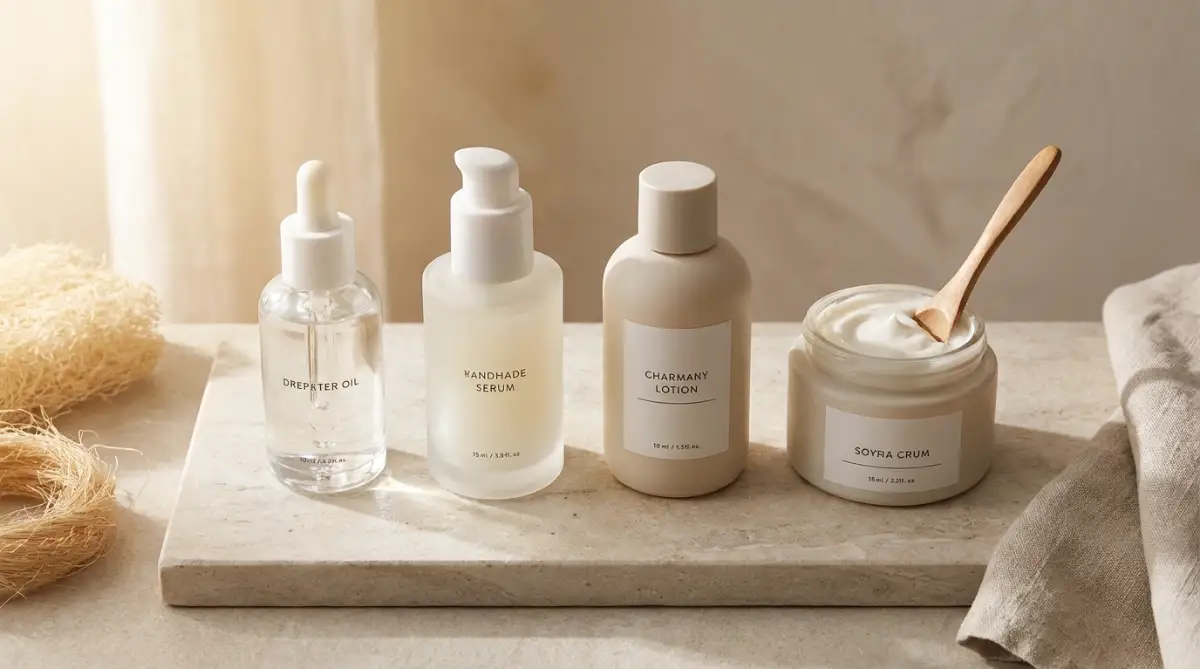
My Quick "Texture First" Layering Rule 🧴
If you are ever confused about what to put on your face first, just remember this simple physics rule: Liquids before lotions, water before oil. Always start with the product that feels like plain water (toners/serums), move to gels, then light creams, and finish with heavy facial oils. If you put an oil on first, your watery serums will just slide right off like water on a freshly waxed car!
Your Easy Morning vs. Night Cheat Sheet
The Dangerous Game of Chemical Mixing
Now that you know the physical order of application, we have to tackle the actual chemistry. This is the exact area where millions of people accidentally cause severe chemical burns on their cheeks and forehead.
When you put two highly aggressive, completely different active chemicals on your face at the exact same time, they do not just work independently. They often react violently with each other.
The Kitchen Baking Analogy:
Imagine trying to bake a cake. You know that baking soda and vinegar are both great ingredients for cleaning your kitchen, but if you mix them together in a bowl, they violently fizz and explode over the counter.
Your face is that mixing bowl. If you mix the wrong acids together, you create a microscopic explosion that instantly destroys your healthy skin cells.
I actually gave myself a terrible, peeling rash right before a major job interview because I applied a strong Salicylic Acid toner immediately followed by a heavy prescription Retinol cream. My biggest realization was that my skin could only handle one major "job" at a time, and forcing it to do two heavy chemical tasks simultaneously caused a complete biological shutdown.
Here is a quick warning table I always share with my friends. Never mix these specific ingredients together in the exact same routine unless you want a bright red, peeling face!
⚠️ The Ultimate No-No Combinations
If you are terrified of accidentally mixing the wrong chemicals and causing a severe reaction on your face, you absolutely must watch this brilliant, easy-to-understand breakdown of safe ingredient pairing.
Separating the Morning and Night Shifts
To completely avoid violent chemical reactions, you have to split your active ingredients into two entirely separate shifts: the Morning Shift and the Night Shift. Your skin requires completely different tools depending on the time of day.
During the bright daylight hours, your skin is under constant, aggressive attack from harsh UV sun rays, heavy city pollution, and dirty wind. Therefore, your morning routine must be entirely focused on defense and protection.
During the dark, quiet night, your body goes to sleep, and your skin enters a highly active repair cycle. Your nighttime routine must be entirely focused on cellular regeneration and healing.
Your Safe Morning Protocol (The Defenders):
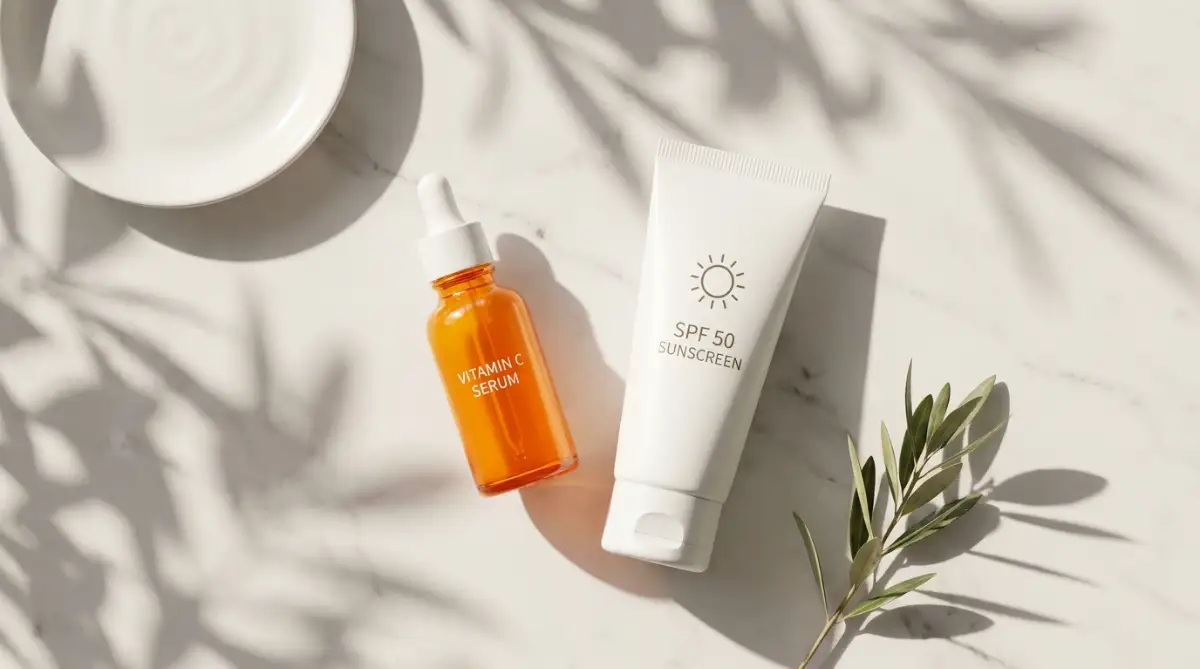
In the morning, after splashing your face with water, you should only use defensive active ingredients. The absolute king of morning defense is Vitamin C.
Vitamin C is a powerful antioxidant that acts like an invisible shield, catching and neutralizing the invisible pollution particles that try to land on your face during your commute. Because Vitamin C is highly acidic, you should never mix it with other strong exfoliating acids.
Apply your watery Vitamin C serum, wait exactly sixty seconds for it to dry, and immediately follow it with a thick moisturizer. Your absolute final step in the morning must always be a high-quality SPF Sunscreen.
Your Safe Nighttime Protocol (The Repairmen):
When the sun goes down, it is time to bring out your heavy hitters. This is when you want to use ingredients that force your skin to shed dead cells and rebuild itself.
The two most popular nighttime ingredients are Chemical Exfoliants (like AHA or BHA acids) and Retinoids. You must treat these two ingredients like two highly aggressive alpha dogs; you can never put them in the same room at the same time.
If you apply an AHA exfoliating acid to strip away dead skin, and then immediately apply Retinol to build new skin, the combined aggression will strip your face completely raw.
The Alternate Night Strategy:
To use both of these powerful tools safely, you must practice "skin cycling." Use your exfoliating acid on Monday night to clear away the dead flakes.
On Tuesday night, use your Retinol cream to boost collagen production. On Wednesday and Thursday nights, give your skin a complete rest and only use a heavy, plain moisturizer to let the barrier heal.
By separating these aggressive chemicals across completely different days of the week, you get all the incredible anti-aging benefits without a single drop of irritation or redness.
Advanced Strategies for Pro-Level Ingredient Safety
Once you understand the basic rules of finding active ingredients and avoiding heavy synthetic fragrances, we must look much deeper into your physical environment. Your daily skincare routine is not a passive checklist; it is a highly active chemical process that dictates your skin's survival.
According to dermatological guidelines published by the American Academy of Dermatology (AAD), maintaining a strong external barrier is the absolute foundation of preventing severe allergic reactions [1]. You must learn to use established biological facts to protect your face from sudden environmental damage.
Clinical research shared by the National Eczema Association reveals that applying moisturizers immediately after washing can increase water retention by up to eighty percent [2]. Knowing how to lock the moisture into your cells is highly important before you step out of the bathroom.
If you try to bypass your skin's natural limits with harsh, scraping tools, you risk causing permanent microscopic scarring. You must avoid these aggressive physical errors just as you would avoid the silent DIY solar mistakes that destroy your home insurance payout to protect your wealth and peace of mind.
Just as dangerous password management mistakes that leave your digital identity exposed can ruin your digital security, neglecting your biological skin barrier can permanently ruin your complexion. Let us explore the advanced, pro-level secrets you can use to build an unbreakable wall of protection today.
The Secret of Understanding Product pH Levels
One of the most surprising scientific details hidden in modern skincare is the concept of pH balance. Your skin naturally has a slightly acidic pH level, usually resting around 5.5 on the scale.
This invisible acidic layer is called the acid mantle, and it acts as your skin's primary defense against bad bacteria and pollution. When you use a product with a very high, alkaline pH, you instantly destroy this protective layer.
Pro Tip: The "Tight Skin" Warning Sign ⚠️
How do you know if your face wash has a terrible, destructive pH level? Wash your face, dry it off, and wait two minutes without applying any products. If your face feels instantly tight, squeaky, or uncomfortable, your cleanser's pH is way too high. A truly balanced, low-pH cleanser will leave your skin feeling calm and soft, never tight or "squeaky clean."
The Soap Scum Analogy:
Think of washing your face with a standard bar of body soap. Body soap is highly alkaline (usually around a pH of 9 or 10), which makes it excellent at stripping heavy grease off your hands.
But when you put that heavy soap on your delicate face, it completely strips away your protective acid mantle. Your skin panics, feels incredibly tight, and immediately starts overproducing oil to compensate, leading to a massive morning breakout.
Your Actionable Strategy:
You must start actively checking the pH level of your facial cleansers and toners. While many brands do not print the exact pH number on the bottle, you can usually find it listed directly on the manufacturer's website.
Always look for products specifically labeled as "pH balanced" or "low pH." By using a cleanser that matches your skin's natural 5.5 level, you safely remove dirt without causing a single drop of microscopic damage to your protective barrier.
Protecting Active Ingredients From Light and Air
Many people spend a massive amount of money on a highly concentrated Vitamin C serum, expecting it to completely erase their dark spots. They open the clear glass bottle, use it every morning, and slowly watch the liquid turn from a clear color into a dark, muddy orange.
They keep using the orange liquid, completely unaware that the product has entirely died. This chemical death is called oxidation.
The Cut Apple Analogy:
Imagine cutting a fresh green apple in half and leaving it sitting on your kitchen counter. Within twenty minutes, the exposed apple flesh turns brown and starts to rot because oxygen in the air is actively breaking down the cells.
Vitamin C behaves in this exact same logical way. When highly unstable active ingredients are exposed to daily oxygen and bright bathroom lights, their molecular structure completely collapses.
If you use an oxidized serum on your face, it will not brighten your skin; it can actually cause severe chemical irritation and increase your risk of sun damage.
Your Actionable Strategy:
You must become highly protective of your active ingredients. Never buy a Vitamin C serum or a Retinol cream that comes in a clear glass bottle or an open tub that you have to dip your fingers into.
Always purchase active ingredients packaged in solid, dark amber glass or completely opaque, airless pump bottles. Store these highly sensitive liquids in a dark, cool drawer rather than leaving them exposed on a bright bathroom shelf.

Silent Cosmetic Mistakes That Will Destroy Your Complexion
Even highly intelligent shoppers make terrible choices when they are desperate to fix a flaky, peeling face before a big social event. The heavy emotional stress of dealing with an unexpected breakout often blinds us to basic biological logic and healthy habits.
If you fall into these incredibly common traps, your daily complexion will eventually experience a complete, permanent failure. This frustrating cycle can easily ruin your daily confidence, destroy your professional appearance, and wipe out your self-esteem.
Here is exactly what you must avoid to keep your skin safe, calm, and perfectly healthy.
The "All Natural" Marketing Illusion
One of the most dangerous mistakes consumers make is blindly trusting a product simply because the box has the word "Natural" printed in big green letters. In the cosmetic industry, the word "natural" is completely unregulated by the government.
A company can legally fill a bottle with ninety-nine percent cheap, synthetic mineral oil, add a single drop of natural green tea extract, and legally call the product "Natural."
You might think you are buying a pure, healthy product, but you are actually rubbing refined crude oil directly into your pores. If you rely on these fake natural products, your skin will quickly become congested, dull, and highly irritated.
Maintaining your skin's true health requires you to be a strict investigator. Just like using stop dry skin the biological secrets to achieving a naturally clear complexion heals your face gently with actual raw ingredients, keeping a clean skincare routine protects your physical appearance.
Never buy a product based on the front label; always turn the bottle around and let the actual INCI ingredient list dictate your purchasing decision.
The Danger of Over-Exfoliating to Remove Flakes
When you look in the mirror and see dead, white flakes of skin on your nose, it is highly tempting to scrub them away. People use harsh sugar scrubs, rough spinning brushes, or strong chemical peeling acids to force the flakes off.
This aggressive scrubbing physically tears the healthy skin underneath, creating millions of microscopic cuts across your entire face. Your skin responds to this violent trauma by becoming bright red, highly inflamed, and even drier than before to protect itself.
Never scrub a dry face with physical exfoliants. Instead, focus entirely on softening the dead flakes with heavy moisture until they naturally wash away on their own.
DO's and DON'Ts For Safe Skincare Shopping:
- DO check the first five ingredients to determine the actual base of the product.
- DO NOT ever buy a product that lists "Fragrance" or "Parfum" near the bottom of the list.
- DO choose gentle, non-foaming cleansers to protect your natural lipid barrier.
- DO NOT mix strong chemical exfoliants like AHAs with Retinol in the exact same routine.
Ignoring the Expiration Symbol (The PAO Jar)
Many people have a dark corner in their bathroom cabinet filled with half-empty lotions and serums they bought three years ago. When their skin feels dry, they reach into the back of the cabinet, open an old jar, and apply the thick cream to their face.
This is a massive biological hazard. Every single cosmetic product has a specific expiration date, and using expired skincare is exactly like drinking expired milk.
If you look at the back of any cosmetic bottle, you will see a tiny symbol that looks like an open jar with a number inside it, such as "12M" or "24M." This is the Period After Opening (PAO) symbol.
It tells you exactly how many months the product remains safe and active after you break the physical seal.
If you use a face cream that has been open for three years, the chemical preservatives have completely failed. The jar is now a breeding ground for dangerous, invisible bacteria and black mold.
Always take a permanent marker and write the exact date you opened the product directly on the bottom of the bottle to keep yourself safe.
Common Questions About Decoding Skincare Labels
What does it mean if an ingredient has a long, unpronounceable chemical name?
It simply means the company is following the law by using the official International Nomenclature of Cosmetic Ingredients (INCI) name. For example, plain water is always listed as "Aqua," and vitamin C is listed as "Ascorbic Acid," so do not panic just because a word looks complicated.
Are parabens actually as dangerous as the internet claims?
Parabens are highly effective, cheap preservatives used to stop mold from growing inside lotion bottles. However, modern scientific studies suggest they act as endocrine disruptors that absorb into the bloodstream and mimic estrogen, which is why most premium brands have completely switched to safer, food-grade preservatives like Phenoxyethanol.
Why does my face feel extremely oily but still look flaky?
This is the classic, absolute biological sign of a broken lipid barrier. Your skin is severely dehydrated, so it is panicking and overproducing heavy oil to compensate, but the water is still evaporating rapidly through the broken barrier beneath the oil.
Is it safe to use products that list "unscented" instead of "fragrance-free"?
No, "unscented" is a massive legal marketing trick used by corporations. Unscented products actually contain heavy, hidden masking chemicals designed to hide the ugly smell of the raw ingredients, while "fragrance-free" guarantees a truly clean, chemical-free product.
Your Skincare Protection Action Plan
Decoding the complex chemical language on the back of your beauty products does not have to be an overwhelming or painful experience. You now hold the exact same scientific knowledge that professional cosmetic chemists use to formulate high-end brands.
By taking a few short minutes to read the first five ingredients, spot hidden fragrances, and avoid harsh sulfates, you completely remove the fear of damaging your skin. You are no longer crossing your fingers and hoping a massive corporation is looking out for your health.
Instead, you are confidently commanding your own daily routine and protecting your body from toxic exposure. This simple shift in your shopping habits gives you incredible power over your entire physical well-being.
My personal skin completely transformed the day I finally threw away my harsh, foaming sulfate cleansers and started strictly reading the back of every bottle I bought. Stop letting clever marketing dictate your skin's health, take five minutes right now to audit your bathroom cabinet, and instantly protect your beautiful, natural glow.
Disclaimer: The information provided in this article is for educational and general informational purposes only and does not constitute formal medical, dermatological, or chemical formulation advice. Skincare reactions, chemical sensitivities, and individual allergies vary heavily by person, genetic background, and specific environmental factors. Always consult with a board-certified dermatologist, licensed esthetician, or primary healthcare provider regarding any severe chronic acne, painful skin rashes, or drastic changes to your daily skincare routine.