
Are you tired of looking in the mirror and seeing dark, puffy bags under your eyes, even when you slept for a full eight hours? It is incredibly frustrating when coworkers constantly ask if you are feeling sick or exhausted. You probably spent hundreds of dollars on heavy, sticky concealers and "miracle" eye creams that do absolutely nothing. But the truth is, your skin is not broken—you just have a temporary traffic jam of fluid trapped under your eyes. Let me show you how to drain that puffiness naturally using a few simple morning habits, without spending a single penny.
Quick Summary: How to Fix Tired Eyes Fast
- Stop the Hot Water: Splashing hot water expands your blood vessels, making dark circles look worse. Use ice or cold spoons instead to shrink them.
- Drain the Fluid: Use your ring finger to gently sweep trapped morning fluid away from your eyes and down your neck (Lymphatic Drainage).
- Ditch Heavy Creams: Thick night creams clog the delicate skin under your eyes; use a lightweight gel instead.
- Sleep Slightly Elevated: Add an extra pillow at night to let gravity pull fluid out of your face while you sleep.
Decoding the Biology of Your Under-Eye Skin
Before you throw away your current face wash, you have to understand the physical construction of the skin around your eyes. The skin directly beneath your lower eyelid is not the same as the skin on your cheeks or forehead.
According to dermatological insights from the American Academy of Dermatology (AAD), the skin directly beneath your eyes is significantly thinner and more delicate compared to the rest of your face. Because this skin is so delicate, the tiny blood vessels running directly underneath it are highly visible to the naked eye.
When your body is perfectly healthy and rested, those blood vessels are small and completely hidden. But when something disrupts your internal biology, those tiny veins physically expand and swell with dark, deoxygenated blood.
The Stained Glass Analogy:
Think of the skin under your eyes exactly like a piece of thin, frosted glass sitting on top of a red lightbulb. If the lightbulb is dim, the glass looks perfectly clear and normal.
But if you turn the red lightbulb up to maximum brightness, the color bleeds heavily right through the thin glass. You cannot fix the red glow by painting the outside of the glass; you have to physically turn down the brightness of the bulb underneath.
Did You Know? The Skin Thickness Fact
The skin underneath your eyes is about 0.5 millimeters thick—which is thinner than a piece of standard printer paper! Meanwhile, the skin on the bottom of your feet is almost 4 millimeters thick. This is exactly why every tiny, swollen blue blood vessel shows up so brightly under your eyes but nowhere else on your body.
Let us look at the practical, science-backed steps you can take every single morning to shrink those swollen blood vessels and drain the trapped fluid naturally.

The Physical Flush: Cold Therapy Application
When you wake up in the morning, gravity has been working against your face for eight straight hours. While you lie flat in bed, fluid naturally pools in the loose, empty spaces under your eyes, causing them to look heavily puffy and swollen.
Your first instinct is to splash your face with steaming hot water to wake yourself up. However, just like you need natural home remedies to fix extremely dry and flaky skin safely, you must treat your delicate under-eye area with extreme care instead of harsh temperatures.
Hot water forces your blood vessels to physically expand and open wider, pushing even more dark blood directly against that thin layer of skin. To fix this, you must do the exact opposite and use targeted cold therapy.

The Immediate Ice Reaction:
Cold temperatures cause vasoconstriction, which simply means your blood vessels rapidly shrink and tighten. When the vessels shrink, they push the dark, stagnant blood completely out of the under-eye area.
Your Actionable Morning Routine:
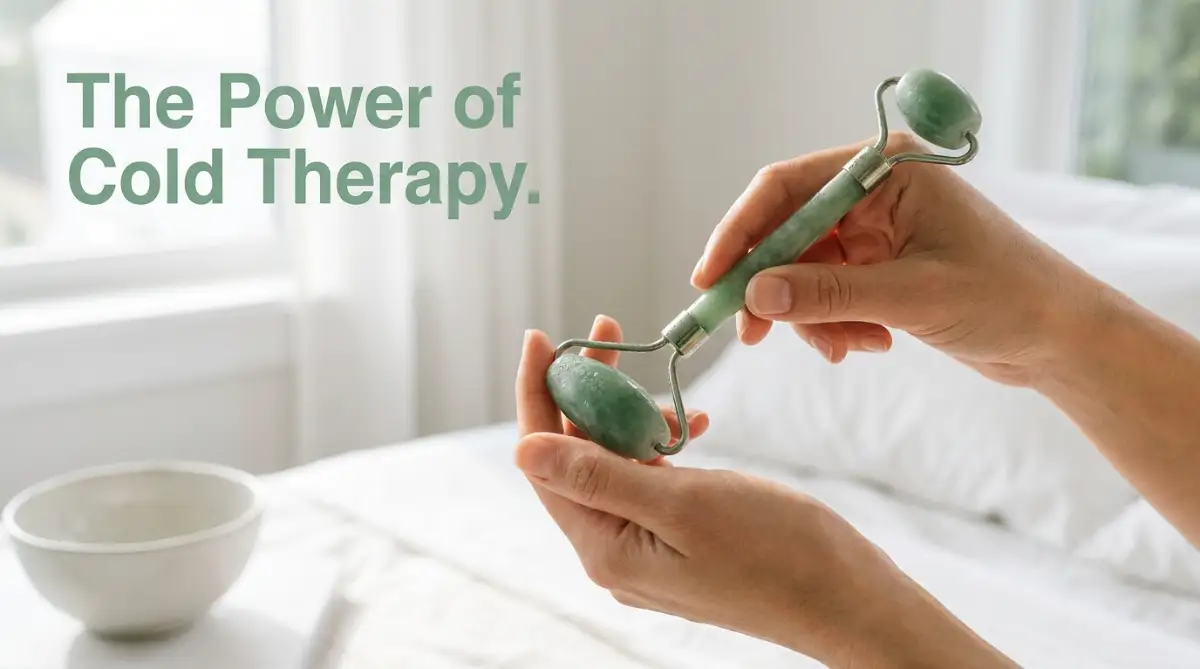
You do not need to buy an expensive, fancy ice roller from a beauty store. Before you go to sleep tonight, place two ordinary metal teaspoons directly into your kitchen refrigerator.
The exact second you walk into the kitchen tomorrow morning, grab those two cold spoons. Gently press the rounded, curved back of the spoons directly against the puffy skin under your eyes.
Hold them there with very light pressure for exactly sixty seconds. You will feel an intense, shocking chill, but you will literally watch the purple shadows shrink and fade away in the mirror as the blood vessels safely contract.
I actually gave myself a terrible ice burn once by holding frozen ice cubes directly against my bare skin for five minutes. My biggest realization was that the skin under the eye is too fragile for freezing ice, and a gently chilled metal spoon provides the exact perfect, safe temperature to shrink the veins without causing tissue damage.
My Personal Morning Tip:
Instead of leaving the spoons in the fridge all night, try popping them in the freezer for exactly five minutes before you use them. It gives you that perfect, crisp shock of cold without the risk of frostbite on your fragile skin. I usually do this while my morning coffee is brewing!
The Manual Drain: Lymphatic Massage Techniques
Once you have used cold therapy to shrink the blood vessels, you are still left with the clear, watery fluid that pooled under your eyes overnight. This fluid belongs to your lymphatic system, which is your body's natural garbage disposal network.
Unlike your blood, which has a heart to constantly pump it around, your lymphatic fluid does not have a central pump. It relies entirely on your physical muscle movement to push the waste fluid down your neck and out of your face.
If you just sit at your desk all morning, that fluid stays completely trapped, leaving heavy, hanging bags under your eyes all day long. You have to act as the physical pump for your own face.

Your Actionable Massage Strategy:
After you apply a very gentle, basic moisturizer to provide some slip, you are going to perform a two-minute lymphatic drainage massage. You must use your ring fingers for this, because your ring fingers naturally apply the absolute lightest amount of pressure.
Start by placing your ring fingers near the inner corners of your eyes, right next to your nose. Very gently, with almost zero heavy pressure, sweep your fingers outward along the bottom of your eye socket toward your temples.
If you are terrified of pressing too hard and accidentally wrinkling the fragile skin around your eyes, you absolutely must watch this expert demonstration of proper, safe lymphatic massage pressure.
Once you reach your temples, sweep your fingers straight down the sides of your face, right in front of your ears, and push all the way down the sides of your neck to your collarbone. You are physically sweeping the trapped fluid out of the eye pocket and pushing it down into the major drainage pipes in your neck.
Repeat this gentle sweeping motion exactly ten times every single morning. This manual flushing technique physically drains the heavy fluid bags, making your face look instantly lifted, sharp, and highly energized.
Quick Look: The 3-Minute Bright Eye Sequence
- Minute 1: Press chilled spoons under the eyes (Shrinks the blood vessels)
- Minute 2: Tap in a lightweight, caffeine-based eye serum (Wakes up the skin)
- Minute 3: Perform a gentle ring-finger lymphatic sweep down the neck (Drains the trapped fluid)
Common Questions About Under-Eye Puffiness and Dark Circles
Can drinking too much coffee cause my dark circles to look worse?
Yes, coffee is a powerful natural diuretic, which physically forces your body to flush out water rapidly. If you drink heavy coffee without matching it with regular water, your skin becomes severely dehydrated, making the dark blood vessels under your eyes look much more prominent.
Do cold cucumber slices actually work for reducing puffiness?
Yes, cucumbers are highly effective! They contain high levels of Vitamin C and caffeic acid, which naturally soothe irritated skin. Because of their massive water content, keeping them in the refrigerator turns them into the perfect, gentle cold compress to shrink swollen blood vessels safely.
How long does it actually take to see results from a lymphatic massage?
If you perform the gentle lymphatic drainage massage correctly, you will literally see the heavy fluid bags shrink in the mirror within two minutes. However, to keep the morning puffiness from returning, you must make the massage a consistent, daily habit.
Your Blueprint for a Bright, Energetic Morning
Fixing dark, exhausted eyes does not have to be an overwhelming experience. You now hold the exact same strategic knowledge that professional estheticians use to treat their clients. By taking just three short minutes every morning to use cold therapy and practice gentle lymphatic massage, you completely remove the fear of looking tired. You are no longer crossing your fingers and hoping a massive corporation sells you a magic cream that actually works.
Instead, you are confidently commanding your own biological engine like a seasoned skincare professional. Fixing this issue is just as important as avoiding dangerous morning routine mistakes that secretly destroy your daily productivity. Stop letting a bad morning routine ruin your confidence; grab a cold spoon tomorrow morning gently press it to your skin, and instantly feel the massive relief of looking totally awake, sharp, and energized!
Disclaimer: The information provided in this article is for educational and general informational purposes only and does not constitute formal medical or dermatological advice. Skincare reactions, vascular conditions, and individual allergies vary heavily by person, genetic background, and specific environmental factors. Always consult with a board-certified dermatologist or primary healthcare provider regarding any severe chronic acne, painful skin rashes, or sudden, unexplainable changes in your facial appearance.