The Fear Of Making The Wrong Legal Move
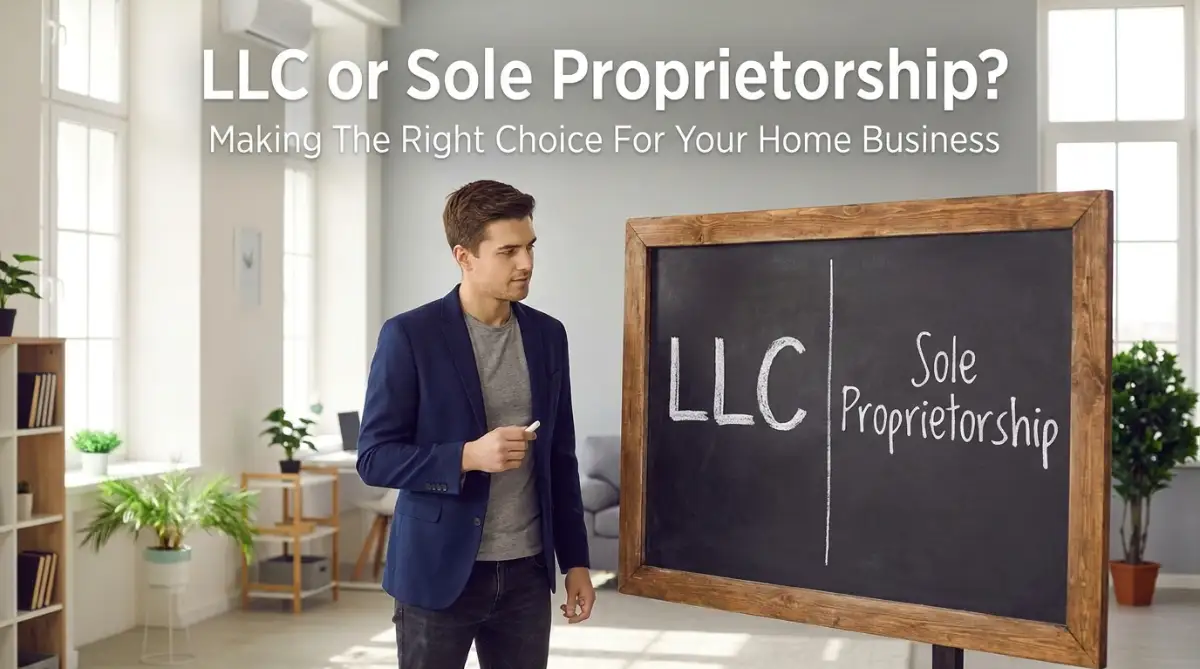
Staring at a brilliant business idea on your notepad while feeling totally paralyzed by legal paperwork is an incredibly frustrating feeling. When I finally decided to turn my side hustle into a real company, the fear of making a wrong legal move and losing my personal savings almost made me quit. It turns out, choosing between a Sole Proprietorship and an LLC is not a giant, terrifying monster—it is actually a very simple, logical choice. Let's strip away all the confusing legal jargon so you can pick the exact right structure and launch your business safely today.

Your 4-Step Legal Protection Guide:
- A Sole Proprietorship is free and easy to start, but it offers zero legal protection; if your business is sued, your personal savings and home are completely at risk.
- Forming an LLC creates an invisible "corporate shield" that legally locks your personal assets safely away from business lawsuits and debts.
- Always check your specific state's annual maintenance fees before forming an LLC—some states are cheap, while others charge hundreds of dollars every year.
- To keep your LLC shield legally strong, you must open a dedicated business checking account and never mix personal and business money (commingling).
Decoding The Default Option: The Sole Proprietorship
Let us start by breaking down the absolute easiest and most common way to start a business. A Sole Proprietorship is the default legal setting for anyone who starts selling things on their own. In fact, you might already be running one right now without even realizing it.
If you baked a cake yesterday and sold it to your neighbor for twenty dollars, congratulations, you are officially a Sole Proprietor in the eyes of the government. You do not have to fill out any special forms, pay any state registration fees, or ask anyone for permission to exist. It is the fastest, cheapest way to get your business off the ground.
The massive benefit here is pure simplicity. When tax season rolls around, you do not have to file a separate, complicated corporate tax return. You simply report all the money you made from your cake sales directly on your normal personal tax return, using a simple form called a Schedule C.
However, this extreme simplicity comes with a very dangerous, hidden catch. In a Sole Proprietorship, the law does not see any separation between you and your business. You and your business are considered the exact same legal entity.
This means that if your business ever gets sued, your personal assets are completely exposed on the front lines. Let us imagine that the cake you sold to your neighbor accidentally made them violently sick, and they decided to sue you for massive medical bills. Because there is no legal shield between your business and your personal life, the court can legally take your personal savings account, your family car, or even your house to pay that debt.
My Quick "Do I Need an LLC?" Risk Test 🚨
If you are wondering whether it is safe to stay a Sole Proprietor, ask yourself these three questions:
- Do I sell a physical product that people consume (like food or cosmetics)?
- Do I have clients visiting my physical home or office space?
- Do I manage heavy digital data (like client credit cards or medical records)?
- If you answered "YES" to any of these, the risk of a lawsuit is too high to operate without an LLC shield.
Understanding The Shield: What Is An LLC?
Now let us look at the other side of the coin. LLC stands for Limited Liability Company. Unlike a Sole Proprietorship, an LLC does not just happen automatically when you make a sale. You actually have to file specific paperwork with your state government and pay a registration fee to create it.
When you form an LLC, you are essentially giving birth to a completely new, separate legal person. The law now sees your business as one entity, and you as a totally separate entity. This creates a massive, invisible wall between your personal life and your business operations.
This invisible wall is what lawyers call the "corporate shield." It is the absolute biggest reason why people choose to form an LLC. If your LLC gets sued by an angry customer or a vendor, they can only go after the money sitting inside the official business bank account.
Your personal savings, your children's college fund, and your family home are legally locked away behind that shield. Even if your business goes completely bankrupt and owes thousands of dollars in debt, your personal assets remain completely safe and untouched.
My Personal Pro Tip: I initially ran my consulting business as a Sole Proprietor because I wanted to save the two hundred dollar state filing fee. Six months later, I signed a contract with a massive corporate client. The sudden realization that a simple mistake on my end could result in a million-dollar lawsuit against my personal savings gave me a panic attack. I filed my LLC paperwork that exact same afternoon, and the mental relief was worth ten times the filing fee.
Forming an LLC gives you an incredible amount of psychological peace. You can take bold, calculated risks to grow your home-based business knowing that a worst-case scenario will not destroy your family's entire financial future.

A Quick Visual Guide To Business Structures
If you are a visual learner who wants to see exactly how these two structures treat your money differently, watch this excellent, easy-to-understand breakdown.
The Hidden Costs of Legal Protection
While the protective shield of an LLC sounds absolutely perfect, it does not come for free. You have to carefully weigh the ongoing maintenance costs before you make your final decision. Every state has different rules and fees for keeping an LLC legally active.
First, there is the initial filing fee to create the company, which usually costs anywhere from fifty to five hundred dollars depending on where you live. But the real hidden cost is the annual maintenance fee. Many states require you to pay a mandatory fee every single year just for the privilege of keeping your LLC shield active.
For example, if you live in California, you might have to pay a massive eight hundred dollar minimum franchise tax every single year, even if your business makes zero profit. If you are just starting a tiny weekend side hustle testing out a new product idea, that yearly fee can completely crush your tiny budget.
A Sole Proprietorship completely avoids all of these expensive state fees. You can operate for years without ever paying a yearly maintenance tax to the government. This makes it the perfect testing ground for brand-new entrepreneurs who have very little starting capital.
You must take ten minutes today to search for the specific LLC filing fees and annual reporting costs in your exact state. Do not guess these numbers. If the yearly fee is fifty dollars, forming an LLC is a no-brainer. If the yearly fee is eight hundred dollars, you might want to wait until your business is actually making a steady, reliable profit.
Pro Tip: The Out-of-State Registration Myth 🗺️
I constantly see beginners trying to register their LLC in cheap states like Wyoming or Delaware to save money, even though they live in California. This is a massive trap! If you physically operate your business in California, you are legally required to register a "Foreign LLC" in California anyway, meaning you will end up paying double the state fees. Always register exactly where you live and work.
How Taxes Actually Work For Both Options
Taxes are usually the most confusing part of this entire decision, but they are actually surprisingly similar for both structures. By default, the IRS treats a single-member LLC exactly the same way it treats a Sole Proprietorship. They are both considered "pass-through" entities.
Pass-through taxation simply means that the business itself does not pay any corporate income taxes. Instead, all the profits pass straight through the business and land directly on your personal tax return. You are taxed at your normal, individual income tax rate.
If your home business makes ten thousand dollars in profit, you report that ten thousand dollars on your personal tax return, regardless of whether you are an LLC or a Sole Proprietor. You also get to deduct exactly the same business expenses. You can write off your home office space, your business internet bill, and your advertising costs under both structures.
However, an LLC gives you a massive secret weapon as your business grows larger. Once your LLC starts making a very large, consistent profit, you can actually ask the IRS to tax you as an S-Corporation instead.
When you elect S-Corp status for your LLC, you can legally split your business income into a regular salary and a separate owner distribution. This advanced strategy can legally save you thousands of dollars in self-employment taxes every single year. You absolutely cannot use this advanced tax-saving strategy if you remain a simple Sole Proprietor.
The Professional Image Advantage
There is one major factor that has absolutely nothing to do with taxes or lawsuits, but it deeply affects how much money you can make. That factor is public perception. The letters "LLC" at the end of your business name instantly change how the world views your company.
When you operate as a Sole Proprietor, your official business name is simply your own personal legal name. If your name is John Doe, your business is just John Doe. If you want to operate under a catchy brand name like "Sunrise Web Design," you have to file extra paperwork called a DBA (Doing Business As).
Even with a DBA, many large corporate clients and government agencies flat-out refuse to sign contracts with Sole Proprietors. They view unregistered businesses as high-risk, amateur operations. They want to see that you are a serious, officially registered company.
Having an LLC instantly proves that you are deeply committed to your business. It tells your clients, your vendors, and your bank that you are a legitimate, professional organization. This built-in trust allows you to easily charge higher premium rates for your services without clients questioning your authority.
Expert Strategies To Maintain Your Legal Business Shield
Making the final decision to upgrade your home business to an official LLC is an amazing feeling. You finally have that protective legal wall standing firmly between your personal savings and your business operations. However, many beginners mistakenly believe that simply paying the state filing fee is the end of the journey.
The truth is, that protective legal wall is actually quite fragile if you do not actively maintain it. In the legal world, there is a terrifying concept known as "piercing the corporate veil." If you treat your new company like a casual hobby instead of a separate legal person, a judge can completely ignore your LLC status and go directly after your personal money.
To stop this from ever happening, you must treat your new business like a completely separate entity from day one. The absolute first thing you must do after your state approves your LLC is apply for an Employer Identification Number. This is commonly known as an EIN.
An EIN acts exactly like a Social Security Number, but it is strictly for your business. It is a completely free nine-digit number that you can get directly from the government. You can read the official guide on how to apply for an Employer Identification Number provided by the Internal Revenue Service to understand exactly how this simple process works.
Once you have that special tax number, you must immediately take it to your local bank. You need to open a dedicated business checking account that sits entirely under your new LLC's name. This is the ultimate secret to keeping your legal shield incredibly strong and totally unbreakable.
Every single penny your business earns must go directly into this new business bank account. If a client writes you a check, it goes into the business account. If you need to pay for website hosting or buy raw materials, you use the official business debit card attached to that specific account.
Never, ever use your business debit card to pay for your personal groceries or your home electricity bill. Mixing your personal money with your business money is the fastest way to instantly destroy your legal protection. If a judge sees that you are using the company account as a personal piggy bank, they will tear down your corporate shield without a second thought.
You also need to present yourself online as a highly organized, professional entity. Many beginners make silent freelance profile mistakes that keep you from getting your first client because they forget to update their brand name. Make sure your website, your email signature, and your client contracts all clearly display your official LLC name.

Dangerous Traps That Destroy Your Financial Protection
Even with the best intentions, everyday entrepreneurs easily fall into silent administrative traps that can ruin their companies. When you are rushing to fulfill customer orders, legal paperwork easily gets pushed to the absolute bottom of your priority list. Let us expose these silent business killers so you can actively avoid them in your daily routine.
The most common trap is completely forgetting about your state's mandatory annual reporting deadlines. Almost every single state requires an active LLC to file a short informational report every year. This simple document just tells the government who currently owns the business and where it is officially located.
If you forget to file this simple piece of paper, your state will hit you with massive late fees. If you ignore those warning letters long enough, the state will eventually dissolve your LLC entirely without telling you. You will wake up one morning operating as a vulnerable Sole Proprietor, completely stripped of your legal protection.
To prevent this nightmare, you must set loud, repeating alarms on your digital calendar right now. Find out your state's exact deadline, and set a reminder to fire off thirty days in advance. Treating this deadline with extreme respect is much better than dealing with the massive stress of a dissolved business.
The Contract Signature Trap
Another massive mistake happens exactly at the moment you sign a new contract with a client or a vendor. Many new business owners just quickly scribble their personal name at the bottom of the document without thinking. This innocent mistake completely bypasses your LLC protection.
When you sign a business contract using only your personal name, you are making yourself personally liable for that specific agreement. If something goes terribly wrong with the project, the client will sue you as an individual, not your company.
You must always sign official documents in your official capacity as the owner of the LLC. For example, you should physically write out "John Doe, Managing Member of Sunset Designs LLC." This tiny change in how you hold your pen proves that the business is making the agreement, not you personally.

For a deeper understanding of how these personal liability mistakes happen, you can study the legal explanations of piercing the corporate veil published by the legal experts at Nolo. Reading real-world examples of how owners lose their protection will motivate you to stay highly organized.
Technology and Security Blunders
When running a home-based business, the lines between your personal life and your work life easily blur together. You might use the exact same laptop to watch movies at night and manage your massive client database during the day. This creates a highly dangerous overlap in your digital security.
Many new founders use weak, easily guessable passwords for their official business banking apps and client portals. These dangerous password management mistakes that leave your digital identity exposed can lead to catastrophic data breaches. If a hacker gains access to your client payment information, your LLC shield will not protect your reputation from completely collapsing.
You must separate your digital tools just like you separate your bank accounts. Use a dedicated password manager specifically for your business logins. Set up heavy two-factor authentication on every single application that touches your company money.
We also see founders completely burning out because they never set boundaries around their work hours. When your office is just steps away from your bedroom, you might find yourself answering client emails at three in the morning.
If your smartphone is constantly buzzing with work notifications, it will completely drain your energy and your actual device. You can easily fix these overlooked habits that quietly destroy your smartphone battery lifespan by turning off work alerts after six o'clock in the evening. Building strong physical boundaries keeps your mind sharp enough to handle the complex administrative duties of running a real company.
When Cash Flow Panic Leads to Bad Decisions
Starting any new business requires a massive amount of patience, especially when the initial cash flow is moving incredibly slowly. Many Sole Proprietors and new LLC owners panic when their first few marketing campaigns fail to generate immediate sales. This sudden lack of cash causes them to make terrifying financial choices out of pure desperation.
Instead of adjusting their business model or finding free ways to market their services, they look for dangerous shortcuts. They start desperately searching the internet for how to get unsecured loans with bad credit and actually get approved. Taking on massive, high-interest personal debt to fund an unproven business idea is a guaranteed recipe for financial disaster.
If you formed an LLC to protect your personal assets, signing a high-interest personal loan completely defeats the entire purpose of the shield. You are voluntarily putting a massive personal debt burden directly onto your own shoulders.
If you are genuinely struggling to figure out your next financial move, you do not have to guess in the dark. You can easily find free, highly experienced business mentors through amazing national programs. Take a few minutes to explore the free business mentoring services provided by SCORE, an official partner of the U.S. Small Business Administration.
Sitting down with a retired executive for just one hour can completely change the trajectory of your entire startup. They can look at your exact situation and tell you if remaining a Sole Proprietor makes sense, or if it is finally time to file that LLC paperwork. Getting free expert advice is always better than trying to solve complex legal puzzles completely alone.
Your Blueprint For Building A Secure Business Foundation
We have completely decoded the heavy legal jargon surrounding your home-based business options today. You no longer have to feel completely paralyzed by fear when trying to decide how to structure your brilliant new idea. You now understand exactly how the invisible corporate shield works and how to keep it perfectly intact.
If your business is just a tiny side hobby making a few hundred dollars a month, a simple Sole Proprietorship is a perfectly fine place to start. It allows you to safely test the market without draining your wallet on heavy state filing fees. But the exact moment you start dealing with high-paying clients, expensive equipment, or physical products that could potentially harm someone, you must upgrade your armor.
Your immediate action plan for tomorrow morning is to sit down and honestly evaluate your current risk level. Look at the products or services you are selling and ask yourself, "If everything went completely wrong today, what is the absolute worst thing that could happen to my customer?" If the answer involves physical injury or massive financial loss for them, you need an LLC immediately.
If you decide it is time to upgrade, do not feel intimidated by the state registration process. Almost every state has a highly modernized website where you can file your LLC paperwork completely online in about fifteen minutes. You do not need an expensive law firm; you just need to read the instructions carefully and pay the basic state fee.
Always remember that setting up the correct legal foundation is an act of deep love for your family. You are actively choosing to protect the money that pays for their food, their shelter, and their future. A strong business structure allows you to chase your wildest entrepreneurial dreams while keeping your loved ones completely safe from the unpredictable storms of the business world.
Common Questions About Business Legal Structures
Do I actually need to get an EIN if I stay a Sole Proprietor?
You are not legally required to have an EIN as a Sole Proprietor unless you plan to hire physical employees. Most Sole Proprietors simply use their personal Social Security Number to file their business taxes. However, getting a free EIN is a highly recommended safety measure because it prevents you from handing out your sensitive Social Security Number to every new client.
Can I easily upgrade from a Sole Proprietorship to an LLC later on?
Yes, absolutely. Millions of successful entrepreneurs start as simple Sole Proprietors to test their ideas cheaply and then transition to an LLC once they reach steady profitability. The transition is incredibly simple; you just file your official Articles of Organization with your state and update your bank accounts to reflect the new company name.
Does forming an LLC protect me if I personally injure someone?
No, an LLC does not give you a free pass to act recklessly. If your business is a plumbing company and you personally break a client's expensive water pipe due to severe negligence, you can still be sued personally for your own direct actions. The LLC shield mostly protects you from the debts of the business and the actions of your employees, not your own intentional mistakes.
How long does the state usually take to approve a new LLC application?
The timeline varies wildly depending on exactly which state you live in. Some states have fully automated digital systems that approve new LLC filings in less than twenty-four hours. Other states with older paper systems might take three to six weeks to finally mail back your official approval documents.
Can I run multiple different businesses under one single LLC?
Yes, you can legally operate multiple different brands under one master LLC structure by using DBA (Doing Business As) names. However, this is generally considered a highly risky strategy. If one of those brands gets hit with a massive lawsuit, the assets of all the other brands sitting inside that same LLC are instantly at risk.
Disclaimer: The information provided in this article is for general educational and informational purposes only and does not constitute professional legal, tax, or financial advice. State laws regarding business entities, annual reporting fees, and liability protections vary heavily depending on your specific location. Always consult directly with a licensed business attorney or a certified public accountant (CPA) before forming a legal entity or making major structural changes to your personal business.