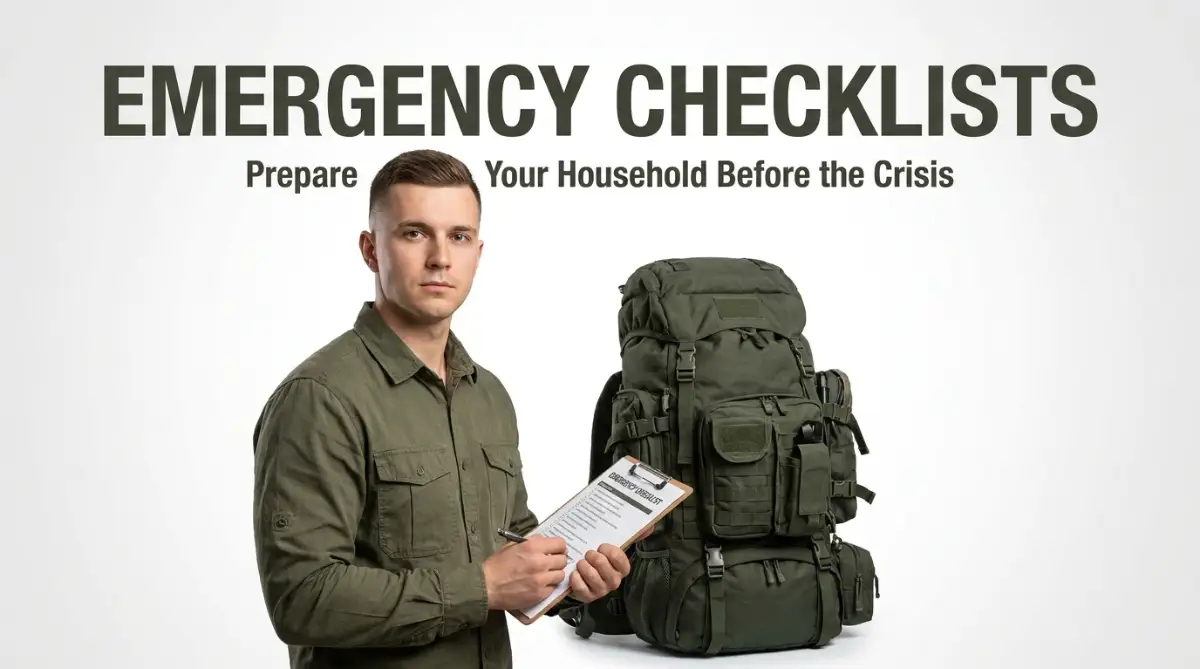
The Silent Panic of Sudden Environmental Disasters
I totally panicked when the power went out last winter. My phone battery was at ten percent, the house was freezing, and all I had in the fridge was half a bottle of water. That night was a massive wake-up call for me. You do not need a crazy doomsday bunker to keep your family safe, just a practical plan. Let me show you exactly what worked for me so you never have to feel that kind of stress.
What You Need to Do Right Now (Quick Summary)
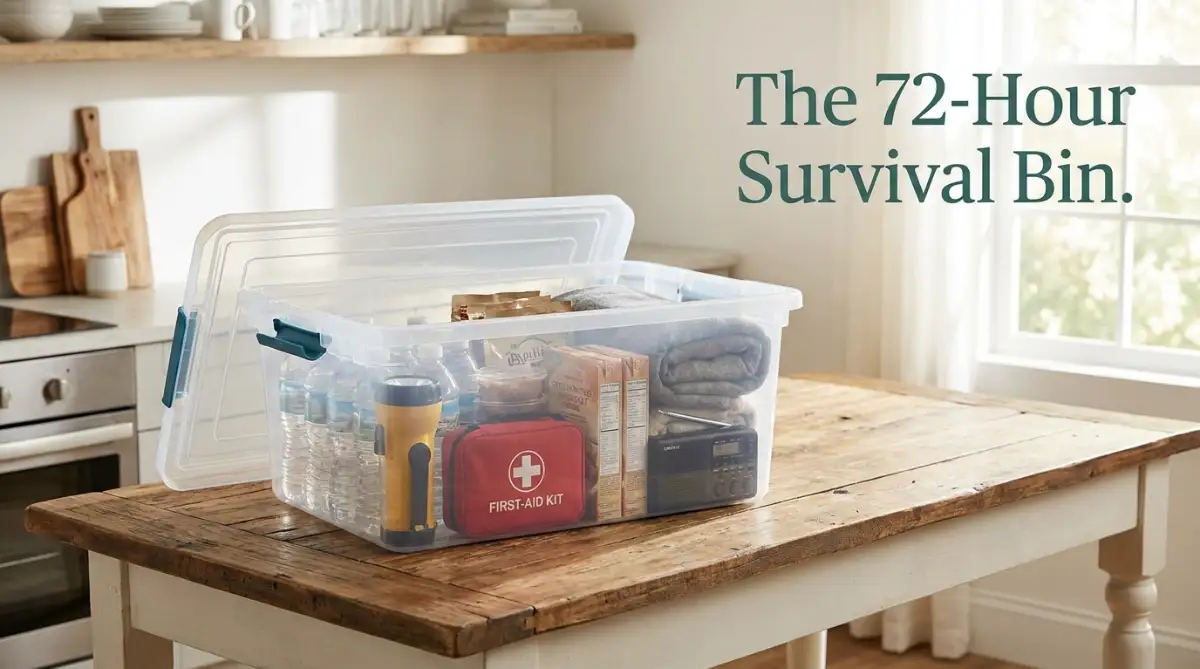
- Store at least 12 gallons of bottled water for a family of four.
- Swap out dry rice and beans for ready-to-eat canned food (and buy a manual can opener).
- Put physical copies of your IDs, insurance papers, and $200 cash in a waterproof folder.
- Pick one friend who lives completely out-of-state to be your family's main contact person.
Your Strategic Blueprint to Household Readiness
Preparing your home for a sudden crisis is not about wishing for good luck. It does not require you to spend thousands of dollars on expensive survival bunkers.
A successful emergency plan relies entirely on organized preparation and clean, paper-based checklists. Your brain cannot process complex decisions when your body is flooded with high-stress hormones like adrenaline.
By having your checklists prepared beforehand, you give your family a clear, simple roadmap to follow when the real panic hits. Let us explore the four most essential areas of household readiness you can secure today.
The 72-Hour Hydration Math: Securing Your Liquid Lifeline
The absolute most important element of any survival plan is securing clean, drinkable water. Your body is a highly complex biological machine that needs water to cool its internal engines and flush out toxins.
If you run out of water, your physical and cognitive systems will begin to fail in less than three days. Many homeowners make the mistake of assuming they can simply use their home's tap water during a major storm or flood.
This is a highly dangerous assumption. Underground municipal pipes often crack and fill with toxic chemicals or sewage during severe earthquakes, floods, or power grid failures.
The Shifting Soil Analogy:
Think of your local municipal water pipes like fragile glass tubes buried beneath a busy highway. When the heavy earth moves during a flood or earthquake, those glass tubes easily shatter, letting the dirty surrounding mud and wastewater leak directly into the clean water supply.
Your Actionable Strategy:
You must store exactly one gallon of water, per person, per day, for a minimum of three days. If you have a family of four, you need a minimum of twelve gallons of sealed, factory-bottled water sitting in your pantry or basement.
Store your emergency water supply in a cool, dark place away from direct sunlight. Never store plastic water bottles directly on a hot concrete floor, as the plastic can slowly degrade and leak harmful chemicals into your drinking water.
Myth vs. Fact: Emergency Water Storage
- Myth: I can just fill up my bathtub right before the storm hits.
- Fact: Bathtubs are full of soap scum and everyday bacteria. Plus, if the municipal pipes break early, nothing will come out of your faucet anyway. Stick to sealed bottles.
- Myth: Boiling dirty flood water makes it perfectly safe to drink.
- Fact: Boiling kills bugs, but it does absolutely nothing to remove toxic chemicals, fertilizers, or motor oil floating in floodwater.
The Non-Perishable Food Strategy: Avoiding the Raw Rice Trap
When people build their very first emergency food supply, they often buy massive bags of dry pinto beans and white rice because they are cheap and last forever. While these dry foods are excellent for long-term food storage, they are completely useless during a sudden power outage.
If the electrical grid is dead, your electric stove will not work, and you cannot boil water to cook raw rice. Attempting to eat dry, uncooked food will only dehydrate your body faster, making your situation much worse.
Your Actionable Strategy:
You must stock your emergency bin exclusively with high-calorie, ready-to-eat foods that require absolutely zero cooking or water to prepare.
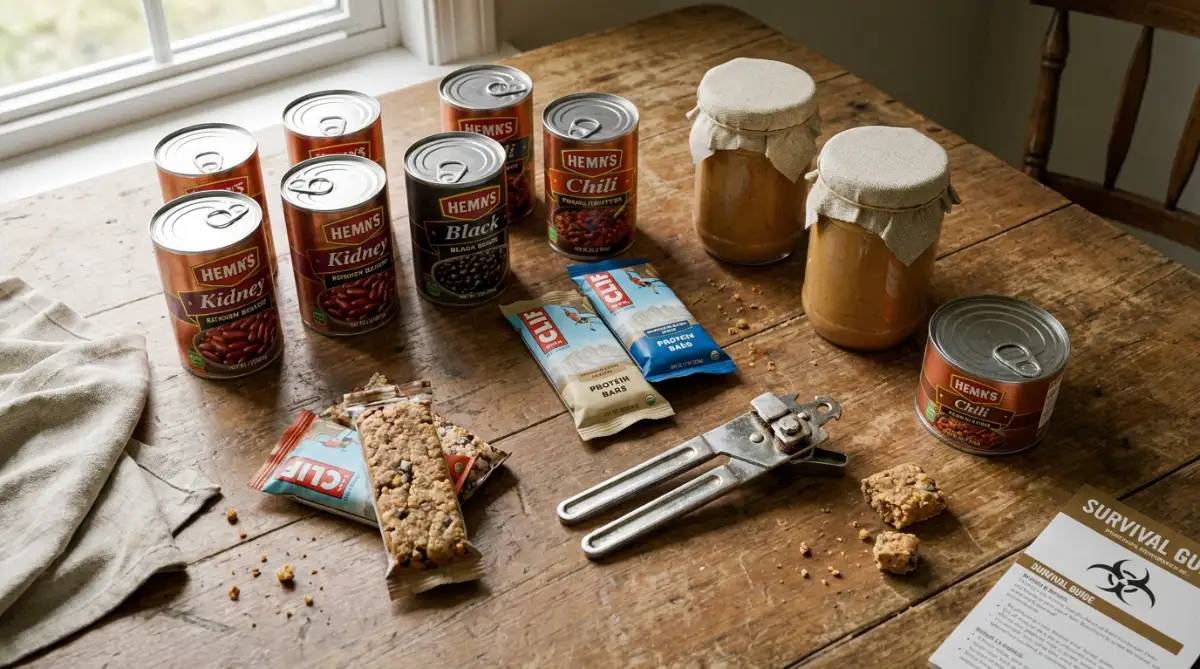
Look closely at your grocery store shelves for canned meats, peanut butter, protein bars, and canned vegetables. These foods are packed with the essential proteins and fats your body needs to maintain its energy levels during high-stress situations.
Most importantly, you must pack a manual can opener directly inside your survival bin. Hundreds of people have starved sitting next to a massive pile of canned food simply because they relied on an electric can opener that no longer had power.
My absolute biggest mistake during my first emergency setup was buying huge, cheap bags of dry rice and pinto beans, thinking my family would be totally fine. I did not realize that when the power goes out, your electric stove is completely dead, and trying to eat raw, uncooked food will only dehydrate your body faster. The very second I swapped those dry foods for high-calorie, ready-to-eat cans and packed a simple manual can opener in my bin, my survival plan became truly stable.
The "Grab and Go" Legal Vault: Securing Your Identity
If a fast-moving house fire or a sudden chemical spill forces you to evacuate your home in exactly ten minutes, you will not have time to search through your desk drawers for important papers. You need a dedicated, portable system to protect your legal identity.
If your physical home is damaged or destroyed, proving who you are to insurance adjusters and government agencies becomes your most difficult battle. Without proper documentation, you cannot access your bank accounts or claim emergency financial assistance.
Your Actionable Strategy:
You must create a highly secure "Identity Go-Bag" today. This should be a thick, heavy-duty, waterproof and fireproof document envelope that rests near your front door.
Inside this envelope, keep physical, clean photocopies of your most important life documents:
- Color copies of every family member's driver's license and passport.
- Printed copies of your home, auto, and medical insurance policy declaration pages.
- Physical copies of your original birth certificates and marriage licenses.
Expert Insight:
Never rely entirely on physical paper. Take clear, high-resolution photographs of all these documents and save them on an encrypted USB thumb drive. Place this tiny drive inside your waterproof envelope so you always have a secure digital backup of your entire legal identity in your pocket.
My 5-Minute Go-Bag Checklist:
Grab a waterproof folder tonight and make sure you pack these specific items right now:
- $200 in small bills (ones and fives are best since stores will not have change).
- A physical paper map of your town (GPS will not help you if the cell towers are down).
- A spare set of house and car keys.
- A written list of any daily medications your family members take.
The Out-of-State Anchor: Designing an Offline Communication Loop
During a massive regional disaster, local cell phone towers are usually the very first things to experience a complete failure. They either physically lose power from the storm or become instantly overloaded because ten thousand panicked people are trying to make a call at the exact same second.
If your family is scattered across town when the emergency hits, you will not be able to call them on the phone. This sudden lack of communication is the most terrifying emotional experience a parent can ever face.
The Out-of-State Anchor Strategy:
While local phone lines quickly become jammed during a crisis, long-distance, out-of-state lines often remain perfectly clear and functional. You must designate one trusted relative or close friend who lives at least two hundred miles away in a different state to act as your family's "communication anchor."
Write their full name, address, and phone number on a small, laminated index card. Put one card in your wallet, one in your spouse's bag, and secure one inside your child's school backpack.
If a disaster scatters your family, every single person knows they must find a working landline or a public phone and call the out-of-state anchor to report their status. This simple, free protocol completely removes the terror of losing your children during a chaotic city evacuation, keeping your family connected.
Advanced Security Tactics for Bulletproof Readiness
Once you understand the basic process of securing your water supply and creating an out-of-state communication plan, we must look much deeper into your physical safety strategy. Your household emergency plan is not a simple checklist to fill out and forget; it is a highly active engine that dictates your family's survival during a crisis.
Technical safety data shared by the American Red Cross reveals that simple, regular evacuation drills can prevent up to eighty percent of all unexpected injuries during a fire or flood [2]. Knowing how to monitor your family's response times is highly important before a real disaster strikes your neighborhood.
Additionally, you must manage your electronic devices safely during power outages. Just as bad charging habits are overlooked habits that quietly destroy your smartphone battery lifespan, running heavy background syncs when grid power is down drains your emergency communication reserves rapidly.
If you try to set up your home generator or backup battery without professional help, you risk causing permanent damage to your house. You must avoid these setup errors just as you would avoid the silent DIY solar mistakes that destroy your home insurance payout to protect your wealth and peace of mind.
Let us explore the advanced, pro-level secrets you can use to build an unbreakable wall of protection around your household today.
The Secret to Controlling Your Home's Climate Without Power
When a massive storm destroys the local power grid during the freezing winter or the scorching summer, your home's temperature will rapidly become dangerous. Without active heating or cooling, your house will quickly mimic the extreme outside environment.
To protect your family, you must understand a scientific concept called thermal massing. This simply means trapping warm or cool air inside a single, small room instead of trying to heat or cool your entire house.
The Blanket Barricade Analogy:
Imagine your house is a massive wooden ship sailing through a freezing arctic storm. If you leave all the cabin doors open, the freezing wind will quickly fill the entire ship, making everyone freeze.
But if you gather everyone into the smallest, central cabin and seal the door with heavy blankets, your collective body heat will easily keep that one room warm and comfortable.
Your Actionable Strategy:
Identify the smallest room in your home that has the fewest windows and outer walls, such as a central bathroom or a walk-in closet. Hang thick, heavy blankets over any doorways or windows in this room using strong duct tape or nails.
If it is freezing outside, gather your family in this room with your warm sleeping bags. If it is scorching hot, open the windows only at night to let the cool air in, and seal the dark curtains tightly during the day to block the sun.
Building a Local Neighborhood Alliance
Many people believe that keeping their emergency readiness completely secret from their neighbors is the safest way to survive. They imagine a chaotic scenario where everyone is fighting over the last bottle of water.
This isolated mindset is a massive, highly dangerous misunderstanding of human survival. During a real-world regional disaster, your immediate neighbors are your absolute best resource for immediate physical rescue and shared tools.
If a massive tree falls on your roof during a storm, the emergency rescue services might not reach your street for hours. The person who will physically help pull you out of the wreckage is the neighbor living right next door.
Your Actionable Strategy:
You must build a simple community safety net before the storm hits. Host an informal meeting with the families living on your immediate street and discuss exactly what emergency tools each person owns.
If you own a heavy-duty chainsaw and your neighbor owns a high-capacity gas generator, you can share these massive assets during a power outage. This strategic pooling of tools and skills makes your entire street infinitely more resilient to sudden disasters, keeping everyone safe.
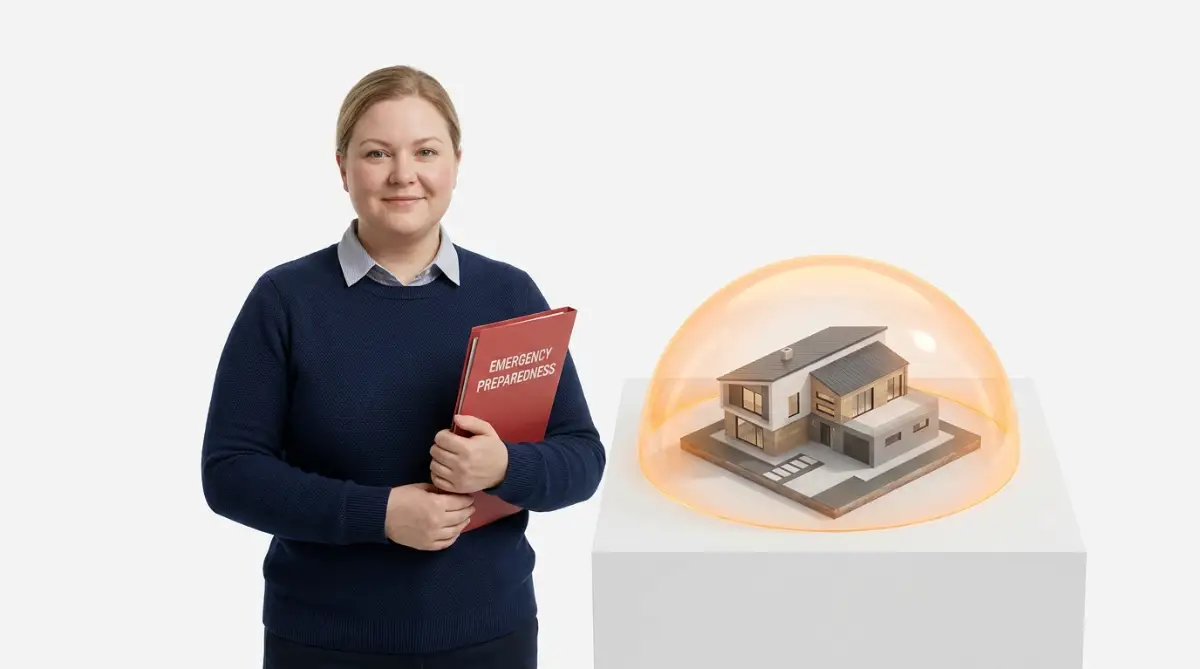
Silent Pitfalls That Will Destroy Your Safety Plan
Before you pack your final emergency supplies, watch this highly helpful video that shows you the exact preparation mistakes that quietly ruin your survival plan. It breaks down the most dangerous home safety errors in a simple, visual way, so check it out and then read the guide below!
Even highly intelligent parents make terrible choices when they are trying to organize their emergency kits quickly on a tight budget. The heavy stress of thinking about a massive flood or fire often makes us buy cheap, useless gadgets or ignore basic safety rules.
If you fall into these incredibly common traps, your survival plan will completely collapse exactly when your family needs it most. Let us look at the silent, dangerous pitfalls you must avoid to keep your household perfectly safe.
The Cashless Trap: Relying Entirely on Digital Banking
We live in a highly digital world where almost everyone pays for their groceries using credit cards or smartphone applications. Many people do not carry a single physical dollar in their wallets, assuming the electronic banking systems will always be active.
This is a massive, highly expensive mistake during a major regional crisis. When the electrical grid fails, every single credit card reader, ATM, and local bank in your city will shut down instantly.
If you walk into a grocery store to buy the last remaining bottles of water, your digital cards will be completely useless. You must keep a hidden stash of physical cash inside your waterproof emergency envelope.
Store at least three hundred dollars in small, crisp five and ten-dollar bills. Small bills are highly important because a local store owner will likely not have change for a hundred-dollar bill during a chaotic emergency.
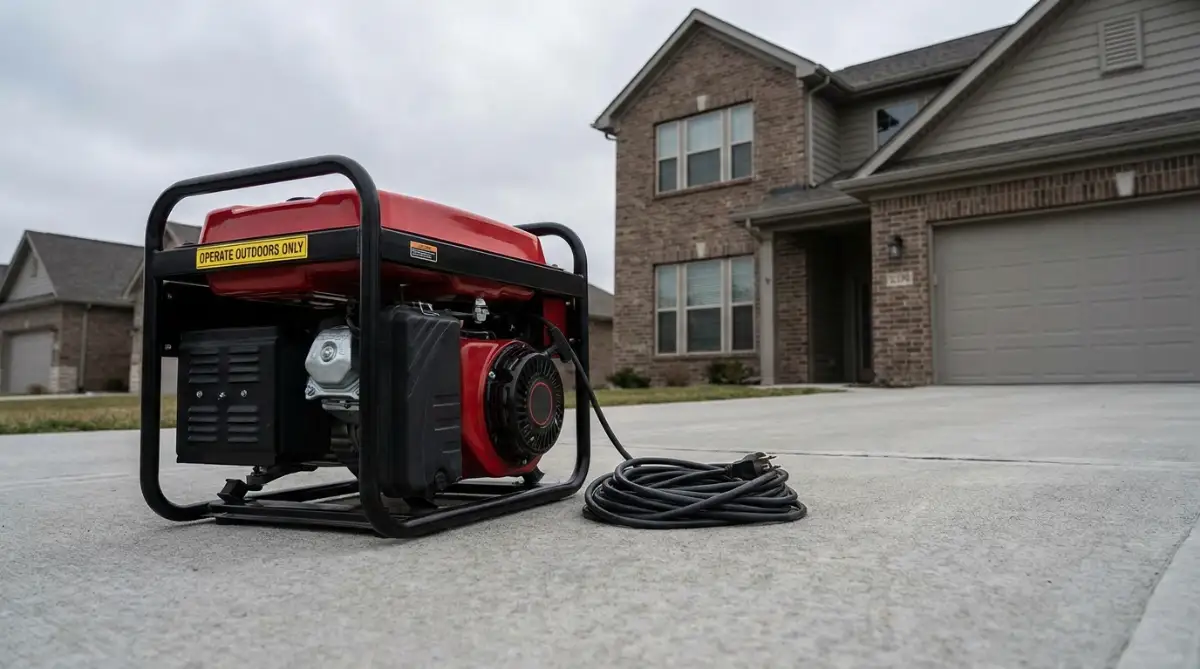
The Carbon Monoxide Threat: Misusing Gas Generators
When a power outage lasts for several days, many families buy a portable gas generator to keep their refrigerator running and charge their phones. But because they are worried about thieves stealing the expensive generator, they place it inside their closed garage or on their back porch.
This is an incredibly dangerous, life-threatening mistake. Gas generators produce a highly toxic, invisible, and completely odorless gas called carbon monoxide.
If you run a generator in a semi-enclosed space, this deadly gas will slowly seep through the cracks in your doors and suffocate your sleeping family. Always place your generator at least twenty feet away from your house, and point the exhaust pipe directly away from your windows and doors.
Ignoring First-Aid Expirations
When building a home medical kit, most people simply throw a standard first-aid box into their plastic survival bin and forget about it. They assume that since bandages do not go bad, the kit will remain perfect forever.
This is a massive medical hazard. Liquid medicines, burn creams, and eye drops degrade rapidly over time when stored in hot, humid spaces.
Maintaining your body's physical health during long hours of evacuation requires a strong protective shield. Just like using natural home remedies to fix extremely dry and flaky skin heals your face gently without harsh chemicals, keeping a clean, updated medical kit protects your skin from infected cuts.
If your home gets damaged by a storm and you lack emergency funding, the sudden replacement costs can easily ruin your family budget. You do not want to be forced into researching how to get unsecured loans with bad credit and actually get approved just to pay for a temporary motel room or buy emergency clothes.
Check your medical kit every six months, write the expiration dates on the bottles with a red marker, and replace any expired creams or medicines immediately.
A Word from the Expert: Your Roadmap to Crisis Peace of Mind
Organizing your household for a massive emergency does not have to be a scary, mysterious, or overwhelming experience. You now hold the exact same strategic knowledge that professional disaster management coordinators use to protect entire cities.
By taking a few short hours to build your physical checklists, secure your legal documents, and map your escape routes, you completely remove the heavy fear of the unknown. You are no longer crossing your fingers and hoping a massive storm avoids your specific street.
Instead, you are confidently commanding your own family's safety behind an impenetrable, organized fortress. This simple shift in your mental approach gives you incredible power over your entire survival future.
Your Safety Preparation Checklist for Tomorrow:
- Audit Your Water Supply: Check your pantry tomorrow and ensure you have exactly one gallon of water per person for three days.
- Build the Document Vault: Buy a fireproof envelope and place physical copies of your IDs, insurance policies, and banking details inside it immediately.
- Establish the Out-of-State Anchor: Call a trusted relative who lives far away and ask them to be your official emergency contact hub.
- Rotate Your Medical Gear: Open your first-aid kit and throw away any expired ointments or dried-out adhesive bandages.
Your family relies entirely on your calm, logical preparation to keep them safe during a crisis. Do not let basic administrative laziness or the discomfort of thinking about disasters stop you from building a strong safety net.
Read your emergency checklists slowly, manage your physical supplies carefully, and take complete, fearless control of your household's safety starting right now.
Looking back, taking the time to build my emergency kit did not just keep my family safe—it completely removed my silent winter anxiety and gave me absolute peace of mind. You do not need to spend thousands of dollars on expensive shelters to protect your loved ones, so please do not let the fear of disasters stop you. Fill your water bottles tonight, set up your emergency document bag, and take complete, fearless control of your family's safety today!
Common Questions About Household Emergency Preparedness
How much emergency drinking water should I store for my family?
You should store exactly one gallon of water per person, per day, for a minimum of three days. For a family of four, this means keeping at least twelve gallons of sealed, factory-bottled water sitting safely in a cool, dark place.
Why shouldn't I store massive bags of dry rice and beans in my emergency kit?
Storing dry rice and beans is risky during a major storm because a dead electrical grid means your stove will not work and you cannot boil water. You must pack your emergency bin with ready-to-eat foods that require zero cooking or water to consume.
Why is having an out-of-state emergency contact so important during a disaster?
Local cell phone towers often experience complete network failures or get jammed by thousands of panicked callers during a crisis. Long-distance, out-of-state phone lines frequently remain clear, making a distant relative the ideal central communication hub for separated family members.
Is it safe to run a portable gas generator inside my garage during a power outage?
Running a gas generator inside a closed garage or porch is life-threatening because it produces odorless, toxic carbon monoxide gas that can suffocate your sleeping family. You must always place your generator at least twenty feet away from your house with the exhaust pointing away from windows and doors.
Why should I keep physical cash hidden in my emergency kit?
When the electrical grid fails, every single credit card reader, ATM, and local bank in your city will shut down instantly, leaving digital cards useless. Keeping a hidden stash of physical cash in small bills allows you to purchase essential supplies from local stores during a chaotic blackout.
Disclaimer: The information provided in this article is for educational and general informational purposes only and does not constitute official medical, emergency rescue, or professional disaster management advice. Emergency protocols, evacuation routes, and survival requirements vary heavily by geographic region, specific weather threats, and local government regulations. Always consult with your local emergency management agency, the Red Cross, or official state safety authorities regarding the exact evacuation procedures and survival requirements of your specific community.