The Heavy Weight Of Doing Absolutely Nothing
I stared at my laptop last Tuesday with five tabs open and a massive to-do list staring right back at me. I knew exactly what I had to do, but my body just refused to move. If you have ever felt that awful, heavy guilt of wanting to work but feeling totally frozen, let me tell you a secret: you are not lazy. You are just fighting your own brain. Let me show you how a simple piece of paper helped me break out of this trap when digital calendars completely failed me.
The Bottom Line (If You Are Short on Time)
- Digital calendar apps trap you with social media distractions; switch to physical paper.
- Draw big, colorful blocks of time instead of making a massive 20-item to-do list.
- Do a "brain dump" first to clear your memory before you plan your day.
- Leave empty buffer blocks in your schedule so you do not panic if a task takes too long.
Why Standard Advice Completely Fails Our Brains
We are constantly told that the secret to getting things done is just pure willpower. But when you have an attention deficit, your brain simply does not process motivation the same way.
Let's look at the actual science behind why we freeze up, and why the usual productivity tips secretly make our lives much harder. Most advice is designed for neurotypical brains that run on a steady supply of dopamine. Our brains, however, are constantly starving for that exact chemical.
The Trap Of The Endless Digital Calendar
Almost every productivity guru tells you to put your entire life into a digital app. We are told to sync our phones, our watches, and our laptops.
But relying heavily on digital screens is a massive trap for someone with attention issues. When you pick up your phone to check your schedule, what happens next? You immediately see a text message, a social media notification, or a funny video recommendation.
By the time you actually open your calendar app, you have completely forgotten why you picked up the phone in the first place. You just lost forty-five minutes to endless scrolling. Your brain gets hijacked by easy dopamine, leaving your actual tasks entirely forgotten.
The "Out Of Sight, Out Of Mind" Problem
People with this specific brain type suffer heavily from a lack of object permanence. If we cannot physically see something right in front of our eyes, it basically ceases to exist in our reality.
When you hide your daily schedule inside a closed app or a shut notebook, your brain completely deletes it from your memory. You will happily sit on the couch for three hours because there is no physical, visual reminder telling you to move.
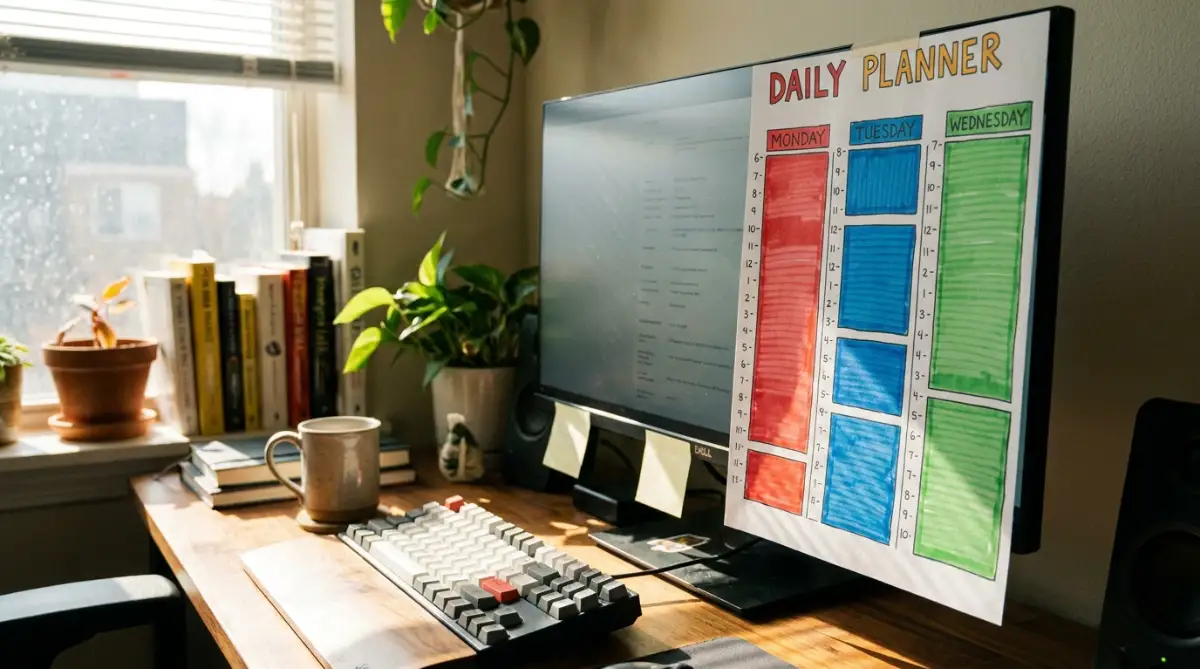
This is exactly why printable, physical paper templates are incredibly powerful. When you print a massive, colorful schedule and tape it to your computer monitor, you cannot ignore it. It stays in your line of sight all day long, gently pulling your attention back to reality without making a loud, stressful notification sound.
The Magic Of Physical Boundaries
A blank piece of paper with no structure is terrifying. It demands that you invent a plan from scratch, which requires a huge amount of executive function.
On the other hand, a highly detailed planner with a slot for every single minute of the day is deeply overwhelming. If you miss your 9:15 AM slot, you feel like the entire day is ruined, so you just give up completely.
Printable time-blocking templates offer the perfect middle ground. They give you a physical boundary to work within, but the blocks are large and forgiving. You are not scheduling specific minutes; you are simply carving out general zones of focus.
Pro Tip: I used to try planning my entire day down to the exact five-minute mark. When a single phone call ran late, my entire rigid schedule collapsed, and I would spiral into a deep freeze. My biggest realization came when I started leaving massive, blank "buffer blocks" in my printed schedule. Those empty spaces saved me from feeling like a total failure when life naturally got messy.
Breaking Down The Visual Time-Blocking Strategy
To actually overcome the feeling of being frozen, we need to bypass the logical part of the brain and speak directly to the visual part.
Visual time-blocking uses bold shapes, bright colors, and physical interaction to create momentum. When you physically hold a pen and fill in a block on a piece of paper, you are making a real, tactile commitment.
Shifting From "To-Do Lists" To "Time Zones"
A standard to-do list is actually a very dangerous tool for us. A list of twenty items has no context of time. Your brain looks at that massive list and assumes every single item needs to be done right this very second.
This immediate pressure triggers a fight-or-flight response, which leads directly to sitting on the couch doing nothing.
Instead of listing tasks, we need to create zones of time. Think of your day like a house with different rooms. You do not try to cook, sleep, and shower all in the exact same room at the same time.
A time block is just a room for your attention. During a specific two-hour block, your only job is to exist inside that room. If the block is meant for "Admin Work," you do whatever admin work you can during that time. When the time is up, you leave that room and walk away entirely guilt-free.
The Concept Of The "Brain Dump" Block
The main reason we experience paralysis is that our short-term memory is completely overloaded. We are trying to hold onto too many floating thoughts at once.
You are worried about buying dog food, sending an email to your boss, paying the electric bill, and calling your mother back. Your brain acts like a computer with way too many background programs running, causing the entire system to crash.
Your printed template must always start with a massive, empty space at the top. This is your mental dumping ground.
Before you even attempt to block out your hours, you take a pen and aggressively write down every single thought bouncing around your head. Get the dog food, the bills, and the emails out of your brain and onto the physical paper. Once the paper is holding the information, your brain finally feels safe enough to relax.
Have you ever felt completely exhausted, but the moment you try to sleep, your brain suddenly remembers everything you forgot to do? Watch this amazing breakdown of why your brain literally hits a brick wall:
Setting Up Your First Successful Template
Getting started is usually the hardest part of the entire process. If the setup is too complicated, you will abandon the system by tomorrow morning.
We need to make the barrier to entry incredibly low. You do not need expensive leather binders or fancy calligraphy pens. You just need a cheap home printer, some basic copy paper, and a few highlighters.
Choosing The Right Scale For Your Brain
Some people need to see their entire week at a single glance to feel safe. Other people look at a weekly calendar and immediately feel a tight panic in their chest.
You have to figure out your personal threshold for visual input. If seeing tomorrow's tasks makes you anxious today, you should only use a single-day template.
Print out one sheet of paper that only contains the next twelve hours. Fold the bottom half under if you have to. Hide the evening from yourself so you can only focus on the morning. By limiting what your eyes can see, you trick your nervous system into staying completely calm.
The Power Of Color-Coded Dopamine
Colors are incredibly stimulating for an underactive nervous system. A black-and-white schedule feels like boring corporate homework.
When you assign bright, specific colors to different types of tasks, your brain instantly recognizes the pattern without having to read the words. This reduces the cognitive load significantly.
My Personal Color-Code Cheat Sheet:
- Red Marker: Brain-heavy tasks (writing reports, doing taxes, paying bills).
- Blue Marker: Low-energy chores (folding laundry, replying to quick emails).
- Green Marker: Pure fun (playing video games, watching a show, taking a nap).
- Use a bright, aggressive red or orange marker for tasks that require deep focus and heavy mental lifting.
- Use a calm, cool blue for low-energy tasks like answering emails or doing the dishes.
- Use a massive, exciting neon green for breaks, meals, and hobbies.
When you look at your printed sheet, you should see exactly how your energy will flow throughout the day. If you see four red blocks stacked right next to each other, you know your plan is completely unrealistic. You can visually see that you will burn out by noon.
Implementing The "Minimum Viable Day"
On days when the paralysis is incredibly heavy, even a colored block feels like too much pressure. This is when you need an emergency backup plan.
Design a specific template called the "Minimum Viable Day." This printed sheet only has three large blocks on it. Nothing else.
You pick the three absolutely necessary things that will keep your life from falling apart today. Maybe it is just eating a hot meal, paying one urgent bill, and taking a shower. You write those three things into the massive blocks, and you completely ignore everything else in the world.
If you finish those three things, the day is an absolute success. You win. This radical self-forgiveness is the only way to slowly rebuild trust with your own brain.
Why Physical Writing Changes Your Brain Chemistry
There is a very specific reason why typing a schedule on a keyboard does not work as well as writing it out by hand.
When you drag a physical pen across a rough piece of paper, you are engaging multiple senses at once. You feel the friction of the paper, you hear the scratching sound, and you watch the ink soak into the page.
This sensory feedback creates a much stronger neural pathway in your brain. It heavily grounds you in the present physical moment. When you are stuck in a mental freeze, your mind is usually obsessing over the future or regretting the past. The simple, physical act of drawing a box on a piece of paper forces your brain to return to the current reality.
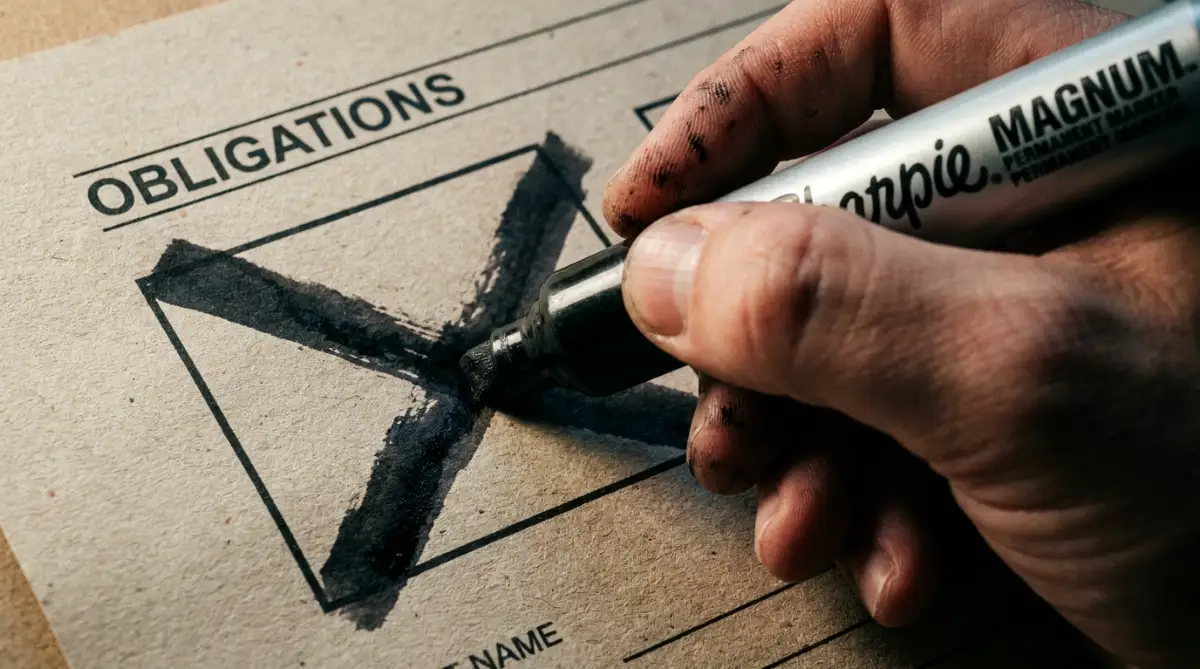
Furthermore, there is immense physical satisfaction in aggressively crossing off a completed block with a thick marker. Tapping a tiny glass screen on your phone to check off a digital box provides almost zero dopamine.
But taking a heavy black marker and slashing a thick line through a difficult task? That feels like a massive, physical victory. That burst of dopamine is exactly what you need to build enough momentum to start the next task.
By keeping a stack of these printed templates right on your desk, you remove the friction of having to boot up a computer or open an app. The tool is always there, waiting quietly for you to pick up the pen and take back control of your day.
Advanced Strategies For Mastering The Print-And-Plan Method
Now that you know why physical paper works better than an app, let's talk about keeping the momentum going. Many of us start a new planning system on Monday and completely abandon it by Wednesday afternoon. We get bored, or we miss a task, and our brains decide the entire system is broken.
To make this strategy last long-term, you cannot treat your time-blocking template like a rigid military schedule. It must be a flexible safety net that catches you when you fall. If you use it correctly, it will actually reduce your anxiety instead of adding to it.
Here are some expert-level tricks I use to keep my brain deeply engaged with the paper planner, week after week.
The "Anti-Task" Blocking Secret
When most people print out a schedule, they immediately fill every single box with hard work. They block out cleaning, paying bills, answering emails, and doing laundry.
This is exactly why your brain eventually starts avoiding the planner altogether. If your paper template only represents pain and hard work, your nervous system will naturally run away from it. You will "accidentally" lose the paper or forget to print it.
To fix this, you must schedule your fun activities first. I call these the "Anti-Tasks." Before you write down a single work email, grab a green marker and block out an hour for playing video games, watching a show, or taking a nap.
When your brain looks at the paper and sees guaranteed fun written in ink, it feels incredibly safe. The hard tasks suddenly feel much easier because your brain knows a specific reward is actively waiting for it at 3:00 PM.
Myth vs. Reality: Scheduling Rest
- The Myth: I have to earn my free time by working hard first.
- The Reality: If you schedule your rest and fun activities first, your nervous system feels safe enough to actually tackle the hard work later.
Combining Time Blocks With Body Doubling
Sometimes, even with a perfectly colored printed template sitting on your desk, the paralysis is just too strong. You stare at the red block that says "Pay Taxes," and your chest tightens up.
You do not even need to be in the exact same room. Text a friend who also struggles with focus. Tell them, "I have a two-hour block on my printed schedule right now. Let's stay on a silent video call until the block is over." The physical paper gives you the boundary, and the other person gives you the gentle accountability to stay inside that boundary.
Creating A "Menu Of Tasks" For Low Dopamine Days
We all have days where our brains feel like absolute mush. You wake up, and you instantly know that deep focus is completely impossible today.
If you try to force yourself to do high-level work on these days, you will end up staring at a wall for six hours. Instead, your printable planner should have a small section at the bottom called the "Low Energy Menu."
Think of this like a restaurant menu for easy dopamine. This list contains mindless, simple tasks that require zero executive function.
Things like sorting old emails, throwing away trash from your desk, or finally fixing dangerous password management mistakes that leave your digital identity exposed. When the brain fog rolls in, you simply abandon your main time blocks, pick an easy item from the menu, and cross it off. You still get the physical satisfaction of completing something, which keeps your momentum alive for tomorrow.

Hidden Pitfalls That Quietly Destroy Your Progress
Even with the best printed templates in the world, our brains love to self-sabotage. We build these beautiful systems, and then we actively find ways to destroy them out of pure habit.
If you do not watch out for these specific mental traps, you will end up blaming yourself when the system crashes. You have to learn how to identify these silent killers before they ruin your entire week. Let's break down the most dangerous mistakes that cause immediate burnout.
The Trap Of Over-Estimating Your Energy
The biggest lie an ADHD brain tells itself happens right before bed. You lie there feeling incredibly motivated about tomorrow.
You think, "Tomorrow, I am going to wake up at 5 AM, clean the entire house, finish my project, and cook a healthy dinner." Driven by this late-night motivation, you print a fresh template and pack it with fourteen straight hours of intense work blocks.
This is a recipe for an absolute disaster. When you actually wake up the next morning, that midnight motivation is completely gone. You look at that packed piece of paper, and the sheer volume of tasks immediately triggers a massive freeze response. You end up sitting on the couch scrolling on your phone all day because the plan was entirely unrealistic.
You must plan your days based on your lowest energy level, not your highest. Leave plenty of empty white space on the paper.
Ignoring The Transition Phases
Our brains do not handle sudden changes very well. You cannot jump instantly from a highly stimulating task to a completely boring one.
Many people block out an hour for "Deep Work" and then the very next block is "Clean the Kitchen." When the clock strikes, they physically cannot stop what they are doing to go wash dishes. They get stuck in hyper-focus, miss the transition, and then abandon the rest of the day's schedule out of guilt.
You have to schedule the transitions. If you know you are prone to getting stuck, you need a visual buffer. Give yourself a fifteen-minute gray block between tasks.
Treating The Template Like A Boss, Not A Tool
This is a very subtle psychological shift, but it changes everything. Do you view your printed schedule as a strict boss yelling at you to work? Or do you view it as a helpful assistant trying to make your life easier?
If you treat the paper like a strict authority figure, your natural demand avoidance will kick in. Your brain will instinctively rebel against the schedule just to regain a sense of freedom. You will purposely ignore the blocks just to prove that nobody can tell you what to do, not even yourself.
You have to constantly remind yourself that the paper is just a tool. It is not judging you. If you completely ignore a time block because you needed a nap, the paper does not care.
There is no punishment for crossing out a block and rewriting it for tomorrow. The moment you remove the moral judgment from the schedule, the heavy paralysis starts to lift.
Your Final Checklist For Getting Started Today
We have covered exactly why your brain freezes up and how a simple piece of printed paper can physically pull you out of the fog. The science is incredibly clear on this.
Relying entirely on digital apps drains your executive function, while tactile, visual boundaries actually restore it. According to neurological studies on how visual aids reduce cognitive load in adults, physically mapping out your time in blocks prevents the short-term memory from completely crashing.
You do not need to wait for Monday to start this. You do not need the perfect markers or the most expensive printer ink. You just need to make the choice to stop fighting your own biology.
Here is your exact action plan to beat the paralysis right now:
- Step 1: Grab any blank piece of paper and a thick pen right now.
- Step 2: Do a massive brain dump. Write down every single stressful thought floating in your head until the paper is full.
- Step 3: Draw three large boxes at the bottom of that page.
- Step 4: Pick just three easy things from your brain dump and write one in each box. Completely ignore everything else.
That is your Minimum Viable Day. When you finish those three boxes, take that thick pen and aggressively cross them out. Feel that physical satisfaction.
I spent over a decade feeling completely broken because I could not use a normal digital calendar like everyone else. I lost jobs, missed deadlines, and ruined opportunities because I was frozen on my couch. But the day I finally started printing massive, colorful, forgiving time blocks and taping them to my wall, the heavy fog finally lifted. I stopped trying to fix my brain and started working with it instead, and I promise you, that simple shift will change your entire life.
Important Questions About Using Printed Schedules
Why do I always abandon my planner after exactly three days?
This is incredibly common and usually happens because the dopamine novelty wears off. Your brain loved the excitement of a new system, but when it became a routine, it felt like a chore. To fix this, you must constantly change the visual look of your printable templates. Use completely different colored markers every few days, or switch from a daily layout to a weekly layout just to keep your eyes interested.
Can I use an iPad with a stylus instead of physical paper?
Using a digital tablet with a stylus is definitely better than typing on a phone because you still get the physical motion of writing. However, an iPad is still a glowing screen connected to the internet. The temptation to quickly check your email or open a browser is always there, which can easily trigger a distraction spiral. True physical paper is completely distraction-free by nature.
What should I do if a time block ends but my task is only half finished?
This is where the magic of the boundary happens. If the block ends, you must stop working on that task immediately, even if it feels uncomfortable. Write down exactly where you left off on a sticky note, and move on to your next scheduled block. This prevents you from spending six hours hyper-focusing on one tiny detail while the rest of your life falls apart.
How do I handle sudden emergencies that ruin my daily schedule?
You have to build "buffer blocks" directly into your printed template. Leave at least two blank hours every single afternoon. If an emergency happens, or a phone call runs long, your schedule doesn't collapse; it simply slides into that empty buffer space. If no emergencies happen, you just get two hours of free time as a reward.
Is it normal to feel exhausted after successfully completing a time-blocked day?
Yes, it is entirely normal. Using executive function to stay on task requires a massive amount of physical glucose in the brain. When you finally focus and complete your goals, your brain has literally run a marathon. You must schedule genuine, low-stimulation rest in the evenings to let your nervous system recover for the next day.
Disclaimer: The information provided in this blog post is for educational and informational purposes only. It is not intended to be a substitute for professional medical advice, clinical diagnosis, or specialized psychiatric treatment for ADHD or any other mental health condition. Always seek the advice of your physician, therapist, or other qualified health provider with any questions you may have regarding a medical or psychological condition.