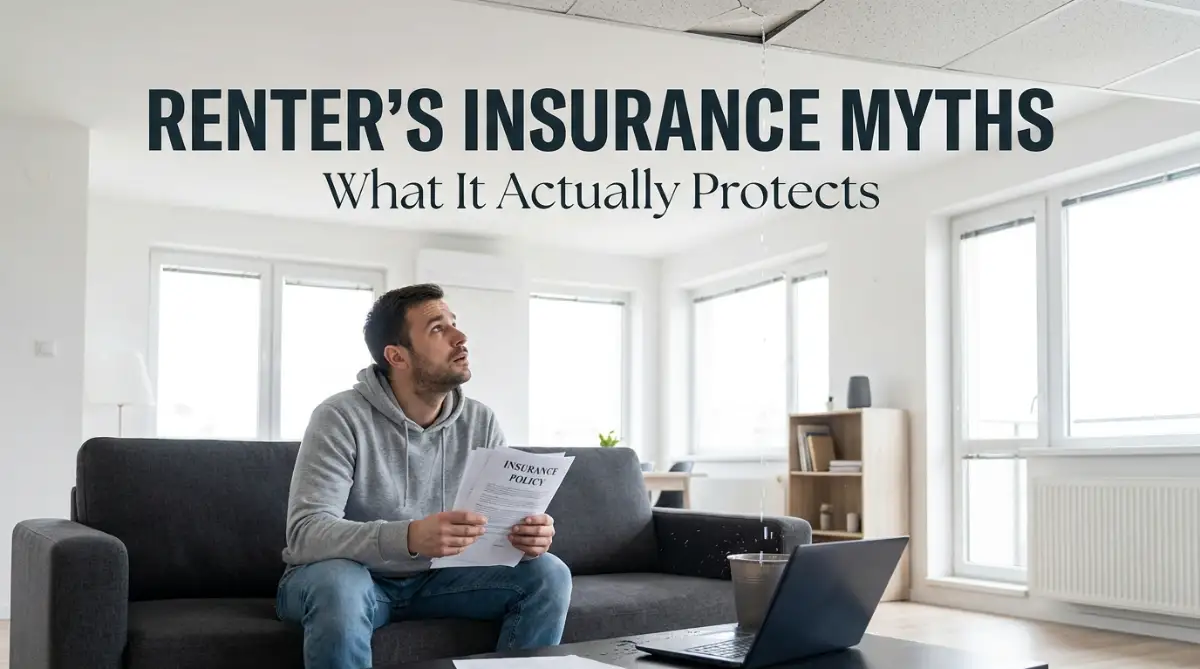
Most renters assume that if a burst pipe or kitchen fire destroys their apartment, the building owner’s insurance will write a check to replace their ruined belongings. In reality, your landlord's policy only protects the physical drywall and floorboards—your laptop, couch, and clothes are completely your own financial problem. In this guide, I will break down the real cost of renters insurance, reveal the surprising protections that follow you outside your home, and show you how to avoid the deadly "cash value" payout trap.
📌 What Every Renter Must Know Before Signing a Lease:
-
Your landlord will not replace your stuff: The building’s insurance strictly covers walls, roofs, and shared pipes—your furniture, clothes, and gadgets are 100% on you.
-
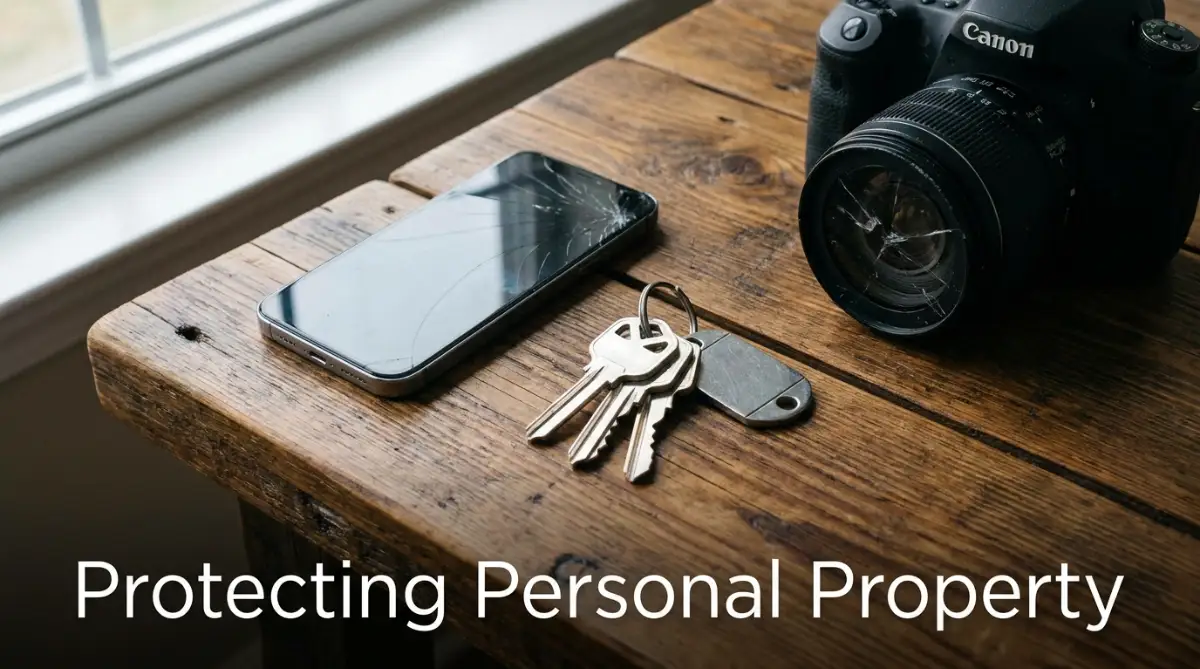
Coverage travels with you: Personal property protection follows you worldwide; if your laptop is stolen from your car or a coffee shop, your policy covers it.
-
Always demand "Replacement Cost": Avoid "Actual Cash Value" policies that deduct heavy depreciation, leaving you with pennies for your destroyed items.
-
Liability is the hidden superpower: A standard $15/month policy protects you from devastating lawsuits if a kitchen fire or overflowing bathtub damages neighboring units.
Tearing Down the "Landlord Liability" Illusion
To actually protect your bank account, we have to start by completely separating your physical stuff from the physical building. The biggest lie in the housing market is that the property owner is financially responsible for everything that happens inside the walls of your unit.
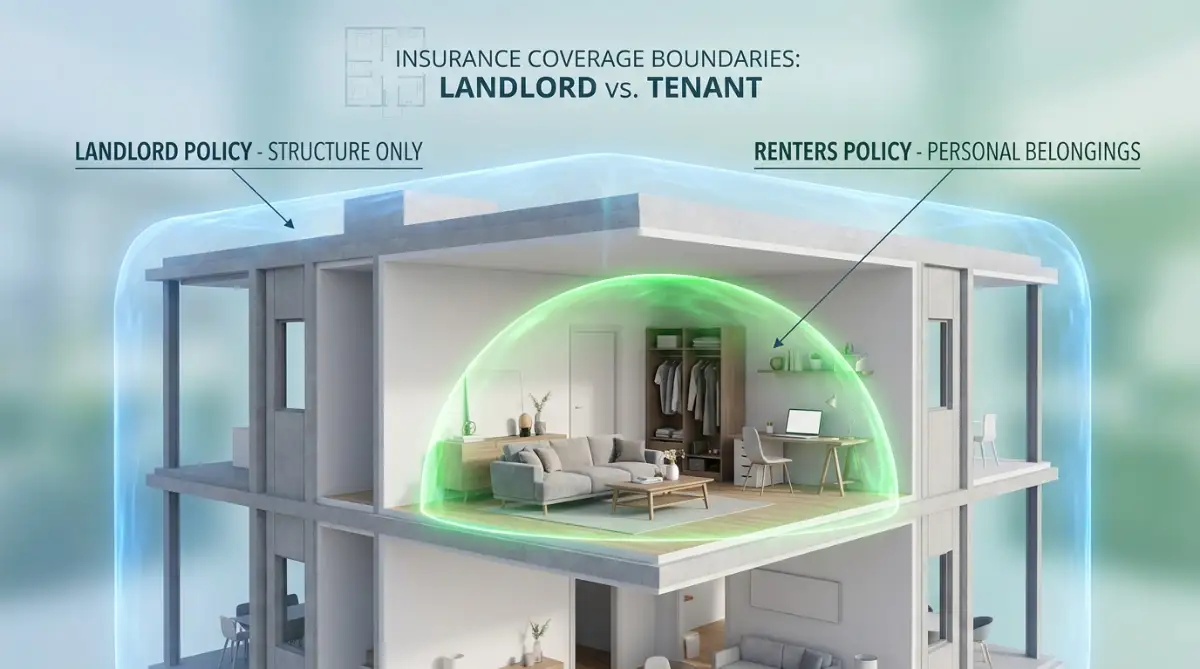
Your landlord does carry a very heavy, expensive insurance policy. But that policy only protects the physical structure that they actually own.
If the building burns down, the landlord's policy pays to rebuild the roof, the walls, and the plumbing. It does not pay a single dime to replace your burned clothing, your melted television, or your destroyed family heirlooms.
The insurance companies draw a very aggressive line between the structure of the building and the personal property sitting inside of it. If you do not own the building, you cannot insure the building. If the landlord does not own your laptop, they cannot insure your laptop.
🏢 Who Pays for the Damage? (Landlord Policy vs. Your Policy)
My Takeaway: Never rely on a building manager's promises. If your personal name is not on the insurance policy, the company will not give you a single penny when disaster strikes.
This simple separation of ownership is exactly why you need your own dedicated policy. Let us systematically destroy the most common misconceptions people have about what these policies actually do behind the scenes.
Myth 1: "My Stuff Isn't Valuable Enough to Insure"
Whenever I tell my friends they need to buy a policy, the very first excuse they throw at me is always the same. They say, "I just buy cheap furniture from IKEA, and my clothes are old. I don't own any expensive diamond rings or famous paintings, so insurance is a total waste of money."
This is a massive psychological trap. You are heavily underestimating the true replacement cost of your normal, everyday life.
You might not own a Picasso painting, but think about what it would actually cost to buy everything you own again on the exact same day. If a fire destroys your apartment tonight, you have to buy a new bed, new sheets, new towels, a month's worth of work clothes, a television, a laptop, and every single fork and plate in your kitchen.
If you sit down with a calculator and add up the retail price of replacing every single boring, everyday item in your house, the number easily skyrockets past ten thousand dollars.
Renter's insurance is not designed strictly for rich people with expensive jewelry collections. It is designed to prevent a normal working person from going completely bankrupt trying to buy basic underwear and a mattress after a total disaster.
Myth 2: "The Policy Only Covers Things Inside My Apartment"
This is one of the coolest, most highly misunderstood features of a standard policy. Most renters think their coverage stops the exact second they walk out of their front door.
They believe the protection is physically trapped inside the four walls of their specific unit. This is completely false.
Your personal property coverage actually follows you almost everywhere you go in the world. If you travel to a coffee shop downtown and someone steals your expensive laptop right out of your backpack while you are ordering a drink, your policy will usually cover the theft.
If you take a vacation to Europe and your luggage gets stolen from the hotel lobby, your rental policy back home can step in to reimburse you for the stolen clothes and electronics.
I used to carry my expensive camera gear around in a state of constant panic, terrified I would drop it or get robbed on the subway. When I finally read the fine print of my policy, I realized my gear was protected even while I was sitting in a park miles away from my actual apartment. Finding out that my coverage extended to my car and my travels gave me a massive amount of mental peace.

🎬 Official Breakdown: What Does Renters Insurance Really Cover?
If you want to see how insurance adjusters draw the line between your belongings and the landlord’s building, watch this quick visual walkthrough from the experts at Allstate. They clearly explain the three core pillars of every policy—personal property, personal liability, and temporary living costs—so you know exactly what protection you are buying:
Myth 3: "It Only Protects My Physical Stuff"
When we hear the word "insurance," our brains immediately think about broken televisions or stolen bicycles. We focus entirely on physical objects because they are easy to visualize and count.
But the absolute most valuable part of a renter's policy has absolutely nothing to do with your physical stuff. The true power lies in the "Personal Liability" section of the contract.
Imagine you accidentally leave a candle burning in your bedroom, and it starts a fire. The fire spreads and severely damages the apartment next door, completely ruining your neighbor's expensive furniture.
Because you started the fire, your neighbor and the landlord can legally sue you for the massive cost of all those repairs. You could be facing a lawsuit for fifty thousand dollars or more.
If you have a solid rental policy, your personal liability coverage kicks in to fight that battle for you. The insurance company provides the legal defense team and actually pays the settlement money up to your policy limit.
This liability coverage also protects you if someone gets physically hurt inside your apartment. If you throw a party and a guest slips on a wet floor, breaking their arm, your policy covers their medical bills. Without this hidden safety net, a single clumsy accident could result in your wages being legally garnished for the next ten years.
Myth 4: "I Cannot Afford Another Monthly Bill"
We live in a world where everything feels incredibly expensive. Groceries cost more, gas prices are high, and streaming subscriptions quietly drain our bank accounts every month.
When people hear they need to buy an insurance policy, they immediately assume it is going to cost them a hundred dollars a month. They lump it into the same mental category as car insurance or health care premiums.
This assumption is wildly inaccurate. Renter's insurance is actually one of the absolute cheapest financial products you can possibly buy in the modern world.
For a standard apartment, a highly comprehensive policy usually costs somewhere between twelve to twenty dollars a month. That is literally the cost of buying two fancy coffees or a single fast-food meal.
You are getting tens of thousands of dollars in asset protection and massive legal liability coverage for less than fifty cents a day. When you look at the actual math, you realize that you cannot afford not to have it.
Understanding "Actual Cash Value" vs. "Replacement Cost"
If you decide to buy a policy today, you have to watch out for one specific trap hidden in the checkout process. Insurance companies will give you a choice between two different types of payout methods: Actual Cash Value (ACV) or Replacement Cost.
If you do not understand the difference, you will be incredibly angry when you eventually file a claim.
Actual Cash Value means the insurance company will only pay you what your item was worth on the exact day it was destroyed. If you bought a laptop four years ago for a thousand dollars, it is probably only worth two hundred dollars today. The insurance company will hand you a check for two hundred dollars, and you will be completely unable to afford a brand-new computer.
You must always select the "Replacement Cost" option when setting up your policy.
Replacement Cost means the insurance company will pay you exactly what it costs to walk into a store today and buy a brand-new version of that exact same item, regardless of how old your original item was. It costs a few extra dollars a month, but it is the only way to guarantee you can actually rebuild your life after a total loss.
💵 The Math Trap: Why "Replacement Cost" Is Worth the Extra $2/Month
Imagine your 4-year-old laptop (bought for $1,200) gets destroyed in a kitchen fire:
-
If you picked Actual Cash Value (ACV): The adjuster calculates depreciation and hands you a measly check for $250. Good luck buying a new laptop with that.
-
If you picked Replacement Cost Value (RCV): The company writes you a check for $1,200 (the actual price to walk into Best Buy and purchase a brand-new comparable computer today).
Always check the box for Replacement Cost. Skimping on this single option defeats the entire purpose of having insurance.
The "Loss of Use" Lifeline
Let us look at another incredible feature that most people completely ignore until a disaster happens. We already established that a fire or a massive pipe burst can destroy your furniture. But what happens to you physically?
If your apartment is heavily damaged by smoke or water, the city inspectors will often declare the unit legally uninhabitable. You are suddenly homeless, and you cannot sleep in your own bed until the landlord finishes major construction, which could take months.
You have to scramble to find a hotel room or sign a short-term lease somewhere else. Paying for a hotel out of pocket for six weeks will completely bankrupt a normal working person.
This is where the "Loss of Use" coverage steps in like a hero.
If a covered disaster forces you out of your apartment, your policy actually pays for your temporary living expenses. They will cover the cost of your hotel room, and they will even reimburse you for the extra money you have to spend eating at restaurants because you no longer have access to a working kitchen.
This specific coverage acts as a massive financial bridge, keeping a roof over your head and food on your table while you wait for your apartment to be safely repaired. It transforms a terrifying, life-altering disaster into a manageable temporary inconvenience.
Pro-Level Tactics to Build an Undeniable Claim Paper Trail
Buying a policy is only the first step. If a disaster strikes and your apartment gets flooded, the insurance company is not going to just take your word for what you owned. They are going to demand hard, undeniable proof for every single item you claim.
If you cannot prove you owned that four-hundred-dollar espresso machine or that designer jacket, the adjuster will simply deny the payout or offer you pennies. You need to build a complete digital home inventory long before disaster strikes.
Take thirty minutes this weekend to do a simple "video walk-through" of your apartment. Open every closet, pull open every kitchen drawer, and slowly film your entire living space with your smartphone.
Narrate the video as you walk around. Read off brand names and model numbers for expensive electronics, instruments, and appliances.
Once your video is finished, upload it immediately to a secure cloud drive like Google Drive or Dropbox. You must make sure your cloud storage is locked down properly; avoiding dangerous password management mistakes that leave your digital identity exposed ensures your private receipts and inventory records stay completely safe from hackers.
According to consumer guidance from the Insurance Information Institute, having a pre-made digital home inventory speeds up insurance claim payouts by more than fifty percent. When you can hand the insurance adjuster an organized folder full of serial numbers and photos, they have zero legal grounds to delay your check.
The Hidden Gaps Most Renters Learn About the Hard Way
While renters insurance covers an incredible amount of everyday disasters, it does not cover literally everything. Walking into a policy blind leaves you wide open to shocking coverage denials.
The biggest gap that catches tenants off guard is water damage. If a pipe bursts in the wall or a neighbor's tub overflows, you are covered. But if an outdoor river floods your ground-floor apartment, standard policies will pay exactly zero dollars.
Flood damage requires a separate federal policy managed by the National Flood Insurance Program on FEMA . If you live on a basement or ground-floor level, you must ask your agent to add a cheap "water backup" endorsement to cover overflowing city storm drains.
These coverage nuances are just as critical as knowing how silent DIY solar mistakes destroy your home insurance payout when homeowners modify their electrical setups. You must always read your policy exclusions before assuming you are fully protected.
Another massive trap is the "Roommate Illusion." Many renters think that because their roommate bought a policy, everyone living in the apartment is automatically covered.
This is completely false. Unless your roommate is your legal spouse or your direct blood relative, their policy only protects their personal bedroom and their specific belongings.
If your roommate leaves a candle burning and burns your clothes, their policy does not automatically buy you new clothes. Every adult on the lease needs their own separate policy, or you must officially pay an extra fee to add both names as named insureds on a single contract.
Fatal Claim Mistakes That Ruin Your Insurance Payout
Even when renters have a great policy, panic during an emergency often causes them to make terrible choices. When you are standing in a flooded living room, your natural instinct is to start cleaning up immediately.
I have watched so many friends destroy their own insurance payouts simply because they made common, emotional mistakes during the first twenty-four hours after a disaster.
Here are the critical pitfalls you must aggressively avoid when filing an insurance claim:
1. Throwing Away Damaged Items Too Early
When sewage or dirty pipe water ruins your expensive leather shoes or living room rug, your gut tells you to toss them straight into the dumpster.
Do not throw anything away until the insurance adjuster has physically inspected it or explicitly told you in writing to discard it. The insurance company needs visual proof of the physical damage. If you throw the soaked items away on Tuesday, the adjuster will deny that part of your claim on Wednesday because there is zero evidence the items ever existed.
2. Filing Micro-Claims for Tiny Losses
Your renters insurance is an emergency shield for major disasters, not a roadside discount card. If someone steals your one-hundred-dollar bicycle, do not file an insurance claim for it.
Every time you file an official claim, it gets recorded on a national database called the Comprehensive Loss Underwriting Exchange (C.L.U.E.). If you file two small claims within a single year, your insurance company will likely cancel your policy, and other providers will charge you triple the price. Save your policy for losses that would actually empty your bank account.
3. Taking on Debt Instead of Using Loss of Use
When a fire or flood makes your apartment unlivable, people often panic and start borrowing cash to survive in expensive hotels. If you do not understand your policy, you might end up desperately researching unsecured loans with bad credit just to cover short-term food and rent.
Always call your adjuster immediately and ask for an advance on your "Loss of Use" coverage. Legitimate insurers can wire emergency living funds directly to your checking account within twenty-four hours so you never have to take on high-interest debt to stay housed.
4. Forgetting About High-Value Electronics Caps
Standard policies usually cap electronics and jewelry payouts at around fifteen hundred to two thousand dollars unless you purchase an extra add-on called a "scheduled floater" or rider.
If you own an expensive three-thousand-dollar gaming PC or high-end photography gear, you cannot rely on standard personal property limits. Much like learning how to spot and avoid overheating issues keeps gaming hardware safe from physical wear, scheduling your devices ensures their full replacement dollar value is legally locked into your contract.
A Clear Action Plan for Total Apartment Security
Protecting your personal assets does not require a massive monthly budget or a complex legal team. You now hold the exact insider knowledge required to protect your home from sudden disasters without falling for costly landlord myths.