
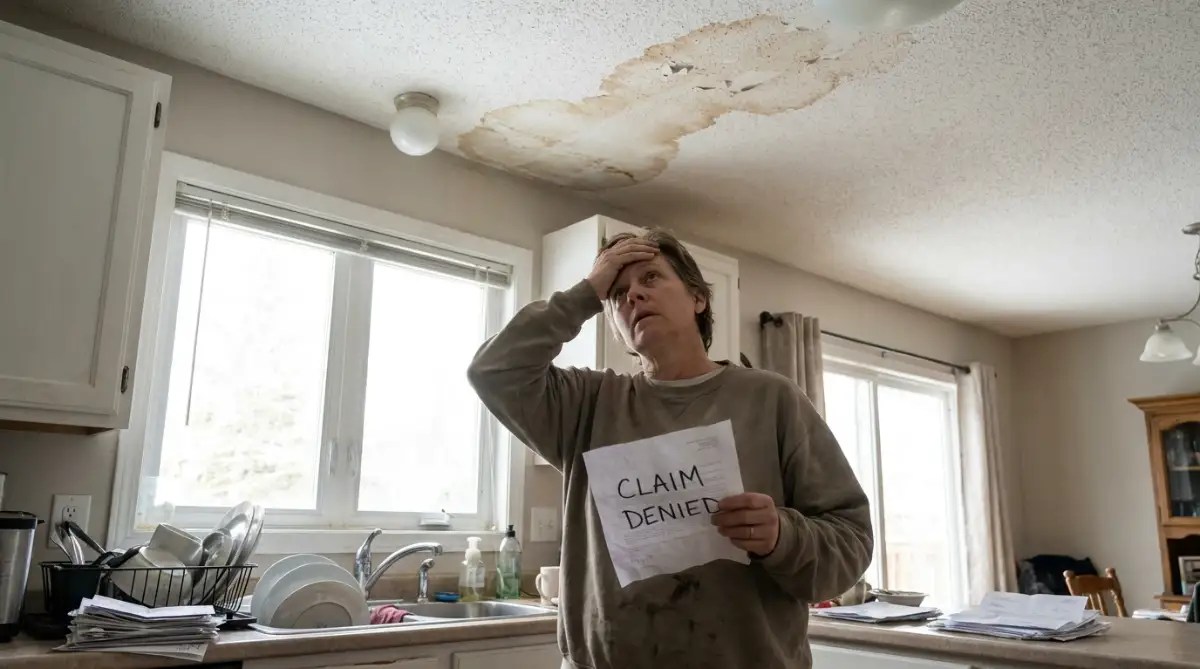
Have you ever stared at a massive water stain on your ceiling, feeling completely panicked about how you are going to pay for it? We dutifully pay our expensive home insurance premiums every month, expecting to be protected when disaster strikes. But here is the terrifying truth: insurance companies are experts at finding tiny excuses to deny your claim and keep your money. I learned the hard way that simple, everyday habits can accidentally void your coverage. Let me show you exactly what adjusters look for so you can bulletproof your home and your bank account.

📌 Quick Summary: How to Bulletproof Your Insurance Claims
- Clean the Gutters: Clogged gutters trap water that rots your roof. Adjusters will use dirty gutters as proof of negligence to deny a massive payout.
- Fix Tiny Leaks Now: Insurance only covers sudden bursts. If an adjuster finds black mold from a slow, 6-month drip, your claim will be rejected.
- Cut Dead Branches: You are legally responsible for maintaining a safe yard. If a visibly dead tree falls on your house, it is your fault, not a storm's.
- Keep a Paper Trail: Never throw away plumbing or roofing receipts. A dedicated "Home Maintenance Logbook" is your ultimate weapon to prove you are a responsible owner.
Decoding the "Neglect" Clause in Your Policy
Before we fix the physical house, you have to understand the legal mindset of the company you are dealing with. Every standard homeowners policy contains a very specific paragraph called the "Negligence or Wear and Tear Exclusion."
This legal paragraph simply states that the insurance company is only responsible for covering sudden, accidental, and highly unexpected disasters. They are absolutely not responsible for fixing long-term damage caused by a lazy homeowner.
Let us use a simple driving analogy.
If you get hit by a drunk driver at a red light, your car insurance pays for the damage because it was a sudden accident. But if your car engine explodes because you refused to change the oil for five straight years, the insurance company will not buy you a new engine. That explosion was your own fault for ignoring basic maintenance.
Your house operates on the exact same strict legal logic. If a tree branch suddenly falls and smashes your window, you are covered. If your window frame slowly rots away over six years because you refused to paint it, you are entirely on your own.
Let us dive deeply into the specific daily mistakes that insurance adjusters look for when they want to deny your repair money.
The Silent Threat Above Your Head: Clogged Gutters
Before you ignore your gutters this weekend, watch this highly helpful video that shows you exactly how clogged gutters can quietly destroy your roof and wreck your insurance claim. It visually breaks down the entire process so you know exactly why keeping them clean is your best financial shield!
You probably hate cleaning your gutters. It is a dirty, smelly, and highly annoying weekend chore. Because it is annoying, millions of people let dead leaves and thick mud build up inside their gutters for years at a time.
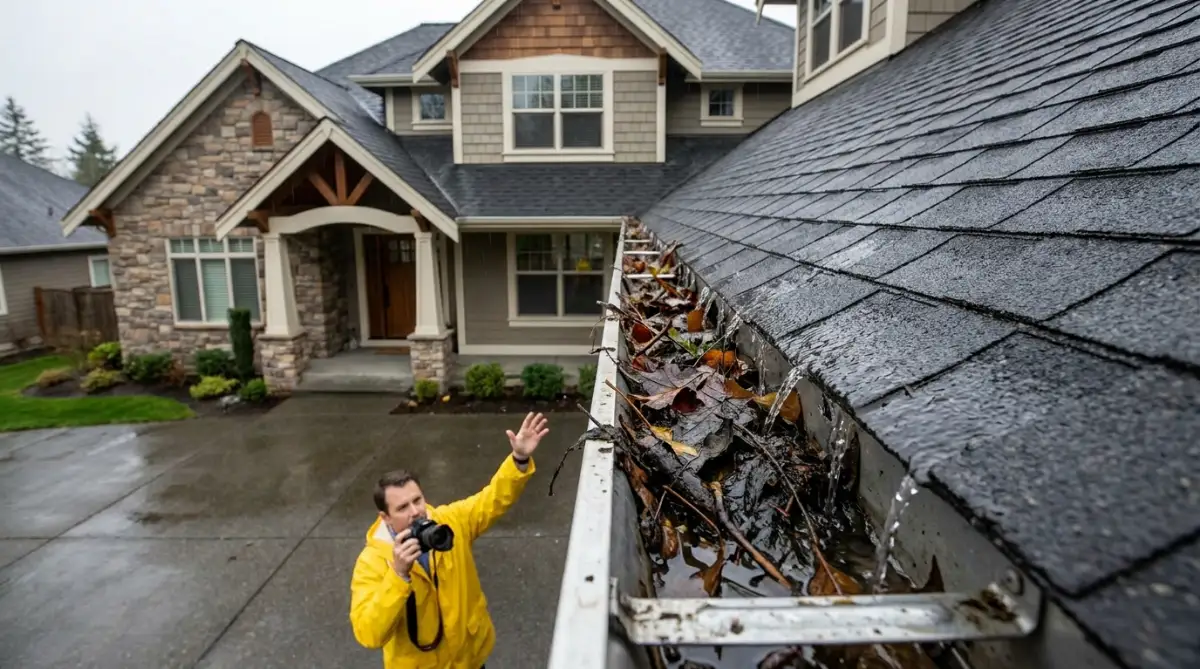
This simple act of procrastination is the absolute fastest way to trigger a massive insurance denial. Your gutters have one highly specific job: directing heavy water safely away from your home's fragile foundation and roofline.
The Biological Chain Reaction of Neglect:
When a gutter is completely packed with wet, rotting leaves, rainwater has absolutely nowhere to go. During a heavy storm, the water fills the gutter to the top and starts pooling directly onto your roof shingles.
Because the water cannot escape, it slowly creeps backward, sliding underneath the shingles and rotting the wooden structure of your roof. Eventually, that trapped water breaks through the ceiling and destroys your living room drywall.
When the insurance adjuster climbs his ladder and sees a garden of weeds growing inside your gutters, he takes a bright, clear photograph.
That single photograph is all the legal proof the company needs to deny your twenty-thousand-dollar roof claim. They will correctly argue that if you had simply spent twenty minutes cleaning the leaves, the water never would have pooled, and the ceiling never would have collapsed.
Your Actionable Fix for This Weekend:
Do not wait for the rainy season to start. Buy a sturdy ladder and a pair of heavy work gloves today.
You must physically clear every single piece of debris out of your gutters at least twice a single year. If you have tall pine or oak trees hanging directly over your house, you need to clean them out four times a year.
Once the heavy mud is gone, take a garden hose and run water directly down the downspout. Watch closely to ensure the water flows rapidly and freely away from the base of your house. This simple, free chore completely destroys the insurance company's ability to use the "negligence" excuse against you.
Did You Know? The "Act of God" Loophole
Insurance companies love to use the term "Act of God" for unpredictable weather events. However, if a completely dead, rotting tree in your yard falls on your roof during a storm, they will NOT call it an Act of God. They will call it "Homeowner Negligence" because you failed to cut down a known hazard before the storm hit!
The Slow Dripping Disaster: Ignoring Minor Plumbing Leaks
Water is the ultimate, silent enemy of any modern house. It is incredibly patient and highly destructive.
Many homeowners notice a very tiny, slow drip coming from the pipe under their kitchen sink. They place an old plastic bucket underneath the drip and completely forget about it for six months. They think, "It is just a tiny drop, I will call a plumber when I have more free money."
This specific mindset is a complete financial death trap. Insurance policies explicitly exclude "gradual water damage."
If a highly pressurized pipe suddenly bursts open on a Tuesday and floods your kitchen, you are totally covered. That is a sudden, uncontrollable emergency.
But if that tiny, slow drip you ignored for six months eventually rots the entire floorboard and causes black mold to grow inside the walls, the company will reject the entire claim.
How the Adjuster Spots the Lie:
You cannot trick a professional adjuster by claiming the damage happened suddenly. They are highly trained to look at the color of the wood and the specific growth patterns of the mold.
Black mold and deep wood rot take many months of continuous moisture to develop. When the adjuster sees heavy black mold, they instantly know the leak was happening for a very long time, and you simply chose to ignore it.
Quick Look: Sudden vs. Gradual Damage Matrix
Your Immediate Action Plan:
You must treat every single drop of unintended water as a massive, urgent emergency. Take a bright flashlight today and check the dark cabinets under your kitchen sink, your bathroom sinks, and directly behind your washing machine.
If you see any wet spots, strange water stains, or smell a heavy musty odor, you must act immediately. Tighten the loose connections with a wrench or hire a local plumber to replace the cheap rubber seal.
Paying a plumber one hundred dollars today to fix a tiny leak guarantees your insurance company cannot deny a massive fifty-thousand-dollar flood claim tomorrow.
The Tree Branch Time Bomb
We all love the beautiful shade and fresh air that large, mature trees provide around our property. However, a large tree planted too close to your physical house is an absolute nightmare waiting to happen.
If you have heavy, dead branches hanging directly over your bedroom roof, you are playing a highly dangerous game of financial roulette. During a heavy winter snowstorm or a violent summer windstorm, those dead branches act like massive wooden spears.
If a dead branch breaks and smashes through your roof, you might assume it was an unavoidable "Act of God." The insurance company will strongly disagree with you.
The Visual Evidence Against You:
When the adjuster arrives to inspect the giant hole in your roof, they will look very closely at the broken branch. If the branch has absolutely no green leaves and is clearly hollow, dry, and rotting from the inside, they know it was dead long before the storm hit.
The company will formally argue that as a responsible homeowner, it was your legal duty to cut down the dead branch before it fell. Because you failed to maintain the safety of your yard, they will classify the damage as preventable negligence and stamp a massive "DENIED" on your paperwork.
How to Protect Your Perimeter:
You must conduct a visual safety audit of your yard every single spring and fall season. Walk around the perimeter of your house and look straight up into the canopy of your trees.
If you see heavy branches that are completely bare, cracking, or leaning dangerously close to your power lines or roof, you must act. Hire a professional, licensed tree removal service to safely cut those specific hazards down.
Take a quick photograph of your newly trimmed, safe trees and save it on your phone. This creates a brilliant, time-stamped visual record proving you are a highly proactive, responsible homeowner.
Advanced Strategies for Bulletproof Property Protection
We have already discussed how dirty gutters and overgrown tree branches easily give insurance companies a legal reason to deny your payout. Now, we need to look much deeper inside the actual structure of your house.
Protecting your financial safety net requires a highly proactive mindset. You have to stop reacting to disasters and start predicting them before they ever happen.
Your property suffers from that exact same type of dangerous neglect. When you ignore the basic health of your home, minor wear and tear quickly transforms into a catastrophic, uninsurable disaster.
Let us explore the expert-level secrets that proactive homeowners use to guarantee their claims are always approved without a single argument.
Mastering the Lifespan of Your Appliances
One of the most common reasons a massive water damage claim gets rejected involves your hot water heater. Most homeowners assume that if a water heater suddenly bursts and floods their basement, the insurance company will automatically cover the ruined carpet.
This assumption is a massive financial trap. Every major appliance in your home has a manufacturer-certified expiration date.
A standard hot water heater is generally designed to last roughly ten to twelve years. If your heater is fifteen years old and the bottom rusts out, the insurance adjuster will classify that flood as pure homeowner negligence.
They will legally argue that you knowingly ignored the expiration date of a highly pressurized water tank. The Insurance Information Institute (III) explicitly states that water damage resulting from a lack of routine appliance maintenance is almost never covered by a standard policy.
Your Actionable Appliance Strategy:
You must walk through your house this weekend and check the printed manufacturing labels on your water heater, your washing machine hoses, and your HVAC system.
If your washing machine is still using cheap, standard rubber hoses, you are sitting on a ticking time bomb. Rubber dries out and cracks incredibly easily over time.
You must visit a local hardware store today and upgrade those cheap rubber tubes to heavy-duty stainless steel braided hoses. This twenty-dollar upgrade completely removes the risk of a sudden laundry room flood and proves to your insurance agent that you are a highly responsible owner.
Creating a Professional Maintenance Logbook
When an adjuster questions the upkeep of your home, verbal promises mean absolutely nothing to them. You cannot simply tell an adjuster, "I promise I had the roof inspected last spring."
They operate entirely on hard, physical evidence and a clear paper trail. You need to build a comprehensive defense system that proves you actively maintain your property.
Buy a simple, thick binder and label it as your Home Maintenance Logbook. Every single time you hire a plumber to fix a tiny leak or pay a roofer to replace a missing shingle, you must staple the official receipt inside this binder.
If a massive storm eventually rips your roof off, you can proudly hand the adjuster a thick folder proving the roof was perfectly maintained beforehand. This undeniable paper trail forces the insurance company to approve your claim quickly because they have no legal room to argue against your diligence.
My biggest mistake early on was throwing away my repair receipts or just shoving them into random kitchen drawers. I did not realize that having a dated, organized paper trail is literally your only shield when an insurance adjuster tries to blame you for a leak. The very day I started keeping a dedicated home maintenance binder with every plumber's invoice, I finally felt like I held the power back in my own hands.
The Heartbreaking Pitfalls of Homeowner Negligence
Even highly intelligent, hardworking people make terrible choices when it comes to maintaining their homes. We often try to save a little bit of money upfront, completely ignoring the massive financial risks we are creating for our future.
When you make these specific careless errors, you hand the insurance company a silver platter of legal excuses to cancel your coverage entirely. Let us abandon the standard bullet points and look at the real, emotional scenarios that routinely bankrupt unsuspecting families.
The DIY Electrical Nightmare
Imagine you want to install a beautiful new ceiling fan in your master bedroom. Instead of hiring a licensed professional, you decide to save two hundred dollars by watching a quick online video and doing the wiring yourself.
You twist the copper wires together, wrap them in cheap electrical tape, and flip the switch. The fan spins perfectly, and you feel incredibly proud of your handyman skills.
A few months later, those loose, amateur wire connections spark a massive electrical fire that burns your entire second floor to the ground. The fire department extinguishes the flames, and the insurance investigator arrives to inspect the heavy black ashes.
The Devastating Financial Consequence:
The investigator will instantly trace the origin of the fire back to that specific ceiling fan. They will ask to see the official city permit and the licensed electrician's invoice for the installation.
When you admit that you did the wiring yourself without a permit, the investigator will immediately close their notebook. Your entire fire damage claim will be denied strictly based on illegal, unlicensed modifications to the property.
Safety experts at the National Fire Protection Association (NFPA) heavily warn homeowners that amateur electrical work is a leading cause of catastrophic residential fires.
Always hire a licensed, bonded professional for any plumbing or electrical upgrades. The official receipt they give you is your ultimate shield against a denied fire or water claim.
Quick Q&A: The Silent Termite Threat
Question: "I just found a massive swarm of termites eating away at my wooden foundation. Will my insurance pay to fix the destroyed structural beams?"
Answer: Absolutely not. Standard homeowners policies almost universally exclude damage caused by insects, rodents, and basic pest infestations.
Insurance companies classify pest control as a basic, mandatory part of daily home maintenance. If termites destroy your living room walls, the company will argue that you should have hired an exterminator months ago when the bug problem first started.
You must schedule a professional pest inspection every single spring. Catching a pest problem early saves your home from irreversible structural damage that you will have to pay for entirely alone.
Failing to Update Your Policy After Major Renovations
Let us look at another highly common scenario that ends in pure tears. You finally save up enough money to completely remodel your outdated kitchen.
You install stunning marble countertops, custom wooden cabinets, and premium stainless steel appliances. The kitchen looks like a masterpiece, increasing the total value of your home by forty thousand dollars.
However, you completely forget to call your insurance agent to update your coverage limits. Your policy is still legally based on the old, cheap, outdated kitchen you had five years ago.
Preparing your home's paperwork requires absolute precision. Just like reading a complete guide to calibrating your drone compass before flight prevents a sudden hardware crash, updating your policy prevents a sudden financial crash.
If a severe grease fire destroys your brand new kitchen, the insurance company will only write you a check for the value of the old, cheap materials. You will lose the entire forty-thousand-dollar investment simply because you forgot to make a five-minute phone call to your local agent.
Whenever you finish a major home improvement project, you must send the final contractor receipts to your insurance provider immediately. Adjusting your coverage limits guarantees that your beautiful new upgrades are fully protected from unexpected disasters.
Your Weekend Blueprint for Ultimate Home Protection
Navigating the complicated rules of property insurance does not have to be an overwhelming or terrifying experience. You now hold the exact same strategic knowledge that professional claims adjusters use to evaluate a disaster scene.
By actively understanding how these massive corporations define "negligence," you completely remove the heavy fear of a denied payout. You are no longer crossing your fingers and hoping the insurance company shows you mercy after a storm.
Instead, you are actively commanding your property's health and documenting your responsible habits like a true professional. This simple shift in your daily mindset gives you incredible power over your financial future.
Your Action Plan for Tomorrow Morning:
- Launch a Perimeter Inspection: Walk around the outside of your house with a critical eye. Look for cracked window seals, loose roof shingles, and heavy tree branches leaning toward your bedroom.
- Upgrade Your Plumbing Connections: Go to the hardware store and buy stainless steel braided hoses for your washing machine and dishwasher. Replace the old rubber tubes immediately.
- Start Your Paper Trail: Buy a highly visible folder and place all your recent repair receipts inside it. You are actively building an impenetrable wall of evidence.
- Treat Problems Instantly: Do not ignore a slow leak or a tiny draft. Fixing small issues quickly is exactly like using natural home remedies to fix extremely dry and flaky skin before the skin permanently tears open.
You have the total ability to handle your home maintenance smoothly and intelligently. Do not let basic procrastination hand an insurance company a free excuse to keep your money.
Check your appliance expiration dates, hire licensed professionals for the dangerous jobs, and take complete, fearless control of your property's safety starting right now.
Looking back, getting my roof claim denied actually forced me to stop procrastinating and start treating my house with the respect it deserves. You absolutely do not need to be a professional contractor to protect your financial safety net, so please do not let the fear of rules stop you. Grab your ladder, clean those gutters tomorrow morning, and take complete control of your home's safety today!
Common Questions About Home Insurance Negligence Claims
Why would an insurance company deny my water damage claim due to clogged gutters?
An insurance company can deny your claim under the negligence clause if clogged gutters caused rainwater to pool and rot your roof. They will argue that simple routine maintenance like cleaning out leaves would have prevented the structural damage entirely.
Will my homeowners insurance cover damage caused by a slow plumbing leak?
Standard policies explicitly exclude gradual water damage, which means a slow leak you ignored for months will not be covered. If black mold and deep wood rot have developed, the adjuster will instantly know the leak was long-term and reject the payout.
Are termite infestations and pest damage covered by standard home insurance?
No, standard homeowners policies universally exclude damage caused by insects, rodents, and termites. Insurance companies classify pest control as a mandatory part of basic home maintenance that the homeowner must handle.
How often should I clean my roof gutters to avoid claim denials?
You should physically clear all debris out of your gutters at least twice a year to prevent water overflow and wood rot. If you have tall trees hanging directly over your house, you might need to clean them out up to four times a year.
What happens if I remodel my kitchen but forget to update my insurance policy?
If a fire destroys your newly remodeled kitchen, your insurance company will only pay out based on your old, outdated coverage limits. Whenever you finish major home improvements, you must update your policy immediately to ensure your new upgrades are fully protected.
Disclaimer: The information provided in this article is for educational and general informational purposes only and does not constitute professional legal or financial advice. Insurance policies vary heavily by state, country, and specific provider. Always consult with a licensed insurance broker, legal professional, or your specific policy provider regarding the exact coverages, exclusions, and maintenance requirements of your personal home insurance contract.