The Heavy Burden Of The Saving Game
I spent years renting because I thought I needed sixty thousand dollars saved up before I could buy a house. My landlord kept raising my rent, and I felt like I was running on a treadmill that kept speeding up. I was completely wrong. You do not need a fortune to get your own place. Let me break down the actual rules so you can stop throwing your money away on rent and get the keys to your first home sooner.
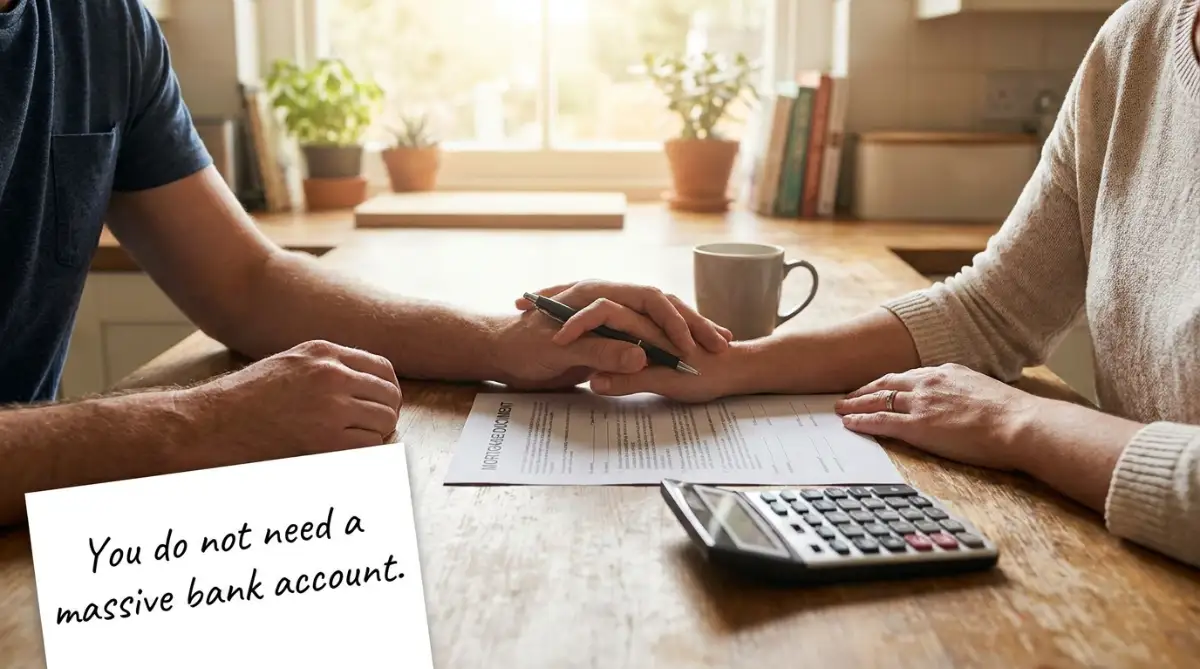
Fast Facts: Buying Your First Home
- You do not need 20% down. The average first-time buyer puts down only 6%.
- FHA loans let you buy a home with just 3.5% down and a lower credit score.
- Always ask for "Seller Concessions" to help cover your closing costs if you are short on cash.
- Do not open new credit cards, make big purchases, or change jobs while your loan is being processed.
Breaking Down The Biggest Lie In Real Estate
To stop feeling completely paralyzed, we need to completely destroy the biggest piece of terrible advice your parents probably gave you. The housing market has evolved drastically, and the rules of lending have shifted heavily to help regular people.
Let's look at exactly why you are stuck renting, and how a simple change in perspective can instantly get you the keys to your own front door.
The "Mandatory 20%" Illusion
If you ask any random person on the street how much money they need to buy a house, they will immediately say "twenty percent." This number is repeated constantly in movies, in casual conversations, and in basic financial articles.
But treating this number as an absolute legal requirement is the single most destructive myth in real estate.
Yes, putting twenty percent down is absolutely a great financial move if you have a massive amount of cash just sitting around. It instantly removes the need for Private Mortgage Insurance (PMI), which saves you a small monthly fee. But avoiding a tiny monthly fee should not stop you from buying an asset that increases in value every single year.
The Reality Check: According to recent data from the National Association of Realtors (NAR), the median down payment for first-time buyers is actually only six percent.
Think about how massive that difference is. If you want to buy a three-hundred-thousand-dollar home, twenty percent is sixty thousand dollars in cold, hard cash. But six percent? That is only eighteen thousand dollars. By holding onto the twenty percent myth, you are literally forcing yourself to wait five or ten extra years to buy a home, missing out on massive property appreciation.
The Secret World Of Government-Backed Loans
Most renters simply walk into their local neighborhood bank, ask for a standard conventional loan, and get heavily rejected. They assume that if their personal bank says no, the entire housing market is closed to them.
This happens because standard banks are highly conservative with their own money. However, there is an entire world of highly flexible loans that are secretly backed by the federal government.
The Federal Housing Administration (FHA) offers loans specifically designed for normal people who do not have massive trust funds. An FHA loan allows you to buy a beautiful home with a down payment as incredibly low as 3.5 percent.
If you have decent credit and a stable job history, you can secure one of these loans almost anywhere. Even better, you do not need perfect credit. The FHA allows for much lower credit scores than traditional banks, completely opening the door for people who have made a few financial mistakes in the past.
FHA vs. Conventional: A Quick Look
- FHA Loan: Only requires 3.5% down. Great if your credit score is around 580 or 620.
- Conventional Loan: Usually requires 3% to 5% down for first-timers, but you need a higher credit score (usually 620+) to get approved.
Pro Tip: I spent two years thinking my credit score of 640 meant I was completely banned from buying a house. I was so embarrassed that I never even called a lender. My biggest realization came when a friend finally forced me to talk to a mortgage broker, who laughed and easily qualified me for an FHA loan the exact same afternoon. Stop rejecting yourself before you even apply.
Why Perfect Credit Is Not The Only Key
There is another massive psychological wall that stops qualified buyers dead in their tracks. We are constantly told that if our credit score drops a few points, we become completely toxic to lenders.
People will literally wait three years to buy a house just trying to push their credit score from a 700 to a 750. This is a massive waste of time and opportunity.
While a perfect credit score certainly gets you the absolute lowest interest rate possible, a good or even average score is still highly acceptable. Lenders look at your entire financial picture, not just one single three-digit number.
The Power Of Debt-To-Income Ratio
When you sit down with a smart mortgage broker, they care much more about your current cash flow than your past credit mistakes. They calculate something called your Debt-to-Income (DTI) ratio.
This simply means they compare how much money you make every month against how much money you owe to credit cards, student loans, and car payments. If your monthly income heavily outweighs your monthly debts, lenders feel incredibly safe giving you a large sum of money.
If you want to make yourself look highly attractive to a bank right now, stop obsessing over your credit score and start aggressively paying off your small credit card balances. Lowering your monthly required payments dramatically increases your buying power, often much faster than saving an extra five thousand dollars for a down payment.
The "All Cash" Closing Cost Surprise
Here is a trap that catches many first-time buyers completely off guard, even when they finally secure a low down payment loan. They save up exactly 3.5 percent for their FHA loan, find a house, and then suddenly realize they do not have enough money to actually close the deal.
Buying a house comes with hidden administrative fees called closing costs. These fees pay for the home appraiser, the title company, and the lawyers who draft the massive stack of paperwork. Closing costs usually add another two to five percent to your total cash requirement.
If you are completely unaware of these fees, the final week before you get your keys will be an absolute nightmare of stress and panic. However, there is a brilliant negotiation tactic you can use to completely bypass this problem.
You can actually ask the person selling the house to pay your closing costs for you. This is called asking for "Seller Concessions."
For example, if a house is listed at two hundred thousand dollars, you can offer them two hundred and five thousand dollars, but ask them to give you five thousand dollars back at closing to cover your fees. The seller still gets the exact amount of money they wanted, and you get to keep your hard-earned savings safely in your pocket.
How I Handled Closing Costs:
When I bought my place, my closing costs were around six thousand dollars. I simply did not have that extra cash. My agent helped me ask the seller for a 3% concession. The seller agreed, which meant I only had to bring my down payment to the closing table.
Are you wondering exactly how these secret loan negotiations actually work in the real world? Watch this incredible breakdown by a top real estate expert:
The Hidden Magic Of Down Payment Assistance
What if I told you there are literally billions of dollars sitting in government accounts right now, specifically designed to be given away to home buyers?
It sounds like a complete scam, but it is absolute reality. Almost every single state, county, and major city in the country runs a dedicated Down Payment Assistance (DPA) program.
These programs are usually funded by the government to encourage normal, hardworking people to settle down and build strong communities. They are practically begging people to take this money, but millions of buyers never even apply because they simply do not know these programs exist.
How Free Money Actually Works
Down payment assistance usually comes in two different forms. The first form is an actual, literal grant.
A grant is free money that you never have to pay back. The state might give you ten thousand dollars to cover your down payment simply because you meet their income requirements and you agree to live in the house for at least three years.
The second form is a forgivable second mortgage. This sounds scary, but it is incredibly helpful. The state lends you the down payment money at zero percent interest. Every year you live in the house, a piece of that loan is completely erased. If you stay in the house for five years, the entire debt magically vanishes forever.
Breaking The "Low Income" Stereotype
The biggest reason people ignore DPA programs is pride. They assume that government assistance is only meant for people living in extreme poverty. They think, "I make a decent salary as a teacher, so I probably make too much money to qualify."
This is a massive, highly costly assumption. These programs are specifically designed for middle-class workers. They target teachers, nurses, police officers, and standard office workers who make solid salaries but struggle to save massive chunks of cash due to high rent prices.
The income limits on these programs are often surprisingly generous. In many major cities, a single person can make up to eighty or ninety thousand dollars a year and still easily qualify for thousands of dollars in free down payment assistance.
You must take the time to visit your state's official housing authority website. A simple twenty-minute internet search could literally put fifteen thousand dollars directly into your bank account next month. By combining a low-down-payment FHA loan with a generous state grant, you could potentially buy a house using less cash than you currently pay for a standard apartment security deposit.
Advanced Tactics To Fast-Track Your Keys
Now that you know the twenty percent rule is completely fake, you have a massive advantage over most other renters. You do not need a magical trust fund; you just need to know how to navigate the modern banking system.
Many smart buyers actually use a tiny down payment on purpose, even if they have extra cash sitting in the bank. They prefer to keep their savings liquid for emergency house repairs instead of dumping it all into the initial purchase. Let's look at exactly how real estate experts structure their finances to buy homes quickly and safely.
Mastering The PMI Strategy
When you put down less than twenty percent, the bank requires you to pay Private Mortgage Insurance (PMI). Many financial bloggers will aggressively tell you to avoid PMI at all costs, claiming it is a massive waste of money.
They treat PMI like it is a terrible financial punishment. But if you look closely at the math, PMI is actually an incredible tool that allows you to buy an appreciating asset years before you normally could.
The average PMI payment is usually around one hundred to two hundred dollars a month. If you wait five years to save twenty percent just to avoid a two-hundred-dollar fee, the price of the house will likely increase by fifty thousand dollars during that time. Paying a small insurance fee is much cheaper than paying a massively inflated house price later. According to research published by the Urban Institute on homeownership trends, buyers who use PMI to purchase earlier generally build significantly more long-term wealth than those who wait.
The Magic Of The "Gift Funds" Loophole
Here is an incredible secret that most traditional banks rarely advertise to first-time buyers. You do not actually have to save your own down payment money.
FHA loans legally allow one hundred percent of your down payment to come from a family member as a gift. If your parents or grandparents want to help you buy a house, they can simply transfer the 3.5 percent directly into your account.
There is one major strict rule you must follow to use this strategy safely. The family member must sign a specific legal letter stating that the money is a pure gift, not a secret loan that you have to pay back. If the bank thinks you borrowed the money, they will instantly deny your mortgage application because it drastically changes your debt ratio.
Building A Bulletproof Employment History
Banks are basically professional risk assessors. They do not just look at your bank account; they heavily judge the stability of your daily life.
To qualify for a low down payment loan, the absolute most important factor is showing a solid two-year employment history. You need to prove that you can hold down a steady job in the exact same industry for twenty-four months straight.
If you constantly jump from being a graphic designer to a dog walker to a retail manager every six months, banks will immediately panic. They view sudden career changes as highly unstable, even if you are making more money in the new job. If you are planning to buy a house in the next year, absolutely do not change your career field until after you have the keys in your hand.

The Devastating Mistakes That Destroy Mortgage Approvals
Even when you finally realize you only need three percent down, the journey is not over. The time between applying for a mortgage and actually closing the deal is incredibly fragile.
During this waiting period, banks will constantly monitor your financial behavior like a hawk. If you make one sudden, emotional financial decision, the bank can completely pull your loan approval the day before you move in. Let's explore the massive mistakes that cause buyers to lose their dream homes at the absolute last minute.
The "New Furniture" Disaster
This is the most common and heartbreaking mistake first-time buyers make. You just got your pre-approval letter from the bank, and you are incredibly excited to move into your new house next month.
You decide to go to a local furniture store and open a brand new credit card to buy a fancy living room set. You think it is perfectly safe because you have not officially bought the house yet.
This single action will immediately destroy your mortgage. When you open a new credit card, it instantly changes your credit score and ruins your carefully calculated debt-to-income ratio. The bank runs one final credit check exactly 24 hours before closing. When they see the new furniture debt, they will instantly cancel your loan, and you will lose the house entirely.
The Danger Of Unexplained Cash Deposits
We often think that putting extra cash into our bank accounts makes us look fantastic to lenders. If you sell an old car for three thousand dollars cash and deposit it right before buying a house, you will trigger a massive security alarm.
Federal banking laws require lenders to meticulously track exactly where every single dollar comes from to prevent illegal money laundering. If they see a sudden, massive cash deposit that does not match your regular paycheck, they will freeze your application completely.
If you cannot provide a legal paper trail, like a signed bill of sale for the car, the bank will refuse to count that money toward your down payment. You must treat your bank account like a highly secure vault for at least two months before applying. Never deposit random cash, and never shift large amounts of money between different accounts without telling your broker first.
Ignoring The Silent Threat Of Identity Theft
If a fake loan hits your credit report two weeks before closing, the bank will halt everything. Cleaning up identity theft takes several months, meaning you will completely lose the house you were trying to buy. Always freeze your credit reports the exact second your official mortgage is fully approved.
Quitting Your Job Too Early
Sometimes, buying a new house means moving to a completely different city or state. Many buyers make the logical assumption that they should quit their current job a week before closing so they can easily pack and move.
This is an absolute nightmare scenario. The bank will physically call your employer on the morning of your closing day just to verify that you still work there.
If your human resources department tells the bank you just quit, your loan is instantly dead. You must stay fully employed at your current job until the ink is completely dry on the final closing documents. Do not give your two weeks' notice until the house is officially, legally yours.
A Final Blueprint For Future Homeowners
We have covered a massive amount of intense financial ground today. The goal here is not to make you terrified of the banking system. The goal is to completely destroy the invisible walls that have been keeping you stuck in a rental apartment.
You do not need to be wealthy to buy a home; you simply need to be highly strategic with the rules that actually exist today. When you realize the twenty percent rule is completely fake, a massive weight lifts off your shoulders instantly.
Your Immediate Action Plan
Do not wait another three years trying to save sixty thousand dollars. Your very first step tomorrow morning should be calling a local, independent mortgage broker.
Do not call a massive, faceless national bank. A local broker will actually take the time to look at your unique financial situation and find the perfect low-down-payment program specifically for your state. They will also tell you exactly what you need to fix on your credit report before you officially apply.
If your credit score is currently a little bruised, that is completely okay. You can easily fix minor issues with the same patience you would use to rescue your lost files before it s too late after a computer crash. Small, steady corrections make a massive difference.
I spent nearly four years convinced I was too poor to ever buy a home, throwing thousands of dollars away on rent every single month. I felt completely defeated by rules that were not even real. The exact day I stopped listening to outdated myths and finally talked to a professional broker, my entire life changed. I promise you, if you take that small step and ask for professional help this week, you will realize you are much closer to buying your dream home than you ever thought possible.
Burning Questions About Down Payments Answered
Do I really need to have a massive emergency fund after paying my down payment?
Yes, absolutely. Most smart mortgage lenders actually require you to have at least two months of mortgage payments sitting safely in your bank account after the down payment is gone. This is called "cash reserves," and it proves to the bank that you will not instantly default on your loan if you unexpectedly lose your job the week after moving in.
What is the absolute lowest credit score I can have to get an FHA loan?
Technically, the Federal Housing Administration allows buyers to secure a loan with a credit score as incredibly low as 580, provided you can put down the standard 3.5 percent. If your score happens to be between 500 and 579, you can still legally qualify, but you will be strictly required to put down a full ten percent instead.
Is a conventional loan always better than an FHA loan?
Not necessarily. Conventional loans are fantastic if you have a massive down payment and an absolutely flawless credit score over 740, because they offer cheaper mortgage insurance. However, if your credit score is in the 600s, an FHA loan will almost always offer you a significantly lower interest rate, making your daily monthly payment much more affordable.
Can I use my personal retirement account to fund my down payment?
Yes, many people successfully use money from their 401(k) or IRA to buy their first home. The IRS actually offers a special penalty-free withdrawal specifically for first-time home buyers. However, you should only use this as an absolute last resort, because pulling money out of your retirement account heavily damages your long-term compound interest growth.
Do down payment assistance programs force me to buy a cheap, run-down house?
No, state-funded down payment grants do not force you to buy in specific "bad" neighborhoods or purchase broken-down fixer-uppers. You can usually use the free money to buy any standard, move-in ready single-family home, as long as the total purchase price falls under the maximum limit set by your specific county's housing authority.
Disclaimer: The information provided in this blog post is strictly for educational and informational purposes only and does not constitute formal financial, legal, or real estate advice. Mortgage rates, loan requirements, and down payment assistance programs vary wildly by state and change frequently. Always consult directly with a licensed mortgage broker, financial advisor, or certified real estate professional to thoroughly evaluate your personal financial situation before applying for a home loan.