The Invisible Wall Blocking Your Biggest Dreams
Staring at a brilliant business idea in your notebook while looking at a completely empty bank account is an incredibly heartbreaking feeling. I spent years believing that entrepreneurship was an exclusive club only open to people with rich families or massive savings. I was completely wrong. Let's tear down the toxic myths about startup funding and look at the realistic, scrappy ways you can launch your business this weekend without begging a bank for a massive loan.
Your 4-Step Scrappy Startup Plan:
- Stop waiting for traditional bank loans; banks only lend to established businesses with two years of proven cash flow, not brand-new ideas.
- Avoid the "Silicon Valley" trap—taking investor money means giving away your company equity and losing your freedom as a founder.
- Use the "Customer-Funded" model: Pre-sell your concept with a deposit first, and use that cash to actually build the product.
- Replace expensive cash with "Sweat Equity" by learning how to build simple websites and run your own marketing using free online tools.
Shattering The Traditional Bank Loan Illusion
Let us start by attacking the biggest and most discouraging rumor of them all. Almost everyone believes that step one of starting a company is walking into a local bank in a nice suit to ask for a loan. We imagine sitting across from a friendly manager who instantly believes in our vision and hands over a briefcase of cash.
In reality, traditional banks are incredibly conservative institutions that absolutely hate taking risks. Banks do not lend money to brand new ideas; they lend money to proven cash flows. If your business does not have a two-year track record of making a solid profit, the bank will almost always say no.
When a normal person gets rejected by a bank, they immediately assume their business idea is terrible. This is a massive misunderstanding of how the financial system operates. The bank is not rejecting your brilliant concept; they are simply rejecting the mathematical risk of a brand-new entity.
Instead of letting a bank teller crush your dreams, you have to look at funding from a completely different angle. You do not need a massive lump sum of cash to prove your concept works. You just need enough micro-funding to take the very first step.
Think about learning to ride a bicycle. You do not start by buying a ten-thousand-dollar professional racing bike. You start with a cheap used bike and some training wheels. Your business funding should follow that exact same logical progression.
The Silicon Valley Investor Trap
If you spend any amount of time reading business news, you will constantly see headlines about companies raising millions of dollars from Venture Capitalists. This creates a highly toxic myth that you must find a wealthy "Angel Investor" before you can officially launch your product.
Here is the honest truth that those flashy news articles never mention. Less than one percent of all new businesses ever receive venture capital funding. Chasing billionaires for seed money is usually a massive waste of your precious time and energy.
Even if you do manage to find an investor willing to write you a check, that money comes with a very heavy price tag. Investors do not just give you cash out of the kindness of their hearts. They demand a massive percentage of your company ownership in return.
When you give away your equity on day one, you are essentially hiring a new boss. You lose the freedom to make your own decisions, which is probably the main reason you wanted to start a business in the first place. You end up working incredibly hard just to make someone else rich.
Most successful local businesses, from your favorite coffee shop to the best marketing agency in town, never took a single dime of investor money. They grew slowly, kept complete control of their profits, and built something sustainable on their own terms.
My Quick "Investor Trap" Reality Check 📉
Don't let the tech blogs fool you. Here is what actually happens when you take venture capital money:
- You lose control: Investors take board seats and can literally fire you from the company you created.
- The growth pressure: You are forced to chase dangerous, hyper-aggressive growth targets instead of building a slow, profitable, and stress-free business.
- The math: You own 10% of a massive, stressful corporation instead of 100% of a comfortable, highly profitable small business.
A Quick Visual Breakdown
If you want a simple, highly effective visual explanation of how early-stage funding actually works for normal people, watch this excellent breakdown.
The "Perfect Business Plan" Delay Tactic
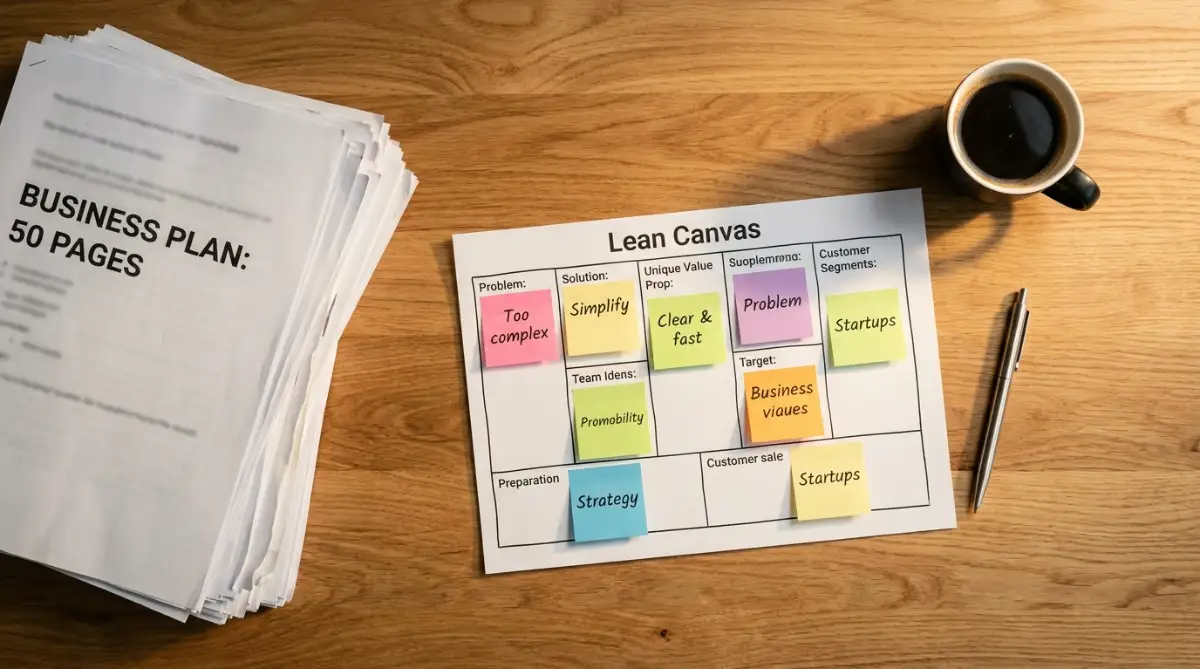
Another massive myth that stops great ideas in their tracks is the obsession with paperwork. So many aspiring founders believe they cannot ask for a single dollar until they have a fifty-page business plan. They spend months agonizing over colorful charts, perfect logos, and five-year financial projections.
Let me save you a massive amount of headaches right now. Unless you are building a commercial real estate skyscraper, a giant traditional business plan is mostly a fantasy document. Nobody actually knows exactly what their business will look like five years from now.
The market changes constantly, customer preferences shift, and new competitors pop up overnight. Spending half a year writing a document that will be completely outdated the day you launch is a terrible strategy. It is mostly just an excuse to delay doing the actual hard work of selling your product.
My Personal Pro Tip: I wasted three whole months trying to write a flawless business plan because I thought it would magically attract money. I finally realized that my time was much better spent talking to actual customers. Once I threw away the massive document and just focused on selling my first service, the money naturally followed without any fancy paperwork.
Instead of a giant book, you only need a simple, one-page document known as a Lean Canvas. This single piece of paper outlines what problem you are solving, who your target customer is, and how you plan to make money. It is fast, flexible, and exactly what modern lenders actually want to see.
Demystifying The Crowdfunding Miracle
Over the past decade, platforms like Kickstarter and Indiegogo have become incredibly popular. People see a completely unknown gadget raise two million dollars in a weekend and assume crowdfunding is basically free money. This leads to the dangerous myth that you can just post a quick video online and become a millionaire.
The reality of a successful crowdfunding campaign is much darker and requires an immense amount of pre-planning. Those campaigns that raise millions of dollars did not just go viral by pure accident. They usually have a massive marketing budget and a huge email list built up months before the campaign ever launches.
If you launch a crowdfunding page without already having an audience of loyal fans, your project will sit there with zero dollars. You will be asking your family and friends to donate out of pity, which is a terrible feeling.
Crowdfunding is actually not a funding strategy at all; it is a marketing strategy. It works beautifully if you already have a community of people who trust you. But relying on it as a magical ATM to fund your very first prototype will almost always lead to severe disappointment.
The Magic Of Customer-Funded Business Models
Now that we have busted the biggest myths, let us talk about a strategy that actually works brilliantly. The absolute best source of funding for your new idea does not come from a bank, an investor, or a rich uncle. It comes directly from your future customers.
This is known as a customer-funded model, and it is the safest way to build a company from scratch. Instead of borrowing fifty thousand dollars to build a product and hoping people buy it, you flip the script. You sell the concept first, collect the money upfront, and use that exact cash to create the product.
Imagine you want to start a custom woodworking business making high-end dining tables. The myth says you need a massive loan to rent a warehouse and buy a mountain of expensive oak wood. The reality is much simpler.
You design one beautiful table, take amazing photos, and find a customer who wants it. You ask that customer for a fifty percent non-refundable deposit upfront. You then use their deposit money to buy the specific wood and materials needed to build their table.
You have successfully funded your business without taking on a single penny of debt. This model works for consulting businesses, software subscriptions, landscaping companies, and digital courses. When your customers fund your growth, you retain one hundred percent ownership and face zero financial risk.
The 3-Step "Pre-Sale" Funding Framework 💡
If you want customers to fund your startup, follow this exact blueprint:
- Build a landing page: Create a simple, free website explaining the massive problem your upcoming product will solve.
- Offer a massive early-bird discount: Tell people they can secure the product at 50% off if they pre-order today before the official launch.
- Collect cash & build: Once you hit your minimum pre-order goal, use that exact cash to manufacture the product. If nobody buys the pre-order, you just saved yourself from building something nobody wants!
Reframing The Idea Of "Sweat Equity"
People often complain that they cannot start a business because they have zero financial equity to invest. They think that if they cannot drop ten thousand dollars into a business checking account, they are not a real founder. This completely ignores the massive value of sweat equity.
Sweat equity is the physical time, deep focus, and hard labor you put into building your idea instead of using cash. In the very beginning, your time is actually much more valuable than money. Money can buy you speed, but sweat equity buys you a solid, unbreakable foundation.
If you cannot afford to hire a professional web designer for five thousand dollars, you use your sweat equity. You spend three late nights watching free online tutorials and you build a simple website yourself. It might not win a global design award, but it gets your business off the ground for absolutely free.
Every single time you choose to learn a new skill instead of paying someone else to do it, you are officially funding your business. You are retaining capital in your bank account by using your own brainpower.
This builds a deep level of resilience that money simply cannot buy. Founders who rely too heavily on massive funding early on often become incredibly lazy. When a problem pops up, they just throw cash at it instead of figuring out a creative, efficient solution.
When you build with sweat equity, you know exactly how every single part of your business operates. If an employee quits later on, you do not panic because you already know how to do their job. You become a highly capable, dangerous competitor in your market because you learned how to survive without a safety net.
Understanding this difference changes your entire perspective. You stop looking at your empty bank account as a massive weakness. Instead, you start viewing your free time, your creativity, and your endless determination as your primary funding source.
Modern Bootstrapping Secrets The Experts Hide
Once you drop the fantasy of giant investment checks, you enter the highly realistic world of bootstrapping. This simply means building your company using your own existing resources and revenue. To survive in this space, you have to think like a scrappy, highly efficient operator who stretches every single dollar.
Your first major secret weapon is utilizing high-quality, free digital tools. Ten years ago, you needed ten thousand dollars just to buy basic accounting and customer management software. Today, the internet is packed with robust, free-tier software that can run your entire operation.
You can launch a professional landing page, set up an automated email sequence, and process credit cards without spending a dime upfront. The trick is to strictly avoid paying for premium software subscriptions until your business actually generates enough monthly revenue to justify the cost. Every dollar you save on software is a dollar you can spend on highly targeted digital marketing.
Another powerful strategy is leveraging strategic partnerships instead of cash. If you do not have the money to market your new service, find a non-competing business that already talks to your exact target audience. You can propose a simple revenue-share agreement where they promote your product to their list, and you split the profits.
This type of collaborative marketing strategy costs you absolutely nothing out of pocket, but instantly exposes your brand to thousands of warm leads. You are trading a slice of future profit for immediate, free marketing reach. It is one of the smartest ways to generate your first ten sales without burning through a heavy marketing budget.
You also need to heavily rethink your initial workspace. So many founders fall into the trap of signing a massive commercial lease just to look like a "real" company. They blow their tiny budget on expensive office chairs and a fancy coffee machine before they even have a single paying client.
Start exactly where you are right now. Work from your kitchen table, a local public library, or a cheap shared co-working desk. Keeping your physical overhead as close to zero as possible gives you a massive tactical advantage over competitors who are stressed out about making next month's heavy rent payment.

Take the time to polish your online presence, ask for strong testimonials from past colleagues, and present yourself as a highly polished professional from day one.

Financial Pitfalls That Destroy First-Time Founders
It is incredibly easy to get swept up in the excitement of launching your own business and make terrible financial choices. When you are desperately trying to get things moving, panic can lead to decisions that will permanently cripple your growth. Let us walk through the most dangerous money traps so you can safely avoid them.
The absolute most destructive mistake is mixing your personal money with your business money. New founders often just use their personal checking account to buy inventory or pay for website hosting. When tax season rolls around, their finances are a complete, terrifying disaster.
You must open a completely separate, dedicated business checking account on the very first day. If you do not legally separate your money, you can easily face severe legal penalties and completely ruin your personal credit score. This simple administrative mistake can actually expose your personal digital identity and financial security to unnecessary risks.
Another massive trap is falling victim to the "Fake Guru" syndrome. The internet is heavily saturated with flashy marketers selling five-thousand-dollar online courses that promise to teach you how to build a million-dollar business in a week. They prey on your natural anxiety about funding and success.
Never borrow money to buy an expensive business course when you are just starting out. All the basic information you need to launch a company is available completely for free at your local library or on legitimate government business websites. Spending your tiny seed budget on a scammy course is a guaranteed way to kill your business before it even starts.
Many desperate founders also make the terrible mistake of taking on high-interest predatory debt. When the bank says no, they panic and start researching how to get unsecured loans with bad credit and actually get approved. They end up signing loan agreements with interest rates so high that the business can never mathematically turn a profit.
If you have to borrow money at a thirty percent interest rate just to launch, your business model is fundamentally broken. You need to pause, step back, and find a cheaper way to test your idea. Debt should only be used as a highly calculated tool to scale a proven concept, never as a desperate lifeline to start an unproven one.
Finally, do not let the stress of funding completely destroy your daily life. Founders often work themselves into a state of total burnout, ignoring their physical health and their families.
Building a business is a marathon, not a quick weekend sprint. If you destroy your mental and physical health trying to secure funding, the business will fail anyway because the leader is broken. You have to actively prioritize sleep, healthy boundaries, and clear, rational thinking.
Your Action Plan For Launching Without Fear
We have completely torn down the biggest myths surrounding business capital today. You no longer have to wait for a magical investor or a massive bank loan to give you permission to start. You hold all the actual power in your own hands right now.
Your new strategy is built on pure logic and scrappy efficiency. You are going to start incredibly small, use your sweat equity, and let your first customers fund your actual growth. This path is definitely not as glamorous as the movie versions of entrepreneurship, but it is infinitely more stable.
Your strict assignment for this weekend is to clearly define your Minimum Viable Product. Ask yourself, what is the absolute cheapest, fastest way I can deliver my core service to just one single paying customer? Stop worrying about a five-year plan and just focus entirely on securing that very first dollar of revenue.
You should also look into free local resources that most people completely ignore. Almost every city has a local chapter of SCORE or a Small Business Development Center that offers completely free, expert mentorship to new founders. Sitting down with a retired business executive for an hour can save you months of expensive trial and error.
My Personal Note: I spent years making excuses about why I could not start my business, and it was always about a lack of money. The day I finally realized I could just presell my idea to a tiny group of people, my entire life changed. Stop waiting for the perfect financial moment, grab a notebook today, and start building the future you actually deserve!
Common Questions About Finding Startup Cash
Do I really need to formally register an LLC before I start selling?
Not always. Many successful founders start out by operating simply as a Sole Proprietorship to test their idea legally without paying heavy registration fees. Once you actually start generating consistent revenue and face real liabilities, you can easily upgrade to a formal LLC structure to protect your personal assets.
What exactly is the difference between seed funding and venture capital?
Seed funding is the very first tiny amount of money you use to build a basic prototype or test a market, often coming from your own savings or early customers. Venture capital is massive institutional money, usually millions of dollars, given only to established startups that need to scale their operations globally at a rapid pace.
Can I use my personal credit cards to fund my new business?
While it is technically possible, relying heavily on personal credit cards is extremely dangerous. If your new business idea fails to make a profit quickly, you will be personally stuck with massive high-interest debt that can ruin your credit score for years. Always try to validate your business idea with pre-sales before borrowing money.
Are government small business grants actually real and easy to get?
Government grants are absolutely real, but they are incredibly difficult and time-consuming to actually win. They are usually highly specific, targeting specific industries like green energy, agriculture, or heavily underserved rural communities. You should never rely on winning a grant as your primary plan to launch a standard retail or service business.
How much money should I save before quitting my day job?
The golden rule among expert bootstrappers is to never quit your safe day job until your side business consistently replaces at least seventy-five percent of your normal monthly income. You also need a solid emergency fund covering six months of personal living expenses to protect you from the unpredictable nature of running a new business.
Disclaimer: The information provided in this article is for general educational and informational purposes only and does not constitute professional financial, legal, or business accounting advice. Startup funding laws, tax regulations, and loan requirements vary heavily depending on your specific location and personal financial history. Always consult directly with a certified public accountant (CPA) or a licensed financial advisor before making any major financial decisions or taking on business debt.