
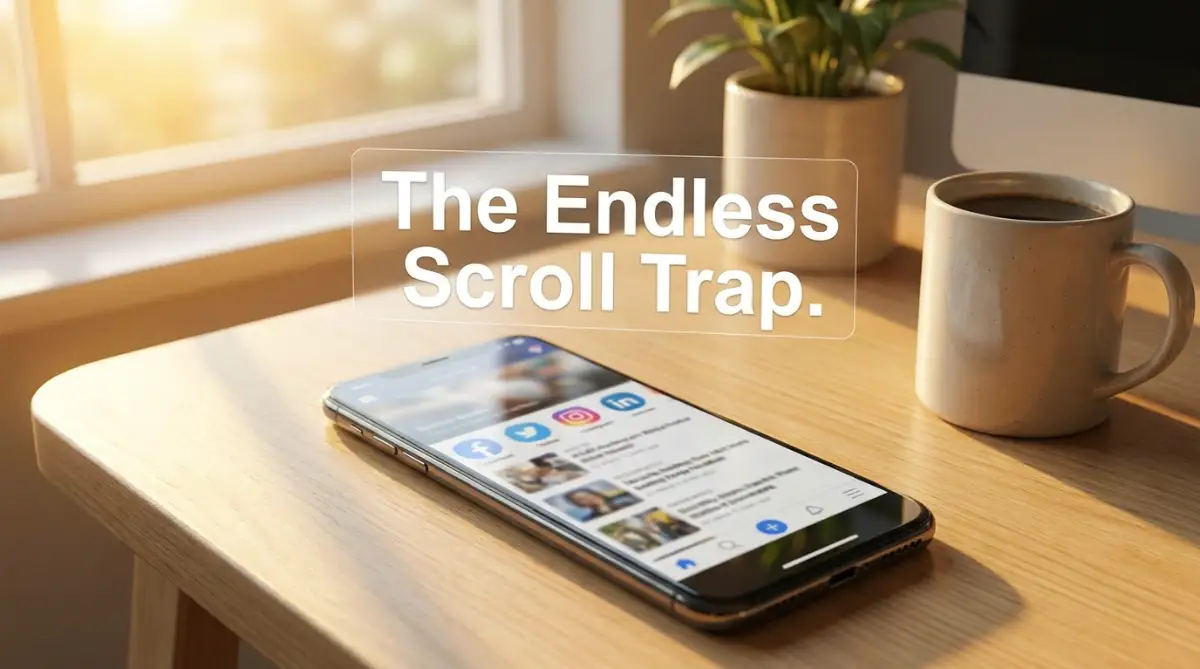
Have you ever caught yourself mindlessly scrolling through stressful news at 3 AM, completely unable to put your phone down? It is an exhausting trap that leaves you waking up with severe brain fog and zero focus. We blame ourselves for lacking willpower, but the truth is, these apps are engineered by behavioral experts to keep you hooked. Let me show you how doomscrolling actually rewires your dopamine pathways, and what simple habits you can use to take back your attention span.
📌 Quick Summary: How to Stop Doomscrolling
- The Slot Machine Trap: Infinite scrolls trigger unpredictable dopamine hits, wiring your brain to crave constant novelty.
- Turn on Grayscale: Stripping away bright, colorful notification badges instantly makes your phone screen look boring and reduces the urge to scroll.
- Use the 50/10 Rule: Work in focused blocks of fifty minutes, followed by ten minutes of screen-free rest (no phones allowed!).
- Ban the Bedside Phone: Stop using your smartphone as a morning alarm. Buy a cheap physical clock and leave your phone in another room overnight.
The Dopamine Hijack: How Endless Novelty Rewires Your Attention
To understand why you cannot seem to stop scrolling, you first have to understand how modern social media platforms are designed. They do not want you to simply find the information you need and close the app.
They use highly advanced algorithms specifically engineered to exploit your brain's natural reward system. This system is driven by a powerful chemical neurotransmitter called dopamine.
Your brain naturally releases a tiny burst of dopamine whenever you experience something new, surprising, or exciting.
Did You Know? The Slot Machine Effect
Tech psychologists have confirmed that social media feeds are programmed using the exact same psychological mechanics as casino slot machines. The unpredictable reward schedule triggers erratic dopamine spikes, making it physically painful to close the app!
The Slot Machine Analogy:
Think of your smartphone's infinite scroll feature exactly like a digital slot machine sitting right in your pocket. Every time you drag your thumb down to refresh the feed, you are physically pulling the lever of the slot machine.

Most of the time, you scroll past boring, average posts, which represents a "loss" to your brain. But occasionally, you hit a shocking headline, a funny video, or an angry comment thread, which represents a massive "jackpot."
Because your brain never knows exactly when the next jackpot is coming, it forces you to keep pulling the lever over and over again.
This constant cycle of erratic dopamine spikes slowly rewires your attention span over time. It makes normal, slow-paced activities—like reading a book, writing a business report, or listening to a lecture—feel painfully boring.
Your brain becomes completely desensitized to normal stimulation, making you feel constantly distracted and unable to focus on any single task for more than a few minutes.
The Silent Erosion of Your Working Memory Capacity
Your brain has a highly important, limited storage area called your working memory. Think of your working memory exactly like a small, clean whiteboard inside your head.
Throughout the day, you use this whiteboard to write down temporary information, like a phone number you need to dial or a task you need to complete next. If you keep the whiteboard clean, you can think clearly and make smart decisions easily.
The Whiteboard Analogy:
Imagine taking a black marker and quickly writing fifty different, highly stressful news headlines all over your clean whiteboard. The text overlaps, the ink smears, and eventually, the board becomes a messy, completely unreadable block of black ink.
This is exactly what happens to your brain when you spend thirty minutes doom scrolling before work. You are completely overloading your working memory with random, high-stress information that you do not actually need.
Pro Tip / Expert Insight:
When you start your day by consuming negative news, your working memory is instantly filled with background stress. Your brain has to spend massive amounts of cognitive energy trying to process that stress, leaving you with almost zero memory capacity to focus on your actual job.
The Cortisol Spike: How Stress Hormones Destroy Deep Focus
When you read a terrifying news headline about a global crisis or a natural disaster, your brain does not view it as just a piece of text. Your primal survival brain (the amygdala) cannot tell the difference between a real-world threat and a digital screen.
It instantly assumes you are in immediate physical danger and floods your bloodstream with high-stress hormones like cortisol and adrenaline.
These hormones are excellent if you need to run away from a dangerous predator in the forest. They physically prepare your body for survival by raising your heart rate and tensing your muscles.
However, high levels of cortisol act like a biological stop sign for your prefrontal cortex, which is the logical, focus-driven area of your brain. Your brain essentially says, "We cannot waste energy thinking deeply right now; we need to save all our energy to survive!"
Your Actionable Strategy:
You must actively block these daily stress spikes by creating strict boundaries around your technology usage.
Never check the news or social media within the first sixty minutes of waking up. Give your brain a clean, peaceful environment to slowly wake up and transition into deep focus naturally.
The Nighttime Blue Light Threat to Brain Recovery
The absolute most destructive time to doom scroll is right before you go to sleep. Your body relies on a highly sensitive internal clock to regulate your sleep cycles.
When the sun goes down, your brain naturally begins producing a hormone called melatonin, which makes you feel sleepy and prepares your brain cells to run their nightly repair cycles.
But your smartphone screen emits a very sharp, powerful type of blue light that mimics the exact wavelength of the midday sun.
When you stare at your screen in the dark, you are physically tricking your brain into thinking it is the middle of the afternoon.
Your Actionable Strategy:
Your brain completely stops producing melatonin, which means you stay awake much longer than you should. Even when you finally fall asleep, your sleep quality is incredibly low.
Your brain cannot run its essential clearing processes, leaving you with massive amounts of cognitive fatigue and brain fog the next morning.
Always place your smartphone on a desk across the room at least sixty minutes before your head hits the pillow. Keeping your sleeping area completely tech-free is one of the most effective ways to preserve your daily focus and protect your long-term mental health.
Advanced Secrets to Protect Your Cognitive Focus
Once you understand the basic differences between active, intentional reading and mindless screen scrolling, we must look much deeper into your mental strategy. Your brain is not a device to feed passively with negative news; it is a highly active engine that dictates your personal productivity.
According to clinical studies published by the National Institutes of Health (NIH), excessive consumption of negative digital media directly increases systemic stress and lowers cognitive performance [1]. You must learn to use these established medical frameworks to protect your daily focus from sudden mental drops.
Research shared by Harvard Health Publishing reveals that chronic psychological stress actually shrinks the prefrontal cortex over time [2]. Knowing how to monitor your daily stress levels is highly important before you open your social media applications.
Additionally, you must manage your personal energy habits. Just as bad charging habits are overlooked habits that quietly destroy your smartphone battery lifespan, running constant high-stress news cycles over weak mental signals drains your personal power rapidly.
Let us explore the advanced, pro-level secrets you can use to build an unbreakable wall of protection around your mental focus today.
The Secret to Creating Friction-Based Digital Barriers
To protect your mind from the automated trap of infinite scrolling, you must build what cognitive scientists call physical friction. Friction simply means making the bad habit slightly more difficult to perform than the good habit.
When your smartphone sits directly next to your hand with a bright, colorful screen, your brain requires almost zero energy to pick it up and scroll. You must make the entry point hard.
The Candy Jar Analogy:
Think of your smartphone's social media apps exactly like a giant jar of sugary candy. If you place that jar directly in the center of your kitchen counter, you will naturally reach inside and grab a piece every time you walk past.
But if you take that jar and place it on a high shelf in the dark basement, the physical effort required to climb the stairs forces your brain to stop and think about whether you actually need the sugar.
Your Actionable Strategy:
You must put your digital candy jar in the basement tonight. First, remove all news and social media applications from your phone's home screen.
Hide them deep inside a secondary app folder that requires multiple swipes and taps to access. Second, change your phone's display settings to Grayscale Mode, which completely strips away all the colorful, bright red notification bubbles and blue screen light.
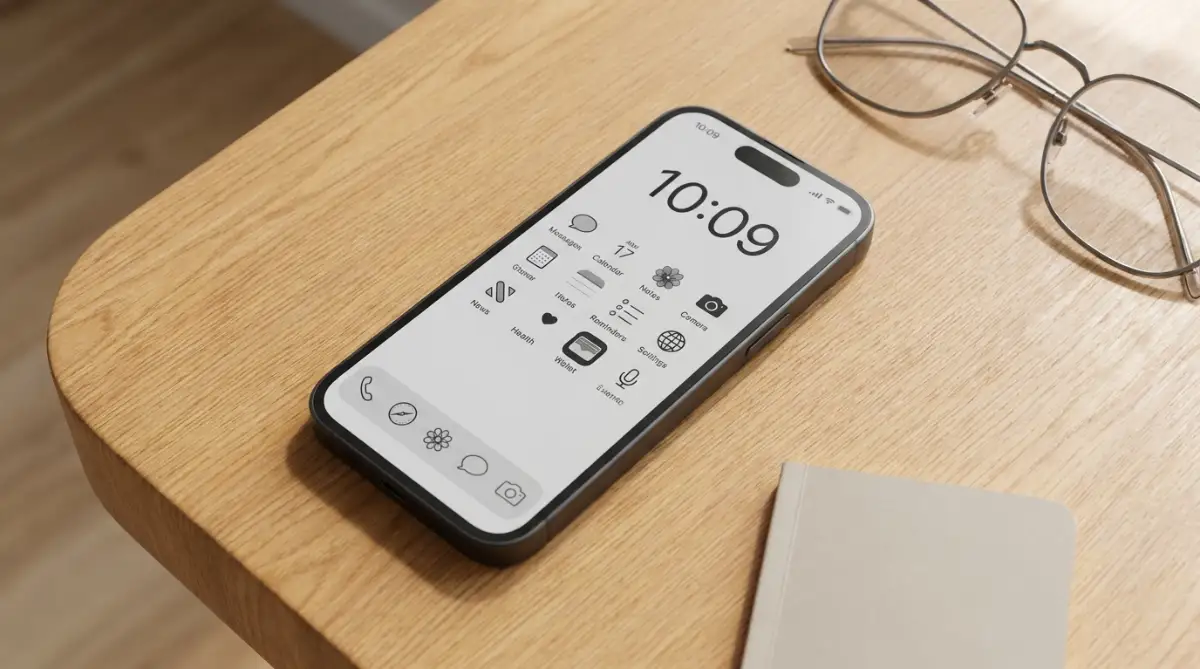
An app that is completely black and white lacks the warm visual triggers that release dopamine in your brain. This simple, free change turns the addictive screen into a boring, flat gray box, making your thumb lose the desire to scroll.
Quick Look: The 50/10 Focus Rule
My absolute biggest mistake was leaving my colorful social media apps right on my phone's main home screen, making it entirely too easy to open them whenever I felt slightly bored. I did not realize that just removing those app icons from my view and turning my display to grayscale mode would stop my automated urge to scroll. The very second my phone became a flat, boring gray box, my daily screen time cut in half without me even trying.
Optimizing Your Cognitive Rest Cycles
Many hard-working people believe that the best way to be productive is to work for four hours straight without taking a single break. But your brain’s attention span naturally decays every ninety minutes under constant focus.
When you do not give your brain a strategic rest, it will eventually experience severe fatigue and force you to take a messy, unorganized break. This is when you find yourself mindlessly opening social media tabs and scrolling for an hour without even realizing you started.
You must protect your working memory by scheduling structured, highly restorative rest periods.
Your Actionable Strategy:
Use a simple timer to work in focused intervals of fifty minutes, followed by exactly ten minutes of pure rest. During those ten minutes, you must physically stand up from your desk, walk to a window, and stretch your body.
Look out at the distant horizon to relax your eye muscles and clear your mind. Most importantly, never check your smartphone during these ten-minute breaks.
Checking your phone is not a real break; it is a highly stressful sensory input that overloads your working memory and ruins your focus for the next work interval.

Silent Digital Trapdoors That Will Sabotage Your Brain
Before you read through these sneaky habits that are quietly draining your focus, watch this highly helpful video that explains why your current screen time is ruining your attention span. It breaks down the mistakes in a simple, visual way, so check it out and then read the rules below!
Even highly intelligent people make terrible choices when they get tired or stressed during the workday. The raw anxiety of trying to finish a project often forces us to make quick, easy decisions that actually ruin our long-term productivity.
If you fall into these common traps, your daily mental focus will completely collapse. This frustrating cycle can easily lead to constant mistakes, missed deadlines, and severe career stagnation.
Here is exactly what you must avoid to keep your mind and your family's future safe.
The Bedside Alarm Clock Mistake
One of the most dangerous traps people fall into is using their smartphone as their morning alarm clock. They place the glowing device directly next to their pillow on the nightstand before going to sleep.
The moment the alarm chimes in the morning, they pick up the phone, turn off the sound, and immediately open their email or social media feeds. They spend their first ten minutes of the day lying in bed absorbing negative news and stressful work messages.
The Direct Biological Impact:
This simple morning habit forces your brain to jump directly from a calm state of sleep into a high-alert, survival-driven stress state. Your cortisol levels spike immediately, and your working memory is flooded with anxiety before you even brush your teeth.
Maintaining your brain's protective barrier requires a strong, active defense. Just like using natural home remedies to fix extremely dry and flaky skin heals your face gently without harsh chemicals, keeping clean, tech-free routines protects your mental stability.
Always buy a cheap, simple digital alarm clock for your nightstand and leave your smartphone charging in the kitchen overnight.
The Cognitive Cost of Multitasking
Many professionals believe they are excellent at multitasking, keeping ten different internet tabs open while writing a business proposal. This is a massive, highly expensive illusion.
Your brain cannot physically process two streams of complex information at the same time. When you switch back and forth between writing a report and reading a news article, you are forcing your brain to run through a destructive cycle.
Always close all non-essential browser tabs when working on an important project. Focus on one single task at a time to keep your mind completely clean and fast.
DO's and DON'Ts For Digital Wellness:
- DO set your smartphone to grayscale mode to remove colorful dopamine triggers.
- DO NOT ever look at a screen within sixty minutes of waking up or going to sleep.
- DO use a physical alarm clock and leave your phone in another room overnight.
- DO NOT check social media during your scheduled five-minute work breaks.
Your Attention Protection Checklist For Tomorrow
Protecting your focus from the constant noise of the digital world does not have to be a scary or overwhelming task. You now hold the exact same scientific knowledge that professional cognitive psychologists use to protect their patients.
By taking a few short hours to build physical friction, manage your environment, and schedule structured rest, you completely remove the fear of constant brain fog. You are no longer crossing your fingers and hoping you will stay focused today.
Instead, you are confidently commanding your own mental environment like a seasoned professional. This simple shift in your daily routine gives you incredible power over your entire technology future.
Your Focus Protection Checklist:
- Move Your Phone: Place your charger in another room tonight and use a simple physical alarm clock instead.
- Audit Your Screen Settings: Change your phone's display to grayscale mode to remove the bright red notification bubbles.
- Schedule Your Breaks: Use a simple kitchen timer to work in focused blocks of fifty minutes, followed by ten minutes of screen-free rest.
- Protect Your Mornings: Spend your first hour of the day completely offline to allow your brain to wake up naturally.
Your mind is a beautiful, highly valuable resource that keeps you connected, creative, and productive every single day. Do not let basic procrastination or bad screen habits force you into making incredibly expensive focus mistakes.
Read your device's screen-time reports slowly, manage your physical and virtual environments carefully, and take complete, fearless control of your mental focus starting right now.
Looking back, taking control of my digital habits did not just give me my focus back—it completely saved my sleep quality and cured my daily anxiety. You do not need to be a technology expert to build healthy boundaries with your smartphone, so please do not let the constant noise make you give up. Change your phone to gray tonight, use a real alarm clock, and take complete, fearless control of your mental peace today!
Common Questions About Overcoming Doomscrolling and Brain Fog
What is doomscrolling and why is it so addictive to our brains?
Doomscrolling is the compulsive habit of endlessly scrolling through negative news and social media feeds, driven by algorithms that exploit our natural dopamine reward systems. Because our brains never know when the next shocking headline will appear, we keep pulling the digital slot machine lever over and over again.
How does reading negative news first thing in the morning affect my work productivity?
Starting your day by consuming stressful news instantly floods your working memory with background anxiety and triggers a cortisol spike. Your brain has to spend massive amounts of cognitive energy processing that stress, leaving you with almost zero memory capacity to focus on your actual job.
Why does turning my smartphone display to grayscale mode help reduce screen time?
Switching your phone to grayscale strips away all the bright, colorful notification bubbles and red visual triggers that release dopamine in your brain. This simple trick turns the addictive, vibrant screen into a boring, flat gray box that makes your thumb naturally lose the desire to scroll.
How does late-night doomscrolling ruin my sleep quality and cause brain fog?
Staring at a bright smartphone screen in a dark room emits blue light that tricks your brain into thinking it is the middle of the afternoon. This completely stops the production of sleep-inducing melatonin, resulting in restless sleep and heavy cognitive fatigue the next morning.
What is the best way to structure my work breaks without picking up my phone?
You can protect your working memory by scheduling structured rest periods where you work for fifty minutes followed by ten minutes of screen-free rest. Walking to a window, stretching your body, and looking at the distant horizon relaxes your eye muscles without overloading your brain with digital stress.
Disclaimer: The information provided in this article is for educational and general informational purposes only and does not constitute professional psychological, neurological, or medical advice. Screen time addiction, cognitive fatigue, and attention disorders can vary heavily by individual and require tailored treatment. Always consult with a licensed cognitive behavioral therapist, clinical psychologist, or primary healthcare provider regarding any severe attention issues, persistent brain fog, or chronic sleep disorders.