The High-Stress Reality of Airport Security Checkpoints
I almost cried at JFK airport when a TSA officer threw my brand-new, expensive face cream directly into the trash. I had spent hours packing my carry-on perfectly, but I completely misunderstood the liquid rules. It ruined the start of my vacation and cost me fifty dollars. Let me show you the actual rules behind the airport security scanners so you can stop stressing and breeze through the line like a pro.
My 60-Second Airport Security Survival Guide
- TSA looks at the printed size of the bottle, not how much liquid is left inside. Keep it under 3.4 oz.
- Never pack lithium batteries or heavy power banks in your checked suitcase; they must stay with you in the cabin.
- Pack your heavy books and charging cables flat so the X-ray machine can easily read through your bag.
- Leave half an inch of empty space in your travel shampoo bottles so they do not explode from cabin pressure.
The Science of Color Separation: Mastering the Liquid Rules
The absolute biggest mistake travelers make happens because they do not understand how airport liquid regulations are enforced. Most people understand that they are only allowed to bring small bottles of liquids, gels, and aerosols in their carry-on luggage.
However, they completely misunderstand the distinction between the volume of the liquid and the physical size of the container.
The Half-Empty Bottle Illusion:
Imagine you have a giant, expensive bottle of premium hair salon shampoo that is almost completely empty. There is only a tiny, single-use squeeze of liquid left at the very bottom of the plastic bottle.
You assume it is perfectly safe to pack because the actual volume of the liquid is well under the legal limit. This is a massive mistake that will lead to instant confiscation.
Security officers do not evaluate how much liquid is inside your container. They look strictly at the printed maximum capacity of the bottle itself.
If your bottle has a capacity of five ounces, it will go straight into the trash can, even if there is only one drop of shampoo left inside.
Your Actionable Strategy:
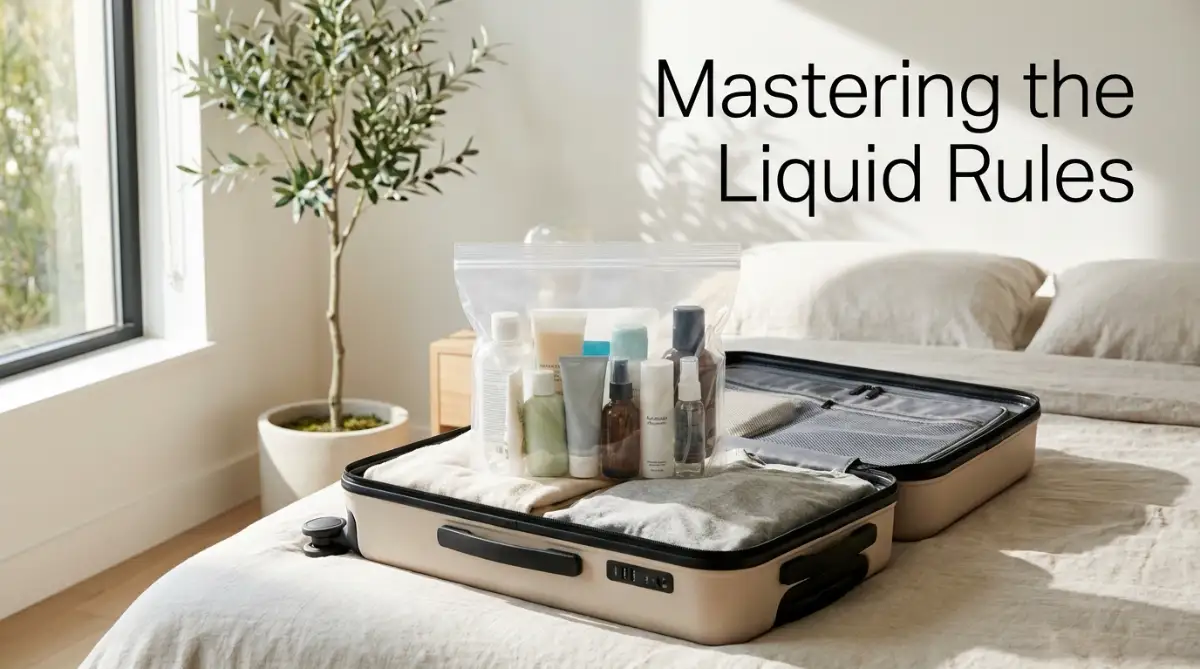
You must transfer all of your essential liquids, creams, and gels into dedicated travel-sized bottles that are labeled as 3.4 ounces (100 milliliters) or smaller.
Place all of these small bottles neatly inside a single, transparent, quart-sized plastic bag. This clear bag acts as an immediate visual proof to the security team that you are following the rules.
My $2 Ziploc Trick:
Do not waste money on expensive "TSA-approved" plastic travel bags that rip easily. A standard heavy-duty quart-sized freezer Ziploc bag is incredibly durable, entirely transparent, and 100% compliant with every airport security rule in the world.
The Invisible Hazard: Managing Your Lithium Batteries
In our highly digital world, we travel with a massive collection of electronics, including laptops, cameras, tablets, and portable power banks. Almost all of these devices are powered by rechargeable lithium-ion batteries.
While these batteries are incredibly useful, they carry a very real, hidden risk of short-circuiting and catching fire. Because of this hazard, aviation safety organizations enforce incredibly strict rules about how batteries must be packed.
The Cargo Hold Fire Trap:
Many travelers make the mistake of packing their heavy portable power banks and loose spare batteries inside their large checked suitcases to save space in their carry-on bags. This is a highly dangerous mistake.
If a lithium battery short-circuits and starts a fire inside the dark cargo hold of an airplane, the flight crew cannot easily reach it to put the fire out. This can quickly lead to a catastrophic emergency mid-flight.
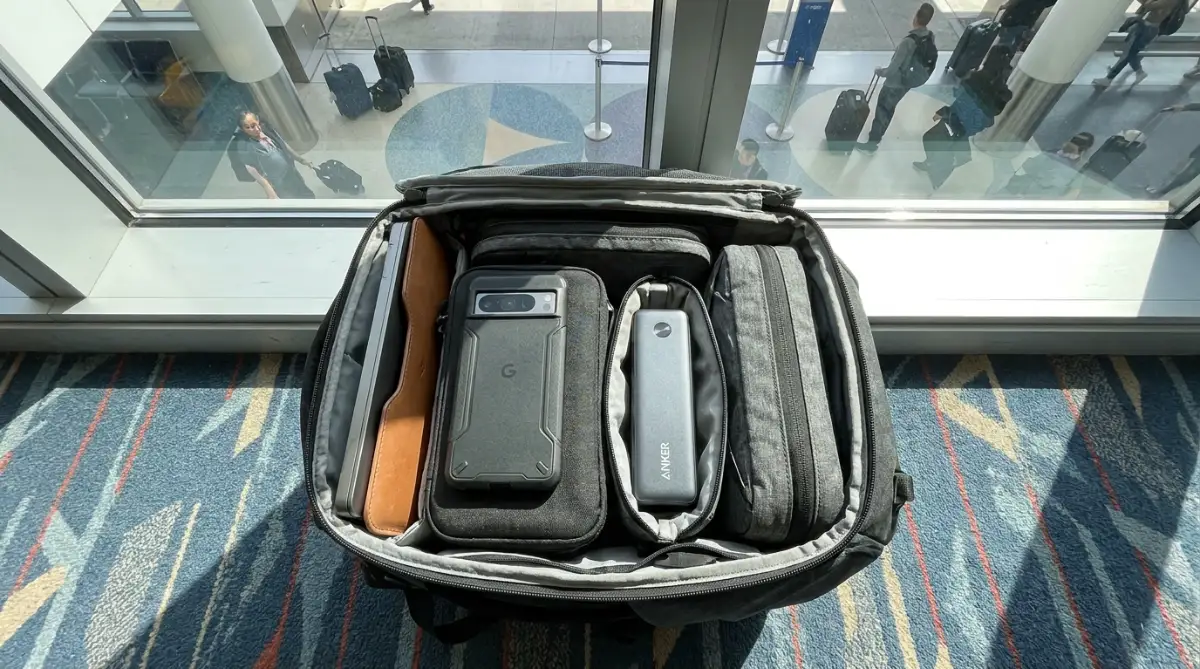
For this reason, all loose lithium-ion batteries and portable power banks must go in your carry-on luggage.
Your Actionable Strategy:
Keep all of your personal electronic devices and spare power banks inside your backpack or carry-on suitcase.
If you have spare, loose batteries, place them inside their original plastic packaging or tape over the metal contact points with electrical tape. This simple precaution prevents the metal points from touching other keys or coins in your bag, completely eliminating the risk of a dangerous short-circuit.
The Dual-Use Object Trap: Everyday Items That Look Like Weapons
You might pack a specific, innocent item in your carry-on bag, assuming it is perfectly harmless because you use it every single day at home. However, airport security scanners do not look at your personal intentions; they look at the physical shape and structure of your belongings.
If an item can be classified as a "dual-use" object—meaning it can easily be used as a weapon—it will be confiscated immediately.
The Tactical Pen Scenario:
Imagine you are a professional writer or a business manager who travels with a heavy, metallic, high-end pen. This pen has a sharp, pointed end designed to break glass in emergencies.
While you only use it to sign documents, the security scanner will flag it as a highly dangerous tactical weapon. The officer will confiscate your expensive pen without hesitation, and you have absolutely zero legal right to argue.
Your Actionable Strategy:
You must carefully evaluate every single tool and metallic object in your luggage before you head to the airport.
Leave your heavy multi-tools, long metal corkscrews, and tactical pens at home, or pack them safely inside your checked luggage. Stick to simple, standard plastic pens and basic travel accessories to avoid any stressful delays.
By taking the time to audit your carry-on using these strict rules, you protect yourself from expensive losses and embarrassing delays. You stop waiting for security to make a decision and start commanding your own travel experience.
Advanced Tactics to Outsmart Airport Security Scanners
Once you understand the basic rules of liquid container sizes and how to manage your lithium-ion batteries, we must look much deeper into your travel strategy. Your carry-on bag is not a simple container to pack passively; it is a highly active collection of items that must pass through an advanced technological screening system.
According to official safety guidelines from the Transportation Security Administration (TSA), the screening process is designed specifically to detect organic, inorganic, and metallic materials using advanced X-ray technology [1]. You must learn to pack your belongings systematically to ensure your bag flows smoothly through the scanner without triggering any red flags.
The Federal Aviation Administration (FAA) warns that carrying prohibited hazardous materials in your luggage poses a massive, direct threat to the safety of everyone on board [2]. Skipping these official safety protocols is incredibly dangerous and can easily lead to costly fines or severe travel delays at the gate.
Many amateur travelers trust popular television myths instead of actual aviation security guides. Just as relying on television leads to surprising Miranda rights misconceptions from TV dramas when dealing with real-world law, relying on simple default packing habits leads to massive, sudden airport delays.
If you try to bypass security rules by hiding forbidden items, you risk facing massive fines or even legal action. You must avoid these packing errors just as you would avoid the silent DIY solar mistakes that destroy your home insurance payout to protect your wealth and peace of mind.
Let us explore the advanced, pro-level secrets you can use to build an unbreakable wall of protection around your carry-on luggage today.
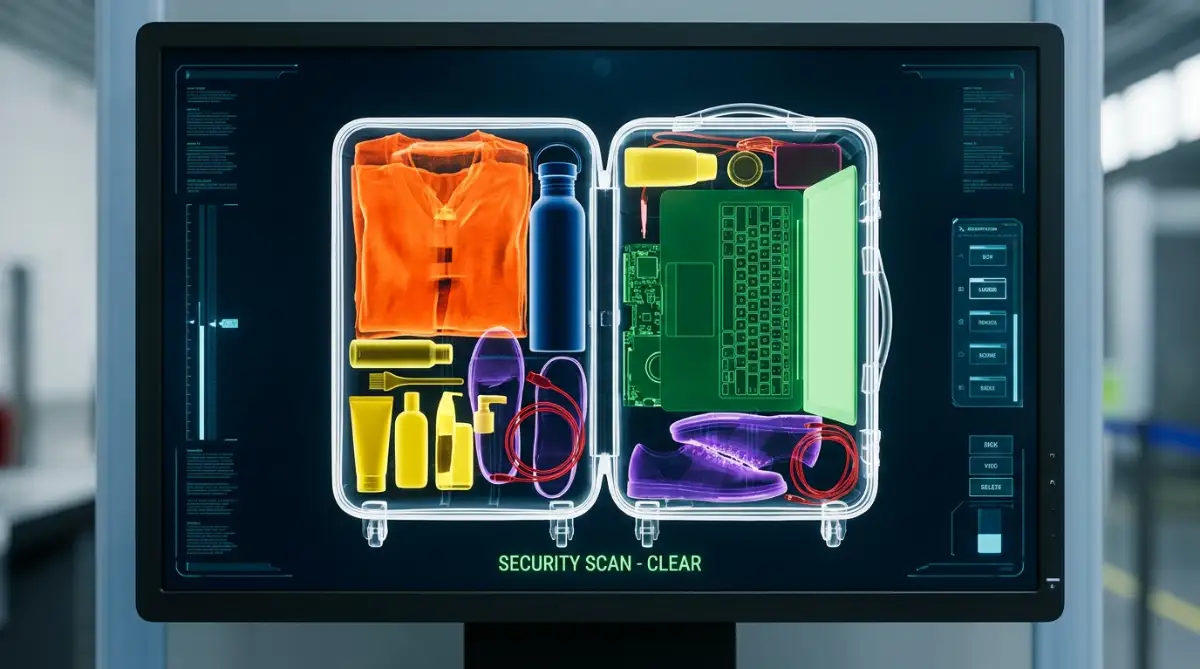
The Science of Density: How X-Rays View Your Bag
To pack like a true professional, you must understand how the airport's X-ray scanner evaluates your belongings. The scanner does not look at your items the way your eyes do; it reads the density and atomic weight of the materials.
The scanner translates different materials into specific colors on the security officer's screen. Organic materials like food, paper, and liquids appear as bright orange, while metals appear as deep blue, and plastics or glass appear as green.
If you pack a massive stack of paper books directly on top of your laptop, or if you tightly coil ten different charging cables around a metal water bottle, you create a dense, unreadable block on the screen. The computer cannot see through this dense mass, forcing the security officer to pull your bag aside for a slow, manual search.
Your Actionable Strategy:
You must pack your carry-on bag in flat, organized layers. Place your heavy books and flat documents at the very bottom of your suitcase, followed by your clothing in the middle.
Always keep your bundle of charging cables and electronic accessories in a single, transparent pouch near the top of your bag. By presenting a clean, easy-to-read visual layer to the scanner, you ensure your bag passes through the machine in seconds without raising any suspicion.
The Liquid Pressure Leak Hack
Even if you pack your travel-sized liquids in a perfect, quart-sized plastic bag, you can still face a massive disaster once you board the plane. As your aircraft climbs to high altitudes, the air pressure inside the passenger cabin drops significantly.
This drop in air pressure causes the tiny pocket of air trapped inside your plastic bottles to expand violently. If your bottles are filled to their absolute maximum limit, the expanding air will force the liquid to leak out past the cap, ruining everything in your bag.
Your Actionable Strategy:
Never fill your travel bottles to one hundred percent capacity. Always leave at least half an inch of empty space at the very top of each bottle.
Before you screw the cap on, gently squeeze the sides of the plastic bottle to force out any excess air. This simple trick gives the internal air plenty of room to expand safely during the flight, preventing any embarrassing, sticky leaks over your clean clothes.
My absolute biggest mistake early on was filling my travel bottles completely to the very top to make sure I had enough shampoo. I realized the hard way that the drop in cabin pressure at thirty thousand feet turns those full bottles into sticky, exploding mess-makers. The very day I started leaving half an inch of empty space and squeezing out the excess air before closing the cap, my clothes arrived perfectly clean and dry.
Hidden Security Trapdoors That Will Sabotage Your Journey
Before you pack your bags for your next big trip, watch this highly helpful video that shows you the exact packing mistakes that trigger security alarms. It breaks down the most confusing airport rules in a simple, visual way, so check it out and then read the guide below!
Even highly intelligent travelers make terrible choices when they are trying to pack their bags quickly on a tight schedule. The intense stress of catching a flight often blinds us to basic security rules and guidelines.
If you fall into these common traps, your smooth airport experience will completely collapse, leaving you stranded at the gate. This frustrating cycle can easily lead to direct missed flights, lost reservations, or expensive fines.
Here is exactly what you must avoid to keep your belongings and your family safe.
The Liquid Medication and Baby Formula Misunderstanding
One of the most common mistakes travelers make is assuming that the strict three-ounce liquid rule applies to everything in their bag. They will leave their important liquid medications or baby formula at home, or pack them in checked bags, out of fear of confiscation.
This is a massive, unnecessary sacrifice. Medical liquids, infant formula, and breast milk are completely exempt from the standard liquid limits.
However, you cannot simply hide these items deep inside your backpack and hope the security officer does not notice them. If the scanner detects a large bottle of liquid, the alarm will trigger immediately, leading to an aggressive search.
You must place all medical liquids and baby formula in a separate, accessible pouch. The moment you reach the security bin, place these items in their own dedicated tray and state clearly to the officer, "These are medically necessary liquids."
The Food and Gel Exclusion Trap
Many travelers love to bring local food items home to their families, such as specialty jams, soft cheeses, or a jar of organic honey. They assume these items are perfectly safe because they are food, not hazardous chemicals.
But to an airport security scanner, any food item that is spreadable, sprayable, or pourable is classified as a liquid.
If you try to bring a jar of peanut butter or a container of local honey in your carry-on, the security officer will throw it directly into the trash can. If you want to bring these delicious items home, you must pack them securely inside your checked luggage or buy them at the duty-free shops past the security checkpoint.
Always check the consistency of your food items before you pack. If you can spill it, spread it, or spray it, do not put it in your carry-on bag.
Food Security Cheat Sheet:
DO's and DON'Ts For Safe Airport Travel:
- DO keep all personal electronic devices easily accessible near the top of your bag.
- DO NOT pack any aerosol cans or highly flammable liquids in your carry-on or checked luggage.
- DO wear simple, slip-on shoes without heavy metal buckles to speed up the physical screening line.
- DO NOT wrap your holiday gifts before flying, as security officers may have to tear the paper to inspect the item.
A Word from the Expert: Your Blueprint for Smooth Skies
Navigating the complicated rules of airport security does not have to be a scary, mysterious, or overwhelming experience. You now hold the exact same strategic knowledge that professional travel guides and flight crews use to navigate airports effortlessly.
By taking a few short hours to organize your liquids, isolate your batteries, and pack your electronics strategically, you completely remove the fear of the unknown. You are no longer crossing your fingers and hoping the security officer does not pull your bag aside.
Instead, you are confidently directing your own travel experience like a seasoned professional. This simple shift in your mental approach gives you incredible power over your entire journey.
Your Pre-Flight Security Checklist:
- Separate Your Liquids: Ensure every single liquid container is under 3.4 ounces and packed neatly in a single clear, quart-sized bag.
- Isolate Your Batteries: Keep all spare lithium batteries and power banks in your carry-on luggage, never in your checked bags.
- Organize Your Electronics: Place your laptop, tablet, and heavy camera gear in an easily accessible section of your bag so you can remove them quickly.
- Declare Your Medical Items: Keep any liquid medications or baby formula in a separate pouch and notify the officer before the screening begins.
Your vacation should be a beautiful time of relaxation, discovery, and joy with your loved ones. Do not let basic packing mistakes or rushed habits force you into stressful airport delays.
Read the security guidelines slowly, organize your luggage carefully, and take complete, fearless control of your travel journey starting right now.
Looking back, surviving those early, highly stressful airport security disasters actually forced me to stop being a passive packer and start traveling like a seasoned pro. You do not need to be an airport worker to breeze through the checkpoints without any fear, so please do not let the pre-trip anxiety ruin your excitement. Pack your bags slowly tonight, separate your liquids, and get ready to enjoy your next adventure with total peace of mind!
Common Questions About Airport Security and Carry-On Rules
Can I bring a large shampoo bottle if it is mostly empty and has only a little liquid left?
Security officers evaluate the printed maximum capacity of the container itself rather than how much liquid is actually inside. If a bottle has a capacity of five ounces, it will be confiscated immediately, even if there is only a single drop of shampoo left at the bottom.
Why do I have to keep my portable power banks and lithium batteries in my carry-on bag?
Loose lithium-ion batteries and heavy portable power banks must go in your carry-on luggage because they carry a real risk of short-circuiting and catching fire. If a battery starts a fire inside the dark cargo hold of an airplane, the flight crew cannot reach it to put it out.
Are liquid medications and baby formula exempt from the 3.4-ounce airport rule?
Medical liquids, prescription medications, infant formula, and breast milk are completely exempt from the standard three-ounce liquid limits. You must pack these items in a separate, accessible pouch and declare them clearly to the security officer before the screening begins.
Why do security scanners flag items like heavy metallic pens or corkscrews?
Security scanners classify items like heavy tactical pens and long metal corkscrews as dual-use objects that can easily be used as weapons. Leaving these items in your carry-on will lead to immediate confiscation, so you should pack them safely inside your checked luggage instead.
How can I prevent my travel-sized liquid bottles from leaking during a flight?
You can prevent messy leaks caused by dropping air pressure at high altitudes by leaving at least half an inch of empty space at the top of each bottle. Gently squeezing the sides of the plastic bottle to force out excess air before screwing the cap on will also give the internal air room to expand safely.
Disclaimer: The information provided in this article is for educational and general informational purposes only and does not constitute formal legal or aviation security advice. Airport security regulations and carry-on restrictions vary heavily by country, airline, and specific airport authority. Always consult with your airline or the official transportation security authority of your departure and arrival countries regarding the exact guidelines, prohibited items, and travel requirements of your personal journey.