
I used to stay up until 3 AM frantically clearing my browser cookies, convinced it would keep airlines from raising flight prices on me. I panicked and watched a ticket jump by three hundred dollars in real time. It was incredibly frustrating. But I learned that airline computers do not actually raise fares based on your cookies. Let me show you exactly how these booking systems work so you can stop stressing and save your travel money.
Your Action Plan for Finding Cheap Flights (TL;DR)
- Stop clearing your cookies or using incognito mode; airline computers do not raise prices based on your personal search history.
- Book your domestic flights 1 to 3 months in advance, and international trips 2 to 5 months ahead.
- Avoid "basic economy" tickets unless you calculate the extra baggage and seat selection fees first.
- Use separate "positioning flights" to fly out of major city hubs instead of booking expensive direct routes from local airports.
The Invisible Algorithm: How Airfare Pricing Actually Operates
Before you open another incognito browser window, you have to understand the business model of modern airlines. Airlines do not determine their ticket prices based on how many times you personally search for a flight.
They use highly advanced, automated software systems called Revenue Management Systems to calculate prices in real-time. This software has one major job: maximizing the total profit of every single seat on the airplane.
It does this by dividing the cabin into different pricing categories, which are called "fare buckets." There might be exactly five seats allocated to the cheapest fare bucket, twenty seats to the mid-tier bucket, and the rest to the premium business buckets.
The Footwear Analogy:
Think of airline seats exactly like a limited run of popular athletic shoes in a retail store. The store manager does not raise the price of the shoes just because you stood in front of the window and stared at them three times.
The price only changes if fifty other people run into the store at the exact same moment to buy those same shoes, causing the inventory to drop. Your flight operates on this exact same logical principle.
If you see a price increase after searching for a flight twice, it is not because the computer tracked your cookies. It is simply because other real travelers bought the last remaining cheap seats in that specific fare bucket while you were busy hesitating.
Let let us look into the most common, highly expensive flight booking myths that are actively wasting your travel budget right now.
The "Incognito Mode" Illusion: Why Clearing Cookies Fails
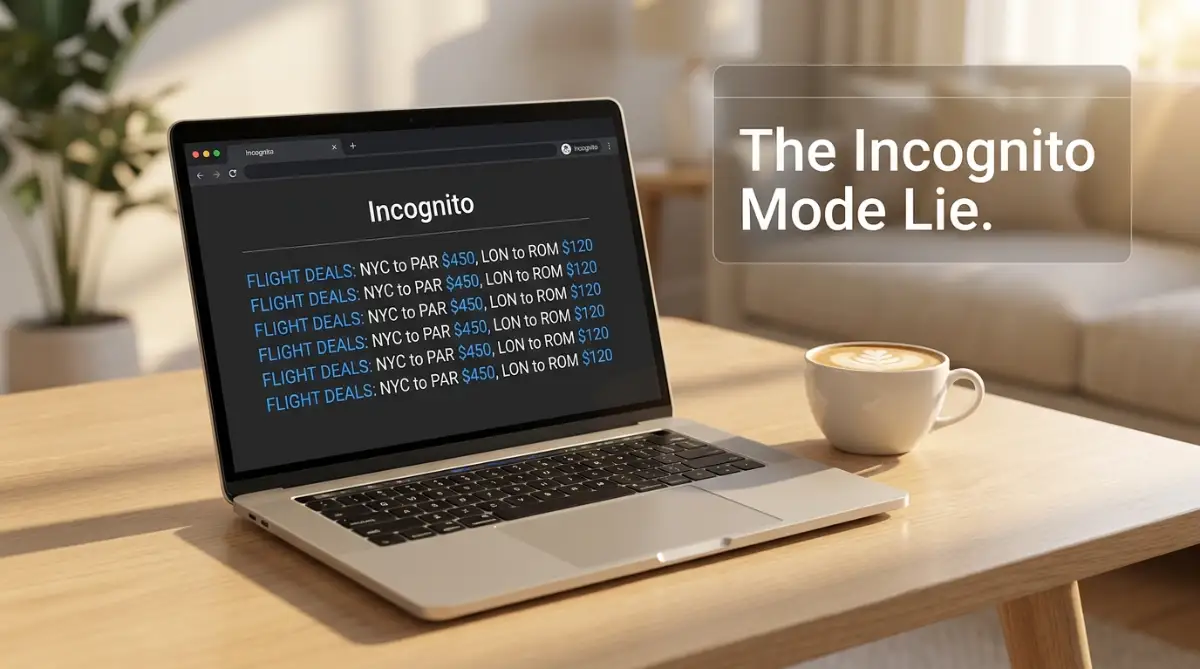
The most persistent, heavily shared travel advice on the internet is the belief that you must search for flights in "Incognito Mode" to keep prices from rising. This myth claims that airlines use tracking cookies to see what routes you are interested in and artificially raise the prices to force you into buying immediately.
While this sounds like a clever, satisfying way to beat the system, it is a complete technical illusion. Modern airlines run massive, highly regulated global distribution networks that cannot legally show different prices to different people based on their search history.
If they practiced this type of deceptive pricing, they would face massive legal fines and investigations from global consumer protection agencies.
The Real Cause of Price Fluctuation:
When you see a price jump after refreshing your page, it is almost always due to real-time database caching. Your travel search engine might show an outdated cheap price that was cached ten minutes ago.
When you click "book," the system runs a live check on the airline's actual database and discovers that those cheap seats were already sold to someone else. The price instantly jumps to the next available tier, making you believe your cookies caused the change.
Your Actionable Strategy:
You must stop wasting your valuable time clearing your browser history or using multiple separate devices to search. Instead, focus your energy on using reputable meta-search engines that pull live, direct data from the airlines.
These platforms show you the actual, real-time inventory without any delayed caching. By using honest, direct data systems, you eliminate the confusion and always see the true price of the seat immediately.
My 3-Step Booking Triage:
- Set Price Alerts Early: Do not check prices daily; it just stresses you out. Set up automated email alerts on Skyscanner or Google Flights three months ahead of your trip.
- Use the 24-Hour Rule: If you see a great price on a Thursday, book it immediately. You legally have 24 hours to cancel for a full refund if you change your mind.
- Fly Mid-Week: Tuesdays and Wednesdays are almost always the cheapest days to fly because business travelers prefer Mondays and Fridays.
The Tuesday Midnight Booking Fallacy
We have all heard the famous advice: "You must book your flight on a Tuesday at midnight to get the absolute cheapest rates." This myth is based on a very old, completely outdated practice from decades ago when airlines manually loaded their new weekly fares into the systems on Tuesday nights.
In today's digital world, airlines do not have employees manually typing in prices at midnight. Their computerized pricing engines adjust ticket costs thousands of times every single second based on real-time global demand and historical data.
The Stock Market Analogy:
Think of airline tickets exactly like shares of stock on the financial market. You would never expect Apple stock to be cheaper on Tuesday at midnight simply because of the day of the week.
The stock price fluctuates continuously based on real-time buyers and sellers, and airline tickets behave in this exact same fluid way.
Your Actionable Strategy:
Stop staying up late on Tuesday nights hoping for a magical discount. Research shows that the actual day of the week you buy your ticket has less than a two percent impact on the final price.
Instead, focus entirely on the day of the week you actually fly. Flights that depart on Tuesdays, Wednesdays, and Saturdays are consistently cheaper because business travelers do not like to travel on those days.
Exposing the "Last-Minute Deals" Trap
Many adventurous travelers love to wait until the absolute last minute to book their flights, believing the airline will desperately lower the prices to fill the remaining empty seats. While this strategy used to work years ago, it is now an incredibly expensive mistake.
Airlines know that travelers who book less than two weeks before a flight are usually business professionals who have to travel for urgent, high-stakes meetings. Because these business travelers have no choice but to fly, they are completely willing to pay peak, premium prices.
Myth vs. Reality:
The Myth: Waiting until the day before a flight is the best way to score an incredibly cheap, last-minute ticket.
The Reality: Last-minute airfares are typically the most expensive tickets of all. Airlines would rather fly with an empty seat than lower their prices at the last minute and train passengers to always wait for discounts.
Your Actionable Strategy:
You must respect the prime booking window. For domestic flights, the safest time to book is between one and three months before your departure date.
For international journeys, you should look to lock in your tickets between two and five months in advance. Booking within this sweet spot guarantees you get the absolute lowest rates before the expensive business-travel pricing kicks in.
Advanced Tactical Moves to Shield Your Travel Budget
Once you understand the basic differences between book pricing and actual dynamic booking engines, we must look much deeper into your travel strategy. Your personal booking dashboard is not a place to search passively; it is a highly active engine that dictates your travel budget's survival.
According to international airline reports from the International Air Transport Association (IATA), modern airfare distribution systems are designed to update seat prices continuously based on complex global demand algorithms [1]. You must learn to use these established system rules to protect your daily travel plans from sudden price spikes.
Flight statistics shared by the Bureau of Transportation Statistics (BTS) reveal that airline capacity changes are the leading cause of sudden airfare fluctuations [2]. Knowing how to navigate these real-time database changes is highly important before you make any new booking decisions.
Many amateur travelers trust popular television myths instead of actual aviation industry guides. Just as relying on television leads to surprising Miranda rights misconceptions from TV dramas when dealing with real-world law, relying on simple default booking hacks leads to massive financial errors.
Let us explore the advanced, pro-level secrets you can use to build an unbreakable wall of protection around your travel bank account today.
The Secret of Positioning Flights and Alternate Airports
One of the most surprising terms hidden in standard airline routes is the hub-and-spoke system. When you search for a flight from a small local airport to an international destination, the software usually routes you through a massive city hub.
Because the system is compiling multiple flight segments, the final price is often extremely high. To beat this, you must learn the secret of positioning flights.
The local bus analogy:
Think of a positioning flight exactly like riding a cheap local bus to the main train station instead of taking an expensive direct taxi from your front door. You buy a separate, very cheap domestic ticket to a major airline hub like New York, London, or Singapore.
Once you are safely at the major hub, you check in for your main international flight, which you booked separately at a much lower rate. This simple, strategic separation of your route can easily cut your overall ticket costs in half.
My absolute biggest mistake early on was always searching for flights to a major city hub and assuming my local airport would give me the best deal. I did not realize that booking a separate, very cheap domestic "positioning flight" to a major hub like London first would save me a fortune on the main ticket. The very day I started booking my long-haul flights from major hubs and taking a cheap local flight to get there, my overall vacation costs cut in half instantly.
Your Actionable Strategy:
Always search for alternative, secondary airports near your final destination. For example, if you are flying to London, do not just search for Heathrow; check Gatwick, Stansted, and Luton as well.
Often, budget airlines use these secondary airports exclusively, offering massive savings that traditional search engines ignore. Be highly disciplined and calculate the cost of local ground transit from the secondary airport to ensure you are actually saving money.
Major Hub vs. Alternate Airport:
- Major Hub (e.g., London Heathrow): High taxi/train options, direct connections, but much higher ticket prices.
- Alternate Airport (e.g., London Stansted): Super cheap budget airlines, but check the bus/train fares. If a bus to town costs $40, you might not save anything at all.
Using the 24-Hour Refund Rule Safely
Many travelers do not know that they have a powerful legal safety net built directly into their booking process. In many major countries, aviation rules require airlines to offer a full, penalty-free refund within twenty-four hours of booking.
This rule applies as long as you book your ticket at least one week before the scheduled departure date. This is an incredibly valuable tool for deal hunters.
Your Actionable Strategy:
If you see a decent fare on a Thursday afternoon, go ahead and book it immediately to lock in the price. Set a loud, recurring reminder on your smartphone for exactly twenty hours later.
During those twenty hours, keep monitoring the ticket prices on other search engines. If you find a much cheaper option, simply cancel your original booking for a full refund and book the cheaper flight.
This simple, free habit keeps your options completely open and protects you from the stress of buyer's remorse.

Silent Airfare Traps That Will Destroy Your Travel Capital
Before you click the pay button on your next flight, watch this highly helpful video that shows you the exact booking mistakes that quietly ruin your travel budget. It breaks down the most confusing airline traps in a simple, visual way, so check it out and then read the guide below!
Even highly experienced travelers make terrible choices when they are trying to book their trips quickly. The intense excitement of planning a vacation often blinds us to basic fine print rules in airline contracts.
If you fall into these common traps, your financial tracking will completely collapse. This frustrating cycle can easily lead to canceled tickets, lost baggage, or heavy penalties.
Here is exactly what you must avoid to keep your family safe and your travel bank account secure.
The Danger of the "Skip lagging" Illusion
If you spend any time researching travel hacks, you will eventually find a popular trick called "hidden city ticketing" or "skip lagging." This trick involves booking a flight with a layover in your actual destination city and simply walking away at the layover airport.
For example, a flight from New York to Miami with a layover in Orlando might be significantly cheaper than a direct flight from New York to Orlando. You buy the cheaper ticket to Miami, get off the plane in Orlando, and leave the airport.
The Severe Hidden Consequences:
While this seems like a clever way to beat the system, it is a massive violation of the airline’s contract. If the airline catches you skip lagging, they have the legal right to void your entire return ticket instantly.
They will permanently ban your account, delete all of your hard-earned frequent flyer miles, and potentially sue you for the price difference. Additionally, you can never check any luggage with this strategy, as your bags will automatically be sent to the final destination in Miami.
Always avoid risky, prohibited booking tricks that can permanently ruin your travel standing.
Booking Basic Economy Without Checking Baggage Fees
It is completely natural to want the absolute lowest ticket price showing on your screen. Airlines understand this human psychology perfectly, and they use it to quietly steal your money.
They will gladly display a tiny, highly attractive "Basic Economy" rate on the search results page. But once you start the booking process, they will charge you extra for every single basic service.
You have to pay extra to select a seat, pay extra to bring a carry-on bag, and pay a massive fee for a checked suitcase. Once you add these heavy extra costs together, your cheap Basic Economy ticket is often much more expensive than a standard Main Cabin fare.
Your Actionable Strategy:
Once you book your flight safely, you must prepare your luggage. Always check your packing list to avoid dangerous carry-on packing mistakes that get your bags confiscated at security checkpoints.
Always calculate the total cost of your travel, including all mandatory baggage fees, before you click the pay button.
DO's and DON'Ts For Smart Travelers:
- DO use flexible date calendars to find the absolute cheapest travel days.
- DO NOT ever book through unverified, third-party travel agencies with terrible customer service ratings.
- DO set up price alerts on meta-search engines weeks before you plan to buy.
- DO NOT assume that buying two separate one-way tickets is always more expensive than a round-trip.
Buying One-Way Tickets Internationally
Many new travelers assume that buying two separate one-way tickets is the best way to maintain flexibility during their journey. They think, "I will buy a ticket to Europe now, and figure out my return flight later."
This is a massive, highly expensive mistake, especially on international routes. Airlines typically price international one-way tickets almost as high as a full round-trip ticket.
Even worse, many countries will legally refuse to let you board the plane if you do not have proof of a confirmed return ticket. They want to ensure you do not plan to stay in their country illegally.
Always book a round-trip ticket or a multi-city ticket from the very beginning to keep your costs low and avoid getting turned away at the airport gate.
A Word from the Expert: Your Roadmap to Seamless Skies
Managing your travel budget does not have to be a scary or overwhelming experience. You now hold the exact same strategic knowledge that professional travel coordinators and corporate flight planners use to protect their finances.
By taking a few short hours to organize your flight dates and understand dynamic pricing, you completely remove the fear of getting scammed. You are no longer crossing your fingers and hoping a airline website displays a cheap price today.
Instead, you are confidently commanding your own travel plans like a seasoned business professional. This simple shift in your mental approach gives you incredible power over your entire holiday budget.
Your Flight-Saving Checklist For Tomorrow:
- Audit Your Travel Dates: Sit down with your calendar tomorrow and identify if you can travel on Tuesdays, Wednesdays, or Saturdays to save money.
- Set Up Price Alerts: Stop manually checking prices ten times a day. Set up automated email alerts on top meta-search systems.
- Check the Baggage Rules: Always read the specific baggage limits of the basic economy ticket before you enter your payment details.
- Lock in Your Booking Window: Ensure you are booking your domestic flights one to three months in advance, and international trips two to five months in advance.
Your next vacation should be a beautiful time of discovery, rest, and pure joy with your family. Do not let basic research laziness or exciting "flight hacks" force you into making expensive booking mistakes.
Read the airline rules slowly, plan your departure dates carefully, and take complete, fearless control of your travel journey starting right now.
Looking back, surviving those early, highly stressful flight booking disasters actually forced me to stop being a passive buyer and start traveling like a seasoned pro. You do not need to be a travel agent to secure amazing, cheap tickets without any fear, so please do not let the pre-trip anxiety ruin your excitement. Track your dates slowly tonight, set your price alerts, and get ready to enjoy your next family vacation with total peace of mind!

Common Questions About Finding Cheap Flights and Airfare Pricing
Do airlines track my browser cookies and artificially raise flight prices when I search?
Airlines do not track your personal searches and raise prices based on cookies, as they rely on massive global distribution networks governed by strict consumer protection laws. When you see a price jump, it is almost always because live seats in that cheaper fare bucket sold out while you were browsing.
Is Tuesday at midnight really the absolute cheapest time to buy plane tickets?
The idea of booking flights on a Tuesday at midnight is a complete myth leftover from decades ago when airlines manually loaded weekly fares. Today's computerized pricing engines adjust ticket costs thousands of times every second based on real-time global supply and demand.
What is the best and safest window of time to book a domestic flight?
The safest time to book a domestic flight is generally between one and three months before your scheduled departure date. Booking within this sweet spot helps you lock in the lowest rates before expensive business-travel pricing kicks in.
What happens if I try the "skip lagging" hidden city ticketing trick?
Skip lagging—getting off at a layover city instead of flying to the final destination—violates the airline's contract of carriage. If caught, the airline can void your return ticket, ban your account, delete your frequent flyer miles, and potentially sue you for the fare difference.
Can I get a full refund if I change my mind after booking a flight?
In many major countries, aviation rules require airlines to offer a full, penalty-free refund within twenty-four hours of booking, provided you booked at least one week before departure. This rule gives you a safe window to lock in a fare while you continue shopping for better deals.
Disclaimer: The information provided in this article is for educational and general informational purposes only and does not constitute professional financial, legal, or travel agency advice. Airline pricing policies, terms of service, baggage fees, and transit requirements vary heavily by carrier, route, and regional aviation authority. Always consult with your specific airline or a certified travel professional regarding the exact conditions, requirements, and rules of your personal journey.