I was so thrilled to get the keys to my first apartment that I just skimmed the lease and signed at the bottom. A few months later, when the refrigerator completely died, my landlord pointed to a tiny clause hidden on page four that made me fully responsible for appliance repairs. I had to buy a new fridge out of my own pocket just to store my food. Let me show you exactly what to look out for so you don't get financially trapped by a shady lease agreement.
My 60-Second Lease Survival Checklist
- Strike out the minor repair clause: Never agree to pay the first $100 for broken appliances or plumbing.
- Check the guest policy: Ensure your lease doesn't automatically classify visiting family members as unauthorized tenants after 14 days.
- Demand a 24-hour entry notice: Protect your privacy by refusing any lease that allows the landlord to walk in whenever they want.
- Get promises in writing: Verbal agreements to clean carpets or fix paint before you move in are legally useless unless written into the contract.
The Hidden Clauses That Quietly Drain Your Wallet
Before you sign your name on any rental contract, watch this highly helpful video that shows you the exact hidden traps landlords put in standard leases. It breaks down the most dangerous clauses in a simple, visual way, so check it out and then read the guide below!
Many people assume that a standard lease agreement is a simple document that only covers your monthly rent and deposit amount. This is a very common, highly dangerous misunderstanding of contract law.
A lease is a legally binding contract, and the small print holds the power to completely bypass your local tenant protection laws. If you do not read every single sentence carefully, you are essentially giving the landlord permission to take your money.
Let us look at the most common, highly expensive hidden clauses that are actively threatening your financial peace of mind right now.
The "Automatic Renewal" Forever Loop
One of the most dangerous traps in any rental agreement is the automatic renewal clause. Most tenants assume that when their twelve-month lease ends, they automatically transition to a flexible month-to-month schedule.
But landlords often hide a tiny, highly restrictive sentence deep inside the contract. This sentence states that if you do not give a formal written notice of your intent to move out exactly sixty days before the lease ends, the contract automatically renews for another full year.
Let us look at a real-life scenario.
Imagine you find a better job in another city and plan to move out the day your lease officially ends. You pack your bags, tell your landlord, and they tell you that you are legally trapped for another twelve months because you missed the sixty-day notice window by just one day.
You are now legally obligated to pay a full year of rent for an apartment you do not even live in.
Your Actionable Strategy:
Always search your contract specifically for the words "automatic renewal" or "notice period." If you see this clause, set a loud, recurring reminder on your smartphone calendar immediately.
Write down the exact date you must send your written notice. This simple digital reminder will save you from getting trapped in an expensive, unwanted contract.
The 60-Day Notice Warning:
Never rely on a quick text message to tell your landlord you are moving out. Most leases strictly require a formal written letter mailed or hand-delivered 60 days before your end date. If you just send a text, the landlord can claim they never received official notice and legally renew your lease.
The "Minor Repair" Maintenance Trap
When you rent a home, you naturally assume that the landlord is responsible for fixing any broken appliances or plumbing issues. After all, that is one of the main benefits of renting instead of owning.
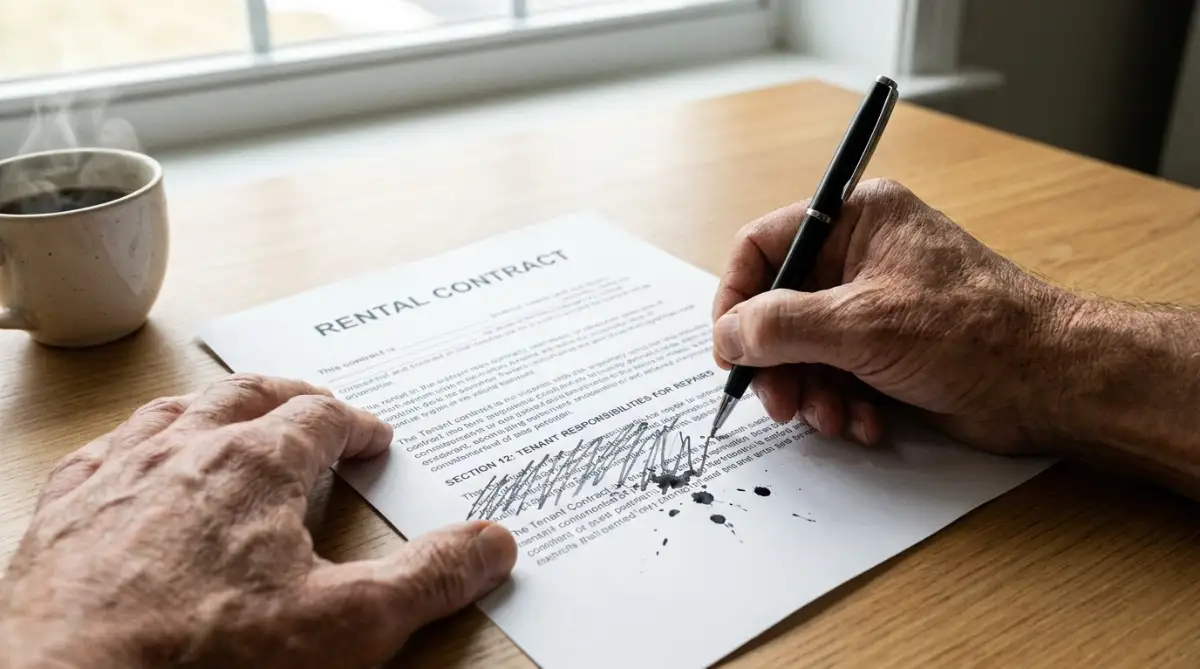
However, many greedy landlords include a tiny clause that makes the tenant responsible for "all minor repairs under one hundred dollars."
This sounds harmless on paper, but it is a massive financial loophole.
The Danger of Cumulative Costs:
If your kitchen pipe has a small leak, your toilet handle breaks, and your bedroom door stops latching, you are facing three separate minor repairs. Under this clause, you have to pay for all of them out of your own pocket.
Furthermore, some landlords will use this clause to blame you for old, worn-out appliances. They will argue that the broken garbage disposal was your fault and force you to pay the first hundred dollars of the repair bill.
Your Actionable Strategy:
Never agree to pay for repairs that are caused by normal wear and tear. Before you sign, ask the landlord to strike this clause from the contract entirely.
State clearly, "I am happy to maintain the cleanliness of the property, but structural, plumbing, and appliance repairs must remain the landlord's responsibility."
The Draconian Guest Restriction Policy
Another highly surprising clause that catches young renters off guard is the guest restriction policy. You might assume that because you pay rent on time, you can have your partner or a family member stay with you whenever you want.
But many contracts contain a highly strict paragraph that defines exactly who is allowed to live in the apartment.
The Hidden Co-Tenant Trap:
The clause might state that any guest staying longer than fourteen consecutive days is automatically considered an unauthorized tenant. If the landlord's security cameras see your partner staying over frequently, they can legally accuse you of violating the lease.
This can lead to immediate eviction, expensive fines, or a sudden, forced increase in your monthly rent.
Your Actionable Strategy:
Always read the guest policy carefully. If you know a family member plans to visit you for a few weeks, discuss this with the landlord before signing the contract.
Expert Insight:
Never let a landlord make verbal promises like, "Don't worry about that guest rule, I won't enforce it." If the rule is written in the contract, they can legally enforce it at any moment. Always get any exceptions or changes written directly into the contract and signed by both parties.
If you are currently facing a difficult housing situation or struggling to afford your monthly rent, do not make the mistake of taking out high-interest loans blindly. Managing your housing budget requires the same careful preparation as managing any major financial debt.
Taking the time to study your tenant rights and negotiate your lease is an essential step to protect your wallet. By keeping your monthly housing costs safe and clean, you protect your long-term financial freedom.
Proactive Shielding: How to Safely Audit Your Rental Contract
Once you understand the basic monthly payments and automatic renewal clauses, we must look much deeper into the legal framework of your contract. Your lease is not a friendly agreement between neighbors; it is a serious legal document that dictates your constitutional right to safe housing.
According to housing law experts at the Cornell Law School Legal Information Institute, landlord-tenant law governs the rental of commercial and residential property, strictly regulating rent security deposits, landlord entry, and eviction procedures. You must learn to use these established laws to protect your household from predatory contract clauses.
The The Consumer Financial Protection Bureau (CFPB) explicitly states that every single state has dedicated local laws protecting tenant rights from unfair practices. Knowing these local protections is highly important before you sit down to sign any contract.
Most tenants simply assume they are protected by common sense, but they completely ignore the actual wording on the paper. Just like misunderstanding your rights during an arrest can lead to surprising Miranda rights misconceptions from TV dramas hurting your case, signing a lease blindly can completely destroy your housing protections.
You must actively study the rules to protect your life. Failing to research your basic constitutional and contract rights is as dangerous as practicing costly study habits that secretly sabotage your exam grades before a major college test; it guarantees a painful failure.
Let us explore the advanced, pro-level secrets you can use to build an unbreakable wall of protection around your rental home today.
The Secret to Neutralizing Roommate Liabilities
One of the most surprising clauses hidden in standard lease agreements is a phrase called "Joint and Several Liability." If you are moving in with a roommate or a close friend to split the bills, this specific clause has the power to completely destroy your finances.
Joint and several liability simply means that the landlord views all tenants as a single, combined financial unit. If your roommate suddenly loses their job, runs away in the middle of the night, or refuses to pay their share, the landlord does not care.
They can legally demand 100% of the monthly rent directly from you alone. Let us look at a real-life scenario.
Imagine you and your best friend rent a beautiful apartment for $2,000 a month, agreeing to split it exactly in half. Your friend suddenly decides to pack their bags and move to another country, leaving you holding the lease.
You cannot simply pay your $1,000 share and assume you are safe from eviction. The landlord can legally sue you for the remaining balance and evict you, completely ruining your rental history and your credit score.
Your Actionable Strategy:
Before you sign a lease with a roommate, you must ask the landlord to add a "several liability" clause. This clause legally states that you are only responsible for your specific portion of the monthly rent.
If the landlord refuses to change the contract, you must establish a separate, legally binding roommate agreement before moving in together. My absolute biggest mistake was moving into a beautiful townhouse with my best friend and signing a standard lease without checking the liability clause. When she unexpectedly packed her bags and left the state, the landlord came directly to me for her half of the rent. I quickly learned the hard way that unless you have a written roommate agreement, you can easily end up paying for someone else's sudden escape.
This private contract guarantees that you can sue your roommate in small claims court if they run away and leave you with the bill.
Restricting the Landlord’s Right of Entry
Many tenants mistakenly believe that because a landlord owns the physical building, they have the right to walk into your apartment whenever they want. This is a massive, highly invasive misunderstanding of basic housing laws.
When you sign a lease, you are legally buying a right called "Quiet Enjoyment." This means that for the duration of your contract, the apartment is your private home, and you have the right to exclude anyone, including the landlord.
However, many predatory contracts contain a small paragraph stating that the landlord can enter the property "at any time for general inspections or maintenance."
If you sign this contract blindly, you are giving up your basic privacy rights. The landlord can legally walk into your home while you are sleeping or while you are away at work.
Your Actionable Strategy:
Always read the "Right of Entry" clause with extreme care. You must demand that the landlord include a strict 24-hour written notice requirement for any non-emergency entry.
Make sure the contract states that they can only enter during normal business hours, such as nine in the morning until five in the evening. This simple change keeps your home perfectly private and secure from unexpected, creepy intrusions.
Know Your Emergency Exceptions:

Silent Mistakes That Instantly Void Your Tenant Rights
Even highly intelligent people make terrible choices when they are under the extreme pressure of moving. The panic of finding a place quickly often makes us ignore basic contract safety rules.
If you fall into these common traps, you can easily lose your security deposit or find yourself facing a sudden, expensive eviction. Let us look at the silent pitfalls you must avoid to keep your legal rights entirely safe.
The "Verbal Promise" Trap
One of the worst mistakes tenants make is relying on a landlord's friendly verbal promises. A landlord might show you a dirty apartment and say, "Don't worry, I will have the carpets professionally cleaned and install a new refrigerator before you move in next week."
You smile, nod, and sign the lease agreement, assuming they will keep their word. But on move-in day, you walk in and see the same dirty carpets and the old, broken refrigerator.
When you call the landlord, they coldly deny ever making that promise. Because the contract contains an "Integration Clause" stating that only the written agreement is legally binding, you have absolutely zero way to prove they lied.
Always get every single promise written directly into the contract before you sign. If they promise to clean the carpets, write it on the paper, initial it, and have them sign next to it.
The "As-Is" Maintenance Trap
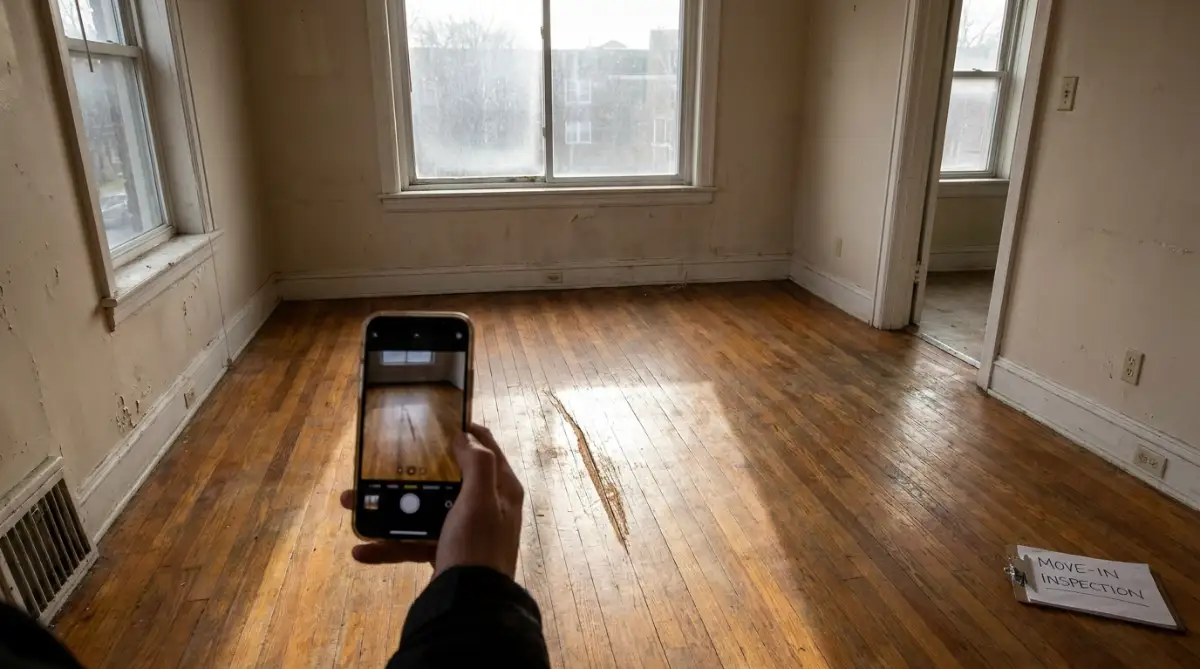
Many modern leases contain a small, dangerous phrase stating that the tenant accepts the property in "As-Is Condition." If you sign this contract, you are waiving your right to ask for repairs for any existing damage on the property.
If you discover that the heating system is broken or the bathroom floor has hidden rot on day three, the landlord will simply point to the contract and refuse to pay for the repairs.
DO's and DON'Ts For Smart Renters:
- DO take detailed photos of every single scratch, stain, and dent on move-in day.
- DO NOT ever sign a lease with blank spaces that the landlord promises to "fill in later."
- DO keep all communication with your landlord in written emails to maintain a permanent paper trail.
- DO NOT withhold rent illegally if a repair is delayed, as this can lead to immediate eviction.
If your landlord refuses to make necessary, safe repairs, you cannot simply stop paying your rent. Withholding rent illegally is a massive mistake that allows the landlord to evict you immediately.
Instead, you must use the legal "Rent Escrow" process, where you pay your monthly rent directly to a local court clerk until the landlord completes the required repairs safely.
Your Rental Safety Plan: A Word from the Expert
Navigating the complicated rules of rental contracts does not have to be a scary or overwhelming experience. You now hold the exact same strategic knowledge that professional tenant advocacy attorneys use to protect their clients.
By taking a few extra hours to audit your lease and negotiate the fine print, you completely remove the heavy fear of getting scammed. You are no longer begging a landlord for a favor; you are entering into a balanced, professional business contract.
This simple shift in your mental approach gives you incredible power over your entire housing future. You are fully capable of securing a beautiful, safe home without feeling stressed, rushed, or confused by the legal paperwork.
Your Master Checklist for Move-In Day:
- Read the Notice Clause: Set a recurring calendar alert ninety days before your lease expires so you never miss the automatic renewal notice window.
- Audit the Liability Wording: Ensure you are not solely responsible for your roommate's financial mistakes or early departure.
- Lock Down Your Privacy: Force the landlord to agree to a twenty-four-hour written notice requirement before they are allowed to enter your home.
- Document the Baseline: Create a shared Google Drive folder filled with high-definition photos of every single wall, appliance, and window on the day you collect the keys.
Your home should be your ultimate sanctuary, a place where you can relax, feel safe, and build your future. Do not let basic excitement or a pushy landlord force you into signing away your peace of mind.
Read the contract slowly, ask for written changes where necessary, and take complete, fearless control of your housing journey starting right now.
Looking back, surviving that stressful first rental nightmare actually forced me to stop being a passive tenant and start acting like a professional business partner. You do not need to be a lawyer to protect your home and your bank account, so please do not let the excitement of a new place make you rush. Set your calendar reminders tonight, read every line slowly, and take complete control of your housing journey today!
Common Questions About Rental Leases and Tenant Rights
What is an automatic renewal clause in a lease and how can it trap me?
An automatic renewal clause states that if you do not give formal written notice of moving out well in advance—often sixty days before expiration—your lease automatically locks you in for another full year. This can legally force you to pay rent for an apartment you no longer live in, so you should always set calendar reminders to track your notice window.
What does "Joint and Several Liability" mean when renting with a roommate?
Joint and several liability means the landlord views all roommates as a single financial unit, giving them the legal right to demand 100% of the rent from you alone if your roommate runs away. To protect yourself, you should ask the landlord to modify the lease or sign a separate, legally binding roommate agreement beforehand.
Can my landlord enter my apartment whenever they want because they own the building?
Landlords cannot legally enter your home whenever they feel like it, because signing a lease grants you the legal right to "quiet enjoyment" and privacy. Most states and standard contracts require landlords to provide a 24-hour written notice before entering for non-emergency repairs or inspections.
Is a landlord's verbal promise to clean the carpets or fix appliances legally binding?
Verbal promises are extremely difficult to enforce in court because standard leases contain an integration clause stating that only the written contract is legally binding. You must always get every promised repair or cleaning condition written directly into the lease and signed by both parties before handing over any money.
What should I do if my landlord refuses to make necessary, safe repairs?
If your landlord ignores urgent repair requests, you cannot simply stop paying your rent, as withholding rent illegally can lead to a fast eviction. Instead, you must use the legal "rent escrow" process by paying your monthly rent to a local court clerk until the landlord fixes the issue safely.
Disclaimer: The information provided in this article is for educational and general informational purposes only and does not constitute formal legal or financial advice. Landlord-tenant laws vary heavily by state, country, and local municipality. Always consult with a licensed real estate attorney or a certified local tenant advocacy group regarding the specific rules, rights, and requirements of your personal rental situation.