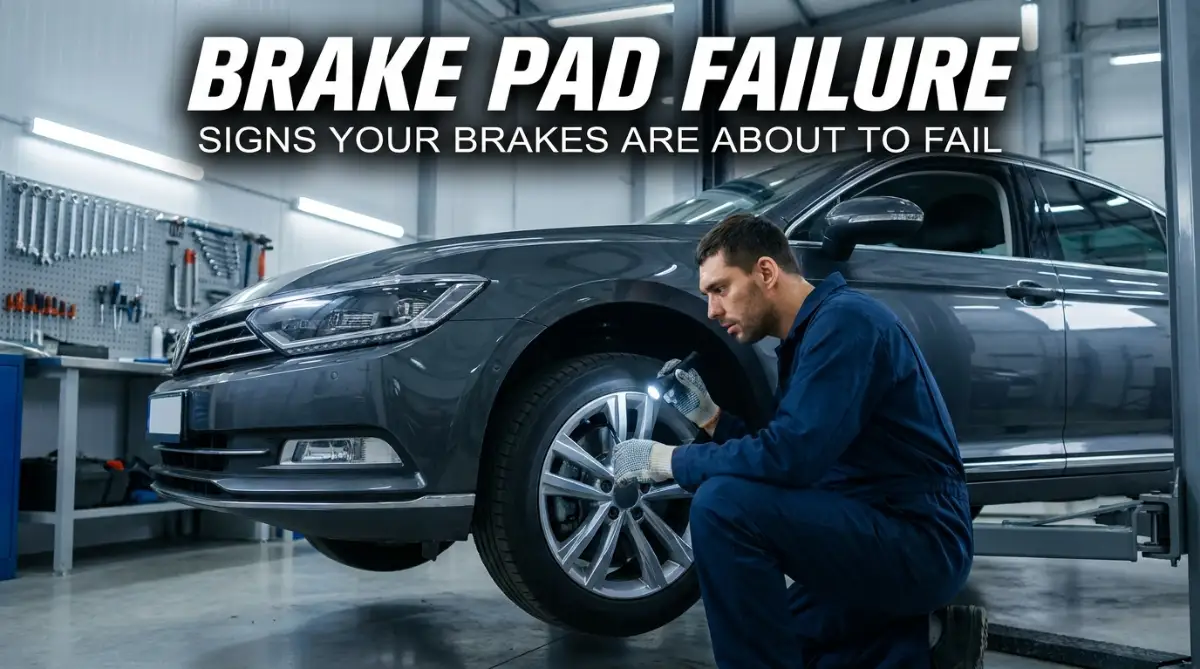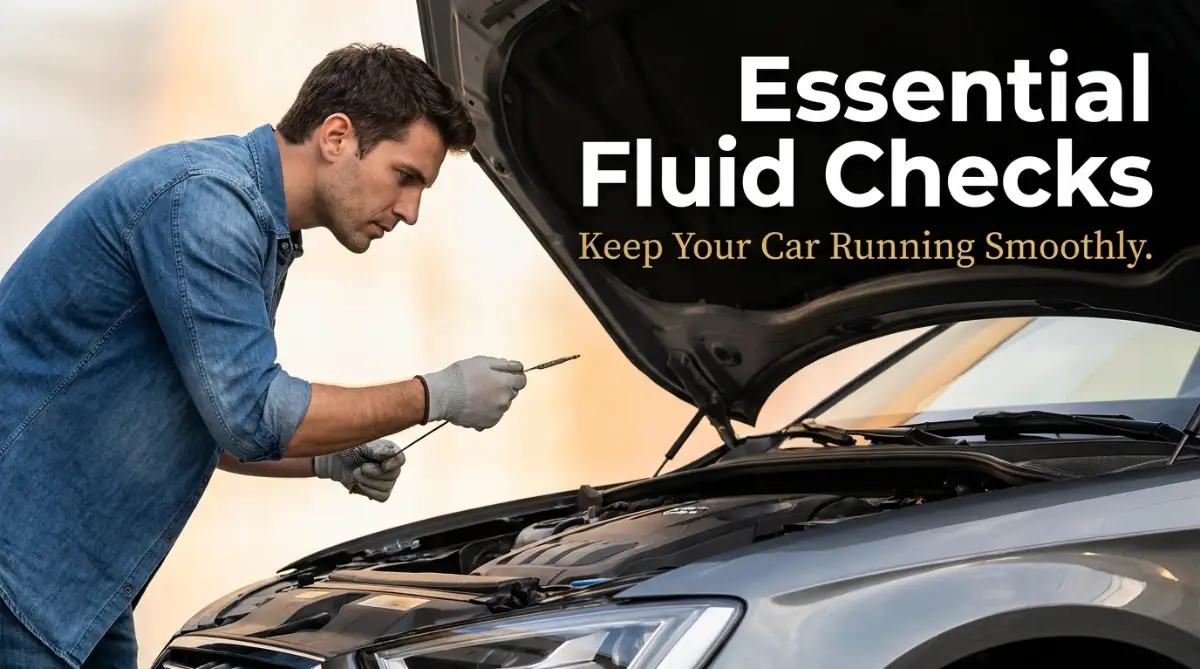
I ignored a tiny red dashboard light for three weeks because I was too intimidated to open my car's hood. That simple procrastination cost me a blown engine on the side of a busy highway and a massive tow truck bill. I realized the hard way that checking your car's fluids isn't advanced mechanics—it is just basic home maintenance. Let me show you exactly where to look under the hood so you can stop small leaks before they destroy your engine and your savings account.
Your 60-Second Under-the-Hood Guide (TL;DR)
- Engine Oil: Check when the engine is completely cool and turned off. The oil should look like clear honey, not dark black syrup.
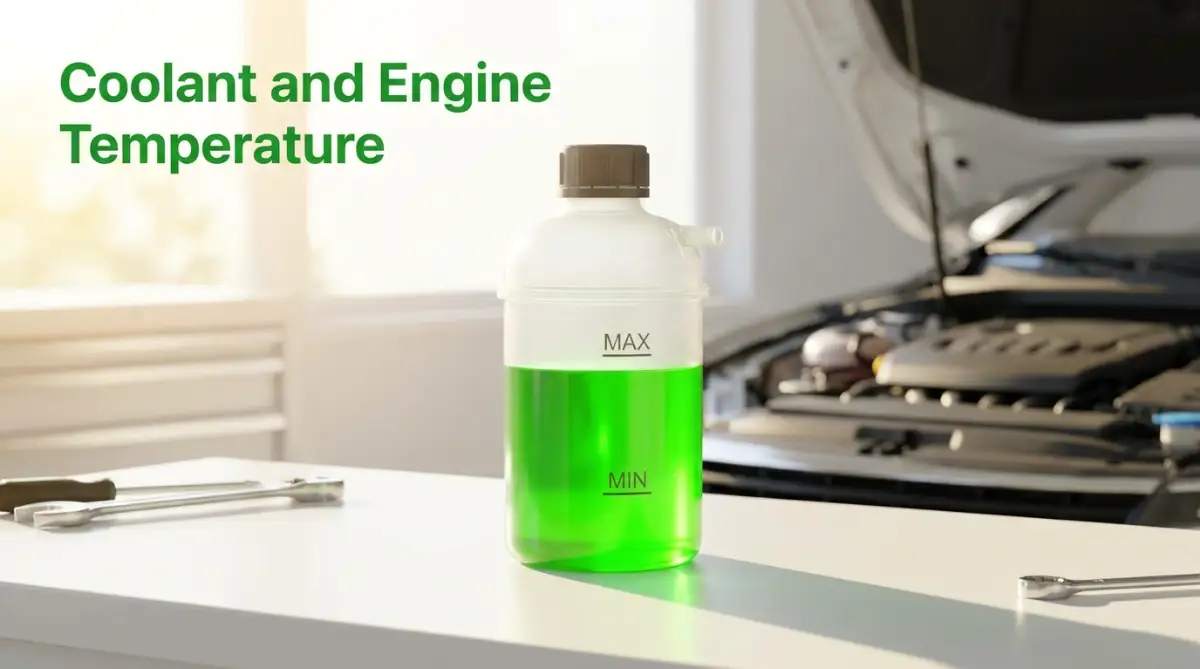
- Coolant (Antifreeze): Never open a hot radiator cap! Check the plastic reservoir tank instead to see if the green/pink fluid is above the MIN line.
- Transmission Fluid: Unlike motor oil, this must be checked while the engine is fully warmed up and running in "Park."
- Brake Fluid: If the fluid looks like dark soy sauce or has black particles floating in it, take your car to a mechanic immediately.
The Lifeblood of Your Engine: Checking the Motor Oil
The absolute most important fluid beneath your hood is your engine's motor oil. This thick, amber liquid has one major job: lubricating the hundreds of moving metal parts inside your engine block.
Without a clean layer of oil, the metal pistons and cylinders would grind directly against each other, creating extreme friction and heat. Within minutes, the metal would melt together, completely destroying your engine beyond repair.
Let us use a simple human joint analogy to understand this.
Think of your motor oil exactly like the natural cartilage and fluid inside your knees and elbows. If that natural padding wears away, your bones rub directly against each other, causing severe pain and structural damage.
Your engine oil acts exactly like that protective padding. Keeping your oil clean and at the correct level is the absolute foundation of basic car care.
Your Actionable Strategy for Checking Oil:
You must park your car on a completely flat, level surface and turn the engine off. Wait at least ten minutes for the hot oil to settle completely back down into the oil pan.
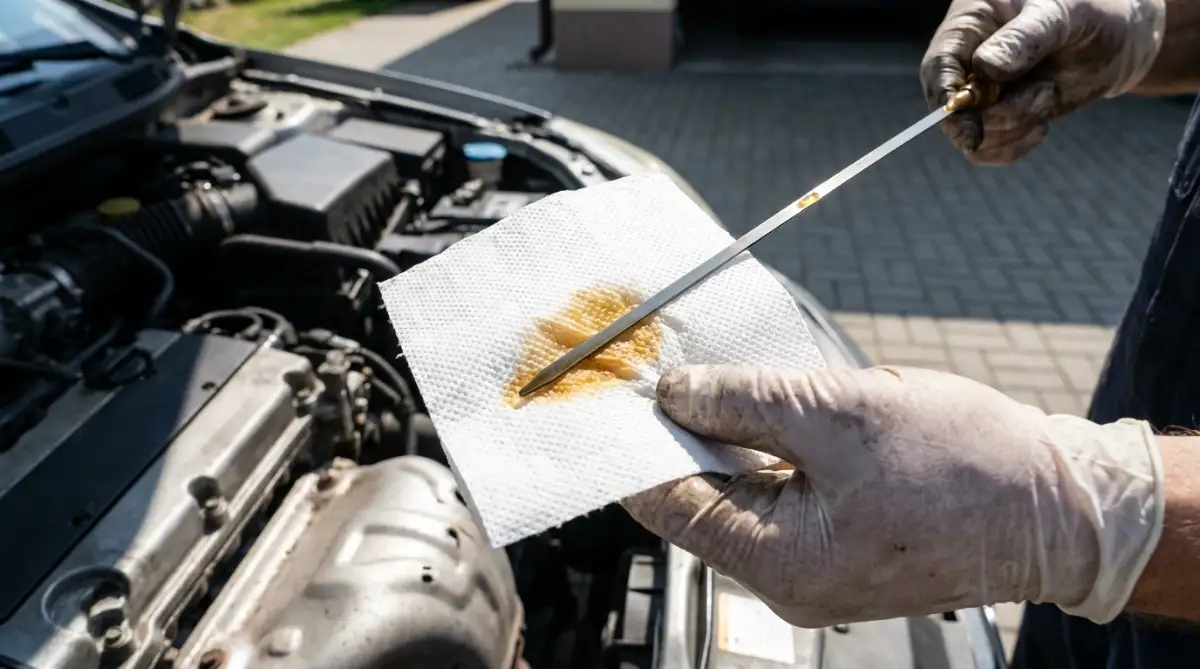
Open your hood, locate the brightly colored handle of the dipstick, and pull it straight out of its metal tube. Use a clean paper towel to wipe the oily tip completely clean, exposing the two small markings near the bottom.
These markings usually look like two tiny holes or the letters "MIN" and "MAX." Push the clean dipstick back into its tube until it clicks, then pull it out once more to read the level.
The oily line must sit comfortably between the two markings. If the oil is below the minimum line, you must add exactly one quart of the recommended oil today.
Pay close attention to the color of the oil on the towel. If it is a clear, honey-like amber, your oil is healthy and clean. But if it looks like thick, black syrup, it is highly contaminated with carbon and must be changed immediately.
Myth vs. Reality: The 3,000-Mile Rule
- The Myth: You must change your engine oil every 3,000 miles, or your engine will break.
- The Reality: Modern synthetic oils are incredibly durable. Most new cars can easily go 7,500 to 10,000 miles between oil changes. Always follow your specific owner’s manual, not the sticker the quick-lube shop puts on your windshield.
Keeping the Heat Away: Inspecting the Engine Coolant
While oil lubricates the engine, the coolant, also known as antifreeze, keeps your engine from suffering a fatal heatstroke. Your engine generates enough heat to melt its own metal structure, and the coolant's job is to carry that heat safely away to the radiator.
If your coolant level drops too low, your engine temperature gauge will rapidly climb into the red zone. This leads directly to warped cylinder heads and blown head gaskets, which are incredibly expensive to fix.
The Sweat Analogy of Car Cooling:
Think of your car's cooling system exactly like your own body's sweat system on a hot summer afternoon. Your body pumps water to the surface of your skin to evaporate and cool you down.
Your car pumps coolant through the hot engine block, carries the heat to the radiator, and uses the oncoming wind to cool the liquid down before sending it back in.
If you are still feeling a bit nervous about finding the right dipsticks and reservoir caps, watch this quick visual guide below. It shows you exactly where to look under your hood so you can check your fluids with complete confidence before reading the rest of our tips!
Your Actionable Strategy for Checking Coolant:
You must never, under any circumstances, open the metal radiator cap while the engine is hot. The cooling system is highly pressurized, and opening the cap on a hot engine will spray boiling water and scalding steam directly into your face, causing severe skin burns.
Instead, locate the transparent plastic reservoir bottle next to the radiator. This bottle has clear "MIN" and "MAX" lines molded into the side of the plastic.
Look at the fluid level through the plastic without opening the cap. If the bright green, pink, or orange liquid sits below the minimum line, wait until the engine is completely cold to add a fifty-fifty mix of distilled water and coolant.
Expert Insight:
Never use plain tap water to top off your coolant reservoir. Tap water contains minerals like calcium that will quickly deposit inside your radiator, creating blockages that stop the fluid flow and cause your engine to overheat anyway.
I once tried to save a little time by pouring regular garden hose water into my coolant tank during a hot summer road trip. A month later, my radiator was completely clogged with hard mineral buildup, and my car overheated right in the middle of heavy traffic. I quickly realized that spending five dollars on the correct premixed coolant at the auto parts store is the absolute cheapest insurance policy you can buy for your engine.
Maintaining Stopping Power: Evaluating Your Brake Fluid
You can have the most powerful engine in the world, but it means absolutely nothing if you cannot safely stop the vehicle. Your brakes operate on a highly specific hydraulic system, which relies on brake fluid to transmit the force of your foot directly to the brake pads.
When you press the brake pedal, you are pushing a piston that forces brake fluid down narrow metal lines to clamp the brake pads against the spinning wheels. If air or moisture gets into this closed system, your brake pedal will feel mushy, and your car will take much longer to stop.
The Balloon Analogy of Brake Systems:
Imagine squeezing a water-filled balloon inside your closed hand. The water cannot be compressed, so the pressure transfers perfectly to the other side of the balloon instantly.
But if that balloon is filled with air instead of water, squeezing it simply squishes the air, and absolutely no pressure transfers to the other side. Air in your brake lines acts exactly like that squishy balloon, destroying your stopping power.
Your Actionable Strategy for Checking Brake Fluid:
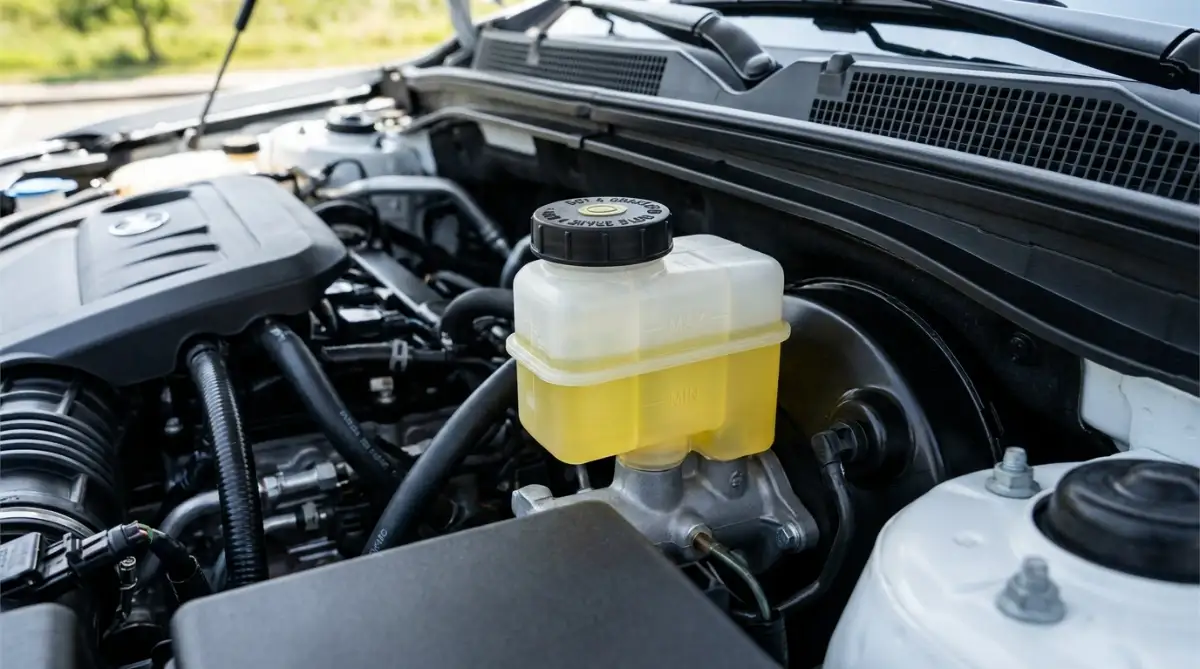
Locate the small, translucent plastic reservoir mounted on the driver's side firewall under your hood. Look through the side of the plastic to check the level against the molded "MIN" and "MAX" lines.
If the fluid is low, do not simply top it off and walk away. A low brake fluid level almost always means your brake pads are wearing thin, or you have a dangerous leak in your brake lines.
Take your car to a professional mechanic immediately for a brake inspection. Also, look closely at the color of the fluid through the plastic.
Clean brake fluid should look like light, clear white wine or pale yellow. If the fluid looks like dark soy sauce or has black floating particles, it has absorbed moisture and dirt. This contaminated fluid can boil under the high heat of braking, completely destroying your ability to stop on steep hills.
Advanced Secrets for Pro-Level Fluid Maintenance
Once you understand the basic process of checking your motor oil and coolant levels, we must look much deeper into your vehicle's mechanical health. Your car is not a single, isolated machine; it is a highly active collection of connected systems that must run in perfect harmony.
According to consumer safety alerts from the National Highway Traffic Safety Administration (NHTSA), mechanical failures caused by neglected maintenance are a major source of preventable road accidents [1]. You must learn to use these established maintenance frameworks to protect your family from sudden highway breakdowns.
Technical guidelines shared by the American Automobile Association (AAA) reveal that simple, regular fluid checks can prevent up to eighty percent of all unexpected engine failures. Knowing how to read your dashboard warnings is highly important before you take your family on a long road trip.
Many amateur car owners trust what they see on television instead of reading actual automotive guides. Just as relying on television leads to surprising Miranda rights misconceptions from TV dramas when dealing with real-world law, relying on simple dashboard warning lights leads to massive, sudden mechanical failures.
If you own an electric vehicle, you must also pay close attention to your daily energy management habits. Just as bad charging habits are silent charging habits that secretly degrade your EV battery lifespan, ignoring basic traditional fluids can destroy a standard combustion engine.
Let us explore the advanced, pro-level secrets you can use to build an unbreakable wall of protection around your vehicle's engine today.
The Secret to Checking Transmission Fluid Correctly
Your transmission is the complex gearbox that transfers the raw power of your engine directly to your wheels. It relies on transmission fluid to act as a lubricant, a cooling agent, and a hydraulic fluid to smoothly shift gears.
Checking your transmission fluid is significantly different from checking your motor oil. To get an accurate reading on your transmission dipstick, your engine must actually be running and fully warmed up.
Let us use a simple kitchen mixer analogy.
If you try to measure the thickness of cold butter sitting in a bowl, it is incredibly hard to judge. But if you turn the mixer on and let the butter soften under the heat, you can easily see if the consistency is correct.
Your Actionable Strategy:
Park your car on a completely flat, level surface and leave the engine idling in "Park" after a short drive. Open your hood, locate the transmission dipstick (which is usually located near the back of the engine and has a bright red handle), and pull it out.
Wipe the dipstick clean with a paper towel, push it all the way back into the tube, and pull it out once more. Look closely at the color of the fluid on the towel.
Healthy transmission fluid should be a bright, clear pink or cherry red color. If the fluid looks like dark, muddy brown or smells like burnt toast, your transmission gears are grinding against each other.
Take your vehicle to a professional mechanic immediately to have the transmission flushed. Ignoring burnt transmission fluid is a highly expensive mistake that can easily destroy your entire gearbox.
Restoring Power Steering and Windshield Washer Levels
If your vehicle has a traditional hydraulic steering system, you have a small pump beneath your hood that uses power steering fluid to help you turn the heavy steering wheel easily. If this fluid level drops too low, you will hear a loud, annoying whining noise every time you turn the wheel.
You will also find that the steering wheel becomes incredibly heavy and difficult to turn, especially when parking. Checking this reservoir is incredibly simple, as most modern cars use a translucent plastic bottle with clear markings.
Simply look through the side of the plastic to check the level against the molded "MIN" and "MAX" lines. If you need to add fluid, make sure you use the exact type recommended in your owner's manual.
The Windshield Washer Fluid Mistake:
While it might seem unimportant, your windshield washer fluid is your primary line of defense against poor visibility on the road. Many homeowners make the terrible mistake of putting plain tap water into this reservoir during the summer.
When winter arrives, that plain tap water will instantly freeze inside the plastic bottle. As water freezes, it expands violently, cracking the plastic reservoir and destroying the electric pump.
Always use a high-quality, alcohol-based windshield washer fluid that is rated for freezing temperatures. This simple, cheap liquid keeps your glass perfectly clean and protects your washer pump from getting destroyed by ice.
My $10 Glove Box Survival Kit:
Whenever I buy a used car, I immediately put a roll of blue shop towels, a cheap plastic funnel, and a bright LED headlamp in the glove box. If you ever have to top off your oil at a dark gas station at 9 PM, that small funnel will stop you from spilling oil all over a hot exhaust pipe.

Silent Mechanical Traps That Will Destroy Your Car
Even highly intelligent drivers make terrible choices when they are trying to maintain their own vehicles on a tight budget. The heavy stress of daily expenses often makes us ignore minor leaks or use cheap, incorrect fluids.
If you fall into these common maintenance traps, your car's engine will eventually experience a sudden, catastrophic failure. This frustrating cycle can easily ruin your weekend and destroy your personal finances.
Here is exactly what you must avoid to keep your family safe and your vehicle running smoothly.
The "Fluid Mixing" Disaster
One of the most dangerous mistakes beginners make is assuming that all fluids of the same color are identical. They might see a bottle of pink coolant in their garage and pour it into a radiator that is already filled with green coolant.
This is a massive chemical mistake that will destroy your cooling system. Different car manufacturers use completely different chemical formulas for their fluids.
When you mix two incompatible chemicals together inside a hot engine, they can experience a violent chemical reaction. The liquid can actually curdle and turn into a thick, muddy gel.
This thick gel will instantly block the narrow passages inside your radiator, stopping all fluid flow. Your engine will overheat within minutes, leaving you with a blown head gasket and a massive repair bill.
Ignoring Small Spots on Your Driveway
Many drivers notice a small, dark spot of oil on their garage floor or driveway and simply ignore it. They think, "It is just a tiny drop, I will worry about it during my next scheduled oil change."
This is a highly dangerous form of procrastination. A small spot of oil on the ground means a rubber seal or a gasket under your engine is actively failing.
As you drive at high speeds on the highway, your engine oil is under extreme pressure. That tiny, slow leak can suddenly blow wide open under high pressure, spraying hot oil all over your hot engine.
This can cause your engine to lose all of its oil in a matter of seconds, leading to immediate engine seizure. It can also spray oil onto hot exhaust pipes, starting a catastrophic engine fire on the highway.
Always trace the source of any leak immediately and fix the cheap rubber seals before they cause a massive financial disaster.
Your Under-the-Hood Checklist for Tomorrow
Checking your vehicle's fluids does not have to be a scary, mysterious, or overwhelming experience. You now hold the exact same technical knowledge that professional mechanics use to inspect vehicles at local garages.
By taking a few short minutes to check your oil, coolant, and brake fluid, you completely remove the fear of a sudden road emergency. You are no longer crossing your fingers and hoping your car decides to work today.
Instead, you are confidently directing your own vehicle's health and protecting your family's safety on the road. This simple change in your weekly routine gives you incredible power over your entire automotive future.
Your Weekly Maintenance Checklist:
- Check Your Motor Oil: Pull the dipstick tomorrow morning before starting the engine and verify that the oil is honey-amber and at the correct level.
- Inspect the Coolant Level: Look at the plastic reservoir tank while the engine is cold to ensure the bright fluid sits comfortably between the lines.
- Monitor Your Brake Fluid: Check the translucent plastic container on your firewall and make sure the liquid is pale yellow, not dark brown.
- Top Off Your Washer Fluid: Fill your reservoir with a high-quality, freeze-rated washer fluid to guarantee perfect visibility on the highway.
Your car is a massive financial investment that keeps your family mobile and safe. Do not let basic procrastination or fear of opening the hood force you into making incredibly expensive repair mistakes.
Read your owner's manual slowly, verify your fluid levels weekly, and take complete, fearless control of your vehicle's safety starting right now.
Taking care of your car does not require a mechanic's degree, and I am living proof of that fact. Once I finally stopped being afraid of getting my hands a little dirty, driving became so much more relaxing and worry-free. Grab a simple paper towel, pop that hood open today, and promise yourself that you will never let an easily avoidable maintenance mistake ruin your family road trips again!
Common Questions About Checking Your Car's Under-the-Hood Fluids
How often should I check my engine's motor oil and coolant levels?
You should ideally check your engine oil and coolant levels at least once a month or every 1,000 miles to catch minor issues before they turn into major road emergencies. Keeping these fluid levels consistent prevents extreme friction and engine overheating.
Why shouldn't I use plain tap water to top off my car's coolant reservoir?
Plain tap water contains minerals like calcium that will quickly deposit inside your radiator, creating blockages that stop fluid flow and cause your engine to overheat. Always use a fifty-fifty mix of distilled water and the recommended coolant instead.
What does it mean if my brake fluid looks dark brown or black?
Dark brown or black brake fluid means the fluid has absorbed moisture and dirt over time, which can cause it to boil under heavy braking and destroy your stopping power. You should take your car to a mechanic immediately to flush the fluid and inspect your braking system.
How is checking transmission fluid different from checking motor oil?
Unlike motor oil, which requires the engine to be turned off and cool, checking your transmission fluid accurately requires the engine to be running and fully warmed up in "Park." This ensures the fluid is warm and expanded so you can get a true reading on the dipstick.
What happens if I mix two different types of coolant in my car's radiator?
Mixing incompatible coolant formulas can cause a violent chemical reaction that turns the liquid into a thick, muddy gel. This gel instantly blocks the narrow passages inside your radiator, leading to rapid engine overheating and expensive repair bills.
Disclaimer: The information provided in this article is for educational and general informational purposes only and does not constitute professional automotive repair or mechanical advice. Car models, engine designs, and fluid requirements vary heavily by manufacturer, brand, and vehicle type. Always consult with a certified automotive technician or refer directly to your vehicle's official owner's manual regarding the exact specifications, fluid capacities, and safety requirements of your personal automobile.