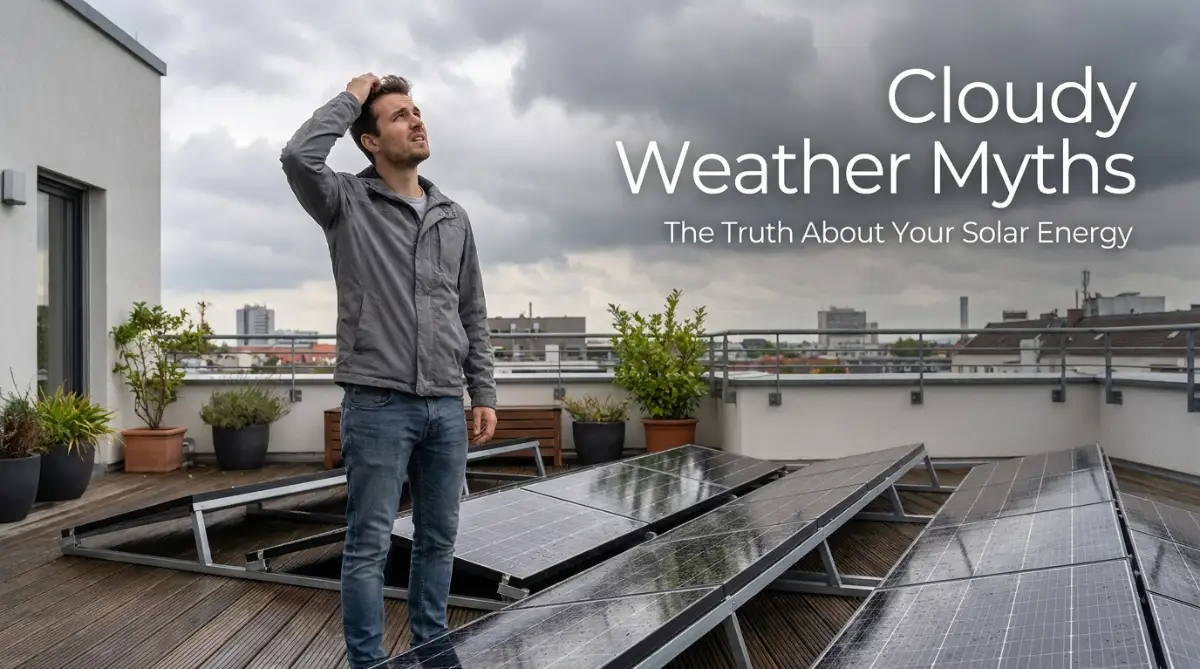
I clearly remember the sick feeling in my stomach during the first major rainstorm after I installed my rooftop panels. I stood by my kitchen window, watching thick, dark grey clouds completely block out the sun. I had just spent a massive amount of my family's savings to become energy independent. My heart raced as I thought about my expensive equipment sitting uselessly on the roof while my house sucked expensive electricity from the grid. I honestly believed I made a terrible financial mistake by not living in a perfect desert climate.
Every single day, thousands of homeowners feel this exact same crushing anxiety when they check the local weather forecast. You want to save the environment and lower your monthly bills, but the fear of bad weather paralyzes your decision-making. People stare at their roofs on overcast days, fully convinced their expensive system is doing absolutely nothing but collecting dust. You start arguing with your spouse about leaving the lights on, terrified that the lack of direct sunshine is draining your bank account.
This constant weather anxiety completely ruins the joy and peace of mind that renewable energy is supposed to bring. You spend hours reading confusing forums where angry people claim solar only works in places like Arizona or California. It feels incredibly unfair that something as simple as a passing rain cloud could supposedly ruin your entire investment strategy. Neighbors who refused to go solar walk by your house and give you that smug, judgmental look when the sky turns gray.
The saddest part is that this fear is built on a massive, outdated misunderstanding of how light actually works. The internet is flooded with terrible advice from people who do not understand basic modern physics. I spent weeks terrifying myself over a problem that completely vanished once I actually looked at my own daily production numbers. Let us completely destroy these heavy weather myths so you can finally stop worrying about the clouds.
Shattering the Direct Sunlight Illusion
To fix this massive misunderstanding, we have to look closely at how a solar panel actually digests light. The biggest myth in the entire industry is that your roof needs hot, perfectly direct sunshine to create electricity. Many people imagine solar panels working exactly like a magnifying glass trying to burn a leaf.
If the bright sun hides behind a thick cloud, people assume the system shuts off completely, like flipping a light switch. This is mathematically and scientifically false. Modern solar panels do not require direct heat; they only require the presence of visible light particles, called photons.
Even on the darkest, dreariest winter days, you can still clearly see your car parked in the driveway. The fact that you can see your surroundings means that millions of photons are successfully penetrating those dark clouds. Your panels happily absorb this scattered light, completely ignoring the fact that there are no sharp shadows on the ground.
Understanding the Magic of Diffuse Light
Scientists use a specific term for light that bounces off clouds and atmospheric moisture: diffuse light. Think of it like putting a thin, white bedsheet over a very bright flashlight in a dark room. The sharp beam of light disappears, but the entire room still fills up with a soft, glowing illumination.
Modern solar cells are specifically engineered with anti-reflective glass to capture this bouncing, diffuse light from every possible angle. They do not care if the light hits them straight on or bounces off a raincloud first. In fact, if the clouds are bright white and fluffy, they can actually act like giant magnifying mirrors in the sky.
This creates a strange phenomenon called the "edge-of-cloud effect," where your panels actually produce more power than on a clear day. The sun reflects intensely off the bright white edges of passing clouds, sending a massive spike of concentrated energy straight to your roof.
I remember checking my monitoring app during a partially cloudy afternoon, expecting terrible numbers. I was absolutely shocked to see my system producing ten percent more power than it did on a perfectly clear, hot Tuesday. That single realization completely changed how I look at passing weather systems.
The Hidden Benefit of Heavy Rainstorms
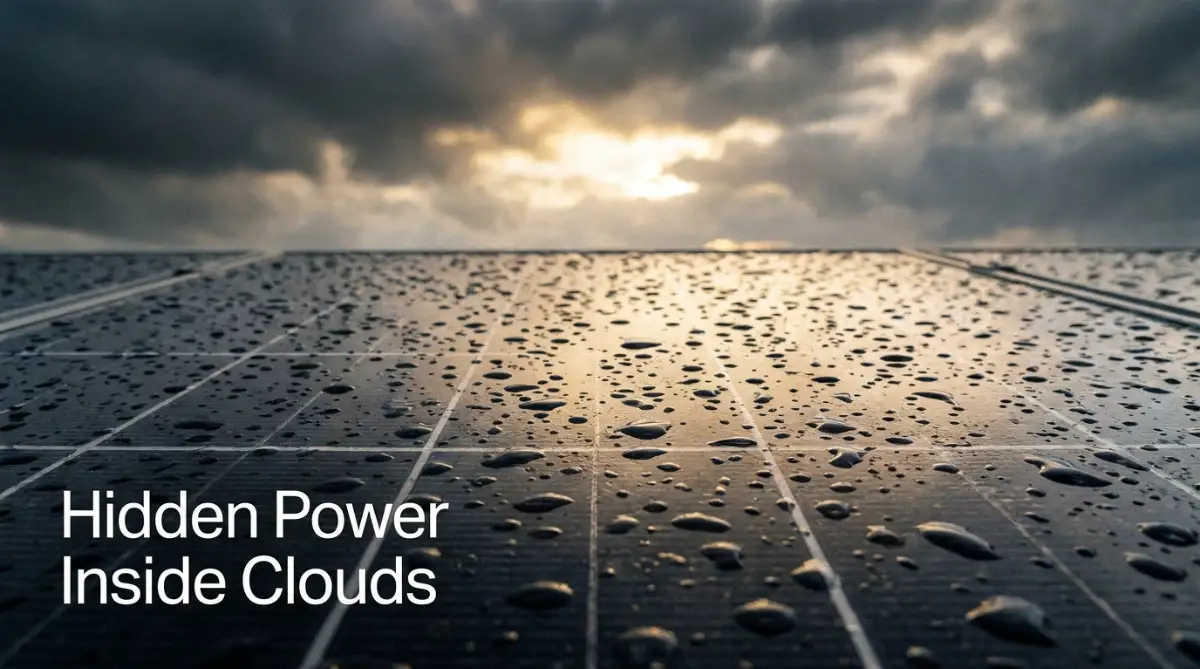
Another massive fear homeowners have is that heavy rain will permanently damage or block their panels. People often assume that standing water on the glass will completely stop the energy production process. This fear usually comes from the basic human instinct that water and electricity are dangerous enemies.
In reality, a heavy rainstorm is actually one of the best things that can possibly happen to your rooftop investment. Over several weeks, a thick layer of sticky pollen, dust, and bird droppings naturally builds up on your glass panels. This dirty layer acts exactly like a heavy blanket, quietly blocking the sun and lowering your daily power output.
Here is exactly how modern weather testing proves your panels are completely safe in extreme storms:
When a heavy thunderstorm rolls through your neighborhood, it acts as a massive, completely free car wash for your roof. The heavy rain violently scrubs the dirt away, leaving the glass absolutely spotless and perfectly clear. The very next day, your freshly cleaned panels will instantly jump back to peak operating efficiency.
You actually want regular rainstorms to hit your house to keep your maintenance costs at absolute zero. If you live in a totally dry desert, you actually have to pay professionals to climb on your roof and wash the dust off manually.
Why Heat is Actually the Real Enemy
This is the most shocking fact that completely breaks the brains of most new solar owners. Everyone assumes that a blisteringly hot, one-hundred-degree summer day is the absolute perfect environment for making electricity. It sounds entirely logical; hot sun equals massive energy, right?
The exact opposite is true. Solar panels are highly sensitive electronic devices, exactly like the smartphone in your pocket or your laptop. If you leave your smartphone sitting in the direct summer sun, it quickly overheats, slows down, and eventually shuts off completely to protect itself.
Solar panels suffer from this exact same overheating problem, which engineers call the "temperature coefficient." As the physical temperature of the black glass rises past a certain point, the internal electrical resistance heavily increases. This invisible resistance makes it much harder for the electricity to flow through the wires into your house.
This means a crisp, freezing cold winter day with clear skies will actually produce significantly more power than a boiling hot July afternoon. The cold winter air naturally cools the internal wiring, allowing the electricity to flow with absolutely zero resistance. People living in snowy, northern climates often see their absolute best production numbers in the dead of winter.
Advanced Strategies to Maximize Low-Light Power
Once you stop worrying about a few rain clouds, you can actively optimize your system to squeeze out every single drop of available energy. Many homeowners make the mistake of just installing the panels and completely forgetting about them for ten years. You need to treat your roof exactly like a high-performance garden; it requires active monitoring and smart digital management to yield the best harvest.
The most powerful tool in your arsenal is actually sitting right in your pocket. Every modern solar installation comes with a smart monitoring application you can download to your smartphone. You must actively train yourself to check this application on a weekly basis, not just when the weather looks perfect.
By analyzing the data during overcast weeks, you will learn your home's unique energy baseline. If you notice a sudden, massive drop in power on a mildly cloudy day, you might have a physical hardware issue, not a weather problem. Reviewing the official homeowner's guide to solar from the US Department of Energy proves that regular system monitoring catches expensive inverter failures months before you actually notice them on your electric bill.
This type of proactive digital monitoring is exactly like finding simple ways to spot and avoid overheating issues with your expensive gaming electronics. If you wait until the system completely shuts down to check the app, you have already lost hundreds of dollars in free electricity.
You also need to become incredibly smart about when you actually use your heavy household appliances. Do not turn on your electric dryer, dishwasher, and pool pump all at the exact same time during a dark rainstorm. Wait until the clouds clear and the sun hits the "edge-of-cloud" peak to run those massive power-draining machines.
Mastering the Art of Net Metering
To truly beat the cloudy weather blues, you have to completely master a financial concept called "net metering." This is a special billing agreement you sign with your local utility company when your panels are first installed. Think of net metering as a magical, invisible battery that stores your extra sunshine for a rainy day.
During the incredibly long, clear days of summer, your panels will produce way more electricity than your house can possibly use. Instead of letting that extra power go to waste, your system automatically pushes it backward into the public power grid. The utility company actually tracks this extra power and gives you a digital "credit" on your account for every extra kilowatt you generate.
When a massive, week-long rainstorm finally hits in November, your panels will naturally produce less energy than your house needs. This is the exact moment you cash in all those digital credits you saved up during the sunny summer months. You pull electricity back from the public grid completely for free, effectively making your winter heating bill zero.
If you do not fully understand how your specific utility company calculates these credits, you are literally throwing cash in the trash. It is exactly like avoiding dangerous password management mistakes that leave your digital identity exposed; you must actively secure your assets to benefit from them. Call your power company today and ask for a detailed breakdown of your net metering bank.

Destructive Habits That Actually Ruin Solar Production
Watching a homeowner accidentally destroy their own solar investment is incredibly painful because it is almost always caused by terrible internet advice. People read a single forum post from 2012 and immediately start doing things that actively void their expensive hardware warranties. These mistakes usually happen when people try to forcefully "help" their panels perform better during bad weather.
The absolute most destructive mistake you can make is climbing on your roof to physically scrub the panels with harsh chemicals. Some homeowners get obsessed with keeping their glass perfectly clean, assuming dirt is blocking the diffuse light from the clouds. They grab a bucket of standard dish soap and a rough sponge, thinking they are doing the system a massive favor.
Standard household soaps leave a thick, sticky chemical film on the anti-reflective glass that actually attracts more dirt than before. Even worse, using a rough sponge will create millions of microscopic scratches across the surface of the panel. These tiny scratches permanently scatter the incoming light, completely destroying the panel's ability to absorb diffuse energy on a cloudy day.
If you physically scratch the glass, the manufacturer will instantly void your twenty-five-year warranty. You have to treat that surface with absolute respect, exactly like knowing how to rescue your lost files before a complete system crash. One rash, uneducated decision can cause permanent, irreversible damage to your most valuable asset.
The Danger of Ignoring Surrounding Trees
Another massive trap is completely ignoring the slow, silent growth of the massive oak trees sitting in your front yard. When your panels were first installed five years ago, the installation team carefully calculated the perfect angle to avoid all the tree shadows. However, trees grow every single spring, pushing new branches directly into the path of the sun.
When a dark cloud rolls over, your panels are already struggling slightly to pull in diffuse light. If a newly grown tree branch adds a hard, dark shadow on top of that cloud cover, the panel will essentially shut off. Exploring the physics of solar shading documented by the US Department of Energy explains how even a tiny shadow on one corner can drastically kill the output of the entire array.
Homeowners often refuse to trim their beautiful trees because they do not want to spend money on an arborist. This stubborn refusal acts exactly like overlooked habits that quietly destroy your smartphone battery lifespan. You are slowly bleeding hundreds of dollars in lost power generation simply to save a few dollars on basic yard maintenance.
You must walk outside every single spring and actively look for any new branches casting hard shadows on your roof. Trimming those branches back opens up the sky, allowing your system to grab every available drop of diffuse light during the rainy season.
Falling for the "Cloud Bumper" Gadget Scam
Because weather anxiety is so incredibly common, shady companies have started selling fake gadgets to nervous homeowners. You might see online ads for special "solar mirrors" or "cloud booster sprays" that promise to double your energy output during a storm. These companies prey entirely on your fear of missing out on energy production.
Let me be incredibly clear: there is absolutely no spray-on chemical or plastic mirror you can buy on the internet that improves modern solar cells. The glass is already engineered in a billion-dollar laboratory to be as efficient as physically possible. Spraying a random internet chemical on your roof is a guaranteed way to ruin the factory coating and void your insurance.
Falling for these expensive, useless gadgets is just like the silent DIY solar mistakes that destroy your home insurance payout. Stop trying to outsmart teams of highly trained electrical engineers. Trust the physical hardware you already paid for, and let the natural weather systems do their job.
A Clear Mindset for Energy Independence
Going solar is one of the most powerful, financially intelligent decisions you will ever make for your family's future. The initial fear of cloudy weather is completely natural, but it is built on old myths that simply do not apply to modern technology. When you finally understand that your panels are actively working through the clouds, rain, and snow, the heavy anxiety completely vanishes.