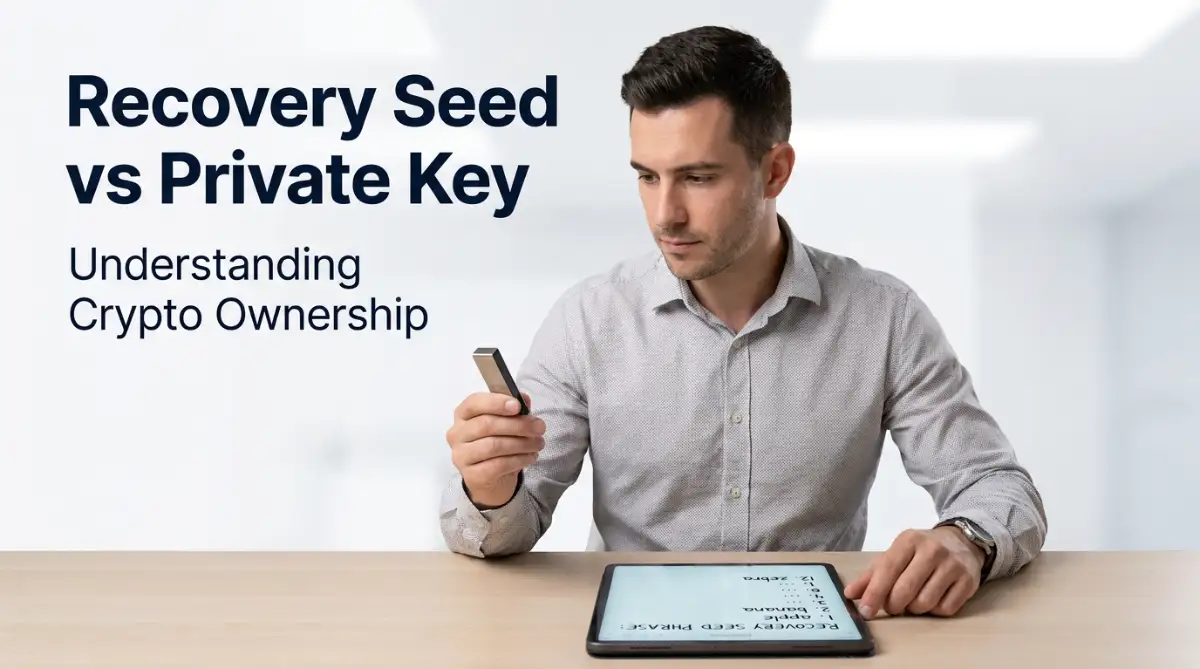
Recovery Seed Phrase vs. Private Key: What Every Crypto Owner Must Know
Plugging in your hardware wallet only to see a blank screen or a factory reset error is every crypto investor's worst nightmare. Most beginners panic because they think their coins are physically trapped inside that piece of plastic, but on the blockchain, your money never leaves the digital ledger. In this guide, I will show you the real difference between your master recovery seed and individual private keys, how to restore a wiped wallet in minutes, and how to bulletproof your offline backups against fire, water, and online thieves.
📌 What Every Crypto Holder Must Know About Keys:
-
Your coins live on the chain: Hardware wallets do not store actual coins; they store the private keys that mathematically unlock your coins on the public ledger.
-
The seed phrase is your true bank: If your hardware device breaks or gets lost, entering your 12 or 24 words into a new device restores 100% of your funds.
-
Never go digital with seed words: Storing recovery words in cloud notes, password managers, or camera photos invites automated scraper bots to steal your funds.
-
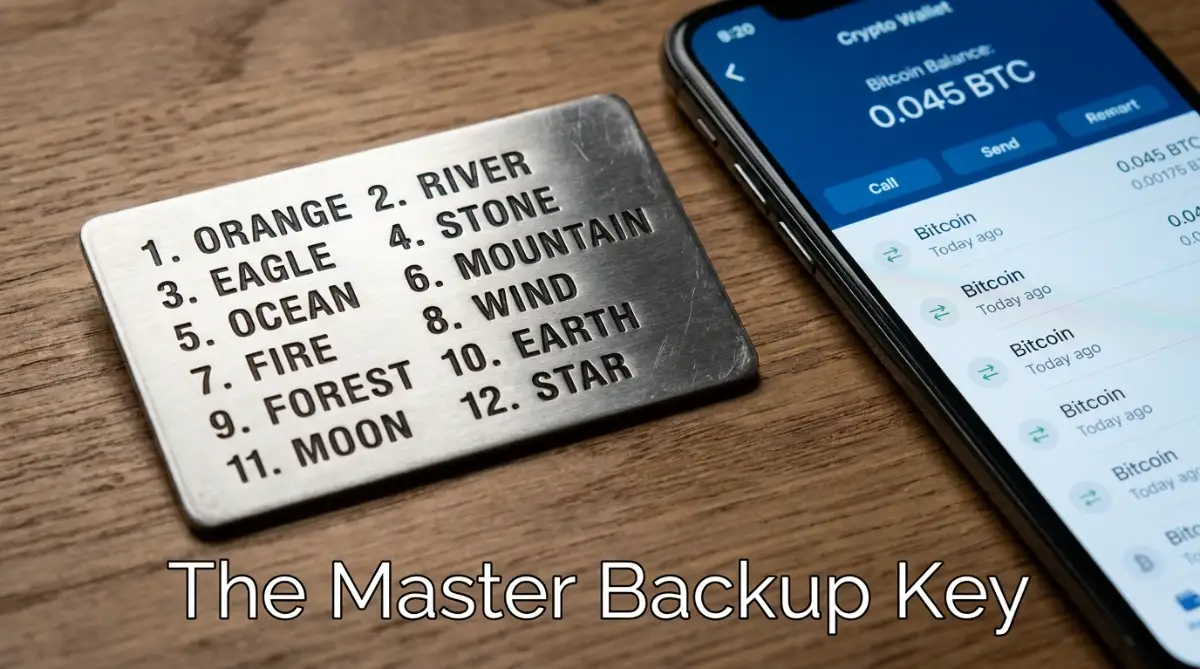
Stamp it in steel: Paper burns and rots; stamping your master seed words into stainless steel creates an indestructible analog backup that lasts for decades.
Decoding the Blueprint of Blockchain Ownership
To completely protect your digital portfolio from permanent loss, we have to look past the shiny apps and examine the raw mathematics running underneath. When most people talk about owning cryptocurrency, they picture digital coins sitting inside a virtual pocket, much like a PayPal balance or a bank account app.
This is a very comfortable, but entirely incorrect, mental picture.
Your actual cryptocurrency coins never leave the public blockchain ledger. They do not live on your phone, and they do not live inside your USB hardware wallet.
What you actually own are cryptographic keys. These keys give you mathematical permission to move specific coins around on that public ledger.
If you lose control of those keys, you lose absolute ownership of the assets forever, regardless of how many coins you originally purchased. This is the ultimate definition of self-custody.
Let us break down the two most important tools in this system: the recovery seed phrase and the private key. Most beginners use these terms interchangeably, which is a massive and potentially devastating mistake.
The Master Blueprint: Understanding the Recovery Seed
Let us start with the recovery seed, often called a seed phrase or a mnemonic phrase. When you set up a brand-new software or hardware wallet for the very first time, the device generates a sequence of twelve to twenty-four random English words.
This list of words is your recovery seed.
Think of this recovery seed not as your actual key, but as the master blueprint or the factory machine used to build all your keys. You can lose your phone, smash your hardware wallet with a hammer, or drop your laptop into the ocean, and your funds are still completely safe as long as you have that written list of words.
If disaster strikes, you simply buy a brand-new device, type those exact words into the setup screen in the exact same order, and the machine rebuilds your entire digital wallet from scratch. Every single account, every transaction history, and every coin balance magically reappears before your eyes.
I actually dropped my very first hardware wallet into a swimming pool during a family vacation years ago. Because I had my twelve-word recovery seed safely stamped into a small piece of stainless steel hidden in my basement, I bought a replacement wallet the next day, typed the words in, and recovered every single Satoshi without losing a single cent. It felt like absolute magic, but it was just clean, brilliant mathematics.
🎬 Visual Explainer: Seed Phrases vs. Private Keys in Plain English
If you are still trying to picture how a twelve-word seed phrase connects to individual private keys on the blockchain, watch this clean, animated breakdown from CoinGecko. They illustrate the exact visual difference between your master recovery phrase and your daily transaction keys in under four minutes:
Now that you have seen the visual blueprint, let us look at the individual working tools built from that master phrase: your private keys.
The Working Tool: What is a Private Key?
If the recovery seed is the master factory machine, the private key is the individual working tool built inside that factory. Every single cryptocurrency address you own—whether it is for Bitcoin, Ethereum, or Solana—has its own unique private key.
A private key is a massive, incredibly long string of letters and numbers that proves you are the absolute master of that specific address.
When you want to send funds to another person, your wallet uses your private key to sign a cryptographic message. This digital signature tells the global blockchain network, "Yes, the owner of this address approved this transfer."
You almost never see your raw private keys when using modern wallets because the software keeps them safely hidden behind the scenes. Instead, the software derives all your private keys automatically using your recovery seed as the master password.
If your recovery seed is the master key ring, your private keys are the individual metal keys hanging on that ring that open specific doors.
The Core Difference That Saves Your Portfolio
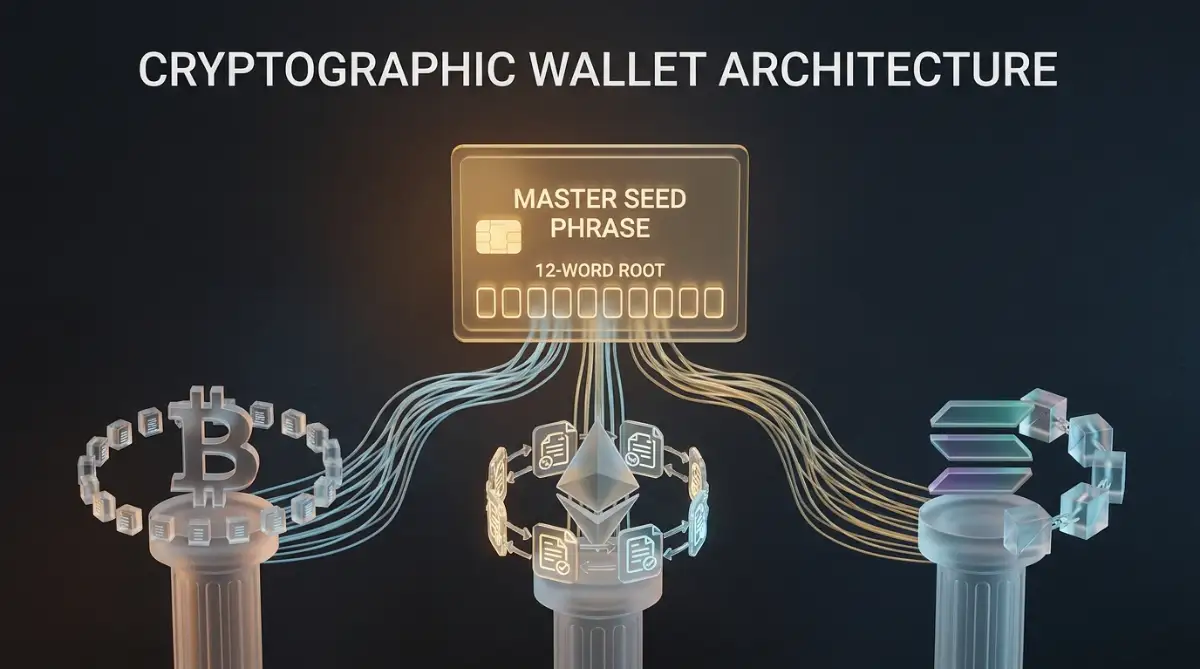
Now that we know what both items are, let us highlight the exact, critical difference between them. The recovery seed is hierarchical and multi-chain; it creates and manages a whole universe of addresses across different blockchains.
A private key is singular, specific, and tied strictly to one single address or account.
If you write down a twenty-four-word recovery seed, you do not need to write down anything else when you create new accounts. Even if you generate fifty different Ethereum addresses inside that same wallet, your original recovery seed will automatically recover every single one of them.
However, if you export just one private key from an account, it will only ever recover that specific account. It knows nothing about your other addresses or your different coin types.
Understanding this distinction protects you from dangerous backup habits. Many beginners think they need to write down dozens of different private keys every time they make a new transaction.
In reality, securing your master recovery seed properly covers your entire digital footprint.
🔐 Technical Breakdown: Master Seed Phrase vs. Individual Private Key
My Developer Rule: Think of your seed phrase as the master key to an entire apartment building, while a private key only unlocks room 302. If you leak your seed phrase, you lose every room in the building. Never share either, but guard your seed phrase with your life.
The Danger of Exposing Your Seeds
Because the recovery seed is the master blueprint that unlocks everything you own, exposing it to the open internet is a complete disaster. If a malicious actor gets their hands on your recovery seed words, they do not need your physical hardware device to steal your wealth.
They can simply type your twelve words into any wallet app on their own laptop anywhere in the world, and your entire portfolio will instantly drain into their control.
This is why hardware wallet manufacturers constantly scream a single golden rule: Never type your recovery seed into a computer keyboard, a smartphone notes app, or a website.
You must write it down manually with a pen on a physical piece of paper, or stamp it into a metal backup plate. Keeping it entirely offline protects it from keyloggers, malware, and remote hackers lurking on the web.
I once watched a friend take a quick photo of his new recovery seed phrase with his iPhone so he wouldn't lose it before getting home. That photo automatically synced to his cloud photo storage account, which was later compromised by a simple phishing link. Within hours, his entire crypto savings account was completely wiped out. He learned the hard way that convenience is the absolute enemy of security.
Self-Custody Versus Exchange Custody
We cannot talk about private keys without addressing the fundamental philosophy of where you store your funds. When you keep your coins on a massive centralized trading exchange like Coinbase or Binance, you do not actually own your private keys.
The exchange holds the private keys in their massive corporate vaults, and they simply give you a username and a password to log into their website dashboard.
This is known as custodial holding. It feels very safe and convenient because if you forget your password, you can just click a button to reset it via email.
However, it violates the core rule of cryptocurrency: "Not your keys, not your coins." If the exchange goes bankrupt, gets hacked, or freezes your account due to sudden regulatory changes, you completely lose access to your money.
When you move your assets into a personal self-custody wallet, you take full possession of your private keys and your recovery seed. You become your own bank.
This grants you absolute financial sovereignty, but it also places one hundred percent of the safety responsibility squarely on your own shoulders. If you mess up your backups, nobody can rescue you.
Advanced Safeguards for Your Digital Assets
Now that you understand the foundational difference between your recovery seed and individual private keys, we need to talk about next-level defense strategies. Owning crypto independently means you are entirely responsible for your own safety, which can feel daunting when you read about online hacks.
The smartest investors do not rely on a single sheet of paper hidden in a desk drawer. They build multi-layered security protocols that withstand physical disasters, technical failures, and human error.
Let us explore the professional-grade secrets used by cold storage experts to ensure their digital wealth remains completely untouched for decades.