Free SSL vs. Paid SSL: Do You Really Need to Buy a Certificate?
Web hosting companies love terrifying new bloggers into believing that free security certificates are cheap toys that will leave their sites open to hackers. They push flashy sales packages charging three hundred dollars a year for a commercial badge that performs the exact same mathematical job as a free alternative. In this guide, I will show you why 256-bit encryption math is identical whether you pay zero dollars or five hundred dollars, how automated Let's Encrypt certificates protect your search rankings, and why you should never waste money on premium SSL upsells.
📌 What Website Owners Must Know About SSL Certificates:
-
The math is identical: Free certificates from Let's Encrypt use the exact same 256-bit encryption as paid options charging hundreds per year.
-
Google treats them equally: Search engines only check for a valid HTTPS connection; paid certificates provide zero extra SEO ranking advantages.
-
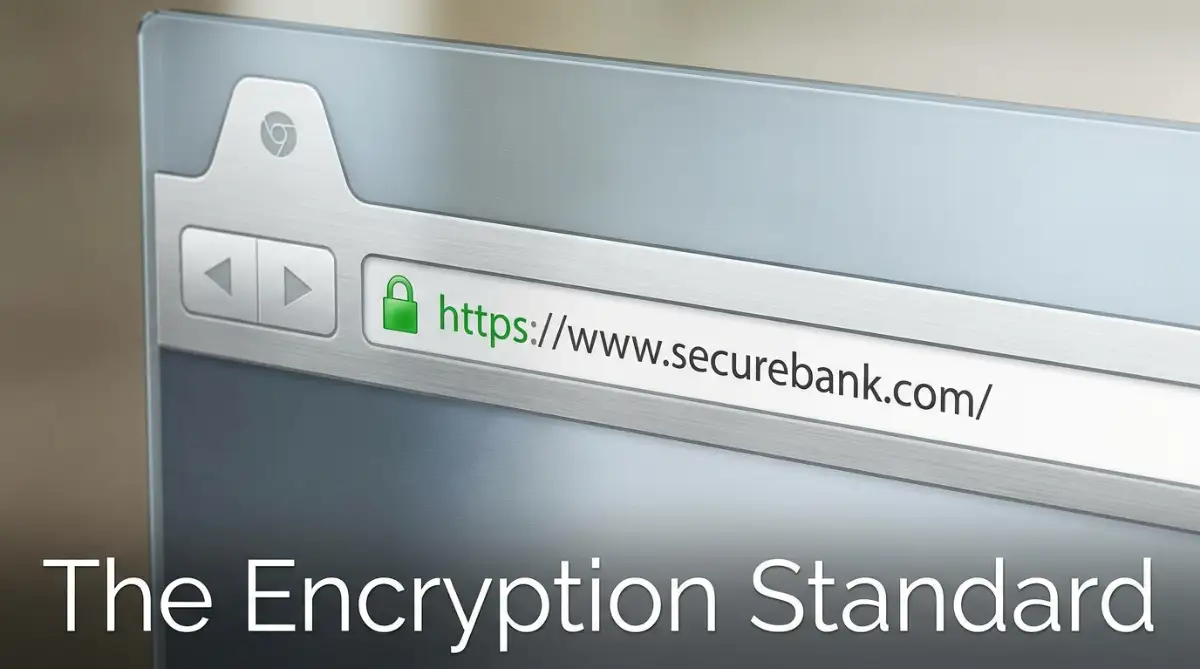
The green bar is dead: Browsers no longer display company names for expensive EV certificates; free and paid options look identical to your visitors.
-
Automate renewals on your host: Modern hosting cPanels renew free certificates automatically every 90 days, eliminating manual paperwork forever.
Decoding the Mechanics of Digital Encryption
To completely dismantle the lies surrounding website security, we have to look past the flashy marketing pages and examine the raw mathematics of the internet. When people hear the word "free," their brains immediately assume there must be a hidden catch.
We are conditioned to believe that if a product costs zero dollars, either the quality is terrible, or we are the product being sold.
While that cynical rule applies to many things online, it fundamentally breaks down when applied to modern cryptography. Math does not care about brand names, and encryption algorithms do not charge a luxury tax.
When an SSL certificate encrypts the connection between a user's web browser and your hosting server, it uses complex mathematical equations to scramble the data. This scrambling process ensures that if a hacker intercepts the data packet while it travels across the internet, they only see a useless wall of random gibberish.
Whether that mathematical key was generated by a multi-billion-dollar security conglomerate or an open-source non-profit organization, the resulting mathematical scramble is equally unbreakable. Let us break down the specific myths that keep people throwing their money away.
The Myth of Encryption Strength
Let us tackle the biggest, most expensive lie right out of the gate. Many web hosts and premium security vendors love to claim that their paid certificates offer stronger, military-grade encryption compared to free options.
They use scary words to make you feel like a free certificate is made of cardboard, while their paid product is made of solid titanium.
This is a complete, unadulterated marketing fabrication.
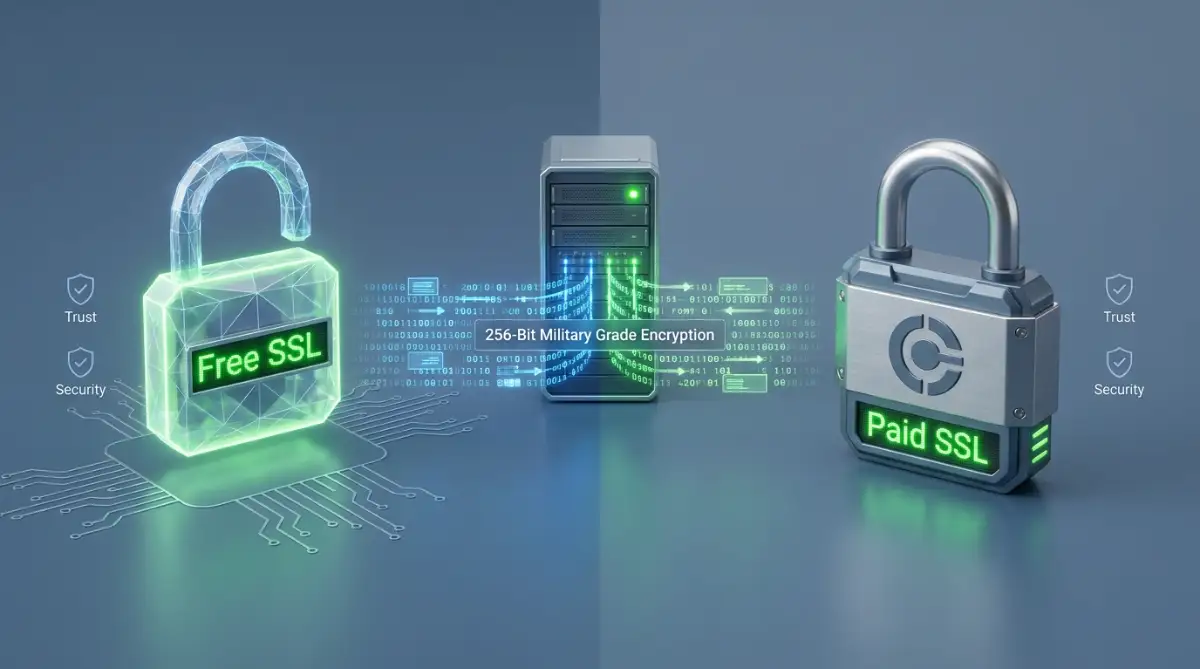
Both free and paid SSL certificates rely on the exact same cryptographic protocols, specifically Secure Sockets Layer and Transport Layer Security standards. They use the same bit-length encryption keys, usually 256-bit encryption, which would take modern supercomputers thousands of years to crack.
The encryption strength protecting a user's credit card number on a site using a free certificate is mathematically identical to the protection used by a site paying three hundred dollars a year. The math does not scale up just because you typed in your credit card details on a more expensive billing plan.
I actually wasted hundreds of dollars across three different websites before a friendly senior developer pulled me aside and explained this simple math. I felt completely foolish realizing I had been paying a "vanity tax" for a brand name logo that offered zero extra technical protection.
🎬 Independent Tech Review: Are Free SSL Certificates Good Enough?
If you are still wondering whether a zero-dollar security certificate is truly safe for your visitors, watch this honest breakdown from web developer Tony on Tony Teaches Tech. He compares free options like Let’s Encrypt directly against paid certificates to show you what you actually get for your money and whether you need to spend a single penny:
Now that you have seen the side-by-side comparison on screen, let us look at the only real technical difference between these certificates: identity validation.
The Difference in Validation Levels
While the underlying math is always identical, there is a real, technical difference between different types of certificates. But this difference has nothing to do with encryption strength; it is all about identity verification.
There are three main levels of validation in the digital world: Domain Validation (DV), Organization Validation (OV), and Extended Validation (EV).
Free SSL certificates are almost always Domain Validation certificates. This means the issuing authority automatically checks to ensure you actually own and control the domain name you are trying to secure.
Paid certificates, on the other hand, can offer Organization Validation or Extended Validation. These higher tiers require the vendor to manually verify your physical business license, your corporate headquarters address, and your legal identity over the phone.
If you are running a massive global banking institution or a Fortune five-hundred e-commerce store, having that heavy corporate validation might make sense for your legal department.
However, if you are running a helpful informational blog, a portfolio site, or a small independent shop, a basic Domain Validation certificate is more than enough. Web browsers treat both options with the exact same level of trust, displaying a secure padlock icon for both.
🛡️ Validation Tiers Compared: Do You Actually Need Paid Verification?
My Developer Truth: Modern browsers like Chrome and Safari killed the green address bar years ago. An EV certificate that costs three hundred dollars looks 100% identical in the address bar to a free DV certificate. Stop paying for corporate validation nobody can see!
The Automation Revolution
Another major reason people used to distrust free options is that they required a massive headache of manual installation and annual renewals. In the early days of the web, if you wanted a secure site, you had to generate complex certificate signing requests and manually paste text files onto your server every single year.
If you missed the renewal deadline by a single day, your website would instantly throw terrifying security errors to your visitors.
This administrative pain made people happy to pay hosting companies a fee to handle the annoying paperwork automatically.
Today, website security has completely changed. Open-source initiatives like Let's Encrypt revolutionized the web by introducing total automation.
Modern web hosting control panels now build free SSL generation directly into your dashboard. The server automatically requests, installs, and renews your free certificate every ninety days without you ever lifting a finger.
You get enterprise-level security without ever having to look at a single line of technical code or worry about expired dates.
The SEO Ranking Factor Reality
For years, search engine optimization specialists have debated whether having a secure site gives you a direct boost in search engine rankings. Google eventually cleared up the confusion by officially confirming that HTTPS is a lightweight ranking signal.
This announcement caused a massive panic, leading shady hosting companies to market paid certificates as an aggressive SEO shortcut.
They implied that if you did not buy their expensive premium SSL package, Google would bury your blog on page ten of the search results.
The reality is much simpler. Google cares that your website is encrypted to protect users from malicious snooping; they do not care at all whether you paid zero dollars or five hundred dollars for that encryption.
A free certificate satisfies the exact same technical ranking requirement as the most expensive corporate certificate on the market. Your search engine placement depends heavily on the quality of your content, not on how much money you wasted buying unnecessary security add-on badges.
Browser Warnings and Trust Indicators
Some premium vendors try to scare small business owners by claiming that web browsers treat free certificates differently. They whisper that internet browsers might display subtle warnings or doubts to users visiting a site secured by a free provider.
This is completely false.
Major web browsers like Chrome, Safari, and Firefox view security through a binary lens: either a site is encrypted with a valid certificate, or it is completely unencrypted.
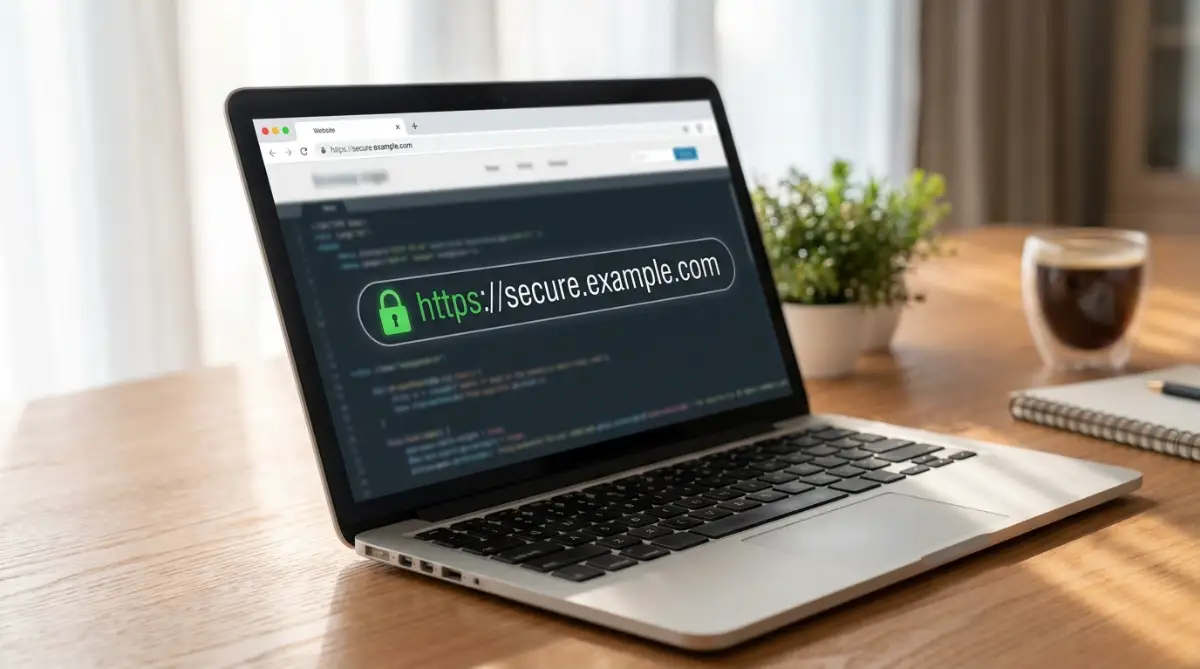
If a valid certificate is installed, the browser displays a clean, reassuring padlock icon in the address bar. It does not matter whether that certificate came from a multi-million-dollar corporation or an automated open source initiative like Let's Encrypt.
When your users visit your site, they see the exact same symbol of safety, and your browser treats the encrypted connection with total respect. You lose nothing by choosing a free option, but you save hundreds of dollars that can be better invested in growing your actual business.