
How to Appeal a Health Insurance Denial (And Actually Win)
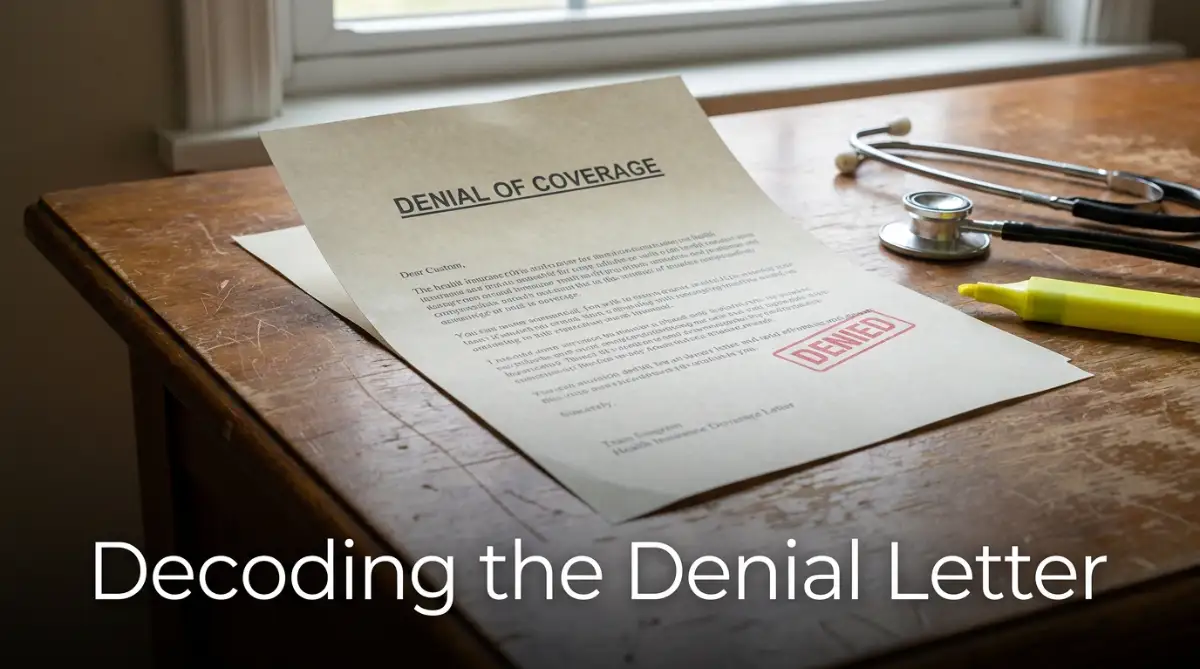
Opening a health insurance rejection letter stamped "DENIED" feels like a punch to the gut, especially when your doctor insisted the treatment was necessary. Insurance companies rely on confusing medical jargon and bureaucratic exhaustion hoping you will simply give up and pay out of pocket. In this guide, I will show you how to decode their exact denial reasons, how to force an expedited 72-hour review, and how to build an airtight appeal packet that turns that rejection into an approval.
📌 What You Must Do Immediately After an Insurance Denial:
-
A denial is just an opening offer: Over 50% of formal health insurance appeals win; never accept the first rejection letter as the final word.
-
Ask for a Peer-to-Peer review first: A 10-minute phone call between your doctor and the insurance medical director can reverse a denial in days.
-
Demand an Expedited Appeal if urgent: If waiting 30 days jeopardizes your health, have your doctor mark the appeal as "Urgent" for a mandatory 72-hour ruling.
-
Escalate to External Review: If the insurance company denies your internal appeal, federal law guarantees your right to an independent review by an unbiased doctor panel.
Decoding the Language of Insurance Rejections
To successfully fight a health insurance company, you have to learn how to speak their rigid, highly technical language. When an insurance provider rejects a prior authorization request, they cannot just say "we don't feel like paying."
They are legally required to provide a specific, documented reason for the rejection.
Most of the time, the denial falls into one of two categories: the treatment is labeled as "not medically necessary," or the paperwork lacked a specific procedural code required by their internal guidelines.
Insurance companies use automated software to scan incoming requests for specific keywords. If your doctor's office leaves out a single line of clinical justification, the computer instantly spits out a rejection notice.
📑 Decoding the Rejection: What the Adjuster Said vs. What It Means
My Golden Rule: Never take "not medically necessary" personally. It is an automated accounting filter, not a medical diagnosis. Treat it like a checklist of missing data you need to supply.
The good news is that an initial denial is rarely the end of the road. It is usually just the opening move in a standard bureaucratic game of tennis.
Let us break down the foundational concepts you need to master before you draft your formal appeal package.
The Power of the Medical Necessity Definition
Let us tackle the most common hurdle first: the phrase "not medically necessary." This is the favorite weapon of corporate insurance adjusters.
They use this term to claim that while your condition is real, the specific treatment your doctor chose is too expensive or unproven compared to cheaper alternatives.
To beat this argument, you cannot rely on emotional pleas or complaints about how much pain you are in. Insurance computers do not care about your feelings; they only care about clinical guidelines.
You and your doctor have to prove that your treatment matches the exact diagnostic standards accepted by mainstream medical associations. If your doctor's office submitted a three-sentence note, you will lose every time.
You need a multi-page mountain of clinical notes, peer-reviewed medical studies, and a detailed letter explaining why older, cheaper treatments failed to work for your specific body.
Why Your Doctor's Office Is Overwhelmed
Many patients assume that if their prior authorization gets denied, their doctor's office will automatically handle the entire appeal process from start to finish. We think our physicians have a dedicated legal team sitting in the back office fighting insurance companies all day long.
The brutal reality is that local medical clinics are completely drowning in administrative paperwork.
A typical family doctor or specialist spends hours every single week fighting with insurance companies over basic prescriptions and scans. They are completely burned out, understaffed, and stretched to their absolute limits.
If you sit back and wait for your clinic to magically fix your denial, weeks will slip by, and your medical condition will sit untreated.
📺 Consumer Alert: NBC News on How to Overturn Denied Claims
If you feel like the system is rigged against normal patients, watch this eye-opening consumer investigation from NBC Chicago. They talk directly with patient advocates who share real-world "health insurance hacks" that force insurance companies to reverse their denials and pay for the treatments you need:
Now that you have seen how consumer advocates push back against unfair rejections, let us look at the fastest shortcut to get your doctor fighting directly for your approval:
You have to become your own aggressive patient advocate. You cannot treat your doctor like an independent agent; you must treat them like your key strategic partner.
You need to call the clinic's insurance coordinator every single morning, ask for updates, and offer to help compile the medical literature yourself. Taking an active role in gathering your own files is the only way to ensure your appeal moves forward with speed.
I actually had to drive down to my cardiologist's office, sit in their waiting room with a flash drive, and personally collect my last three test results because the fax machine was broken. If I hadn't taken matters into my own hands, my appeal paperwork would have sat on a dead desk for a month.
🩺 The 5-Minute Shortcut: Asking for a "Peer-to-Peer" Review
Before writing a 20-page formal appeal, call your doctor’s office coordinator and ask for this immediate fast-track:
"Hi, since my prior authorization was denied yesterday, can we schedule a Peer-to-Peer review between Dr. [Doctor's Name] and the insurance medical director this week? Many denials get overturned on that 10-minute doctor-to-doctor phone call without waiting months for paperwork."
Insurance companies use medical directors who are often general practitioners. When your actual treating specialist gets them on the phone and explains your specific symptoms live, approvals frequently happen right on the spot.
The Internal Versus External Appeal Tiers
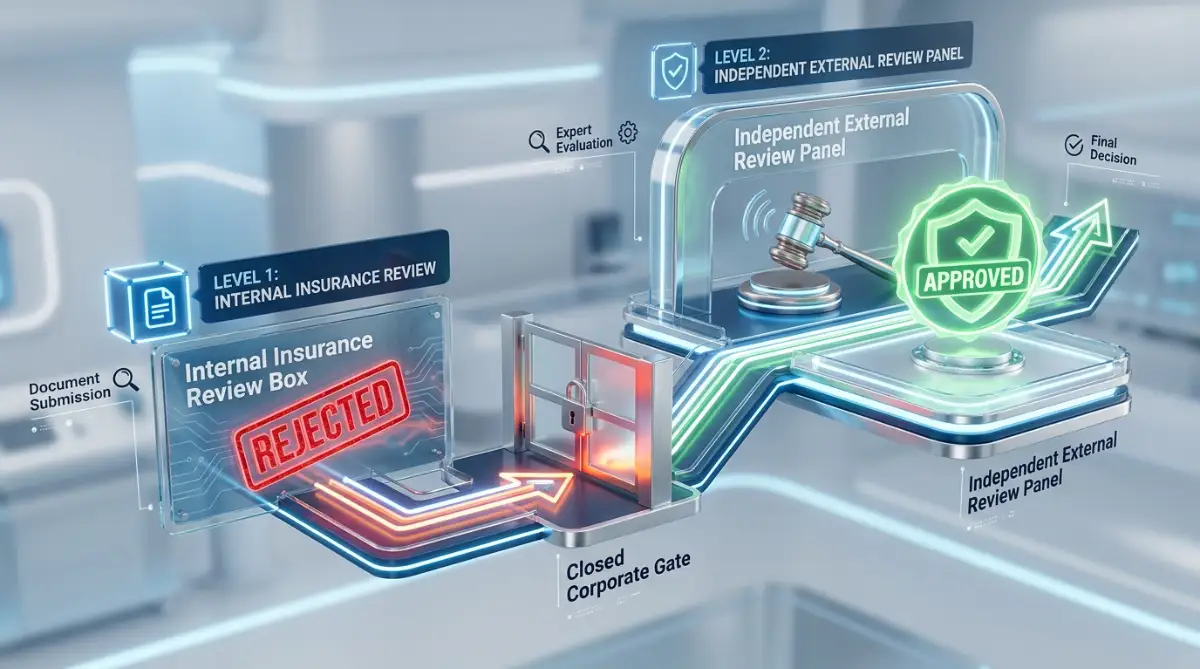
When you fight a health insurance rejection, you are entering a structured multi-tier legal process regulated by state and federal laws. You cannot just skip to the end; you have to climb the ladder step by step.
The first stage is always an "Internal Appeal."
During an internal appeal, you are literally asking the exact same insurance company that rejected you to take a second look at your file. Naturally, they assign a different medical reviewer this time, but they still have a financial incentive to uphold their original decision.
If the internal appeal fails—which happens frequently—you unlock the door to an "External Review."
An external review is a game-changer because your case gets ripped out of the insurance company's hands entirely and sent to an independent, neutral third-party medical organization. The insurance company is legally bound to follow whatever decision this independent panel makes.
Knowing that an external review exists gives you massive confidence. You are never completely trapped by a single insurance provider's biased ruling.
Unlocking the Urgent Expedited Timeline
Time is a massive factor when dealing with a medical denial. If you are waiting on approval for an urgent surgical procedure or a critical cancer treatment, you cannot afford to wait sixty days for a standard bureaucratic review.
Federal regulations give you the legal right to request an "Expedited Appeal."
An expedited appeal forces the insurance company to review your case and deliver a decision within seventy-two hours instead of the standard thirty to forty-five days.
To qualify for this fast track, your doctor must officially certify that waiting for a standard review could seriously jeopardize your life, your health, or your ability to regain maximum function.
You must ask your physician to write the magic words "urgent medical necessity" directly onto the top of the appeal paperwork. This speeds up the timeline dramatically, cutting through the red tape when every single day genuinely matters.
Gathering the Ultimate Medical Evidence Package
Building a winning appeal packet is very similar to preparing a legal case for a courtroom judge. You have to present a story that is completely airtight and backed by cold, hard data.
You should request your complete medical records directly from every specialist you have seen over the past year. Do not assume the insurance company already has these files in their digital database.
Highlight the specific test results, doctor notes, and diagnostic images that clearly illustrate the severity of your medical condition.
If your doctor prescribed a specific brand-name drug because you experienced severe, documented allergic reactions to the cheaper generic alternatives, you need pharmacy records proving those past bad reactions.