Opening your mailbox only to find an aggressive violation notice and a three-hundred-dollar fine from your homeowners association can instantly ruin your day. Most boards count on you getting scared, staying quiet, and writing a check just to make the headache disappear. In this guide, I will show you how to find administrative loopholes in your community rulebook, how state laws override rogue board members, and the exact steps to get unfair neighborhood fines dismissed without spending a fortune on lawyers.

📌 What You Must Know to Fight an Unfair HOA Fine:
-
State law overrules your board: Community covenants can never strip away legal rights protected by state statutes, such as solar access or flag displays.
-
Never withhold monthly dues: Protest fines through formal dispute letters, but always keep paying your regular monthly assessments to avoid automatic property liens.
-
Demand the exact rule in writing: Vague claims like "property nuisance" are legally weak; force the board to cite the exact page and paragraph of the master CC&Rs.
-
Use certified mail for all disputes: Phone calls and verbal promises hold zero weight in court; send every appeal with a return receipt requested.
The Secret Playbook of Homeowners Associations
Understanding exactly how your board operates is your very first step toward finding a real solution. Most boards are simply made up of volunteer neighbors who have no real background in property management or law. Because they lack professional training, they often misinterpret the complex rules they are supposed to enforce. This lack of clear understanding is exactly why so many unfair violations get mailed out in the first place.
Many times, a board member will issue a fine based on their own personal preference rather than the actual rules. They might hate the specific type of flowers you planted and decide to twist a vague landscaping rule to penalize you. This is a massive overstep of their legal authority, but they do it because people rarely fight back. Recognizing this behavior helps you see that their notices are not always legally binding.
Why Your Governing Documents Are Your Best Friend
To beat an unfair fine, you have to read the actual rules better than the people trying to enforce them. Your community is governed by a set of documents usually called the Covenants, Conditions, and Restrictions (CC&Rs). Think of your CC&Rs as the master rulebook for a board game you are forced to play. If a rule is not clearly printed inside that specific book, they cannot legally enforce it against you.
You should also request a copy of the community bylaws and the specific rules and regulations document. Sometimes, a board will create a new rule about parking or trash cans without properly updating these official documents. If they skipped the legal process to add that rule, the fine they sent you is completely invalid. Finding these small administrative errors is a proven way to get your ticket entirely dismissed.
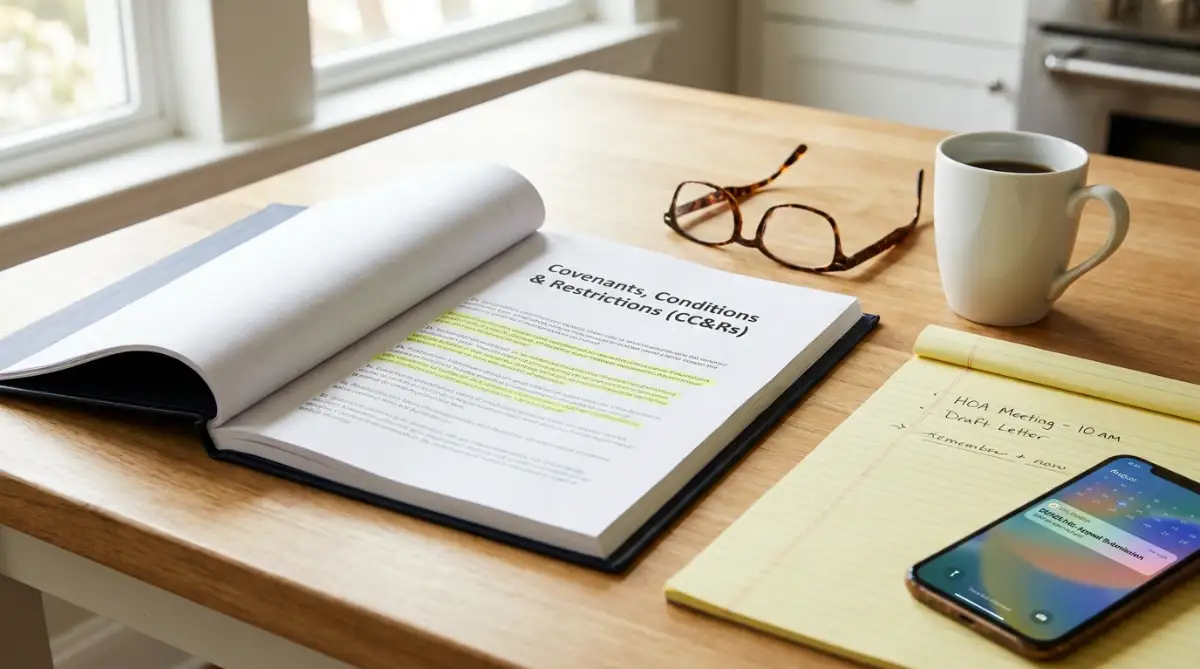
I learned the hard way that phone calls simply do not matter when dealing with property managers. My biggest mistake was trusting a verbal agreement over a fence height, which later resulted in a massive penalty. Now, I always follow up every single phone call with an email summarizing exactly what we discussed.
State Laws Always Beat Community Rules
Here is a fact that many property managers try to hide from you on purpose. No matter what your CC&Rs say, they can never overpower your specific state and local laws. Your local government laws sit at the very top of the legal food chain. If your neighborhood rule conflicts with a state law, the state law wins every single time.
For example, many states have strictly protected a homeowner's right to install solar panels or display the national flag. If your association tries to fine you for these protected actions, they are actually breaking state laws. You can easily use these local protections as a massive shield to drop the charges instantly.
⚖️ The Real Estate Food Chain: What Overrules What?
My Legal Rule: If an overzealous board member passes a "resolution" banning holiday door decorations, but your master CC&Rs don't mention it, the board rule is completely unenforceable. Always check Level 1 and Level 2 first!
🎬 Federal Law Spotlight: The Legal Shields That Overrule Your HOA
Many neighborhood boards act like they have unlimited power, but they are strictly bound by federal and state statutes. Watch this eye-opening legal breakdown from the team at Epic Real Estate. They reveal the exact federal protections you can cite to render unfair HOA fines completely void and force an overreaching board to back down immediately:
Now that you know how state and federal laws protect your property rights, let us look at the step-by-step action plan to officially dispute an unfair fine:
The Action Plan to Dispute Outrageous Fines
Whenever that nasty notice lands in your mailbox, your very first reaction will probably be extreme anger. You might want to march straight over to the president's house and give them a piece of your mind. You absolutely must resist this urge because getting emotional will only hurt your chances of winning. You need to treat this entire process like a professional business transaction.
Step 1: Read the Fine Print Carefully
Do not just glance at the amount they are demanding from you. Read the entire document closely to see exactly which specific section of the rules they claim you broke. You will often find that the citation is incredibly vague, simply stating you have a "property nuisance." A vague citation is incredibly hard for them to defend if you challenge it officially.
Check the date on the notice and the exact deadline they have given you to respond or appeal. Most communities have a very strict time limit, usually between 14 to 30 days, to file an official dispute. If you miss this tight deadline, you might automatically lose your right to a hearing. Set an alarm on your phone so you do not miss this important date.
Step 2: Gather Your Undeniable Evidence
You cannot win an argument with a property manager just by saying you are right and they are wrong. You need to gather solid proof, much like a student gathering data for a major science project. Grab your phone and take highly detailed, clear photos of the area or issue in question. Make sure your camera settings show the exact time and date on every single picture.
If the dispute is over a noise complaint or a parking issue, ask your closest neighbors for help. A short, simple letter from the person living next door saying you did not cause a disturbance is incredibly powerful. The board expects you to just complain, so presenting them with organized evidence usually catches them completely off guard.
Step 3: Write a Professional Dispute Letter
You will need to officially state your disagreement in writing to the management company and the board. Keep your letter extremely short, polite, and completely free of any emotional insults. State clearly that you are officially disputing the charge and mention the exact rule you believe was misinterpreted.
Attach copies of the photos or neighbor statements you gathered in the previous step. Always send this letter through certified mail with a return receipt requested from the post office. This guarantees that you have hard legal proof that they actually received your response before the deadline.

Preparing for the Board Hearing
Once you submit your letter, the board is usually required to offer you a formal hearing. This sounds incredibly intimidating, but it is just a simple meeting where you can explain your side of the story. Treat this meeting exactly like you would a professional job interview. Dress neatly, bring organized copies of your evidence, and stay completely calm.
Keeping Your Cool Under Pressure
When you walk into the room, remember that these people are just your neighbors, not real judges. They might try to interrupt you or act dismissive of your evidence to make you nervous. Take deep breaths, speak slowly, and politely ask them to let you finish your statement. Stick only to the facts and directly reference the rules you highlighted in your governing documents.
If they ask you a question you do not know the answer to, do not guess or make something up. Simply tell them you will need to review your documents and get back to them on that specific point. Taking notes while they talk shows them that you are taking this process very seriously. Usually, a calm and organized homeowner is enough to make a board drop a questionable fine.
Understanding the Threat of Retaliation
A common fear is that fighting a ticket will just make the management company target you even more. You might worry they will start driving past your house every single day looking for a new problem. This is a very real concern, but giving in to their demands actually makes you an easier target. When you stand your ground legally and professionally, they usually move on to someone less prepared.
Documenting Unfair Targeting
If you feel you are being unfairly targeted after a dispute, you need to start a detailed logbook. Write down every single time a board member lingers outside your house or takes photos of your property. If they send you three letters for a tiny weed while ignoring the messy yard across the street, take pictures of both yards. This proves selective enforcement, which is highly illegal in almost every single state.
Selective enforcement means the board is playing favorites and not applying the rules equally to everyone. If you can prove they are singling you out, a judge will throw out their fines completely. Keep this logbook in a safe place and continue updating it carefully. This record is your ultimate insurance policy if things ever escalate to a real courtroom.
📸 How to Build an Ironclad "Selective Enforcement" Defense
If a board fines you while ignoring the same violation on their friend's lawn, gather these three pieces of data before your hearing:
-
1. The Date-Stamped Comparison Photo: Photograph your cited property, then photograph three other homes on your street committing the exact same infraction on the same afternoon.
-
2. The CC&R Clause Reference: Quote the specific clause they cited and point out in writing that the board has historically abandoned uniform enforcement.
-
3. The "Equal Application" Demand: State politely: "Under state law, community covenants must be applied uniformly without arbitrary preference. I request an immediate dismissal of this citation until all similar properties are held to the identical standard."
When to Bring in the Legal Professionals
Sometimes, no matter how perfectly you present your evidence, a stubborn board will refuse to drop the charges. They might even start adding expensive late fees to your account and threatening your property. This is exactly when you need to stop communicating with them directly and seek outside help. You do not have to fight a massive legal battle entirely on your own.
Finding a Real Estate Attorney
Look for a local lawyer who specifically handles homeowners association disputes and property rights. Many general practice lawyers do not fully understand the highly specific laws that govern community boards. A simple consultation with a specialized attorney can show you exactly how strong your case really is.