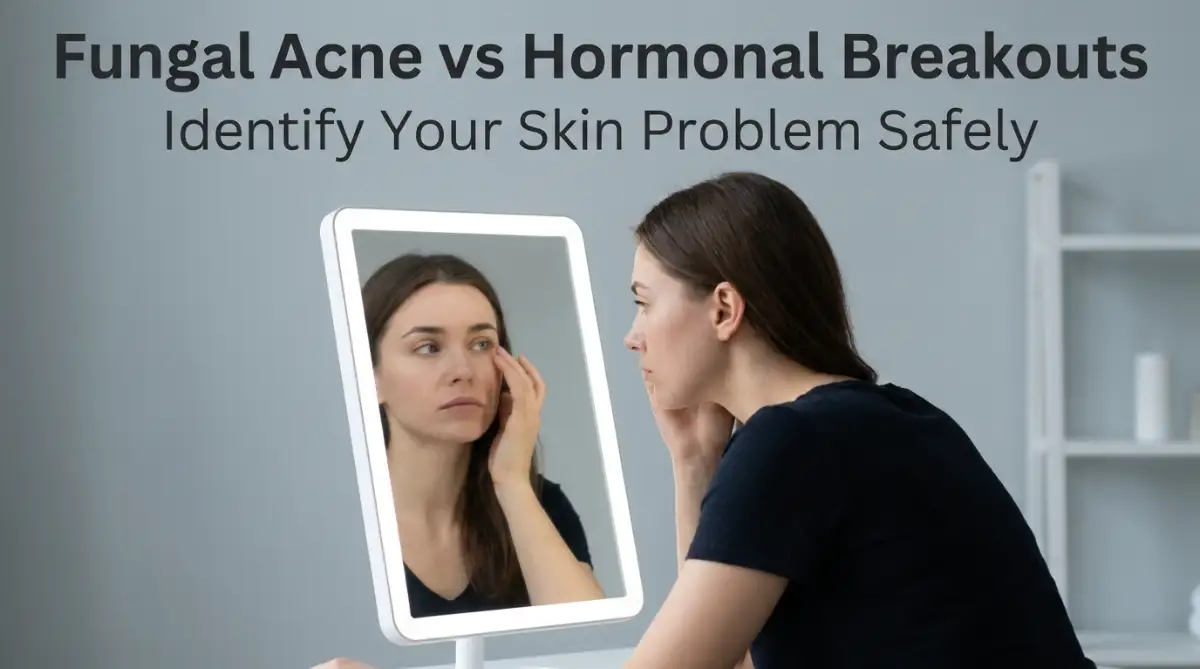
If you have spent the last three months slathering strong salicylic acid and benzoyl peroxide onto a forehead full of tiny, stubborn bumps with zero improvement, stop right now. You are likely treating facial yeast with standard acne medicine, and you are accidentally feeding the exact thing causing the breakout. I wasted a small fortune on high-end skincare before discovering my bumps were fungal, not hormonal. Here is the exact routine shift I used to finally clear my skin without scrubbing my face raw.
The 30-Second Texture Diagnosis (Read This First)
-
It is yeast, not bacteria: If your bumps are identical in size and feel itchy when you sweat, regular acne acids will only irritate your skin barrier.
-
Starve the food source: Stop using facial oils, rich creams, and fermented essences—skin yeast actively feeds on fatty acids and esters.
-
Use short-contact therapy: A zinc pyrithione or ketoconazole wash used 2 to 3 times a week for just 60 seconds clears excess yeast without overdrying.
-
Less is truly more: Healing textured skin requires stripping back to a basic gentle cleanser, safe hydrator, and fungal-safe sunscreen.
Decoding the Hidden Microscopic Culprits
To fix a skin problem that refuses to heal, you have to understand what is happening beneath the surface. Traditional hormonal breakouts are caused by an overproduction of natural skin oil mixing with dead skin cells inside your pores. When bacteria gets trapped down there, your immune system reacts by creating a red, inflamed pimple.
These hormonal spots usually show up in predictable cycles, often targeting your chin, jawline, and lower cheeks. They tend to be deep, sore, and come to a distinct white head over a few days. They are a normal physical response to fluctuating internal body chemistry.
Fungal acne, on the other hand, has nothing to do with bacteria or standard pimples at all. Despite its common name, it is not actually acne in the traditional medical sense. It is caused by an overgrowth of yeast living naturally inside your hair follicles.
Why Standard Acne Treatments Make Fungal Bumps Worse
When you treat fungal bumps with regular acne creams like benzoyl peroxide, you get zero positive results. In fact, standard acne treatments often strip your skin barrier and kill your good bacteria, leaving room for the yeast to multiply faster.
Furthermore, many traditional moisturizers and sunscreens contain heavy oils and esters that act like a feast for skin yeast. Every time you apply a rich cream to hydrate your dry face, you are accidentally feeding the microscopic culprit causing your texture.
This explains why your stubborn forehead bumps only seemed to multiply every time you tried to take extra good care of your skin. Recognizing this biological difference completely changes how you shop for skincare products.
The Itch Test and Texture Clues
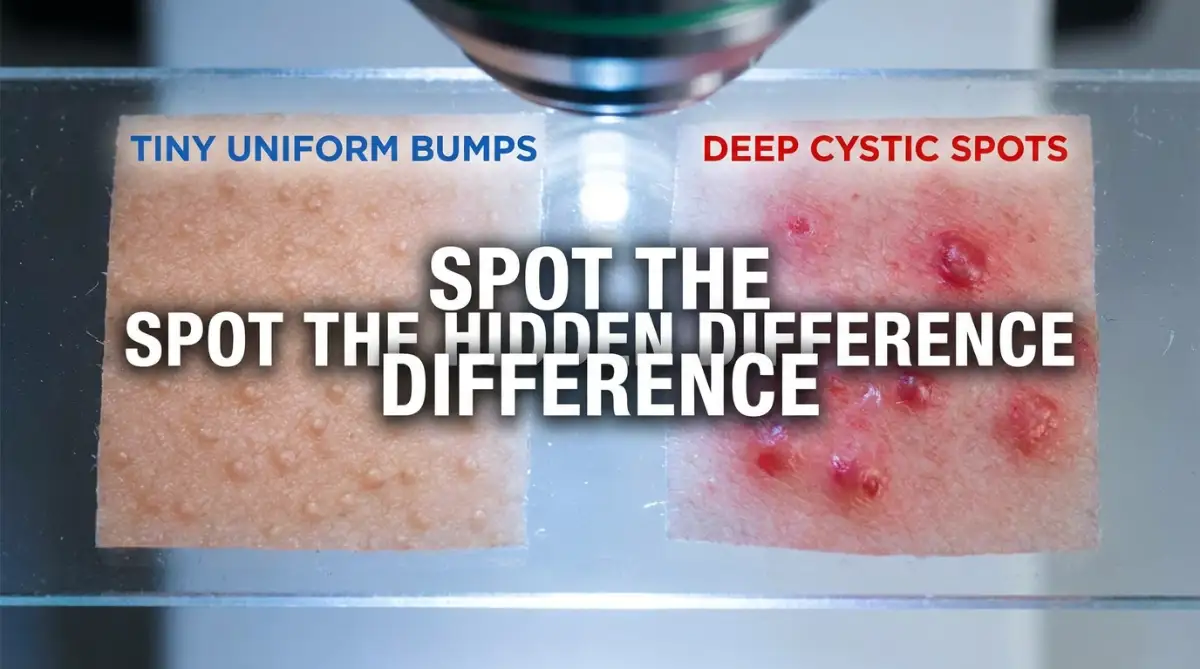
There are a few very clear physical signs that help you spot the difference right in your own mirror. Hormonal pimples are usually scattered randomly across your face, and they tend to hurt when you touch them.
Fungal bumps, however, appear in massive, uniform clusters that look almost identical in size and shape. If you look very closely, they do not have individual whiteheads; they are just tiny, stubborn bumps sitting right next to each other.
Another massive giveaway is itching. Hormonal acne rarely feels intensely itchy, but fungal outbreaks are often accompanied by an annoying, persistent itch, especially when you sweat. If your skin texture drives you crazy with an urge to scratch, you are likely dealing with yeast rather than bacteria.
🪞 The 10-Second Mirror Test: Which One Do You Have?
Signs It Is Hormonal Acne (Bacterial):
-
Large, painful cysts or tender bumps that throb when touched.
-
Mostly concentrated on your chin, jawline, neck, and lower cheeks.
-
Calms down or dries out within 48 hours after using salicylic acid or benzoyl peroxide.
Signs It Is Fungal Bumps (Malassezia):
-
Massive clusters of tiny, identical pinhead bumps with no pop-able center.
-
Intensely itchy and stinging, especially after workouts or hot showers.
-
Mostly concentrated on your forehead, temples, chest, and upper back.
-
Zero improvement from acne washes; gets redder and itchier after using rich oils.
Myth vs Reality in Breakout Care
Let us look at a quick comparison to clear up the most common misunderstandings about stubborn skin texture.
Adjusting Your Daily Routine for Clear Results
Once you realize your stubborn texture is actually caused by yeast, you have to completely overhaul your shelf. The first step is dropping any product that contains heavy oils, fermented ingredients, or long-chain fatty acids. You want to starve the yeast of its favorite food sources while keeping your skin calm and protected.
Look for lightweight, water-based hydrators that sink into your skin without leaving a greasy film behind. Checking your ingredient lists online using safe cosmetic analyzer tools becomes your new best friend before buying anything new.
You should also look for targeted anti-fungal body washes or gentle cleansers with active ingredients like sulfur or ketoconazole. Using these specialized washes a few times a week clears out the excess yeast without destroying your outer moisture layer.
The Importance of Gentle Cleansing Habits
When dealing with stubborn skin texture, people often panic and start scrubbing their faces with harsh physical scrubs. Scrubbing your skin raw does not kill yeast; it only creates tiny micro-tears that invite more irritation into your pores.
You must treat your face with extreme gentleness, using only your fingertips and lukewarm water. Pat your skin dry with a clean microfiber towel instead of rubbing it aggressively.
Pro Tip: I used to scrub my forehead with walnut scrubs every single night, thinking I was wiping away the bumps. My biggest realization came when I stopped all physical scrubbing and switched to a basic, non-stripping cleanser. Within two weeks, my skin stopped feeling raw, and the stubborn texture finally started calming down.
Keeping Your Face Dry and Breathable
Yeast thrives in warm, dark, and humid environments, which makes sweat your skin's worst enemy during a breakout. If you love going to the gym or running outside, you must wash your face immediately after working out.
Never sit around in sweaty workout clothes or let your gym headband sit against your forehead for hours. Letting sweat dry on your skin creates a luxury resort for yeast to multiply rapidly.
Still not sure if your stubborn texture is caused by yeast or bacteria? Watch a board-certified dermatologist break down the top 5 signs of fungal acne in this quick visual guide:
The Danger of Over-Treating Your Skin
When frustration takes over, the biggest mistake people make is layering ten different active ingredients all at once. You might buy a sulfur wash, a salicylic acid serum, a retinoid, and a benzoyl peroxide gel, using them all on the same night. This aggressive chemical cocktail destroys your skin barrier faster than anything else.
Your skin barrier is your body's natural brick wall that keeps moisture in and bad microbes out. When you burn it down with too many strong products, your face becomes completely defenseless against inflammation.
Healing persistent texture requires immense patience and a minimalist approach. Giving your skin time to breathe and recover is infinitely more effective than blasting it with harsh chemicals every single evening.
Advanced Dermatology Secrets for Long-Term Skin Clarity
Once you understand the basic differences between yeast-driven texture and standard hormone-driven pimples, you can shift toward advanced care. Achieving a permanently clear complexion requires building a bulletproof defense system that prevents future microscopic outbreaks before they start. Professional dermatologists look at skin health as an ongoing lifestyle routine rather than a quick overnight fix.
Treating your face with precision keeps your skin barrier strong and resilient against harsh weather and sweat. Let us explore the sophisticated methods that keep your skin balanced, calm, and deeply hydrated without feeding unwanted facial yeast.
Checking Product Labels Like a Detective
The most powerful secret weapon you can acquire is the ability to read cosmetic ingredient lists like an expert. Many commercial skincare brands use misleading marketing words like "non-comedogenic" on the front of their bottles, which only applies to regular acne. Those same products can still contain heavy fatty acids that cause a massive yeast explosion on your forehead.
You should get into the healthy habit of running new product ingredient lists through specialized online cosmetic checkers. These digital tools scan formulas instantly to flag ingredients that feed skin yeast. Checking your cosmetic labels carefully protects your delicate skin barrier—taking an extra minute to scan the formula prevents weeks of frustrating breakouts down the road.
Ingredient Fast Filter: What Feeds Yeast vs. What Starves It
-
🚫 Triggers to Drop Right Now: Polysorbate-20/60/80, Galactomyces (fermented extracts), Lauric / Stearic / Palmitic fatty acids, and natural plant oils (like rosehip, coconut, and olive oil).
-
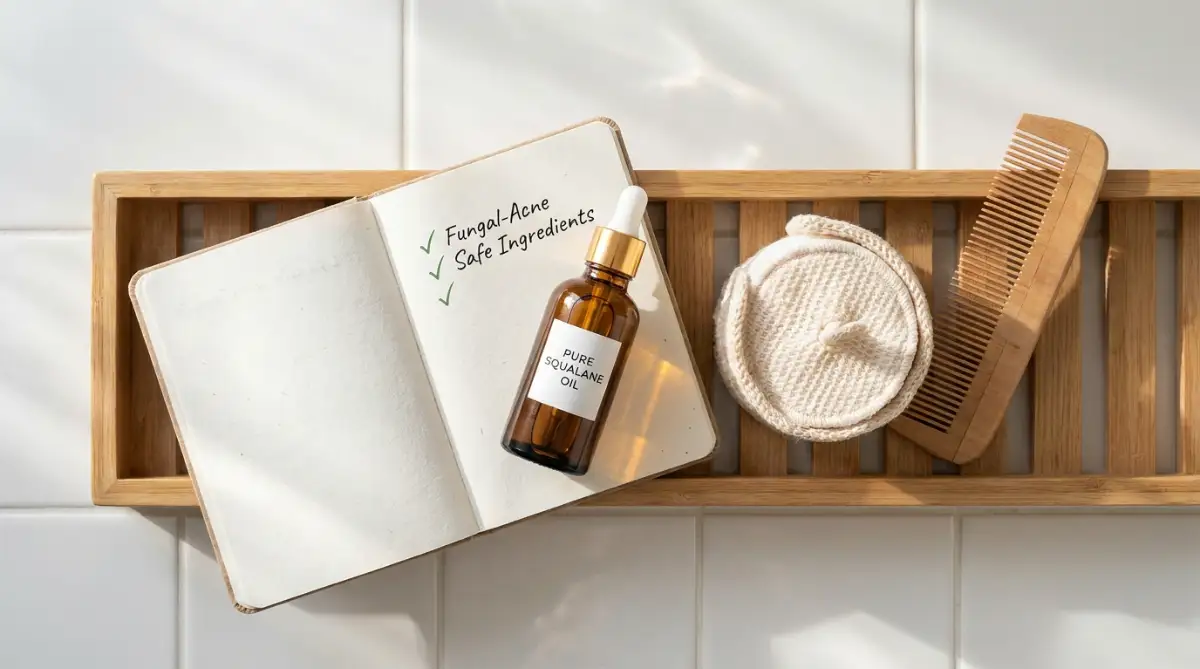
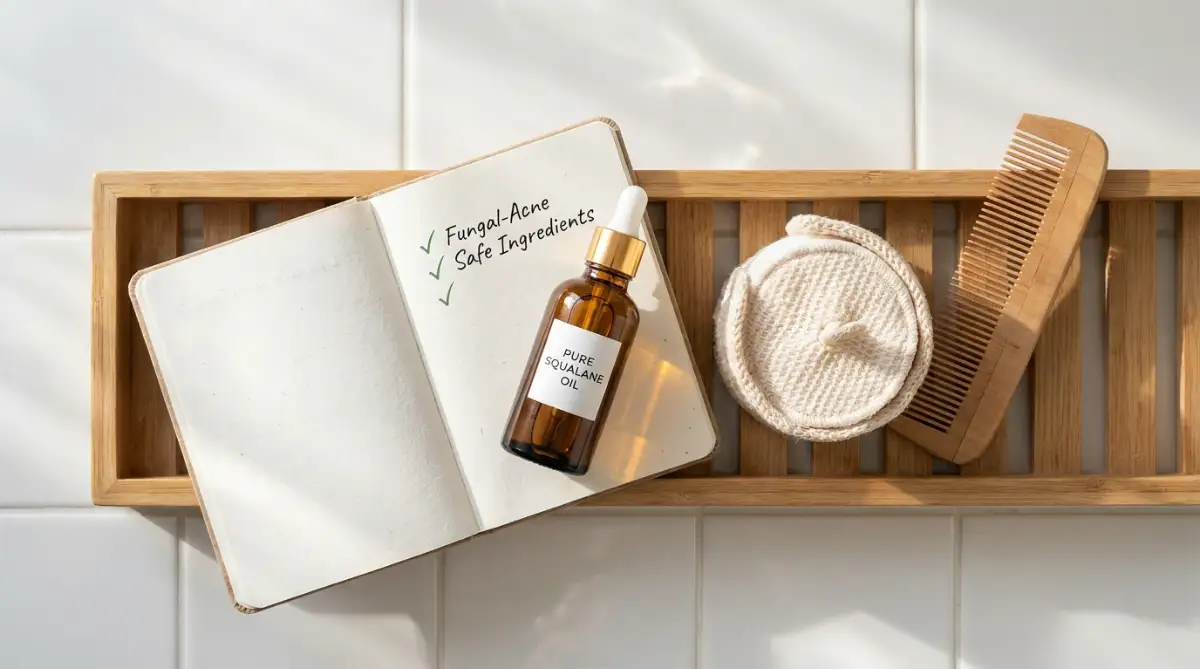
✅ Safe Hydrators to Use Instead: 100% Sugarcane-derived Squalane oil, pure Hyaluronic Acid, Glycerin, and pure Caprylic/Capric Triglyceride (MCT oil).
Incorporating Targeted Anti-Fungal Rinses Safely
Using a standard gentle cleanser is wonderful for daily maintenance, but stubborn texture sometimes demands a stronger approach. Dermatologists often recommend using an over-the-counter anti-fungal dandruff shampoo containing zinc pyrithione or ketoconazole as a temporary face wash.
You apply the active wash to your damp skin, let it sit gently for one minute, and rinse thoroughly with cool water. This brief contact time allows the active compounds to neutralize excess surface yeast without stripping your natural oils.
However, you should only use this specialized rinse two or three times a week to prevent severe dryness. Overusing active treatments will leave your skin flaky and inflamed—pushing your skin barrier past its natural limit always triggers more irritation.