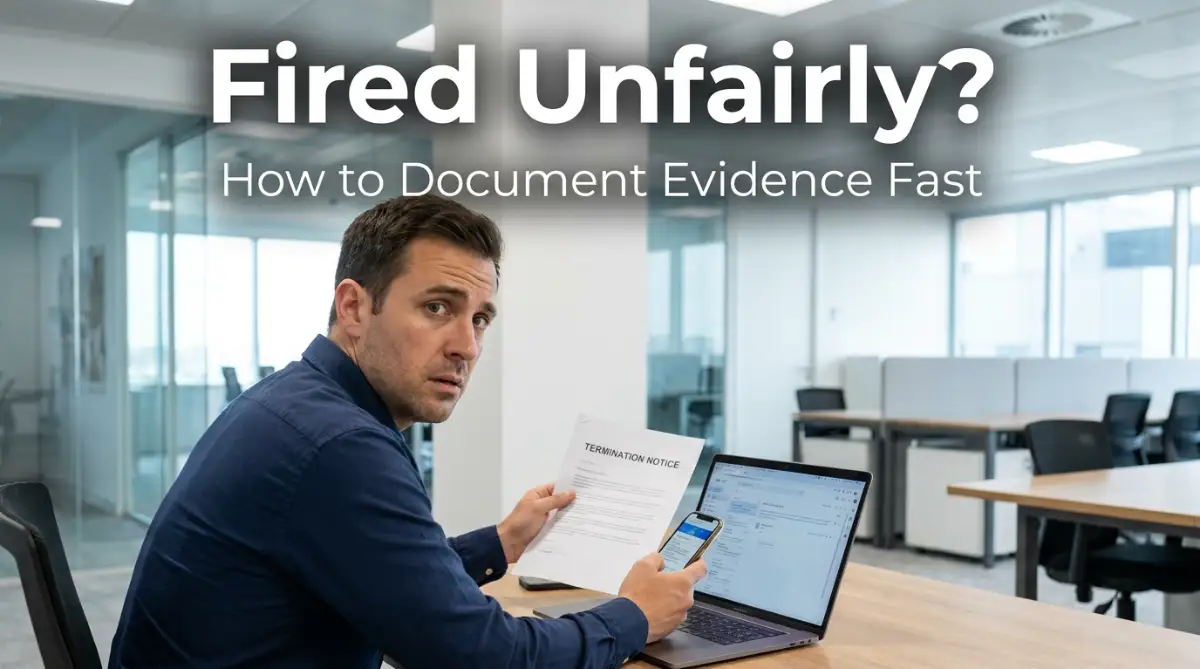
The Sudden Shock of an Empty Desk
I remember the exact moment my stomach completely dropped to the floor. It was a perfectly normal Wednesday afternoon, and I was just finishing up my weekly report when my manager suddenly sent me a completely blank calendar invite for a "quick sync." I walked into the glass conference room, and the head of human resources was already sitting there with a massive, terrifying yellow envelope. Within three minutes, they told me my role was being eliminated due to "performance restructuring." I felt entirely paralyzed because I knew for an absolute fact that my performance reviews had been flawless for three straight years. I walked back to my desk, my hands shaking violently, realizing that I was actually being pushed out because I had reported a major safety violation just two weeks prior.
Have you ever experienced that freezing wave of total panic when you realize your employer is aggressively pushing you out the door for a completely illegal reason? You are definitely not alone in feeling this way.
Every single day, thousands of hardworking people are fired out of nowhere because of workplace retaliation, quiet discrimination, or total corporate greed. We trust these massive companies to follow the basic rules of human decency, but the reality is that businesses will always move aggressively to protect their own bottom line.
When you get hit with a sudden termination, your brain instantly goes into survival mode. You worry about how you will pay next month's rent, how you will afford groceries, and what you are supposed to tell your family at dinner.
This heavy mental strain makes it incredibly difficult to think logically. You start packing your coffee mug and your family photos into a cardboard box, completely ignoring the massive digital paper trail sitting right in front of you.
The worst part is that human resources departments are highly trained to rush you out of the building as fast as physically possible. They want you confused, emotional, and totally separated from your computer before you realize what is actually happening. They know that if you leave without gathering your personal proof, their corporate lawyers will easily crush any future claims you try to make. It is time to stop feeling like a helpless victim and learn exactly how to build an unbreakable shield of truth.
Securing Your Digital Footprint Before the Screen Goes Black
To actually win a fight against a massive company, you have to understand exactly how the legal game is played. When an employment lawyer looks at your case, they do not care about how angry you are or how poorly your manager treated you.
They only care about hard, undeniable physical proof. You need evidence that shows a clear timeline of events leading up to your sudden dismissal.
The absolute biggest mistake people make is waiting until they get home to start gathering their thoughts. The exact second you suspect you are being pushed out, the clock starts ticking incredibly fast.
Your employer's IT department can and will lock you out of your company email, Slack channels, and internal servers with the single push of a button. You have to act fast, but you must act completely within the bounds of the law to ensure your evidence is actually usable in a courtroom. Let us break down the exact strategies you need to deploy right now.
The Art of Saving the Right Emails
If you suspect foul play, your company inbox is your absolute best friend. You need to identify any emails that prove your competence, prove you complained about an illegal issue, or show your boss treating you differently than your coworkers.
However, you cannot just randomly forward three thousand company emails to your personal Gmail account. This is a massive trap.
If you forward highly sensitive, proprietary company information—like secret client lists, upcoming product designs, or massive financial spreadsheets—the company will instantly sue you for stealing trade secrets. They will use this as the perfect excuse to justify firing you, completely ruining your wrongful termination claim.
You must only save emails that directly relate to your specific employment status.
Look for your past performance reviews, emails where you explicitly requested medical leave, or messages where you formally complained to HR about a hostile environment.
The absolute safest way to capture this information without triggering the company's automated security software is to physically take out your personal smartphone and snap clear, readable photos of the computer screen. Make sure the date, time, and the sender's email address are perfectly visible in every single picture.
I once lost a massive piece of evidence because I tried to forward an email to myself, and the corporate firewall blocked it instantly. The IT department got an alert, and my computer was locked five minutes later. From that day on, I only used the camera on my phone to quietly capture the truth.
If you want to understand exactly what types of communication employment lawyers look for first, watch this incredibly helpful breakdown.
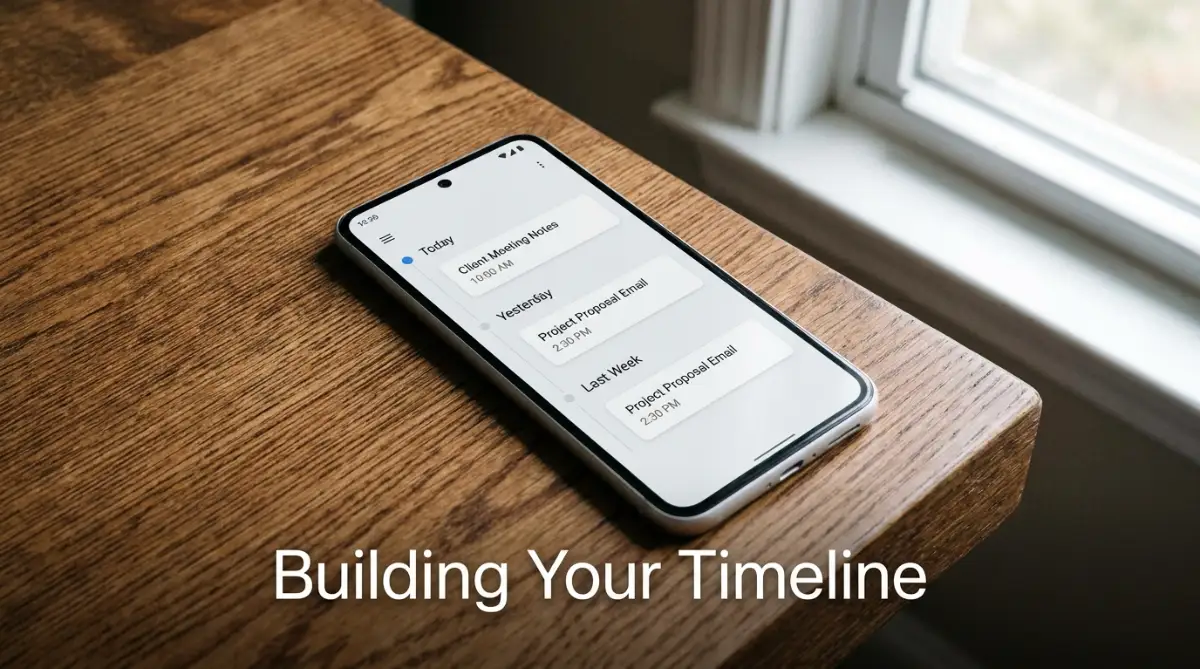
Building the Unbreakable Master Timeline
Raw photos of emails are great, but they are just random pieces of a very confusing puzzle. To make a lawyer take your case seriously, you have to organize those pieces into a clear, compelling story.
You need to sit down at your kitchen table tonight with a fresh notebook and start building a chronological master timeline.
Do not rely on your memory. Human memory gets incredibly fuzzy when you are dealing with severe trauma and stress. Write down the exact date you started noticing the weird behavior from your manager.
Did they suddenly exclude you from weekly team meetings right after you announced you were pregnant? Write down the exact date of that specific meeting. Did they start giving you impossible, conflicting deadlines right after you complained about unpaid overtime? Document exactly what those deadlines were and who assigned them to you.
When you build a timeline, you start to see a clear, undeniable pattern of retaliation. This pattern is exactly what a judge or a jury needs to see to understand that your firing was not just a random business decision.
The Power of the "Follow-Up" Email Trap
If you are still currently employed but you feel the ax slowly swinging toward your neck, you can actively generate powerful new evidence right now. Most illegal discrimination or retaliation happens quietly, behind closed doors, during verbal one-on-one meetings.
A terrible boss will never put their illegal threats into writing because they know it leaves a paper trail.
You have to force them onto the record. Whenever you have a suspicious meeting with your manager or human resources, go back to your desk immediately and write a polite "follow-up" email.
Keep your tone entirely professional and completely emotionless. Say something simple like, "Hi Susan, I just wanted to quickly summarize our meeting today. As we discussed, you mentioned that my recent request for legally protected medical leave was 'causing too many problems for the team,' and that my future here might be in jeopardy. Please let me know if I misunderstood anything."
Send that email and immediately take a picture of it with your phone.
If your boss replies and confirms it, you have absolute gold. If your boss completely ignores the email, that silence often acts as a quiet confirmation in the eyes of the law. You just took a totally undocumented verbal threat and turned it into hard, date-stamped digital evidence.
Securing Your Own Performance Metrics
When a company fires someone for an illegal reason, they almost always try to cover it up by claiming the employee was simply bad at their job. They will suddenly invent a narrative that you were lazy, missed deadlines, or lacked basic skills.
To completely destroy this fake defense, you need to gather proof of your actual competence before they lock you out of the system.
Take pictures of your official monthly sales dashboards showing you hit your targets. Save copies of the official end-of-year review where your manager rated you as "exceeds expectations."
If a client recently sent an email praising your excellent customer service, make sure you capture that message. If you recently won a company award or received a random bonus for hard work, document it heavily.
If you can prove to a jury that you were an objectively fantastic employee right up until the exact moment you reported a safety violation, the company's "bad performance" excuse completely falls apart.
The Danger of Signing the "Severance Package"
This is the exact moment where the company will try to permanently trap you. When they pull you into the final termination meeting, HR will usually slide a thick packet of paper across the desk.
They will offer you a month of free salary and extended health benefits. It sounds incredibly generous, especially since you are suddenly terrified about how you will pay your bills.
But there is a massive, highly toxic hook buried in the fine print. To get that severance money, you have to sign a "General Release of Claims."
When you sign that specific piece of paper, you are legally signing away your absolute right to ever sue the company for wrongful termination, discrimination, or unpaid wages. You are literally selling your silence for a few thousand dollars.
Never, ever sign a severance agreement in the room on the day you are fired. The emotional shock makes it impossible to read the legal jargon clearly.
Politely take the packet, tell HR you need time to review it with your family, and walk out of the building. You legally have the right to take the document home. You should immediately take that un-signed packet straight to an employment lawyer.
Sometimes, the lawyer can look at the evidence you gathered and successfully negotiate a massive, six-figure settlement that is ten times larger than the tiny severance check they initially offered you.
Identifying Potential Friendly Witnesses
Your own documentation is incredibly powerful, but it becomes completely unbreakable when another human being backs up your story. In the corporate world, finding someone willing to speak the truth is extremely difficult because everyone is terrified of losing their own job.
However, you should quietly identify any former coworkers who might have witnessed the discrimination or heard the aggressive comments from your boss.
Focus heavily on colleagues who have recently quit or retired, as they no longer have any financial loyalty or fear of the company. Do not aggressively harass them for statements while you are packing your desk.
Simply ask for their personal cell phone number or connect with them on a professional network like LinkedIn before your computer access is revoked. Having a quiet way to contact them later allows your future attorney to reach out formally and gather official sworn statements without causing unnecessary workplace drama today.
Building a strong network of truth is just as important as knowing how to troubleshoot software integrations when your daily work systems completely crash. You need external support to fix a broken environment.
Professional Testing Strategies for True Market Fit
Now that we have stripped away the massive emotional ego of building a product, we need to focus heavily on the data. Launching a manual or slightly ugly MVP is just the starting line; the real challenge is figuring out what to do with the early user feedback.
You cannot just release a basic webpage and hope the market tells you exactly what to build next. Customers are incredibly bad at explaining what they actually want, but they are exceptionally good at showing you what they hate.
If you want to survive the brutal startup ecosystem without burning through your savings, you have to become a master observer. You need to set up highly specific testing frameworks that capture silent user behavior. Let us explore the exact, pro-level strategies that successful tech founders use to steer their early products.
The Concierge Testing Method
We briefly touched on manual testing, but let us look at a highly advanced version known as the Concierge MVP. Instead of faking automation behind a landing page, you act as a high-end personal assistant for your first few clients.
If your startup idea is an automated travel booking app, you do not write the code. You find three busy executives and offer to manually plan their entire business trip for a flat fee. You use regular spreadsheets, standard email, and your own phone to book their flights and hotels.
According to product validation research from Harvard Business School, manually performing the service forces you to experience the exact same friction points your software will eventually face. You might discover that clients do not care about cheap flights; they actually care deeply about flexible cancellation policies.
This incredibly raw, human insight tells you exactly what feature to code first when you finally hire a developer. You skip building the cheap flight scanner entirely and focus your budget on a flexible cancellation tool, saving yourself months of wasted programming.
Creating the "Fake Door" Test
Sometimes you have a great idea for a new feature, but you are not sure if it is worth spending two weeks to build. Instead of guessing and hoping, you can use a brilliant psychological trick called a Fake Door test.
Let us say your MVP is a basic website selling custom dog collars, and you wonder if people would also pay extra for a matching dog leash. Do not manufacture the leashes yet.
Simply add a bright "Buy Matching Leash - $15" button to your current checkout page. When a customer clicks that button, a polite pop-up message appears saying, "We are currently out of stock, but please leave your email to get notified when they arrive!"
If fifty people click the button in one week, you have undeniable, data-driven proof that the demand is real. You can confidently go spend money manufacturing the leashes. If nobody clicks the button, you just saved yourself thousands of dollars in wasted inventory.
This simple button trick is a fantastic way to protect your limited capital. It is just as critical as knowing how to properly speed up your phone by clearing app cache to keep your testing tools running smoothly without buying new hardware. Always test the system before you fully commit the power.